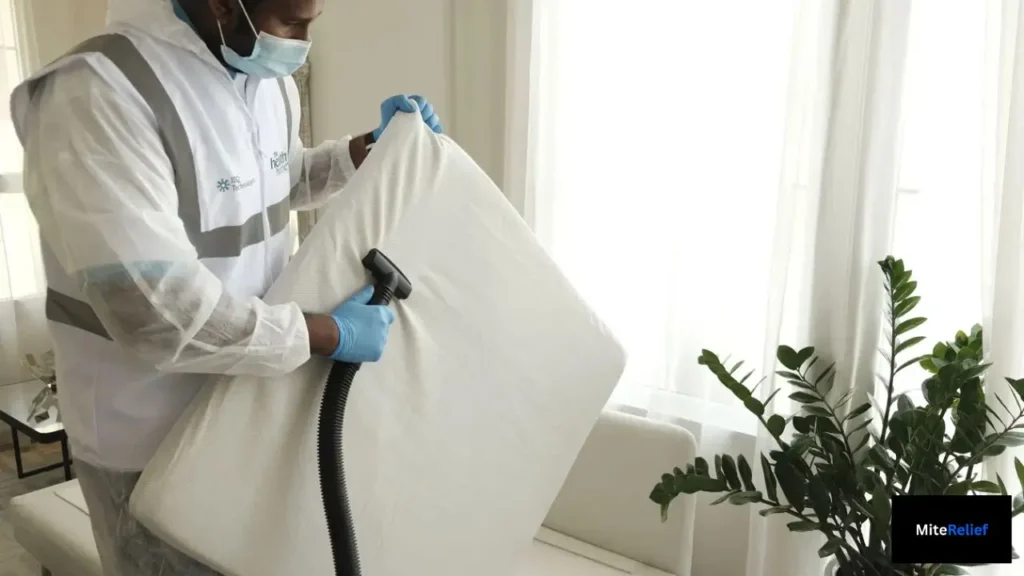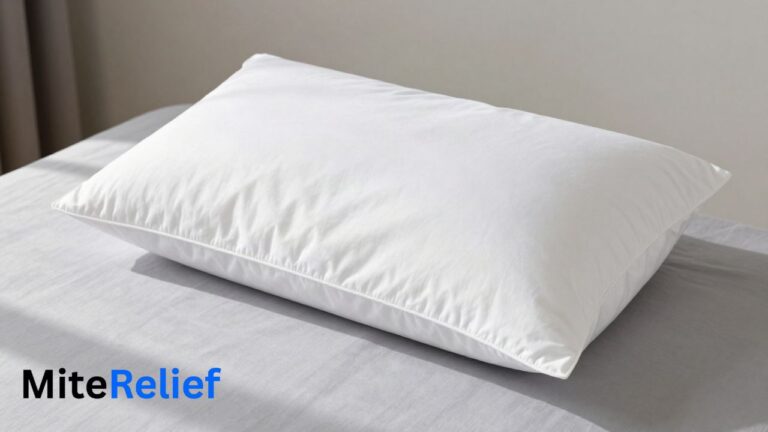
Your pillow sits inches from your nose, eyes, and skin for hours every night. If dust mite allergens are present in the sleeping environment, sensitive people may experience congestion, sneezing, or itchy eyes during the night or after waking. When choosing the best pillow for dust mite allergy, consider more than fill material: washability, support, care instructions, and whether it fits inside a proper allergen-proof encasement all matter.
None of that happens in isolation, either. A pillow that’s difficult to clean will undo a lot of the benefit of a good cover, and vice versa. Before getting into specific fills, zoom out to allergy-friendly bedding as a whole, since the pillow is only one piece of that puzzle.
Why Your Pillow Matters as Much as Your Mattress
Dust, dead skin, sweat, and dust mite allergens all end up in pillows over time, right alongside whatever else drifts around the bedroom. Given how close a pillow sits to your face for hours at a stretch, that buildup is worth taking seriously if you’re dealing with symptoms linked to dust mite exposure.
It’s tempting to assume the mattress is the bigger culprit, but that’s not really accurate. Pillows and mattresses both act as allergen reservoirs, and understanding how mites build up in bedding makes it easier to see why both deserve attention.
So what actually helps? A supportive pillow that’s realistic to maintain, a complete allergen-proof encasement, regular washing of outer bedding, and general allergen control around the room. The American Academy of Allergy, Asthma & Immunology (AAAAI) and the American College of Allergy, Asthma & Immunology (ACAAI) both point to dust-proof or allergen-proof covers on pillows and mattresses as a standard part of managing bedroom allergens.
Which Pillow Fill Is Best for Dust Mite Allergy?
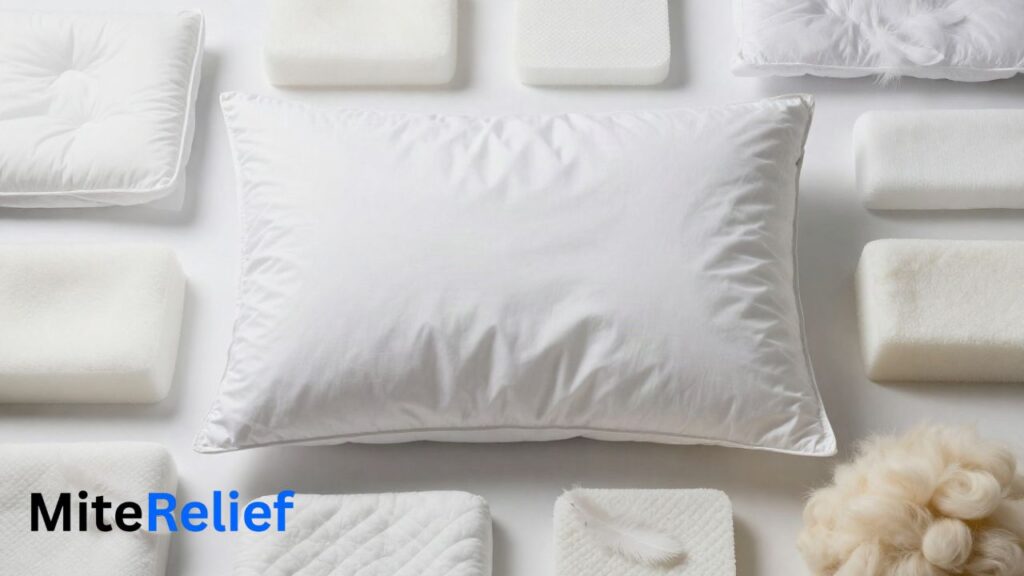
No single fill wins out for every allergy sufferer; that’s just not how it works. Each material comes with its own upkeep, and the “right” one usually depends on how you sleep as much as what you’re allergic to.
| Pillow type | Washability | Encasement needed | Main benefit | Main limitation |
| Polyester/synthetic | Often machine washable | Yes | Easier routine care | Not automatically allergen-proof |
| Latex | Usually not machine washable | Yes | Firm, consistent support | Limited cleaning options |
| Memory foam | Foam core not washable | Yes | Contouring, pressure relief | Hard to clean thoroughly |
| Down/feather | Varies by product | Yes | Soft, adjustable feel | Care instructions vary widely |
| Wool | Varies by construction | Yes | Temperature and moisture management | Not machine washable |
| Kapok | Difficult to clean | Yes | Lightweight, plant-based | Not recommended for allergy reduction |
Polyester or Synthetic Pillows
A lot of polyester pillows go straight into the washing machine, which is a real draw if you’d rather not deal with complex care requirements. But being washable doesn’t automatically make something dust mite-proof, so the main advantage here is easier maintenance.
Indeed, compared to feather pillows, synthetic pillows gathered more Der p 1 dust mite allergen, according to one study, so “synthetic is safer” isn’t a claim that holds up. Check the label for hot-wash and hot-dry compatibility, add a full encasement regardless, and replace the pillow once it flattens or gets hard to clean properly.
Latex Pillows
Latex, whether Dunlop or Talalay, gives you firm, consistent support that a lot of sleepers like. The catch is that most solid latex pillows can’t go anywhere near a washing machine or hot dryer, so a full encasement and careful label-reading matter more here than with washable materials.
It’s also not fair to call latex naturally allergen-free or fully mite-proof, whatever the marketing might imply.
Memory Foam Pillows
Memory foam contours nicely and takes pressure off the neck for plenty of sleepers. Because the foam core is difficult to wash, a detachable, washable outer cover and a full allergen-proof encasement can make routine care easier.
There’s no solid evidence pinning memory foam at a specific “moderate risk” level for allergens. The real issue is simpler: it’s just hard to clean.
Down and Feather Pillows
Down and feather pillows get a bad reputation they don’t fully deserve. Care varies by product; some can be washed or professionally cleaned, and the fill itself isn’t what determines allergen exposure. An encasement helps no matter what’s inside.
Worth noting: the research doesn’t actually back up the common claim that synthetic pillows always beat feather ones on allergen content.
Wool Pillows
Wool can help regulate temperature and pull moisture away, though how it’s cared for depends heavily on the specific pillow. Some let you adjust or remove the fill; others flatly can’t go in a washing machine.
Wool isn’t dust mite-resistant on its own, so it still needs the same encasement treatment as everything else.
Kapok Pillows
Kapok is a plant-based fiber, lightweight and soft, but difficult to clean thoroughly. ACAAI specifically advises against kapok-filled bedding for people trying to cut down on dust mite exposure.
How to Choose a Hypoallergenic Pillow for Dust Mites
The best pillow for dust mite allergy should be washable, supportive, and suitable for a full encasement.
Washability
Look at the care label, not the material category. Synthetic, feather, wool, latex, and foam pillows all vary in what temperature they can handle, even within the same fill type.
Firmness and Loft
Comfort and neck alignment shouldn’t take a back seat to allergy control; you need both. Side sleepers generally do better with a taller pillow, back sleepers land somewhere in the middle, and stomach sleepers usually want something thinner.
That’s a starting point, not a rule. Body size, shoulder width, and mattress firmness all shift what actually feels right.
Encasement Compatibility
Make sure the pillow fits inside a full zippered allergen-proof encasement without getting squashed or distorted. An oversized or overly firm pillow can make this harder than it sounds.
Removable Outer Cover
A washable outer cover simplifies day-to-day care, but it’s a supplement to a full encasement, not a substitute for one.
Meaning of Hypoallergenic
“Hypoallergenic” doesn’t mean dust mite-proof. Before buying anything with that label, check the materials, washability, any barrier testing, and whether it’ll work with a standard encasement.
Why You Also Need a Dust Mite Pillow Protector
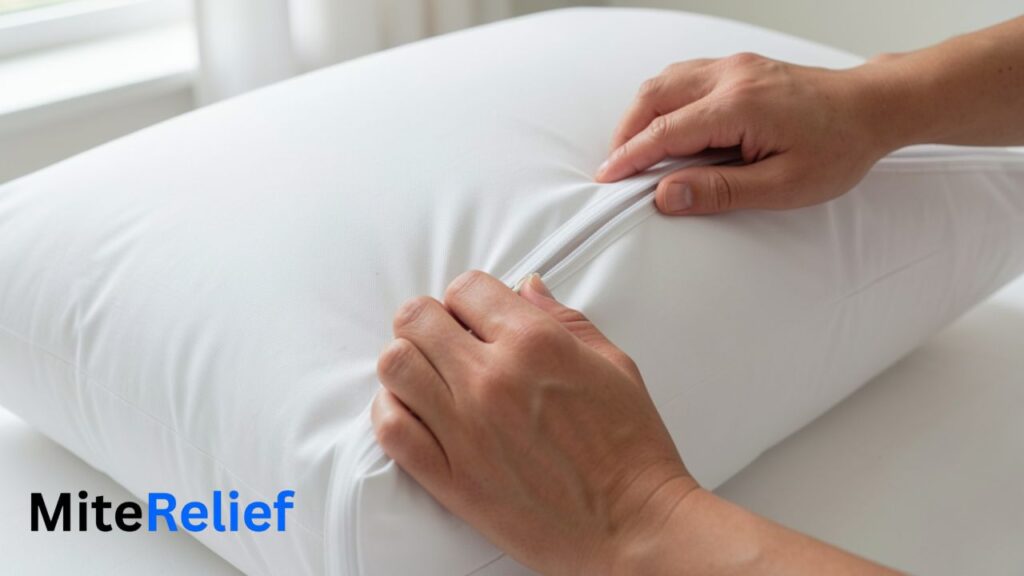
There’s a meaningful difference between a pillowcase, a pillow protector, and a full pillow encasement, and mixing them up leads to gaps in protection. A pillowcase keeps things clean and comfortable, but it doesn’t fully enclose the pillow, so the next step is the proper protector.
A proper dust mite pillow protector zips closed and wraps around every side. These protectors cut down on allergen movement from the bedding, though covers alone won’t guarantee fewer symptoms.
They work best paired with other steps: protecting the mattress with an encasement, washing bedding on a regular schedule, keeping humidity in check, and cleaning the room itself. Allergen pillow protectors can reduce exposure but cannot cure a dust mite allergy.
How to Choose the Best Dust Mite Pillow Covers
Labels such as allergy-friendly, anti-allergy, dust-resistant, and hypoallergenic pillow covers don’t tell you much on their own. Finding the best dust mite pillow covers comes down to checking the construction underneath those claims.
Features to Check
Full zippered encasement. It needs to wrap the entire pillow, not just the top and sides.
Barrier fabric. Tightly woven or independently tested barrier fabric is one of the better signals of quality among the best pillow protectors for allergies.
Pore size. If a manufacturer lists pore size, research suggests that tightly woven fabrics with pores below 10 microns can block detectable dust mite allergens. Still, independent testing, zipper construction, fit, and durability also matter.
Protected zipper area. A flap or shield over the zipper cuts down on one of the most common gap points in dust mite-proof pillow covers.
Correct size. It should fit snugly, without squeezing the pillow or leaving loose, bunched-up fabric.
Breathability. Woven fabric tends to feel better through a whole night’s sleep than plastic or heavily coated material.
Washability. Look for a care label that actually matches your laundry habits, not one that requires special handling every time.
| Feature | Why it matters | What to check |
| Full zipper | Encloses the entire pillow | Zipper closes fully |
| Barrier fabric | Limits allergen passage | Independent testing |
| Pore size | Indicates fabric opening size | Below 10 microns with barrier testing |
| Breathability | Affects comfort | Woven, air-permeable fabric |
| Washability | Supports regular care | Clear care label |
| Correct fit | Prevents gaps and bunching | Exact pillow dimensions |
How Often Should You Wash Pillows and Covers?
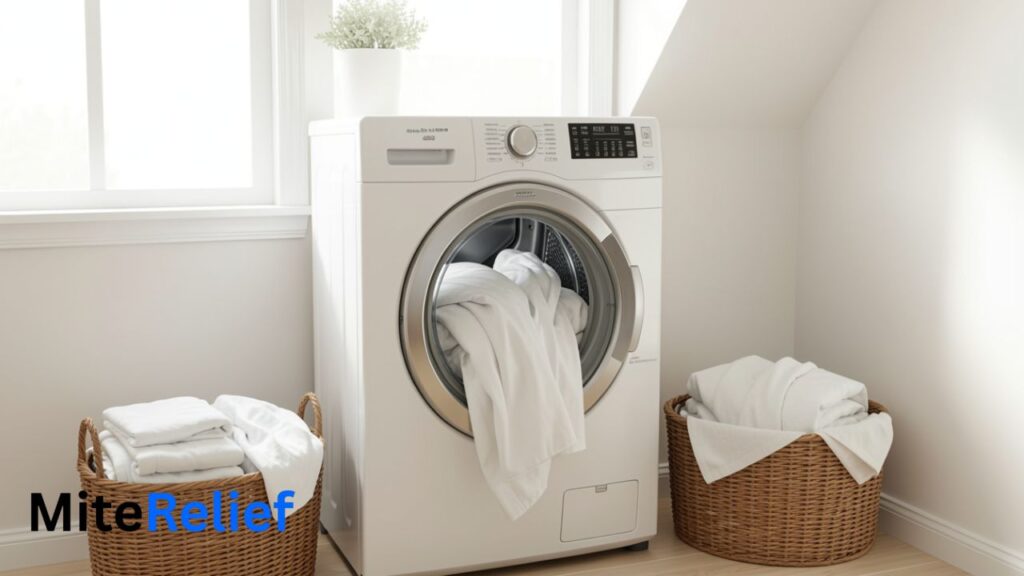
There’s no one washing schedule that fits every pillow; it really depends on what’s underneath the cover.
Pillowcases
Once a week is the common recommendation, and it’s an easy habit to keep.
Sheets and Bedding
AAAAI suggests washing bedding weekly in hot water around 130°F (54°C) and drying it on a hot cycle. That said, a dust mite practice parameter points out that weekly washing removes allergens effectively without needing water hot enough to be a safety concern, which is useful if you’re weighing ways to reduce mites through heat alongside laundry options for allergen control.
A more practical version: wash weekly using the hottest setting your care label allows, and skip cranking up the household water heater to hit that number.
Pillow Encasements
Stick to whatever the manufacturer recommends here. Washing an encasement every month “just in case” can wear down some barrier fabrics faster than necessary.
Pillow Core
Same logic applies to the pillow itself: follow the label. Latex and memory foam, in particular, shouldn’t go in a machine or hot dryer unless the manufacturer explicitly says it’s fine.
Replacing the Pillow
There’s no fixed one- or two-year rule for allergy-related replacement. Watch for flattening, lost neck support, permanent stains or odors, damage, difficulty cleaning, or signs of moisture or mildew.
Pillow Setup for Better Dust Mite Protection
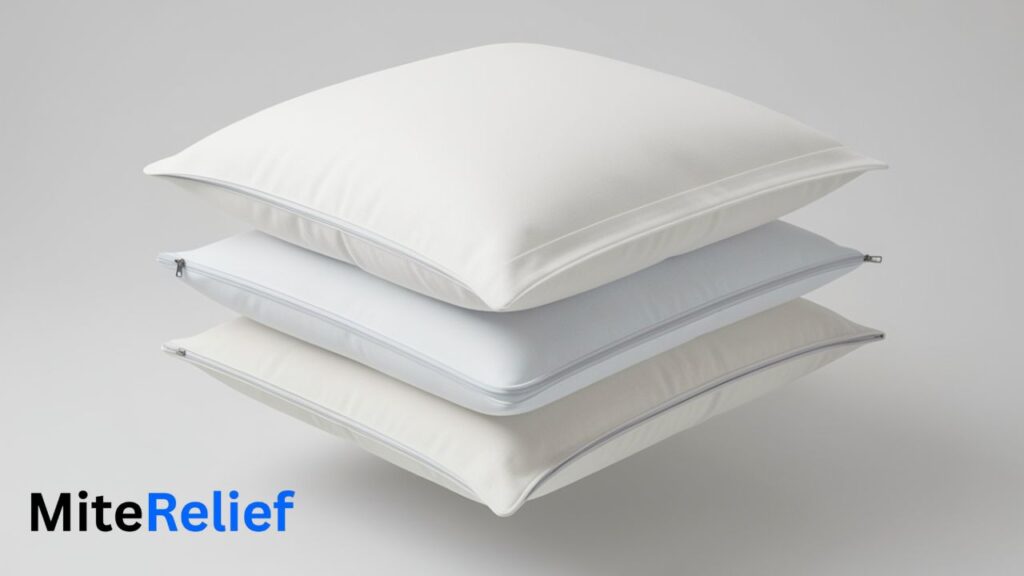
A simple three-layer setup covers most of the bases:
- A comfortable, supportive pillow
- A full zippered allergen-proof encasement
- A regular washable pillowcase
The pillowcase handles frequent washing, while the encasement underneath acts as the main allergen barrier, so you’re not constantly stripping the whole bed down.
None of this works in a vacuum, though. Pair it with a mattress encasement, weekly bedding washes, reducing allergens throughout the bedroom, and keeping bedroom humidity under control. A few simple prevention habits for the bedroom, including cleaning the mattress before adding covers, round things out.
ACAAI recommends keeping relative humidity under 50 percent; AAAAI generally suggests a 30 to 50 percent range. This setup is a solid, manageable way to handle the pillow specifically, but it works best as one part of a broader plan rather than a fix on its own.
Frequently Asked Questions
Are Memory Foam Pillows Good for Dust Mite Allergy?
They can work well if you like contoured support, but the foam core itself is tough to wash. Pair it with a washable outer cover and a full allergen-proof encasement, and stick to the manufacturer’s care instructions.
How Do I Know When to Replace My Pillow for Allergy Reasons?
There’s no single deadline that applies across the board. Look for lost support, damage, persistent stains or odors, a pillow that’s hard to clean, or signs of moisture or mildew; any of those are good reasons to move on.
Can I Put My Pillow in the Dryer to Kill Dust Mites?
Only if the care label says it’s okay. Washable synthetic and feather pillows often tolerate hot drying fine, but that same heat can damage latex and memory foam.
Is Down or Synthetic Better for Dust Mite Allergy?
Neither one is a clear winner across the board. Washable pillows are generally easier to maintain, yet one small study found higher dust mite allergen levels in synthetic pillows than feather pillows, and encasement use and bedroom conditions end up mattering just as much as the fill itself.
Do Pillow Protectors Make Pillows Hot?
It depends on the fabric. Tightly woven, breathable materials tend to sleep cooler and quieter than plastic or heavily waterproofed covers, but comfort ultimately comes down to the specific fabric, any coating, and your room’s temperature.
Are allergy pillow covers the same as pillow encasements?
Not always. Some allergy pillow covers only protect the surface, while a full zippered encasement surrounds the entire pillow.
What to Read Next
- Best Bedding for Dust Mites: Covers, Sheets & Pillows
- Best Dust Mite Mattress Encasements That Actually Work
- How to Prevent Dust Mites: 9 Habits That Work
Conclusion
The best pillow for dust mite allergy isn’t defined by one “correct” fill material; it’s one that offers real support, has care instructions you’ll actually follow, and fits properly inside a complete allergen-proof encasement. Washability, condition, humidity, mattress protection, and regular bedding care all carry just as much weight as what the pillow is filled with.
If congestion, coughing, breathing trouble, or skin symptoms keep showing up at night, it’s worth talking to an allergist for proper testing and treatment.
Medical Disclaimer
This content is for informational purposes only and is not a substitute for professional medical advice, diagnosis, or treatment. Always consult a qualified healthcare provider regarding persistent allergy symptoms, skin reactions, asthma, or breathing difficulties. Never delay or disregard seeking professional medical advice because of information you have read on this website.

Umar Farooq is the founder of MiteRelief, a resource for dust mite control and allergy prevention. After battling allergen sensitivity, he started creating research-backed guides that turn complex indoor air quality science into practical, affordable solutions anyone can implement.