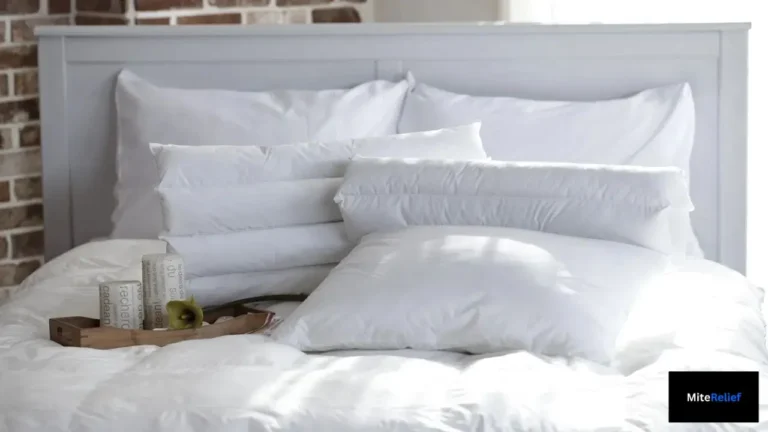
Your mattress could be home to 10 million dust mites right now, and most people have no idea. If you wake up with a blocked nose, itchy eyes, or that scratchy throat that just won’t quit, your bedding is probably the reason. The good news? Choosing the right best bedding for dust mites allergies is honestly one of the easiest changes you can make. We’re not talking about a full bedroom overhaul. Simple swaps, the right mattress covers, allergen-proof pillow covers, and sheets can cut your allergen exposure dramatically. This guide covers everything: what works, what doesn’t, and what to look for when shopping.
Already dealing with sneezing and congestion? Before we get into bedding choices, it’s worth knowing exactly what’s triggering you. Check dust mite allergy symptoms to make sure you’re dealing with mites and not something else entirely.
Why Bedding Matters Most for Dust Mite Control
Think about it: you spend roughly 8 hours a night in bed. That’s a third of your life pressed up against your mattress and pillow. Nowhere else in the home gets that level of sustained contact, which is exactly why it’s the highest allergen exposure point in your entire bedroom.
Dust mites don’t bite or fly around; they live deep inside your mattress, pillow, and duvet, feeding on shed skin cells. A single mattress can hold hundreds of thousands of them. And it’s not the mites themselves that cause symptoms; it’s their waste particles, which become airborne the moment you move in bed.
That’s why surface cleaning alone isn’t enough. You need bedding that physically blocks mites and their particles from reaching you. To understand why mites thrive where they do, it helps to know more about them.What are dust mites? Breaks this down if you want the full picture.
What Is Anti House Dust Mite Bedding and How Does It Work?
So here’s the thing people get wrong: anti-house dust mite bedding isn’t just marketing language for ‘clean sheets.’ It refers to fabric with an ultra-tight weave. specifically engineered so the pore size is too small for mites and their particles to pass through. Most effective options sit at or below 6 microns, which is smaller than mite waste particles.
The most common material used is tightly woven microfiber dense enough to act as a physical barrier without feeling like you’re sleeping in a plastic bag. Some options use treated cotton, though microfiber tends to be more consistent in terms of pore size control.
When shopping, look for third-party certification. OEKO-TEX certification means the fabric has been tested for harmful chemicals, important especially for children. Allergy UK certification specifically tests for mite barrier effectiveness. Either is a good sign. Any product making claims without showing certification? Probably skip it. Decent mite-proof bedding will always have the paperwork to back it up.
If you want to complement your bedding choices with broader prevention strategies, simple dust mite prevention habits is a solid read alongside this.
Best Mattress Covers for Dust Mites
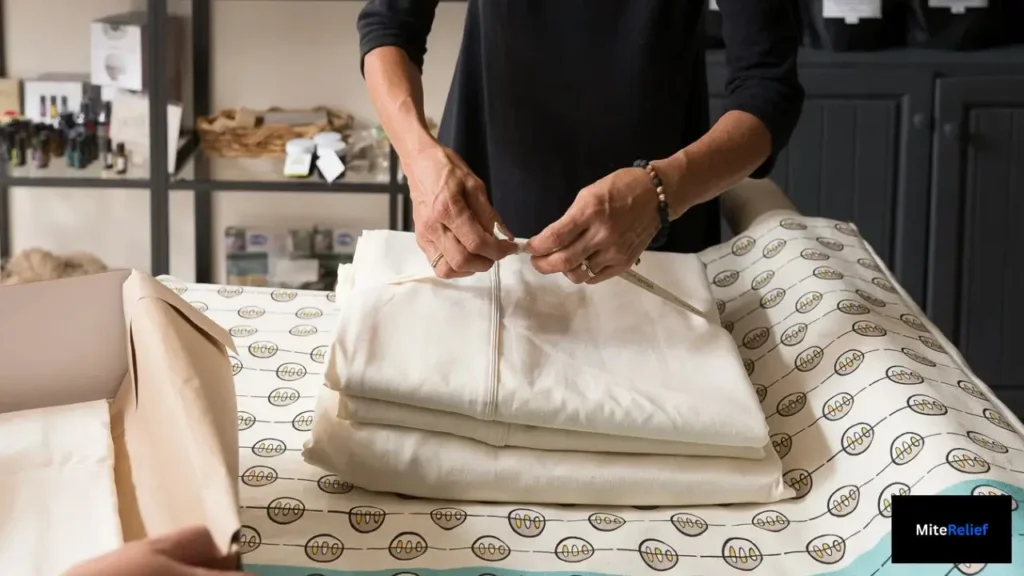
Full encasement or a fitted cover, which is actually better? Honestly, full encasement wins every time. A fitted cover only wraps the top and sides, leaving the underside of your mattress completely exposed. Since mites live throughout the entire mattress, not just the top layer, a full zip-up encasement is the only way to seal them in and stop new ones from settling.
What to look for on the label: pore size should be under 6 microns. It should be waterproof; moisture is one of the key things mites need to survive, and a waterproof layer also protects against spills. And it absolutely needs to be washable at 60°C. Anything less and you’re not actually killing the mites, just rearranging them.
One more thing: breathability matters. A cover that traps heat and humidity is counterproductive because warm, damp conditions are exactly what mites love. best bedding for dust mites Look for covers described as ‘breathable membrane’ rather than basic plastic-coated options. The price difference is usually worth it. For a broader look at killing existing mites (not just blocking them), what kills dust mites covers treatments that pair well with encasement covers.
Best Allergen-Proof Pillow Covers
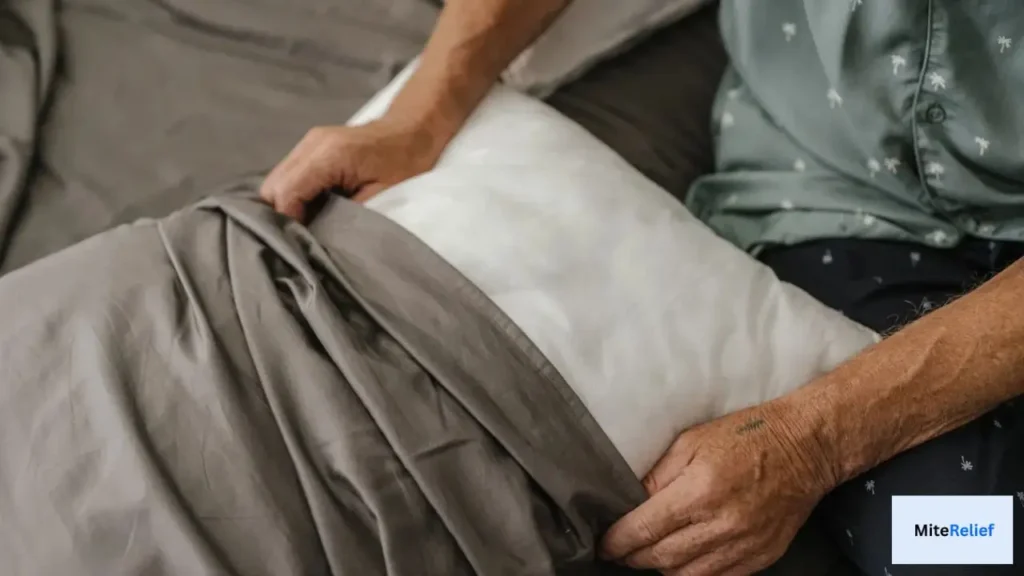
Pillows are arguably worse than mattresses for mite exposure, because your face is literally pressed against them for hours. Standard pillowcases do almost nothing; the weave is too loose, and mites pass straight through. You need a proper zippered encasement under your regular pillowcase.
The best allergen-proof pillow covers use the same principle as mattress encasements: tight microfiber or treated cotton with a pore size below 6 microns. sealed with a zip. The zip matters; make sure it fully closes with no gap at the end. Some cheaper covers have a small opening where particles can still escape. Cotton vs. microfiber for pillow covers? Cotton feels softer and is better for anyone with sensitive skin or chemical sensitivities. Microfiber tends to be more effective as a pure barrier and holds up better after repeated washing at high temperatures. For children, certified cotton covers are usually the better call. Worth repeating: a regular pillowcase alone is not a dust mite cover solution. It’s a nice decorative layer. The encasement has to go underneath it.
Best Duvet and Comforter for Dust Mite Allergy
Choose a duvet that is easy to clean and suitable for your normal laundry routine. Check the care label before buying, because washing instructions differ between synthetic, down, wool, and other fills.
A removable, washable duvet cover can make regular care easier. For a detailed comparison of duvet fills, materials, washability, and covers, read our guide to choosing sheets and duvets for dust mite allergies.
Best Sheets for Dust Mite Allergy
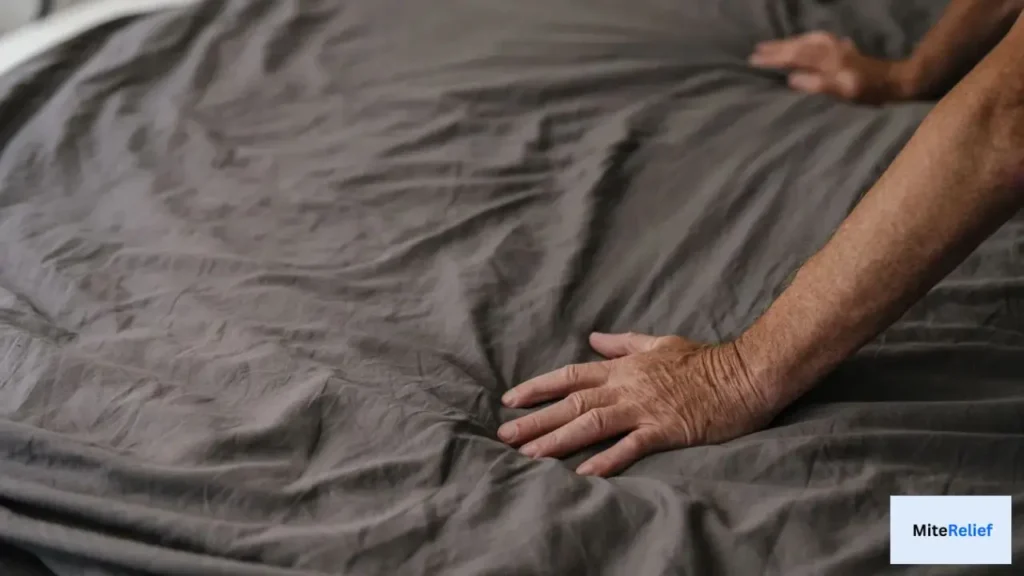
Look for sheets that feel comfortable, can be washed regularly, and match the care needs of your household. Cotton, linen, bamboo-derived fabrics, microfibre, and blends all differ in breathability, weave, durability, and washing instructions.
Thread count alone does not determine whether sheets are suitable for allergy sufferers. See our full guide to the best bed sheets for dust mite allergies for detailed material and weave comparisons.
Which Bedding Materials Are Harder to Maintain?
Bedding that holds moisture, cannot be washed easily, or has complicated care instructions may be harder to manage. However, no material should automatically be described as bad for every allergy sufferer.
Check washability, drying instructions, breathability, comfort, and whether the item can be protected with a suitable encasement.
How to Wash Anti-Dust Mite Bedding Correctly

Wash sheets and pillowcases weekly to remove dust, skin flakes, and allergens. Always follow the care label, since fabrics, duvet fills, and protective covers may require different temperatures and drying methods.
Dry bedding completely before putting it back on the bed, as damp fabric can encourage moisture buildup. Wash mattress and pillow encasements according to the manufacturer’s instructions to protect the barrier material.
For more help with washing products and additives, see our guide to laundry options for dust mite allergen control.
Frequently Asked Questions
Do dust mite mattress covers really work?
Yes, when they’re properly certified and correctly fitted. Multiple clinical studies have shown that full encasement mattress covers with a pore size below 6 microns significantly reduce allergen exposure. They work best as part of a broader approach combined with regular washing and synthetic-fill bedding rather than as a standalone fix. Learn more about what dust mites look like to understand what you’re actually keeping out.
How often should you replace dust mite covers?
Most mattress and pillow encasements last 2–3 years with regular washing, assuming you’re following the 60°C wash rule. Over time the fabric degrades slightly, and the pore size can expand, reducing barrier effectiveness. Check for any thinning or visible wear and replace when in doubt. Durability varies a lot by brand, so certified options from reputable sources tend to last longer.
Can you put a dust mite cover over an old mattress?
Absolutely, that’s actually one of the main use cases. A full encasement seals in whatever is already inside your mattress, stopping allergens from escaping into your breathing zone. It doesn’t clean the mattress or kill the mites inside, but it does create an effective barrier between you and them. You don’t need a new mattress to benefit from encasement covers; just make sure the cover you choose fully zips closed with no gaps.
Does changing bedding cure dust mite allergy?
No. Suitable bedding and encasements may reduce allergen exposure, but they do not cure an allergy. Regular washing, humidity control, cleaning, and medical treatment may also be needed.
What to Read Next
- How to Prevent Dust Mites: 9 Habits That Actually Keep Them Away.
- What Kills Dust Mites? 7 Methods That Actually Work.
- Dust Mite Allergy Symptoms: How to Know If You’re Allergic.
Conclusion
You don’t need to replace everything overnight. Start with a mattress encasement and allergen-proof pillow covers; those two changes alone address the highest allergen exposure points in your bedroom. Then work through the rest: swap out feather fill, switch to cotton or bamboo sheets, and get the washing routine locked in.
The best bedding for dust mite allergy isn’t expensive or complicated; it just needs to tick the right boxes: certified barrier fabric, hot-washing compatible, and properly fitted. Consistent care does more than any one-off purchase. Get the bedding right and keep up with the cleaning, and most people notice a real difference in their symptoms within a few weeks.
Medical Disclaimer
This content is for informational purposes only and is not a substitute for professional medical advice, diagnosis, or treatment. Always consult a qualified healthcare provider regarding persistent allergy symptoms, asthma, or breathing difficulties. We assume no liability for any health outcomes resulting from the use of this information.

Umar Farooq is the founder of MiteRelief, a resource for dust mite control and allergy prevention. After battling allergen sensitivity, he started creating research-backed guides that turn complex indoor air quality science into practical, affordable solutions anyone can implement.