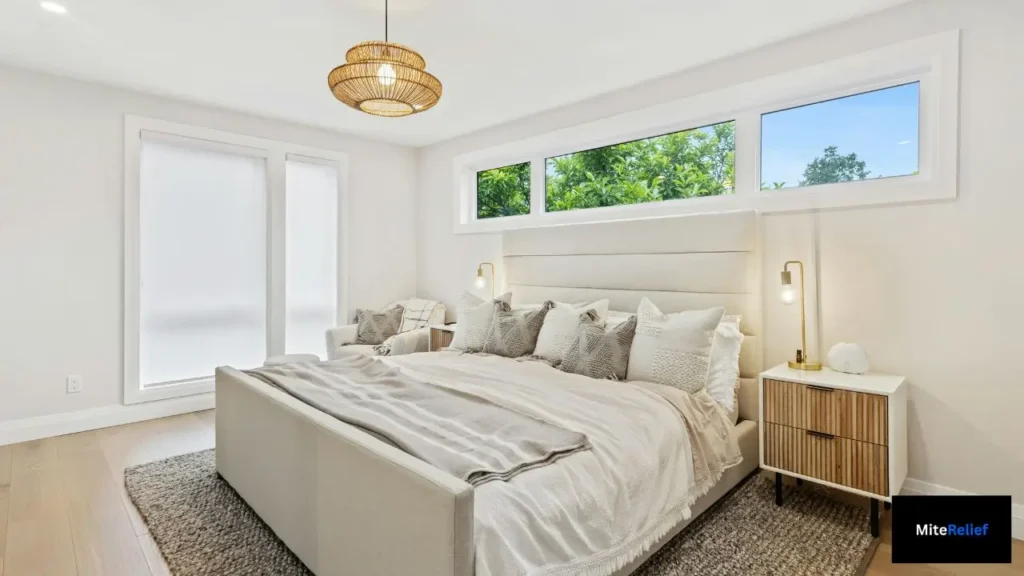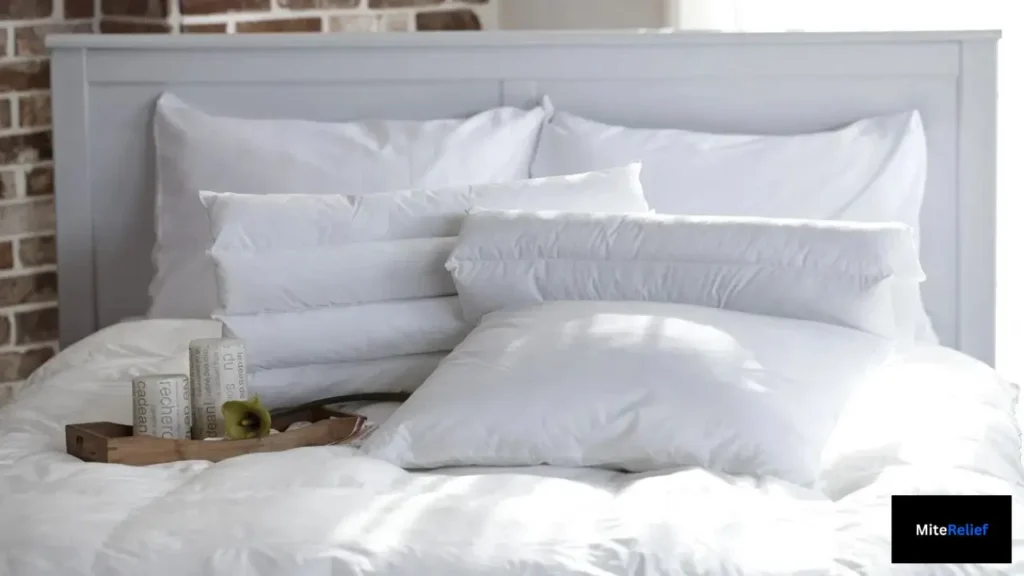
Dust mites can’t survive in dry air. best dehumidifiers for dust mite allergy might be the single most useful thing you’re not doing right now. Not a spray, not some fancy filter gadget. Just air, dried out enough that mites simply can’t function anymore.
Wake up sneezing in your own bed, again? Dust mites don’t bite; they never have. It’s their droppings and shed skin that set off allergies, and for a lot of people, that means worse asthma symptoms by morning. Pull that moisture, and the whole population starts to crash. Most people never connect the dots, not until someone spells it out for them. It’s not a cleanliness thing either; tidy homes get humid bedrooms too, plenty of them. The fix? Simpler than you’d think. No scrubbing required.
Why Humidity Is the Real Lever for Dust Mite Control
Here’s the thing nobody really tells you upfront. Killing mites one at a time? That’s a losing game. There can be thousands living in a single mattress. You’re not winning that fight with spot treatments, no matter how thorough you are.
Dust mites thrive at 70 to 80 percent humidity. Below 50 percent, though, they start to dehydrate. Survival gets hard for the whole colony, not just a few unlucky individuals. So instead of chasing mites room by room, you’re changing the entire environment they depend on. That’s a bigger lever. It works on the whole household, not one corner of one room. Think about it. Spraying and vacuuming that only ever gets the mites you can actually see or reach. The ones buried deep in a mattress seam? Never touched. Lower the humidity instead, and you’re hitting every single one at once. Seen or not.
This is also why cleaning-only advice tends to fall flat for allergy sufferers. Wash your bedding every week, please do; it helps. But you can still have a thriving colony if your bedroom sits at 65 percent humidity all summer long. Want the bigger picture, beyond just the humidity piece? There’s a solid breakdown on how to prevent dust mites that covers nine habits worth doing. Small step. Pairs well with whatever else you’re already doing on the humidity front.
Wait, Don’t Humidifiers Make Dust Mites Worse?
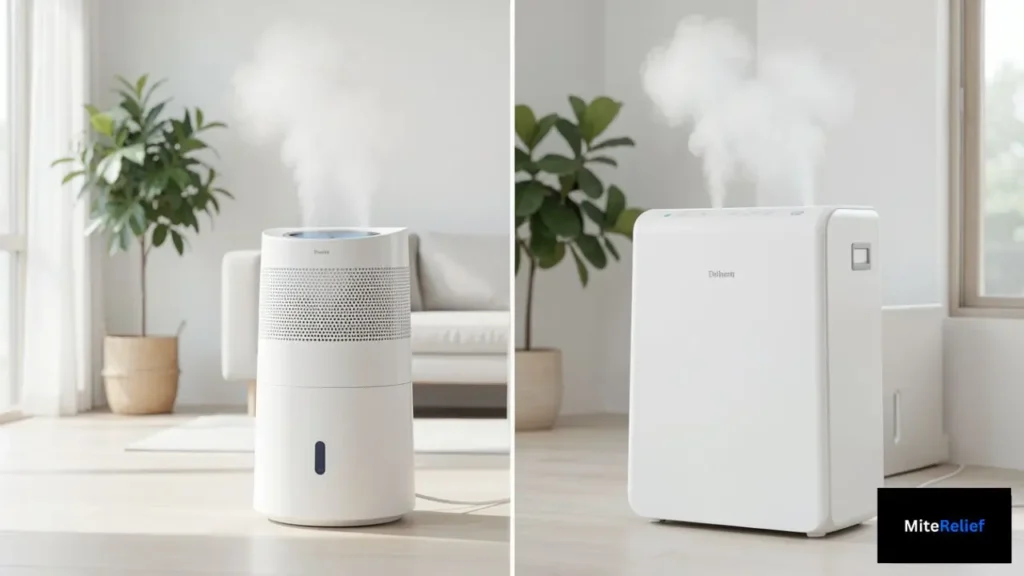
Quick clarification, because this trips people up constantly. Honestly, the names don’t help anyone. A humidifier adds moisture to the air. A dehumidifier takes it away. Opposite jobs, easy to mix up if you’re tired or shopping fast.
If you’ve got a dust mite allergy, running a humidifier is generally the wrong move. It pushes humidity right back up toward that mite-friendly 70 to 80 percent zone. There’s one narrow exception worth mentioning: arid climates, under 30 percent humidity, where dry air cracks skin and irritates sinuses. A small humidifier might help there, used sparingly. But for most households dealing with dust mites? The goal points the other way. Easy mistake, honestly. Both machines sit in the same store aisle, and boxes look nearly identical if you’re not paying attention. Read the label twice. Returning one later? Hassle nobody wants, trust me.
So when someone searches for “humidifier and dust mites,” hoping for a fix, what they usually need is the reverse machine. A humidifier for dust mites is, in almost every real case, going to feed the problem instead of solving it. Worth repeating, because the mix-up shows up everywhere, even among people who’ve already bought the wrong unit once and wondered why nothing improved.
What Humidity Level Should You Target?
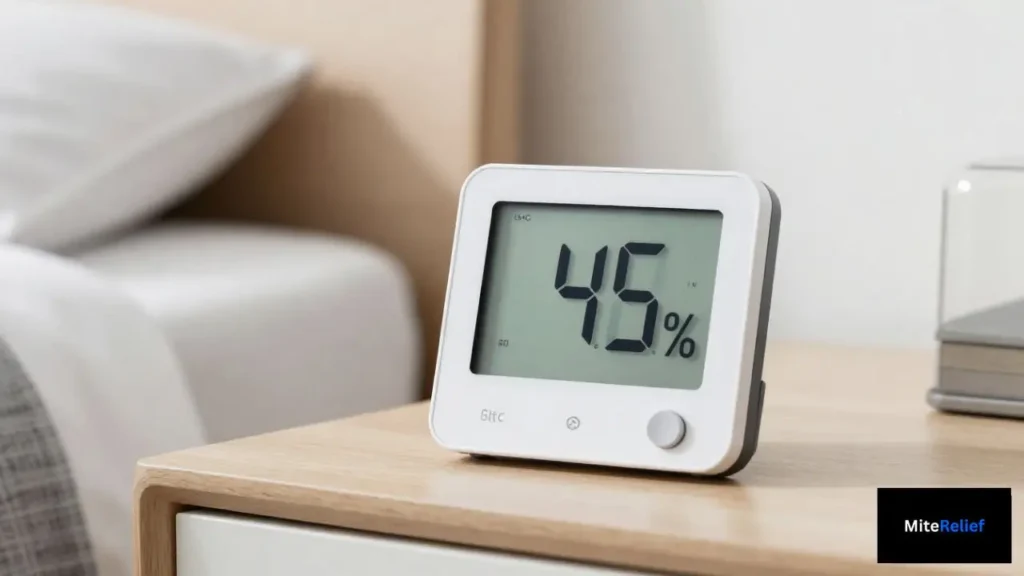
Somewhere between 30 and 50 percent relative humidity. Not bone dry; that creates its own problems. Closer to 40 percent works well for most bedrooms, since you spend roughly a third of your life there, breathing whatever’s in that air.
How do you actually know your number? A cheap hygrometer, fifteen or twenty bucks, sits right on a nightstand and tells you in real time. Buy this before the dehumidifier, honestly. It tells you whether you even need the bigger purchase or whether conditions are already fine and the sneezing’s coming from somewhere else entirely. Pillows. Pets. Who knows. Some dehumidifier models build the hygrometer right in, which is convenient, though a standalone one works just as well. Check it at different times of day, not just once and for all. Mornings run higher than afternoons usually, especially post-shower or after rain. One reading tells you almost nothing. A few days of tracking tells you everything.
Best Dehumidifiers for Bedrooms
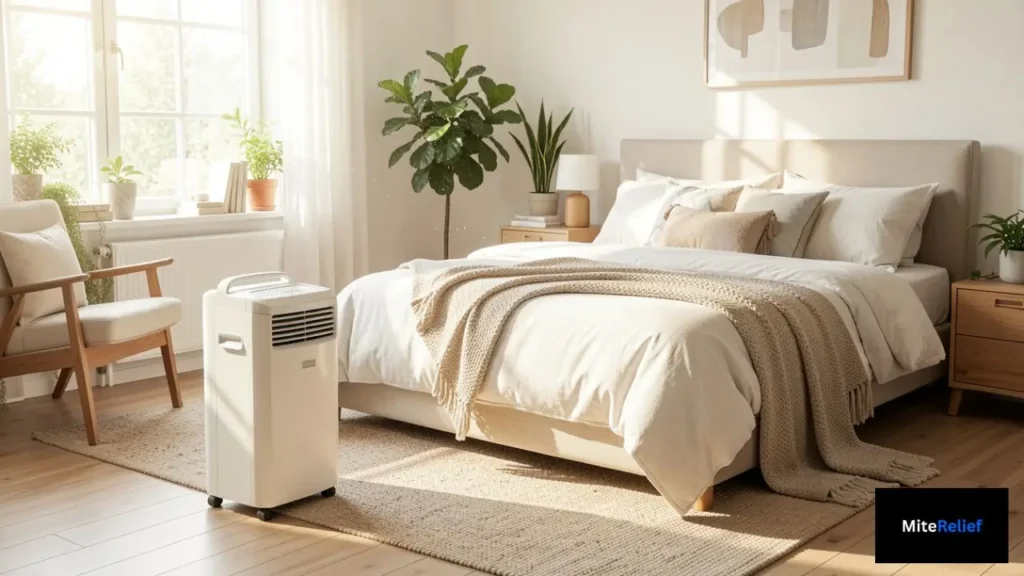
This section contains affiliate links. When shopping, three things actually matter. Capacity matched to your room size. Quiet operation, because you’re trying to sleep near this thing. And an easy-empty water tank, so you’re not wrestling it out at 11pm wondering why you bought it. If your goal is reducing dust mites in your bedroom, choosing the right dehumidifier can make a noticeable difference by keeping indoor humidity under control. None of these picks are flashy. That’s sort of the point, actually. You don’t need smart features, app controls, any of that, for a bedroom unit. Best Dehumidifiers for Dust Mite Allergy You need something quiet, easy to empty, and stubborn enough to keep running for years without complaint.
For a standard bedroom of roughly 200 to 300 square feet, a 50-pint unit usually does the job. The Frigidaire FFAD5033W1 comes up a lot, and for good reason. It’s Energy Star rated, which matters more than people think once you see what these things do to a summer power bill. A continuous drain option means less daily emptying too.
Budget-conscious?
The HomeLabs HME020031N gets recommended constantly. Decent capacity, simple controls, but it works. If quiet matters most (light sleepers, this means you), look at the Midea MAD50S1QWT. Not silent—nothing with a compressor really is—but noticeably less intrusive than older units running all night next to your head.
Smaller space, like a closet or an apartment corner?
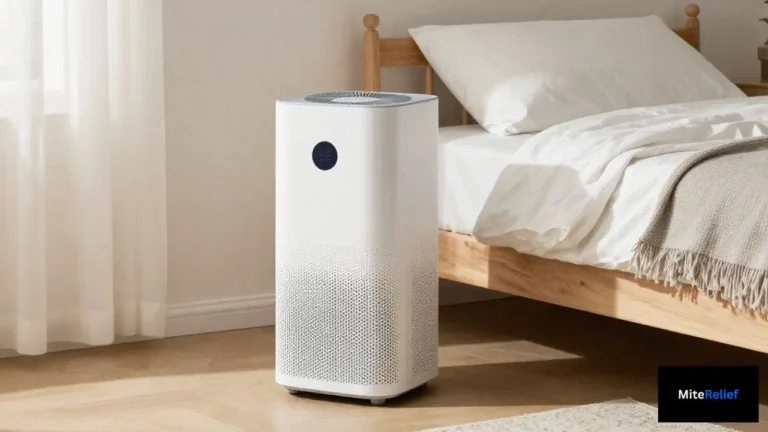
The Eva-Dry EDV-1100 is tiny and mostly silent. It’s not really built for full room-size coverage, though. more of a supplement than a full solution. One thing surprises people. A dehumidifier pulls moisture out of the air, but it won’t clean the air itself. It doesn’t grab dander, dust, or floating allergen particles. That’s a separate job entirely. Pairing it with using an air purifier alongside a dehumidifier covers that gap: moisture on one side and airborne particles on the other. Budget maybe fifteen minutes a week for upkeep, whatever model you land on. Wipe the exterior. Check the tank. Glance at the filter. Takes nothing, really, but skip it long enough and that’s exactly how units die early.
Whole-Home vs Portable Dehumidifiers
Portable units make sense if the bedroom is your main problem. And for most allergy sufferers, it is; that’s where you’re breathing for eight straight hours. But if you live somewhere humid year-round, like the Gulf Coast or parts of the Midwest in July, a whole-home HVAC-integrated unit might make more sense long-term.
They’re pricier upfront. Installation is included, sometimes a thousand dollars or more depending on your setup. A portable unit runs a couple hundred bucks. So it really comes down to this: is this a one-room problem, or is your whole house fighting humidity? For most people reading this because of allergy symptoms, one good bedroom unit solves maybe eighty percent of the issue. Save the whole-home upgrade for when you’re seeing mold growth on walls, musty basement smells, or that kind of thing. Renters are lean, portable, almost every time. Installing a whole-home system in a place you don’t even own? Rarely makes sense financially. Take the unit with you when you move instead. Start fresh wherever you land. Still figuring out how long you’ll stay somewhere? Same advice. Portable wins. You can always upgrade later, once things are clearer.
Other Ways to Lower Bedroom Humidity Without a Machine
Not everyone wants another appliance, and honestly? You don’t always need one right away. Open windows on dry days. It sounds too simple, but swapping stale humid indoor air for dry outdoor air, even briefly, makes a real difference.
Run the exhaust fan after showers. Every single time. That bathroom humidity drifts down the hall and settles wherever it’s coolest, often the bedroom, at night while you’re asleep and not thinking about it. Don’t dry laundry indoors. It’s one of the sneakiest humidity sources nobody considers. A load of wet towels hanging in a spare room can push humidity up several points in a closed house. Already running central AC? Good news: It’s pulling moisture out as a side effect, so you might be partway there already.
Want a fuller routine instead of relying on one appliance? There’s a deeper guide on natural ways to control dust mites that goes well beyond just the humidity piece. Washing temperatures, mattress covers, and more. Houseplants, weirdly enough, are another source worth mentioning. They release more moisture than people realize every time you water them. Keep a few out of the bedroom specifically; fine everywhere else, and you might shave a few points off that reading. Even cracking a door helps, evening out humidity pockets between rooms. Stagnant air holds moisture; moving air doesn’t, not nearly as much.
Frequently Asked Questions
How does humidity control help reduce dust mites?
Mites need moisture to survive and reproduce. Drop the air below 50 percent and their numbers start declining on their own. No spraying, no manual removal needed, just a hostile environment they can’t handle.
Can dust mites survive in a dry climate?
Not well, honestly. In naturally arid regions, populations tend to stay low without any intervention at all. It’s humid, temperate climates where they really take off and become a year-round headache
Is a humidifier bad if I have a dust mite allergy?
Generally, yes. Avoid one unless your climate is very dry, under 30 percent humidity, in which case a small humidifier used sparingly might be fine. For most people, though, it works against you.
How long does a dehumidifier take to reduce dust mites? Populations don’t crash overnight, unfortunately. Most people notice fewer symptoms within two to four weeks of consistent use. Full population reduction can take a couple months as the colony dies off and isn’t replaced.
How long does a dehumidifier take to reduce dust mites?
Don’t expect a difference overnight. A dehumidifier starts lowering indoor humidity within hours, but reducing dust mite populations takes longer. Most people notice fewer allergy symptoms after two to four weeks of keeping bedroom humidity below 50%, while a larger drop in dust mite numbers may take one to three months, especially if you combine it with regular washing and HEPA vacuuming.
What to Read Next
- Do Air Purifiers Help With Dust Mites? Best Picks & How to Use Them
- How to Prevent Dust Mites: 9 Habits That Actually Keep Them Away
- Dust Mites in Your Bedroom: How to Make It a Mite-Free Zone
Conclusion
So, that’s really it. Dust mites don’t fight back; they just need the right conditions, and dry air takes that away from them. A dehumidifier in the bedroom, a cheap hygrometer to keep you honest, and a few small habits like airing out the room and washing bedding hot. None of it’s complicated, and none of it costs much either, honestly.
Give it two or three weeks before you judge whether it’s working. Mites don’t vanish overnight, and your nose probably won’t agree with you on day one. But if you’ve been blaming pollen, or your pillow, or just bad luck every spring, check the humidity first. It’s usually the boring answer. It’s usually also the right one.
Medical Disclaimer
This content is for informational purposes only and is not a substitute for professional medical advice, diagnosis, or treatment. Always consult a qualified healthcare provider regarding persistent allergy symptoms, asthma, or breathing difficulties. We assume no liability for any health outcomes resulting from the use of this information.

Umar Farooq is the founder of MiteRelief, a resource for dust mite control and allergy prevention. After battling allergen sensitivity, he started creating research-backed guides that turn complex indoor air quality science into practical, affordable solutions anyone can implement.