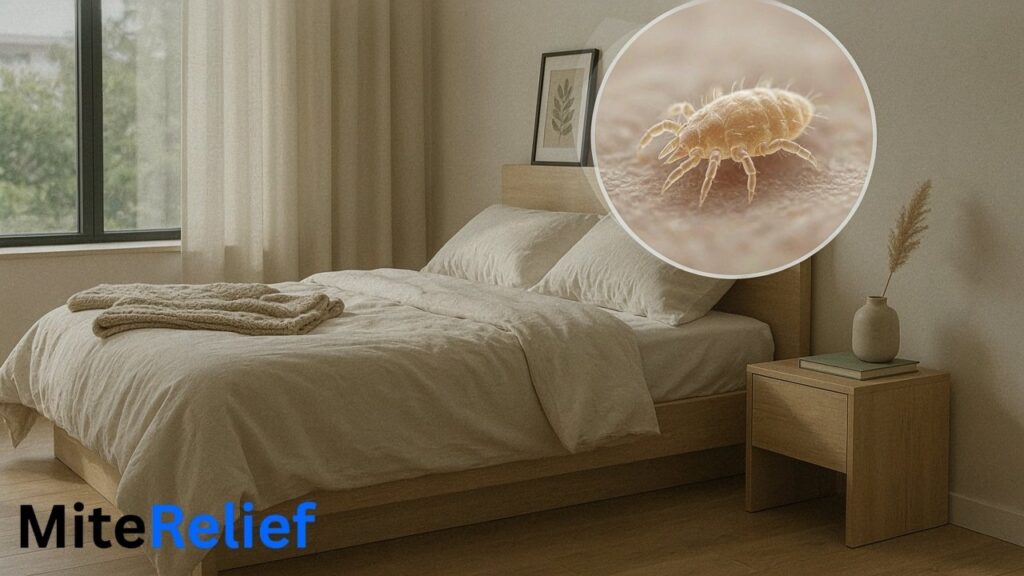
You wake up again, and before you’ve even opened your eyes properly, the sneezing starts three or four times in a row. Your nose is blocked and your eyes are a little puffy. You think, “Okay, maybe I’m getting sick.” But then you step outside, breathe some fresh air, and within twenty minutes, you feel fine. Completely fine. Like nothing happened.
That’s the part that throws people off. If it were a cold, going outside would not suddenly fix things. If it were the flu, you would feel terrible everywhere, not just at home. But this keeps repeating morning after morning: same room, same symptoms, and same weird recovery the second you leave the house.
Most people do not connect it right away. Why would they? You’re not lying in bed at 7am, thinking about microscopic creatures in your mattress. You’re just annoyed and tired of reaching for tissue number six before you’ve even had tea.what dust mites are
But that pattern, worse at home, better outside, and absolutely worst right after waking up, is one of the clearest signs of dust mite allergies that people miss for months, sometimes years. And it’s worth actually understanding what’s going on.
What are the most common dust mite allergy symptoms?
Before getting into symptoms, it helps to understand what dust mites even are because, despite the dramatic name, they’re not little bugs crawling across your pillow where you can see them. Actually, you can’t see them at all.
They’re microscopic.
Tiny enough that millions can exist in soft household spaces without anyone noticing.
Mattresses, pillows, blankets, sofas, carpets, rugs, heavy curtains, stuffed toys, basically anywhere soft, warm, and comfortable. Which, unfortunately, describes most bedrooms.
- And no, dust mites do not bite.
- People assume that constantly.
- Fair assumption, honestly.
But the reaction isn’t from bites. The allergy comes from proteins found in dust mite droppings and shed body particles. Sounds unpleasant because, well, it kind of is.
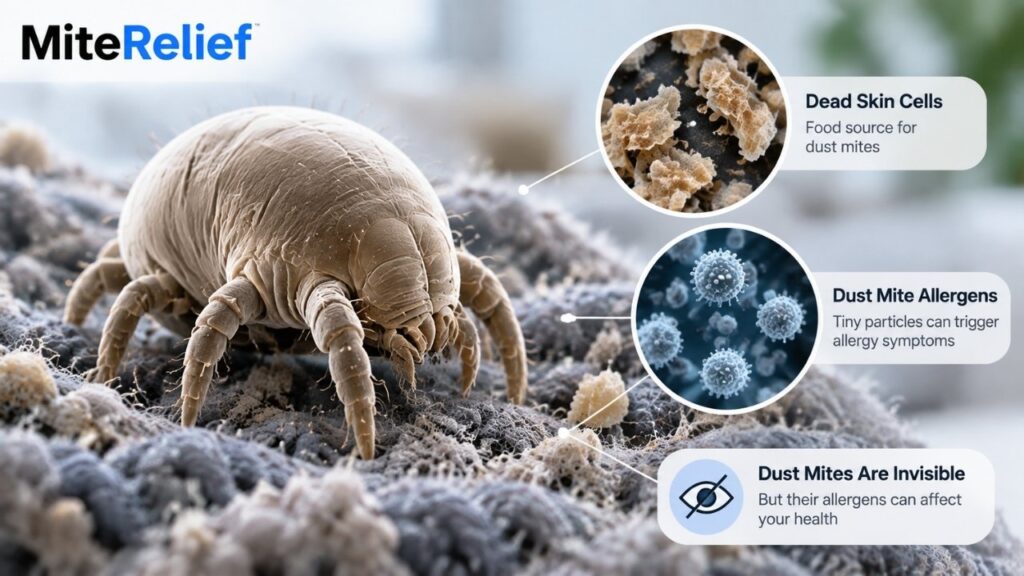
When those particles become airborne and you breathe them in, your immune system overreacts. It sees harmless proteins and decides, for reasons nobody asked for, that they’re dangerous.
- Cue inflammation.
- Sneezing.
- Congestion.
- Itching.
- Watery eyes.
- All the fun stuff.
And because dust mites love warm, slightly humid environments, symptoms can stick around year-round instead of showing up only during certain seasons. That’s what makes this tricky. You stop questioning it. You just assume mornings suck.

The Symptoms Nobody Really Explains Honestly
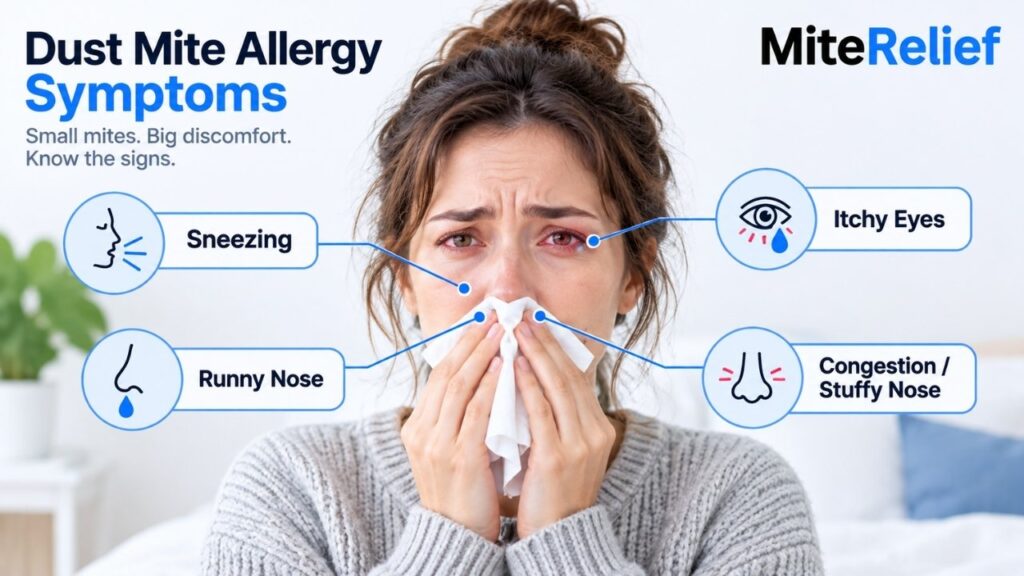
Here’s the frustrating thing about dust mite allergy symptoms: they rarely arrive dramatically. There’s no grand moment where you suddenly realize, Ah yes, definitely allergies.
No.
It’s slower than that. Sneezing becomes more common. Your nose stays blocked a little longer. Sleep starts feeling less refreshing. You clear your throat more. Then one day you realize this has quietly become part of daily life. And weirdly enough, you adjusted to it without noticing.
Sneezing—and not the normal kind
For a lot of people, this is where things begin. Not one random sneeze. More like a chain reaction. You wake up already sneezing before your brain has properly clocked in for the day.
Sometimes it feels ridiculous. You’re standing in the kitchen holding tea, wondering why your nose has chosen violence before sunrise. And mornings are usually the worst. Makes sense, though.
You’ve just spent seven or eight hours sleeping inches away from bedding full of allergens. That exposure adds up overnight.
Your bed is one of the most common places for allergens to build up. Learn where dust mites hide in your bedroom and why mornings can feel worse.
Nasal congestion that never fully leaves
This one fools people. Because it doesn’t feel like a proper cold. It’s lighter than that. A little swelling. Slight blockage. Constant annoyance. You can breathe technically.
Just not comfortably.
Some people end up breathing through their mouth during sleep without realizing. Others constantly sound congested even though they’re not “sick.” And if someone asks how you’re feeling?
- You say fine.
- Because you kind of are.
- Except, also, not.
Itchy, watery eyes
Sometimes it’s obvious. Sometimes not.
Maybe your eyes sting slightly in the morning. Maybe they look tired even after decent sleep. Maybe they water randomly while sitting indoors.
People blame screens. Lack of sleep, stress, weather, everything except allergies. And rubbing your eyes? Brief relief. Then somehow worse afterward. Which feels unfair, honestly.
Postnasal drip. that throat thing nobody explains
This symptom confuses people constantly. You know when it feels like something tiny is stuck in your throat?
You keep clearing it. That quiet little ahem every few minutes.
Not enough to call it a cough exactly. Just irritating.
That can be postnasal drip: mucus moving down the back of the throat instead of out through the nose. And weirdly, loads of people live with it for years without realizing allergies might be behind it.
- They think dry air.
- Or dehydration.
- Or maybe reflux.
Meanwhile, dust mites are sitting quietly in the background, causing problems.
Nighttime coughing
A dry cough that seems random. Usually worse at night. Or first thing in the morning.
That detail matters.
Because if you’re breathing in allergens for hours while sleeping, irritation builds slowly. By morning? Everything feels worse. People Google things like why do I cough at night but feel okay during the day?
Sometimes the answer is surprisingly boring. Your pillow.
Sinus pressure and facial heaviness
This one’s difficult to describe. Not exactly pain. Not quite a headache either.
Just pressure.
Like your forehead feels oddly heavy. Or the space around your eyes feels swollen from the inside somehow. Easy to ignore at first. Until you realize it’s there almost every day. That’s when it starts getting annoying.
How do dust mite symptoms feel different from hay fever?
People mix these up all the time, which honestly makes sense because the symptoms can look almost identical at first. Sneezing? Check. Runny nose? Definitely. Itchy or watery eyes? Also yes. That’s exactly why so many people assume they’re dealing with regular seasonal allergies when it might actually be something happening inside the home.
The biggest difference usually comes down to timing.
Hay fever tends to follow seasons. Spring rolls around, pollen levels rise, and suddenly everything feels miserable for a few weeks or months. Then eventually, symptoms settle down again. There’s usually a pattern attached to weather and time of year.
Dust mites, though, don’t really care what season it is. They care more about where you spend time, especially where you sleep.
If symptoms show up every single morning no matter the month, feel worse indoors than outside, or seem strongest after spending time in bed, that’s worth paying attention to. Actually, it’s more than worth paying attention to; it’s often one of the clearest clues.
People also start noticing little patterns once they stop brushing things off. Feeling worse after staying in bed longer. Sneezing while changing sheets. Cleaning dusty corners and suddenly feeling terrible. Walking outside and somehow breathing easier within minutes. Even humidity can make things feel heavier or more uncomfortable indoors.
On their own, these things may not seem like a big deal. Put it together, though? They start telling a pretty clear story.
skin symptoms: rashes, eczema and hives
This part surprises people more than anything.
Most assume allergies stay in the nose, eyes, or throat. Sneezing, congestion, watery eyes — that sort of thing. But sometimes, the skin gets involved too. Not for everyone, obviously, but often enough that it’s worth mentioning.
Eczema flare-ups
This tends to happen more often in children, though adults aren’t completely off the hook either.
Dry, itchy patches of skin appear, settle down, then come back again for no obvious reason. Parents often go through the usual checklist first: new detergent, different soap, food triggers, weather changes, and skincare products. Fair enough, those things can matter.
Hives are less common but possible in more sensitive individuals, raising itchy welts that do not have an obvious cause. dust mites don’t bite.
But occasionally, the sleeping environment quietly plays a role in the background. Mattresses, bedding, soft fabrics, and airborne allergens sitting around longer than expected over time it all adds up.
For some people, these allergens can also make eczema worse. Learn more about eczema triggered by dust mite exposure.
Unexplained rashes
Sometimes it’s smaller things.
Random red patches. Mild irritation. Skin that feels itchy without an obvious reason behind it. No new lotion, no bug bites, nothing that clearly explains why your arms or torso suddenly feel irritated.
And because people ask this constantly, it’s worth saying again: dust mites do not bite humans.
The reaction comes from allergens left behind, not from anything actually biting the skin.
If your skin stays red or itchy, read more about dust mite related skin reactions and ways to manage them.
Hives
Less common, but still possible.
Raised, itchy welts can appear in people whose immune systems react more strongly to allergens. What makes this confusing is that symptoms don’t look the same for everyone. One person sneezes constantly. Another deals with skin irritation. Someone else gets congestion and coughing.
Bodies are strange sometimes. Allergies are even stranger.
Dust mites and asthma: the connection

If asthma is already part of the picture, dust mite allergies can become a lot more frustrating.
The overlap between asthma and dust mite exposure is actually pretty common. Spending seven or eight hours breathing in allergens overnight , especially from bedding or pillows — can irritate already sensitive airways.
For some people, this shows up as a cough that keeps interrupting sleep. Others notice mild wheezing or a strange tightness in the chest. Not exactly painful, but enough to feel wrong. Like breathing suddenly takes more effort than it should.
And then there’s the sleep issue.
You wake up feeling more tired than when you went to bed, which sounds backwards because sleep is supposed to help, not leave you feeling worse. But if allergies are quietly irritating the airways overnight, mornings often become the hardest part of the day.
That pattern matters, especially if it keeps happening.
Dust mite allergy symptoms in children
Kids usually don’t explain symptoms the way adults do.
They’re not going to walk into the kitchen and announce they think they have sinus pressure or postnasal drip. Honestly, that would be impressive.
Instead, symptoms show up through behavior.
A child who constantly sniffles. One who rubs their nose upward all the time, something doctors sometimes call the “allergic salute.” Dark circles under the eyes that never fully disappear. Restless sleep, tossing around at night, waking up tired despite spending enough time in bed.
Sometimes there’s trouble focusing at school too. Low energy. Irritability for reasons that don’t seem obvious. And sure, kids go through phases. Sometimes bad sleep is just bad sleep.
But when symptoms hang around for weeks or months and never really clear up, allergies become worth considering.
When should you see a doctor?
Not every sneeze deserves a doctor’s appointment. Obviously.
But there’s usually a point where “I’ll just wait it out” stops being helpful.
If symptoms start feeling less occasional and more like part of everyday life, it may be time to check in with a doctor , especially if sleep keeps getting interrupted or over-the-counter medicines barely make a difference.
It’s usually worth getting checked if:
- Symptoms happen most days
- Sleep keeps getting interrupted
- Over-the-counter allergy medicine barely helps
- Congestion never fully goes away
- Breathing feels difficult
- Chest tightness starts happening
- A child’s sleep, focus, or daily routine is affected
If home changes are not enough, learn about common treatment options for dust mite allergies.
Testing itself is generally straightforward. Doctors may suggest a skin prick test or a blood test to figure out what’s triggering symptoms. Nothing dramatic.
If you are not sure what is causing your symptoms, learn about dust mite allergy testing options and how these tests work.
But at least you stop guessing, which honestly gets exhausting after a while.
How to reduce symptoms at home: quick wins
Bad news first: completely removing dust mites from a home probably isn’t realistic.
Good news? You absolutely can reduce them enough to feel noticeably better.
And no, it doesn’t have to turn into some huge deep-cleaning obsession either. Usually, small consistent habits matter more.
A few simple home changes can lower your exposure. See more ways to prevent dust mites at home.

Wash bedding weekly with hot water
Not every now and then. Consistently. Sheets, pillowcases, and blankets: regular washing makes a difference, especially if mornings tend to be the worst part of the day.
Regular washing is only one step. You can also try these natural ways to reduce dust mites around your home.
Use anti-dust mite covers on pillows and mattresses
Simple change. Surprisingly helpful. Especially for people who wake up sneezing or congested every morning.
The right sheets, covers, and pillow materials may also help lower exposure. Explore these allergy-friendly bedding choices.
Clean with HEPA filter vacuum if possible
Regular vacuums sometimes stir allergens back into the air instead of fully trapping them. Helpful, yes. Perfect? Not always. A good filter tends to work better.
Keep humidity lower in rooms
Dust mites love warm, humid environments. Less moisture indoors often means fewer allergens hanging around.
Reduce clutter in soft furniture areas
Extra rugs, piles of cushions, and thick fabrics—allergens settle there more easily than people realize. No need to turn the house into an empty room. Just reduce buildup where possible.
Let fresh air in daily, even for a short while
Open windows. Air things out. Simple habits sound boring, but weirdly enough, they help more than people expect.
Frequently asked questions (FAQs)
Can dust mite allergies make you tired?
Yes, surprisingly often.
Poor sleep, blocked breathing, and constant low-level irritation add up over time. You may not feel properly sick exactly—just drained, foggy, and somehow never fully rested.
How do I know it’s dust mites?
Usually, it follows a pattern.
Symptoms tend to feel worse indoors, especially in bedrooms or carpeted rooms, and better outside. Mornings are often the hardest. A proper allergy test confirms it.
Can it go away on its own?
Sometimes symptoms improve a little, but usually not completely without changes to the environment. The good part? Most people notice real improvement once they start managing exposure properly.
Are symptoms worse at night?
Usually, yes.
You’re spending hours surrounded by bedding and soft materials where allergens build up. By morning, irritation has had plenty of time to settle in.
What to read next
- What Are Dust Mites?
- What Do Dust Mites Look Like? Size, Color & Photos
- Do Dust Mites Bite? Rash, Symptoms & Real Causes
Conclusion
They’re slower and more draining. You don’t always see the dots at first; you just feel tired, a bit congested, maybe not sleeping well, and it becomes your normal without you even realizing it. The good news is small changes can make a difference.
Regular washing of bedding, dust control in the bedroom, humidity control, and mattress covers—none of it is hard, but it does have to be done regularly.
Things usually ease up over time, people notice. If it’s still not getting better even after you’ve tried the basics, it’s worth talking to a doctor or allergist. Testing is easy, and there are treatments that can help a lot if home changes aren’t sufficient.
People with ongoing symptoms may also want to learn about advanced dust mite allergy treatments and discuss them with an allergist.
Medical Disclaimer
This content is for general informational purposes only and is not a substitute for professional medical advice, diagnosis, or treatment. Individual health needs can vary, so speak with a qualified healthcare professional about allergies, asthma, skin reactions, medications, or other symptoms. Seek prompt medical care if symptoms are severe, persistent, or getting worse.

Umar Farooq is the founder of MiteRelief, a resource for dust mite control and allergy prevention. After battling allergen sensitivity, he started creating research-backed guides that turn complex indoor air quality science into practical, affordable solutions anyone can implement.