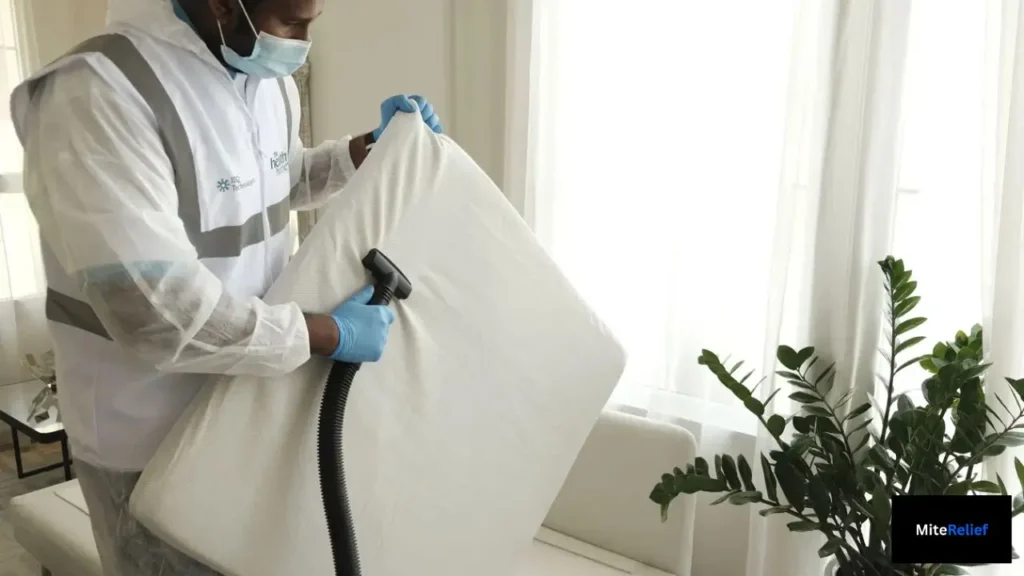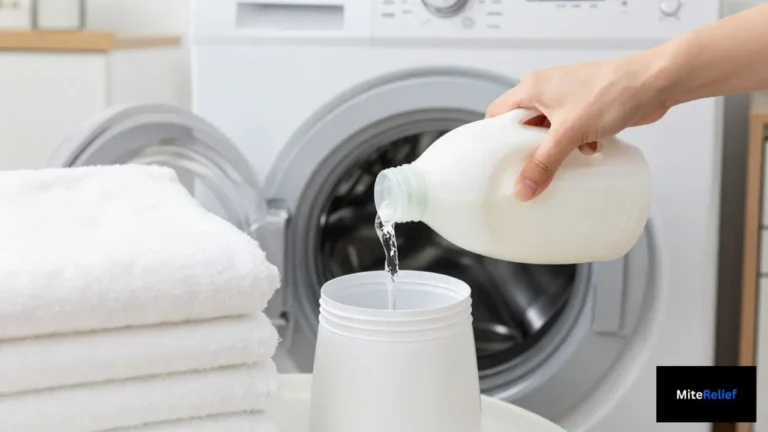
Hot water kills most dust mites. Everyone knows that bit, or at least everyone’s heard it somewhere. But here’s what nobody really tells you straight: the mites can be completely dead, gone, and finished, and you’re still waking up sneezing into your pillow at 3am. Still rubbing your eyes before you’ve even had coffee. Why is that?
Because the reaction was never really to the mites. It’s about what they leave behind after they die, honestly, best laundry detergents & additives which is a gross thought but a true one. That’s the actual job of a dust mite laundry additive, and it’s the piece a lot of people skip entirely.
So if you’ve been washing your sheets religiously, every week, doing it “right” by every rule you’ve read online, and you’re still stuck with the same puffy eyes and scratchy throat, stay with me for a bit. We’ll get into what really strips allergens out of fabric, not just the mites, and how to actually use these products without throwing money at something that barely does anything.
Does regular detergent already get rid of dust mites?
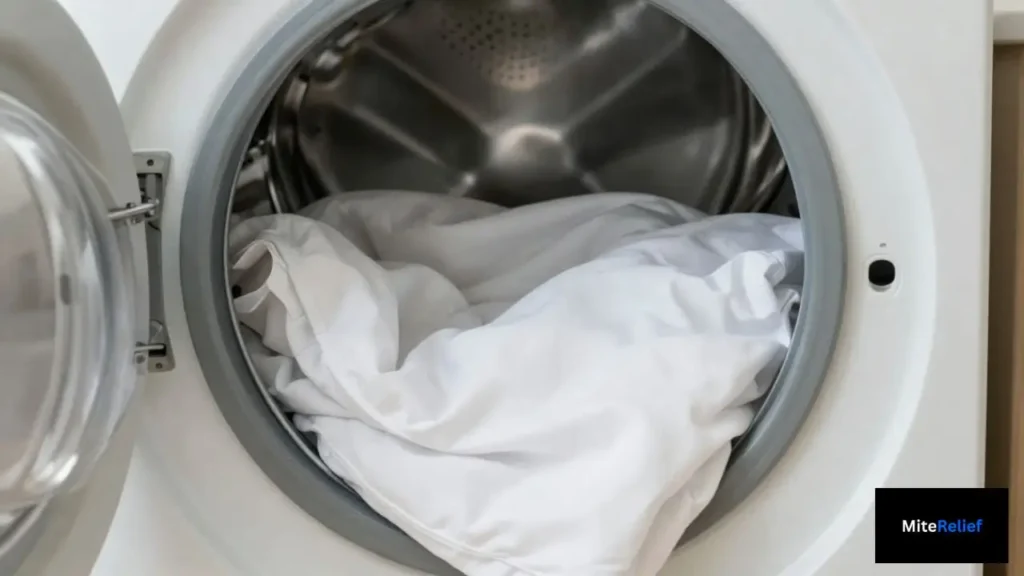
Not really. Not by itself.
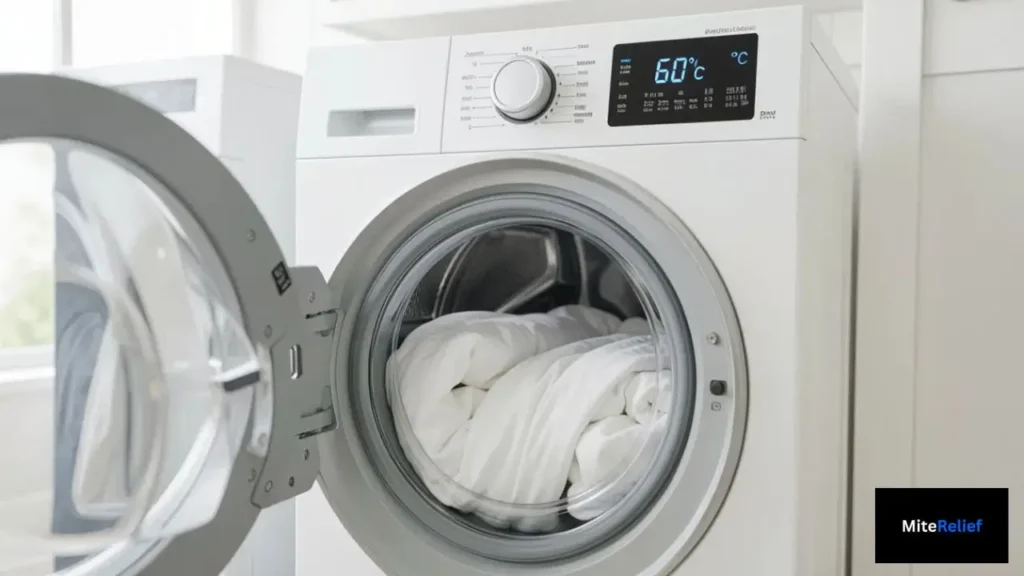
Water has to hit 60°C or hotter to actually kill dust mites. That’s the number researchers keep landing on, again and again, and it’s not really up for debate at this point. Drop below that threshold, a cold cycle, or even a lukewarm one, and most mites just shrug it off. Survive fine. Your regular detergent might lift some surface dust off the fabric, sure, but the allergen proteins themselves, the stuff from mite droppings and shed skin, cling on stubbornly. Almost annoyingly so, if you’ve ever actually pulled sheets out of the wash and still felt that itch an hour later. It also pairs well with other habits already covered in our guide on what kills dust mites, particularly keeping bedroom temperature and humidity in check.
And here’s where it gets frustrating. A lot of bedding just can’t handle 60°C. Wool blankets, silk pillowcases, some duvet covers: none of it was built to survive that kind of heat without shrinking or coming apart at the seams. So what do you do then? What’s the move when half your linens can’t go anywhere near a hot cycle?
That’s basically the gap these specialized additives were built to close. Instead of leaning on temperature alone, they work through a different mechanism entirely. something that still functions fine in a cool or lukewarm wash. More on that in a second; it matters more than most articles give it credit for.
What is a dust mite laundry additive, and how does it work?
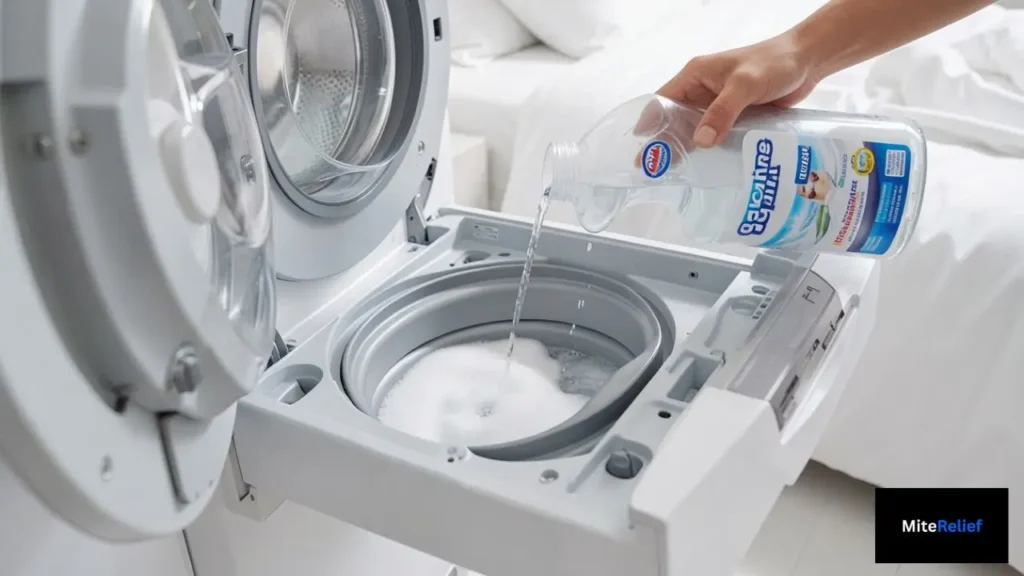
A dust mite laundry additive isn’t a replacement for your detergent, to be clear. Think of it more like a booster, something added alongside your normal wash, not instead of it. Most of the effective ones are enzyme-based. Sounds a little technical, I get it, but the idea underneath is pretty simple once you break it down.
Enzymes break down protein structures; that’s really their whole function. And dust mite allergens, the actual things triggering your sneezing, itchy skin, and sometimes asthma flare-ups too, are proteins found in mite waste and body fragments. So instead of trying to kill mites through brute heat, these additives go straight after the allergen molecules, breaking them apart so they rinse away with the water rather than sitting embedded in the fibers.
This matters a lot if you’ve got sensitive skin or you’re washing something for a baby, because you can use these in a cold or warm cycle without blasting fabric at high heat. Products like DustmiteX Formula and other dust mite laundry detergent options in that same category work exactly this way. Targeting the allergen, not the bug itself.
One thing I wish more articles actually said out loud: these additives don’t “repel” mites, whatever the marketing on the bottle might suggest. They break down what’s already sitting there in the fabric. That’s really it, nothing fancier. Ongoing, repeated use matters far more than a single deep-clean session, and we’ll get into exactly why below.
Best dust mite laundry detergents
Okay, so which ones are actually worth spending money on? There’s a lot of noise in this category, and honestly, best laundry detergents & additives some products out there are just regular detergent with a dust mite sticker slapped on the label. Here’s what to actually look for before you buy anything.
Fragrance-free or hypoallergenic, first and foremost. Fragrances can irritate skin and airways all on their own, which kind of undercuts the whole point if you’re already dealing with allergy symptoms. Enzyme-based formulation matters second; this is the actual active ingredient doing real work against allergen proteins, not just words printed on packaging. And third, check for “safe for sensitive skin” somewhere on the label, especially if you’re washing things for kids.
A few names come up again and again in this space, and for good reason. Allersearch Allergen Wash is enzyme-based and fragrance-free, a solid pick if allergen removal without extra chemical smell is your main priority. De-Mite Laundry Additive is another one worth knowing; it’s designed specifically to be used alongside your regular detergent rather than on its own. Then there’s ACARIL Laundry Additive, which sits at a slightly different price point but relies on that same enzyme-breakdown approach underneath everything.
For a full detergent rather than just an add-in, AllerTech Laundry Detergent and Anti-Allergen Laundry Detergent both combine standard cleaning power with allergen-targeting enzymes in one bottle. Some people just prefer that, one less bottle in the laundry cupboard. And if sweat and body oils are part of the picture too, SWEAT-X Free is worth a look; it handles both allergen breakdown and general residue removal at once.
Price-wise, you’ll find everything from budget to fairly premium here. Mid-range options genuinely hold up about as well as the pricier ones in most cases, from what the reviews and lab breakdowns suggest anyway. Don’t assume more expensive automatically means more effective; that’s just not how this category tends to work.
How to use laundry additives correctly
This part trips up a lot of people, so bear with me here for a second.
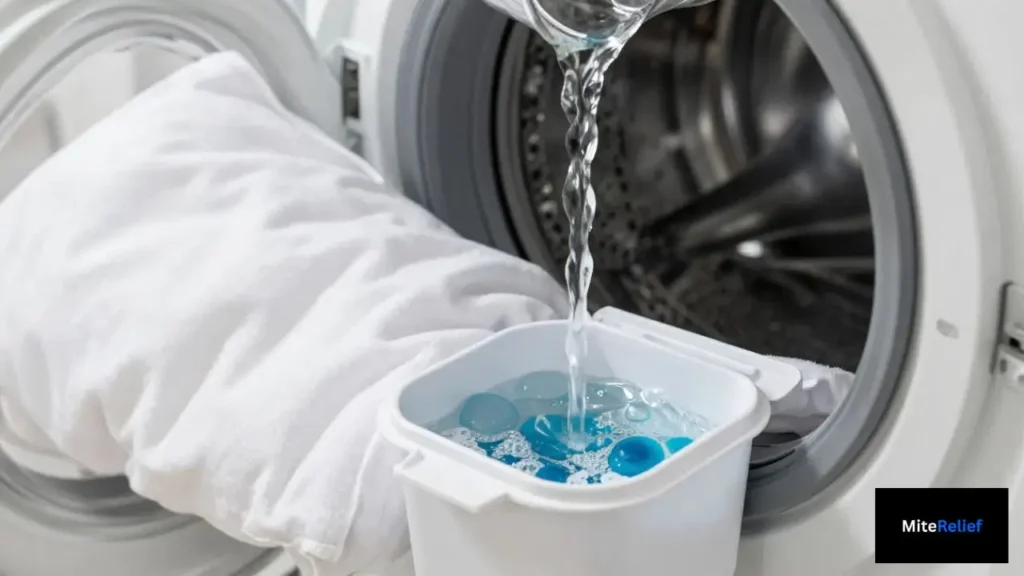
Add the additive during the rinse cycle. Not the main wash, the rinse specifically. Timing actually matters for how the enzymes end up interacting with the fabric fibers, believe it or not. And whatever you do, don’t combine it with fabric softener in the same load, ever. Softeners coat fibers in a waxy layer, and that layer blocks the additive from doing its job properly. Kind of defeats the entire point, right? It also fits nicely alongside a few other habits we cover in our guide on natural ways to control dust mites, especially keeping bedroom temperature and humidity in check.
Consistency beats intensity, every time. Using the additive once, even during a really thorough deep-clean weekend, won’t give you lasting allergen control on its own. It has to become part of the regular routine, basically every wash, if you actually want ongoing relief from the sneezing and itchy eyes over the long run. Combine both approaches together and you get something far more complete than either one alone could manage.
What items should get this treatment?
Not everything needs the additive treatment, to be fair; that would honestly be overkill for most of your laundry. Focus on the fabric items holding the most allergens, the ones that also can’t survive a proper hot cycle.
Bedding tops the list, unsurprisingly. Sheets, pillowcases, and mattress protectors sit against your skin for hours every single night and rack up skin cells and mite waste fast, faster than most people realize. Soft toys come next, especially in kids’ rooms, since they get hugged and drooled on constantly and rarely get washed as often as they probably should. Curtains too; people forget curtains exist half the time, but they trap dust in the folds and almost never get a proper wash.
Basically, if it touches your face regularly, or it simply can’t survive a 60°C hot cycle, it’s a candidate for this treatment. For more on which bedding products actually resist allergens best, our guide on keeping your bedroom free of dust mites covers the full room setup, not just the laundry side of things.
Hot wash vs. additives: Which should you prioritize?
Fair question, and honestly the answer’s less complicated than it sounds at first.
If the fabric can take 60°C or hotter, go with hot water first, full stop. It remains the most reliable, proven method for actually killing mites, and there’s no real substitute for that kind of heat when the material allows it. Cotton sheets, most towels, and standard pillowcases can usually handle it just fine without issue.
But for anything delicate, wool, silk, certain synthetics, or items that would warp or shrink under that kind of heat, the additive becomes your primary tool, not just a backup plan. It’s not a downgrade either, just the right tool for a different situation.
Humidity plays into all of this too, more than most people ever consider. Dust mites thrive in damp environments, so keeping indoor humidity below 50 percent genuinely slows how fast allergens rebuild between washes. If that’s a struggle in your home, and depending on your climate, it often is, our piece on best dehumidifiers for dust mite allergy digs into why that specific number actually matters so much.
Frequently Asked Questions
Does washing in cold water kill dust mites?
No, cold water won’t kill them outright. But a good enzyme-based additive still removes the allergen proteins even without any heat involved at all.
Does bleach kill dust mites on clothes?
Bleach can kill some mites on direct contact, sure, but it doesn’t reliably break down existing allergen residue, and it’s honestly too harsh for most delicate fabrics anyway.
Does washing pillows kill dust mites, or does it just deter them?
A proper hot wash actually kills mites living inside pillows; it’s not just deterring them temporarily. Though pillows need washing more often than most people assume, roughly every few months if you want to stay on top of it.
Are dust mite laundry additives safe for babies’ clothes?
Most fragrance-free, enzyme-based additives are formulated gently enough for baby clothing, but always check the label first, and maybe run a small patch test if your baby has particularly sensitive skin already.
What to Read Next
- Best Bedding for Dust Mite Allergies
- What Kills Dust Mites? 7 Methods That Actually Work
- Best Dehumidifiers for Dust Mite Allergy (And Why Humidity Matters)
Conclusion
No single product fixes all of this on its own; let’s just be honest about that. Hot water where you can use it; a reliable dust mite laundry additive where you genuinely can’t; and a bit of attention to humidity around the house—that combination is really what keeps symptoms manageable over the long run. Start with your bedding this week.
Medical Disclaimer
This content is for informational purposes only and is not a substitute for professional medical advice, diagnosis, or treatment. Always consult a qualified healthcare provider regarding persistent allergy symptoms, asthma, or breathing difficulties. We assume no liability for any health outcomes resulting from the use of this information.

Umar Farooq is the founder of MiteRelief, a resource for dust mite control and allergy prevention. After battling allergen sensitivity, he started creating research-backed guides that turn complex indoor air quality science into practical, affordable solutions anyone can implement.