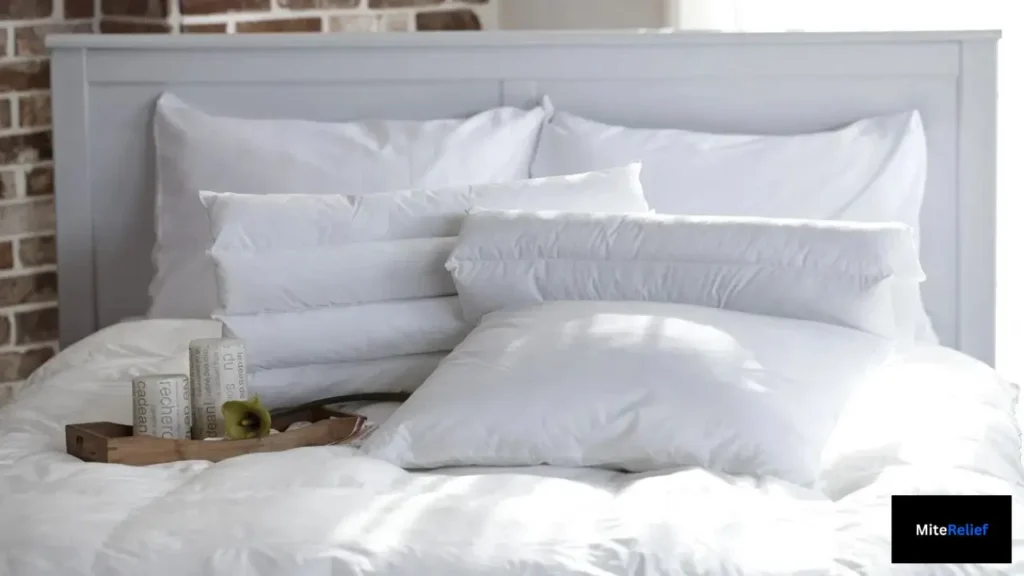
Most people spend around eight hours every night in their bedroom and never once think about what they’re breathing in. If mornings feel rough for you, with a stuffed nose, scratchy throat, and eyes that just won’t stop watering, there’s a decent chance dust mites in your bedroom are the culprit. Not a cold. Not allergies to your dog. These microscopic things that live in your bedding, your mattress, your pillows, basically everywhere you’re trying to rest.
I know it sounds dramatic, but the bedroom really is the one room that matters most when it comes to dust mite exposure. And sorting it out doesn’t have to be complicated or expensive. This guide goes through each problem area one at a time, your mattress, pillows, carpet, and curtains, and tells you what’s worth doing.
If you’re not totally sure it’s dust mites causing the trouble, reading up on dust mite allergy symptoms first might save you a lot of guesswork. Some people spend years thinking they’ve got hay fever when it’s actually this.
Why Your Bedroom Is the Worst Room for Dust Mites
Your bedroom gives dust mites pretty much everything they need to survive and multiply. Warmth from your body. Humidity from your breath overnight. And a near-constant supply of shed skin, because yes, you lose around 1.5 grams of dead skin daily, and a big chunk of that happens while you sleep. To a dust mite, your bed is basically a five-star hotel.
What makes this worse is the sheer amount of time you spend in there. dust mites in your bedroom Your bedroom is responsible for more of your total daily allergen exposure than any other room in your home. More than the living room. More than anywhere else. For people dealing with asthma or ongoing allergy symptoms, the bedroom is usually where most of the damage is happening. Want to understand more about what you’re actually dealing with? The article on what are dust mites covers the biology without making it a whole thing.
Once you know why the bedroom is the priority, the fixes start to make a lot more sense.
Dust Mites in Your Mattress: How Bad Is It Really?
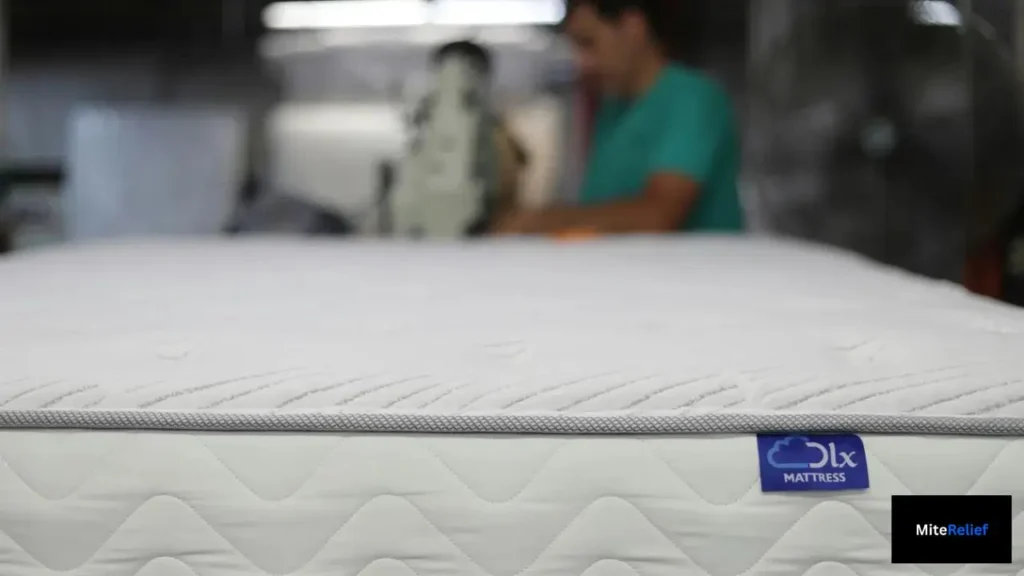
Fair warning, this bit is a little grim. Your mattress can be home to anywhere from 100,000 to 10 million dust mites depending on how old it is and how you’ve been caring for it. Not thousands. Millions. And the reason flipping your mattress every few months does nothing for dust mites in your mattress; that is, they don’t just sit on the surface waiting to be disturbed.
They go deep into the mattress fibers, where they stay warm and undisturbed. Every time you move in the night, you’re pushing tiny particles of dust mite waste up into the air right around your face. That’s the reason your asthma or allergy symptoms tend to hit hardest first thing in the morning. Makes sense when you think about it. For an actual breakdown of what works against them, what kills dust mites
The fix that works best here is a proper mattress encasement, a fully zippered cover that wraps around the entire mattress rather than just lying on top. Not a mattress pad, not a protector, a full encasement. Combine that with washing your bedding weekly in hot water, and you’ve dealt with a massive chunk of your exposure already.
Dust Mites in Pillows: What to Actually Do

People sort out their mattresses and forget completely about pillows. Which is a bit odd when you consider that your pillows are pressed directly against your face all night. Dust mites in pillows build up quickly, sometimes within weeks of buying a brand-new pillow, because the humidity from your breathing and the warmth of your body make the inside of a pillow genuinely comfortable for them.
Washing pillows at 60 degrees Celsius once a month is the baseline. Below that temperature you’re really just giving them a warm bath. Also worth knowing: pillows should be replaced every year or two. The outside might look clean, but the inside collects years’ worth of skin and mite debris that washing can’t fully remove.
Allergen-proof covers that zip all the way around are genuinely useful here. They sit between you and the mite population inside the pillow and block the allergens from reaching your face. A lot of people notice their mornings improving pretty quickly after making this one change, clearing sinuses within a few days rather than hours after waking up from bed.
Dust Mites in Curtains and Soft Furnishings
Heavy curtains are one of those things nobody ever thinks to clean. They just hang there. Month after month. Collecting dust, absorbing humidity, providing a quiet home for dust mites. Most bedroom cleaning routines involve vacuuming the floor and changing the sheets and calling it done, while the curtains get left entirely.
If switching to roller blinds is an option, it’s genuinely one of the easiest upgrades you can make. Wipe them down; done. If you’d rather keep curtains, make sure they’re a washable fabric and actually put them through the machine at 60 degrees every month or so. It’s not glamorous advice, but it works.
Same goes for stuffed toys in the bedroom. If they can’t be washed at 60 degrees, stick them in a sealed plastic bag and put them in the freezer overnight once a week. It sounds strange, but it does kill the mites. And beyond that, just reducing general clutter in the bedroom helps a lot. Every extra cushion or blanket piled on the floor is another spot for mites to move into and settle.
Dust Mites in Bedroom Carpet: Remove or Treat?
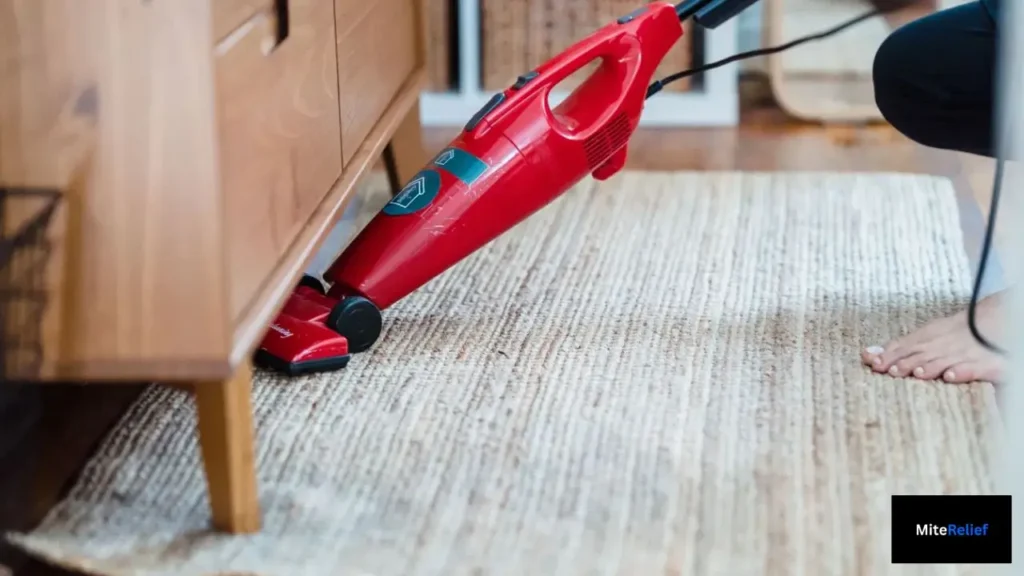
Here’s the honest truth about dust mites in bedroom carpet: carpet holds up to 100 times more allergens than a hard floor. That’s not a rough estimate. The fibers trap shed skin, trap mite debris, and trap humidity, and no matter how often you vacuum, you’re never fully clearing it out.
Removing the carpet entirely is the best option. Hard floors, whether wood, tile, or laminate, are genuinely much easier to manage for allergen control. A damp mop collects what a vacuum would just push around. That said, not everyone is in a position to pull up their carpet, whether it’s rented, recently fitted, or just not in the budget right now.
If the carpet is staying, get a HEPA vacuum. A regular vacuum without a HEPA filter can actually scatter fine dust mite particles back into the air as you use it, which just makes things worse. Use it daily if possible, or every other day at minimum. Then steam clean the carpet every three months or so. The heat from steam gets deep enough to actually kill mites, whereas a vacuum only gets the top layer.
The Ideal Bedroom Setup to Minimise Dust Mites

If you’re starting from scratch or doing a proper sort-out of the bedroom, here’s what a genuinely low-allergen room looks like in practice. This isn’t about minimalism for the sake of it. It’s purely about reducing the places dust mites can live.
Hard floors where possible. Allergen encasements on the mattress and all pillows. A dehumidifier is running to keep humidity under 50%, because dust mites really struggle in dry air and their numbers drop off noticeably when you take away the moisture. A HEPA air purifier is running quietly in the corner. Weekly hot washes for all bedding, no skipping weeks.
A couple of smaller habits that actually add up: keep the bedroom door closed during the day to stop pollen drifting in from other parts of the home. Get changed outside the bedroom rather than in it, since most skin shedding happens when you’re undressing. These feel like small things, but over time they genuinely reduce how much material dust mites have to feed on. For anyone looking to avoid chemical treatments, natural ways to control dust mites are worth a read.
Your Bedroom Mite-Control Routine: Weekly and Monthly
Weekly Tasks
- Wash all bedding, sheets, pillowcases, and duvet covers, at 60 degrees or above
- HEPA vacuum the full floor including under and around the bed
- Wipe hard surfaces, bedside tables, skirting boards, and windowsills with a damp cloth
- Empty and rinse the dehumidifier water tank
- Check the HEPA air purifier filter and replace if needed
Monthly Deep Clean
- Wash pillows at 60 degrees
- Machine wash curtains or wipe down blinds properly
- Check the mattress encasement zip and fabric for any signs of wear
- Steam clean carpet if present, or quarterly at minimum
- Check skirting boards and around windows for any mold or water leaks
- Freeze or wash stuffed toys kept in the bedroom
Frequently Asked Questions
How do I know if my mattress has dust mites?
Just assume it does; genuinely, every mattress has them. What you want to figure out is whether they’re actually bothering you. Wake up stuffy, a bit sneezy, maybe eyes feel heavy, and then an hour after getting up you’re completely fine? Yeah, that’s your bed. That’s what’s setting off your symptoms overnight.
Should I throw away my mattress if I have dust mites?
Not worth it at all. Get an encasement, zip it around the whole mattress, and you’re done. The mites already inside slowly die off because nothing’s getting through to feed them. Throwing it out and buying new without fixing the humidity or washing bedding properly just means the same thing happens again by spring.
Do dust mites live in memory foam mattresses?
Unfortunately, yes. Denser foam means they hang around closer to the surface rather than going deep, which honestly isn’t much better. The same fix applies: encasement, hot wash the bedding each week, and keep humidity in the bedroom below 50%. The mattress type really doesn’t change what needs doing.
Can dust mites live in a cold bedroom?
They hang on longer than people expect in the cold; they just slow down a bit. You’d need it genuinely freezing for weeks before numbers drop properly. Humidity is what hits them harder. Dry air, below 50%, paired with a cooler room that combination is what makes the bedroom actually difficult for dust mites to survive in.
What to Read Next
Conclusion
You spend roughly a third of your life in your bedroom. That’s a long time to be breathing in allergens that are messing with your sleep and leaving you groggy every morning. Dust mites in your bedroom won’t ever be completely gone; that’s just the reality, but getting your exposure down to a manageable level is genuinely possible, and it doesn’t have to cost a lot or take over your weekends.
If you’re not sure where to start, just pick the mattress encasement and commit to washing your bedding in hot water every week. Those two things alone will make a noticeable dent. From there you can work through the rest, the pillows, the curtains, and the carpet situation at whatever pace makes sense. People dealing with dust mite allergy symptoms for years sometimes notice a shift within the first two or three weeks of doing this properly. Clearer mornings mostly. Better sleep. Less of that foggy, blocked feeling before the day has even started.
Medical Disclaimer
This content is for informational purposes only and is not a substitute for professional medical advice, diagnosis, or treatment. Always consult a qualified healthcare provider regarding persistent allergy symptoms, asthma, or breathing difficulties. We assume no liability for any health outcomes resulting from the use of this information.

Umar Farooq is the founder of MiteRelief, a resource for dust mite control and allergy prevention. After battling allergen sensitivity, he started creating research-backed guides that turn complex indoor air quality science into practical, affordable solutions anyone can implement.