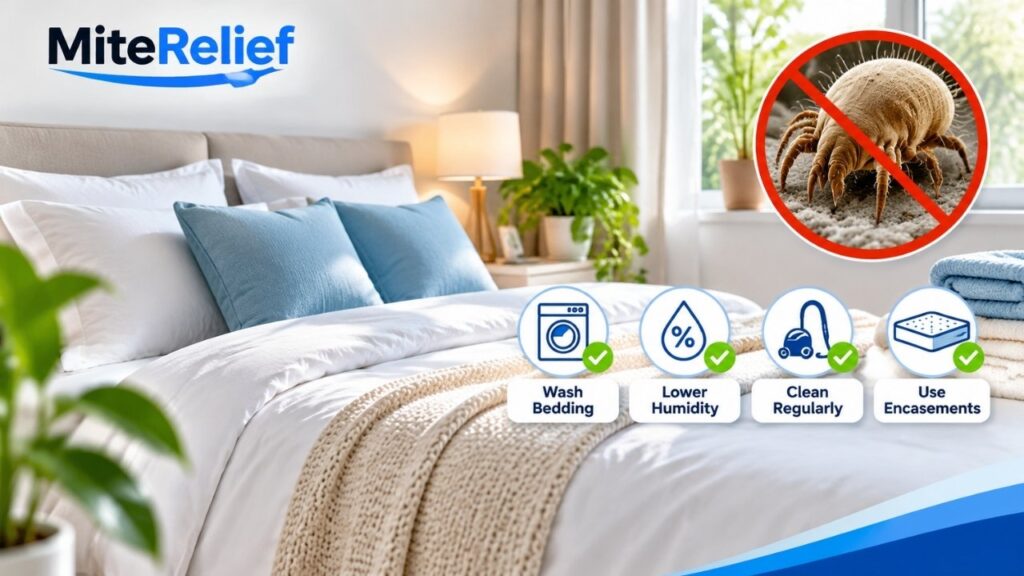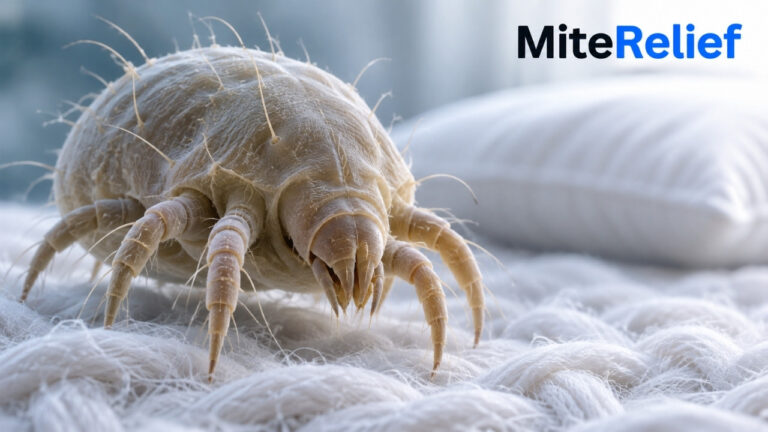
So, what kills dust mites? Mostly heat. Hot water, a hot tumble dryer, and steam can kill house dust mites when they reach the right temperature for long enough. Freezing can work on small items, and sunlight helps only a little.
Here’s the catch. Killing mites doesn’t remove the allergens they leave behind. Dead mite bodies and droppings can still cause sneezing and itchy eyes. For broader background, see the AAAAI/ACAAI practice parameter on dust mite exposure control.
What Kills Dust Mites Instantly?
Nothing in your home kills every mite instantly. Temperature and exposure time decide the result. In one laboratory study, exposure to 60°C and 70°C prevented dust mite eggs from hatching. The researchers concluded that at least 30 minutes at these temperatures was effective. At 40°C, approximately 80% of eggs survived.
Eggs are tougher than adults, and heat has to reach mites hiding deep in fibers. Lab results also don’t guarantee the same outcome in a thick mattress. Be wary of any “instant kill” claim.
Does Heat Kill Dust Mites?
Yes. Heat is the best-supported way to kill them. In a classic laundry study, water at 55°C (131°F) or hotter killed all mites. Mayo Clinic advises washing bedding at 130°F (54.4°C) or higher for the same reason.
Both temperature and time matter. Heat only works where it actually reaches, and the center of a thick duvet can stay cooler than the water around it. Home machines don’t always hit the temperature on the dial, either.
It helps to separate lab results from real homes. A lab test exposes mites to a set temperature for a set time. Your washing machine, dryer, and bedding are messier, so treat the numbers here as targets, not guarantees.
Safety matters too. Water heaters set to 130°F or higher can scald, especially around children. Many people instead use their machine’s hot or sanitize cycle, and check fabric care labels before using high heat.
Does Washing Kill Dust Mites?
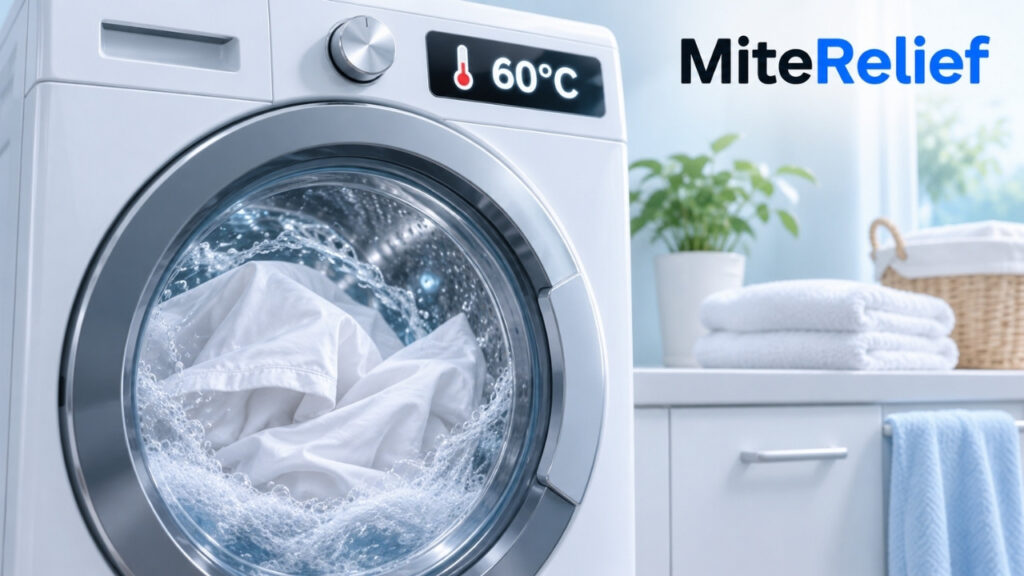
Hot washing can kill dust mites when the water reaches a sufficiently high temperature. In a lab test, 30°C and 40°C cycles killed just 6.5% and 9.6% of mites, while a 60°C cycle killed all of them.
The same study found that water temperature and the number of rinses both affect allergen removal. Check fabric labels first, since many items can’t handle that heat.
Cold washing can still reduce dust mite allergens, and some washing procedures can physically remove mites. However, results vary by washing method and study conditions. Hot washing remains a well-supported option when fabrics allow it.
Does a Tumble Dryer Kill Dust Mites?
Yes, if the item reaches the required temperature. Mayo Clinic recommends drying items that cannot be washed hot for at least 15 minutes above 130°F (54.4°C), then washing them to remove allergens.
Check fabric care labels before using high heat. A dryer can kill mites under these conditions, but it does not remove the allergens they leave behind.
Can Steam Cleaning Kill Dust Mites?
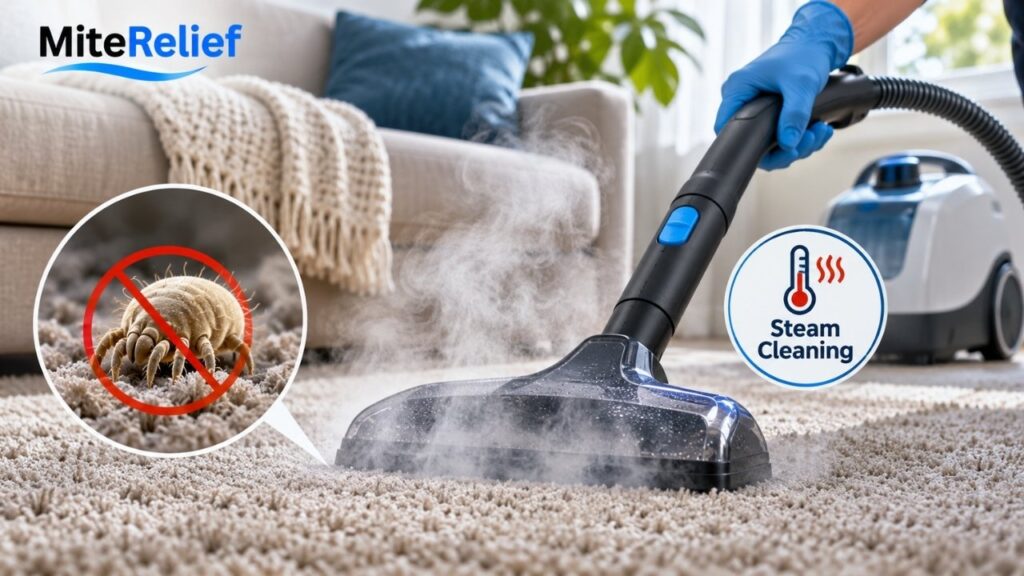
It can, within limits. In a 1995 study, steam-cleaned carpet squares had no live mites at any check over four months. In a real flat, steam cleaning cut Der p 1 allergen by about 87%, compared with 5% in untreated spots. That’s encouraging, but it was one small study on carpet.
A steam cleaner only kills what its heat reaches. Steam loses heat fast and may not get deep into a mattress or sofa cushion. Move slowly so the surface gets enough contact time. Then let everything dry completely, because leftover moisture helps mites come back. Skip it on fabrics that can’t take heat or moisture, and keep children and pets away while you work. Steam burns are real.
Does Freezing Kill Dust Mites?
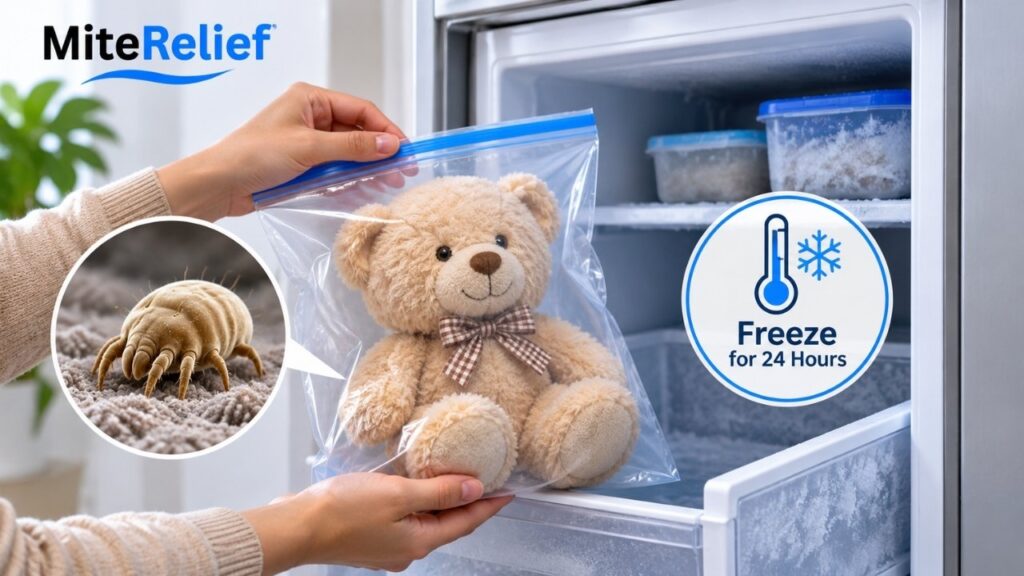
Freezing for 24 hours can kill dust mites, according to Mayo Clinic. However, laboratory research suggests that household freezer temperatures may not reliably prevent dust mite eggs from hatching. This means freezing can help, but it should not be treated as a guaranteed way to eliminate every life stage.
For stuffed toys and small cushions, seal the item in a bag before freezing. Afterward, wash it according to its care instructions to help remove remaining allergens. Freezing is more practical for small household items than for mattresses or carpets.
Does Sunlight Kill Dust Mites?
Sometimes, but you can’t count on it. In a lab test, three hours of direct sunlight stopped mite eggs from hatching on slides. A sheet hanging on a line is a different story.
Sunlight warms and dries the surface, which mites dislike. But it doesn’t reach the inside of a pillow or mattress, and clouds, shade, and cool days weaken it. Drying out a fabric slows mites down. That doesn’t kill them.
Do Humidity Control and HEPA Vacuuming Kill Dust Mites?
These two don’t kill mites, but they support the rest of your routine. Low humidity makes survival harder over time. Mayo Clinic recommends keeping indoor humidity below 50%, and our guide to dust mites and humidity covers the science.
HEPA vacuuming can remove some surface dust and allergen particles, but it does not reliably kill dust mites or remove most allergens.
Mayo Clinic notes that vacuuming won’t remove most mites or allergens. A vacuum cleaner with a HEPA filter or suitable microfilter bag can help trap fine particles collected during vacuuming, reducing their release back into the room.
Which Methods Actually Kill Dust Mites?
Think of three jobs: killing mites, slowing their numbers, and removing allergens. Few methods do all three.
| Method | Kills Mites? | Removes Allergens? | Main Limitation |
| Hot water washing | Yes, at suitable temperatures | Yes | Fabric and machine limitations |
| Hot tumble drying | Yes, under suitable conditions | No, wash afterward | Temperature and exposure time |
| Steam cleaning | Yes, where sufficient heat reaches | Can reduce allergens | Limited penetration |
| Freezing | Can kill mites; eggs may survive | No | Domestic freezer limitations |
| Direct sunlight | Can affect eggs under specific conditions | Not reliably | Weather and surface exposure |
| Lower humidity | Not an immediate treatment | No | Gradual effect |
| HEPA vacuuming | Does not reliably kill mites | Removes some surface particles | Does not remove most mites or allergens |
What Does NOT Reliably Kill Dust Mites?
Cold-water washing cleans fabric but leaves most mites alive. Air fresheners only mask odors. Baking soda may freshen a mattress, but it isn’t a proven mite killer.
Vinegar and household disinfectants clean, but research doesn’t support them as reliable ways to kill mites deep in bedding. Cleaning, killing, and removing allergens are three different jobs. A product that does one may not do the others.
The same goes for anything that promises to kill every mite for good. No home method guarantees that, and new mites can move in from furniture, carpets, and clothing.
Why Killing Dust Mites Does Not Remove Their Allergens
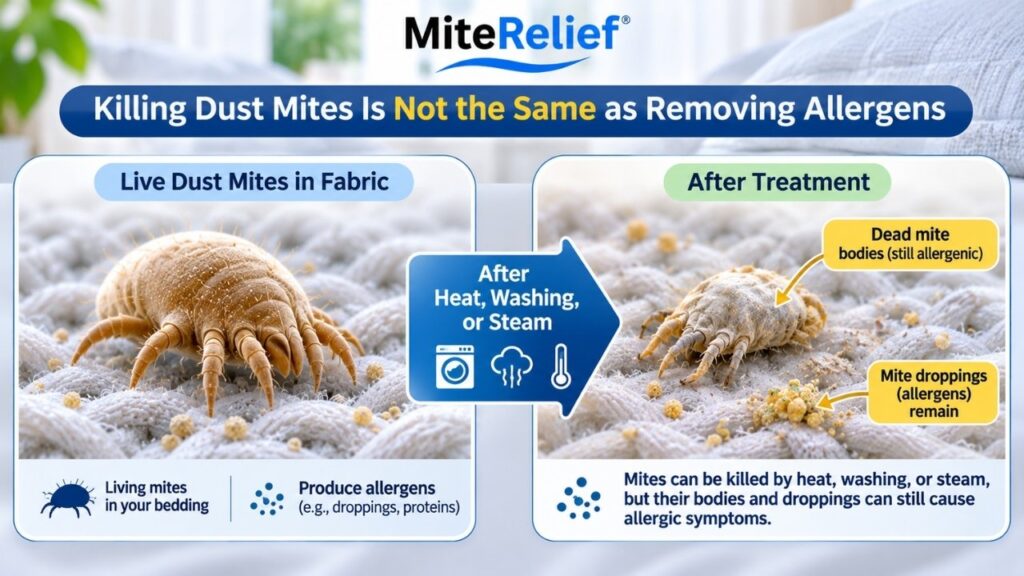
The main allergens, Der p 1 and Der f 1, come from mite bodies and fecal particles. They stay in fabric after the mites die. That’s why dead mites can still trigger symptoms.
Dry cleaning shows the gap clearly. In the same 1992 laundry study, it killed most mites but didn’t reduce allergen levels in the dust. After treating washable items, wash them to remove remaining allergens. For carpets and household surfaces, damp cleaning and suitable HEPA-filtered vacuuming can help reduce surface dust and allergen particles.
Mayo Clinic suggests damp or oiled cloths because dry dusting sends allergens back into the air. For more low-cost routines, see our guide to natural ways to control dust mites.
Frequently Asked Questions (FAQs)
Does Dettol kill dust mites?
Not reliably. Disinfectants are made to kill germs, and strong evidence for killing mites in fabric is lacking. Hot washing is better supported.
Does vinegar kill dust mites?
Not reliably. It’s a mild cleaner, but it isn’t a proven mite killer. Hot water and heat have much stronger support.
Do dust mite eggs survive heat treatment?
They can if the heat is too low or too brief. In one lab study, about 80% of eggs survived 40°C, while 60°C stopped hatching.
Can dead dust mites still trigger allergies?
Yes. Allergens in mite bodies and droppings remain after mites die, so wash and clean after any treatment.
What to Read Next
Final Thoughts on What Kills Dust Mites
Hot water, hot drying, and steam have the strongest evidence for killing mites. Freezing and sunlight are weaker backups. Temperature and exposure time matter most. Since dead mites still leave allergens behind, follow every treatment with cleaning, and read our guide on how to prevent dust mites to keep numbers down.
Medical Disclaimer
This content is for general informational purposes only and is not a substitute for professional medical advice, diagnosis, or treatment. Individual health needs can vary, so speak with a qualified healthcare professional about allergies, asthma, skin reactions, medications, or other symptoms. Seek prompt medical care if symptoms are severe, persistent, or getting worse.

Umar Farooq is the founder of MiteRelief, creating research-backed guides about dust mites, indoor allergens, and practical allergy prevention for healthier homes.