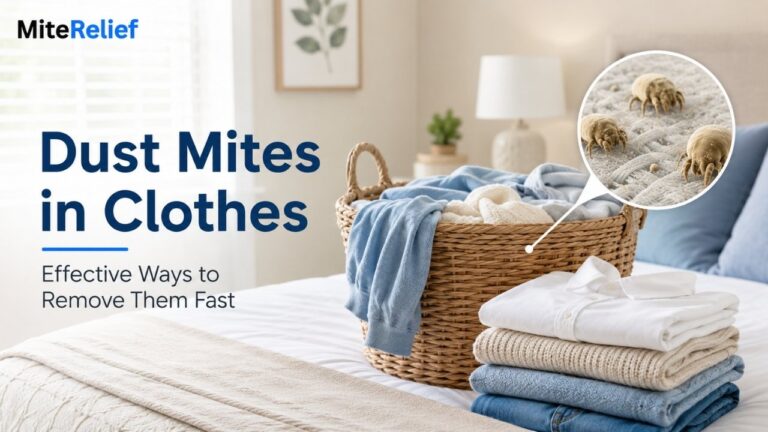
Worried about dust mites in clothes? You’re not alone. Most dust-mite-on-clothes problems come from allergens, not live bugs crawling around your closet.
Your clothing picks up dust from bedding, sofas, carpets, and the air around your home. This dust often carries tiny allergen proteins shed by dust mites.
The good part is that clothing isn’t where these pests like to live most. It’s more of a stop along the way.
Can Dust Mites Really Live in Your Clothes?
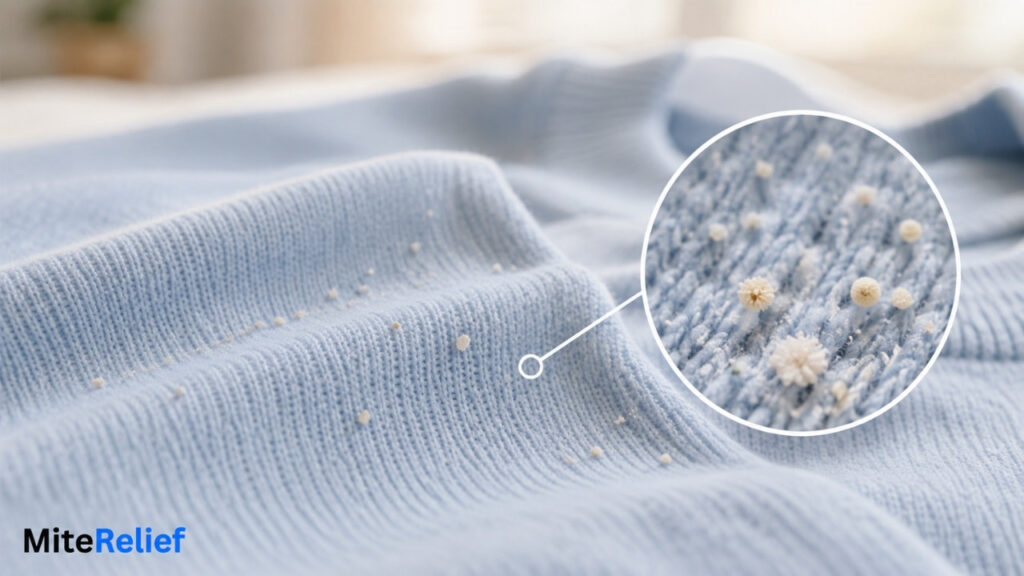
Dust mites need steady moisture and a food source to survive. Fabrics you wear and wash often don’t offer either one for very long. That’s why clothes are usually a poor home for dust mites compared to soft, undisturbed spots like bedding or upholstered furniture.
Still, clothing can pick up skin cells, dust, and other bits that dust mites feed on. Worn or stored garments collect this material over time, especially if they sit for days between washes.
Here’s the key thing to understand: finding dust mite allergens on a shirt doesn’t mean live mites are hiding in it. Allergens are tiny leftover particles, not the bugs themselves.
Clothing that gets washed on a normal schedule usually shows far less buildup than fabrics that sit around for weeks. If you want the full picture on these pests, you can learn more about dust mites.
Which Clothes Hold the Most Dust?
Not all fabrics collect the same amount of dust. Thicker, textured materials tend to trap more than smooth, lightweight ones.
Clothes that tend to hold more dust include:
- Wool sweaters and coats
- Fleece jackets and blankets
- Heavy knits and textured textiles
- Coats and outerwear that don’t get washed often
- Seasonal clothing stored away for months at a time
On the other hand, lightweight garments that are washed regularly, like t-shirts and everyday pants, usually stay cleaner. Frequent washing simply doesn’t give dust much time to build up.

That said, there’s no solid evidence that mites burrow deep into any fabric. They mostly sit on the surface, along with the dust and skin cells they feed on.
How to Get Dust Mites Out of Clothes
Cleaning clothes doesn’t need to be complicated. A regular laundry routine handles most of the job.
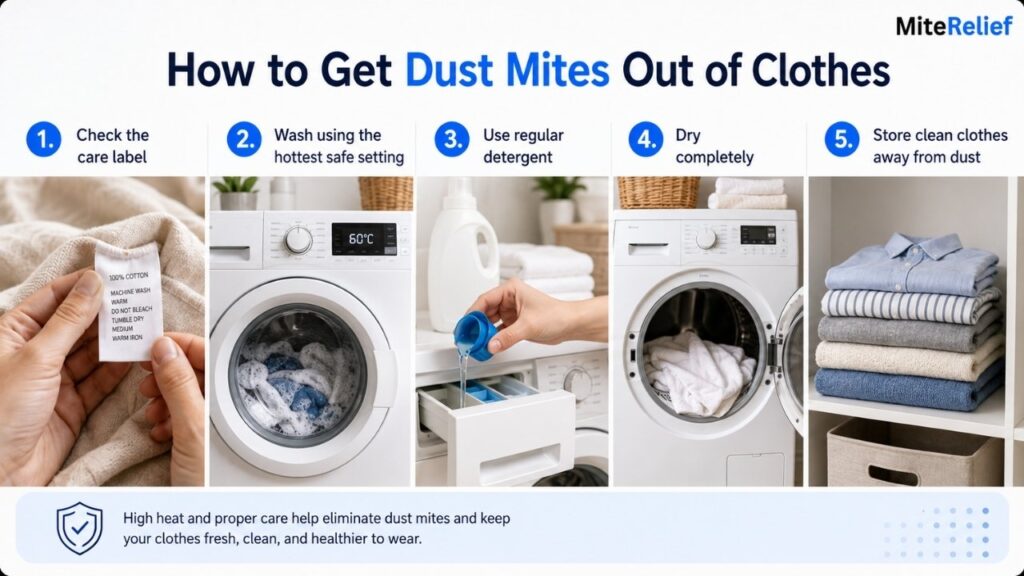
Here’s a simple process to follow:
- Check the care label on the garment first.
- Wash using the hottest setting the fabric can safely handle.
- Use your regular detergent; no special products needed.
- Run the clothes through a full cycle in the tumble dryer, or let them dry completely.
- Store the clean clothes away from dusty surfaces once they’re dry.
This routine works because washing removes dust, skin cells, and allergen proteins from fabrics, not because of one specific water temperature.
If you want to understand more about what actually gets rid of these pests, check out this guide on ways to kill dust mites.
And if you’re curious whether your detergent matters, this article on laundry options for dust-mite allergens covers it in more depth.
What If Your Clothes Can’t Handle Hot Water?
Some garments just aren’t built for hot washing. Wool, delicate knits, suits, and other dry-clean-only items can shrink or get damaged in a hot washing machine.
For these pieces, follow the care label and use the coolest safe setting on your washer. A gentle cycle with cold or lukewarm water still helps remove surface dust, even if it’s not as thorough as a hot wash.
For items marked dry cleaning only, a professional cleaner is your best option. The dry-cleaning process uses solvents instead of water, which works well on delicate fabrics without risking damage.
Steam can sometimes help freshen a garment between cleanings, but it isn’t a stand-in for a full wash or dry-cleaning visit.
Why Clean Clothes Get Dusty Again
It’s frustrating to wash a load of laundry only to have it collect dust again within days. This usually comes down to where clean clothes end up after washing.
A few common culprits:
- Piling clean clothes on the bed, where bedding sheds its own dust
- Leaving garments draped over a bedroom chair
- Letting clothes touch carpets or the floor
- Mixing worn and clean items in the same pile
- Storing clean clothes on dusty wardrobe shelves
Keeping clean clothes off the bed and away from worn items makes a real difference. A quick wipe-down of closet shelves also helps reduce recurring buildup.
For more ways to keep dust down in general, this piece on how to reduce dust mites around your home is worth a look.
The Best Way to Store Clothes
How you store clothes matters just as much as how you wash them. Damp or dusty storage spots undo a lot of your cleaning effort.
Keep these habits in mind:
- Wash garments before putting them away for the season
- Make sure everything is fully dry before storing it
- Wipe down wardrobe and closet shelves now and then
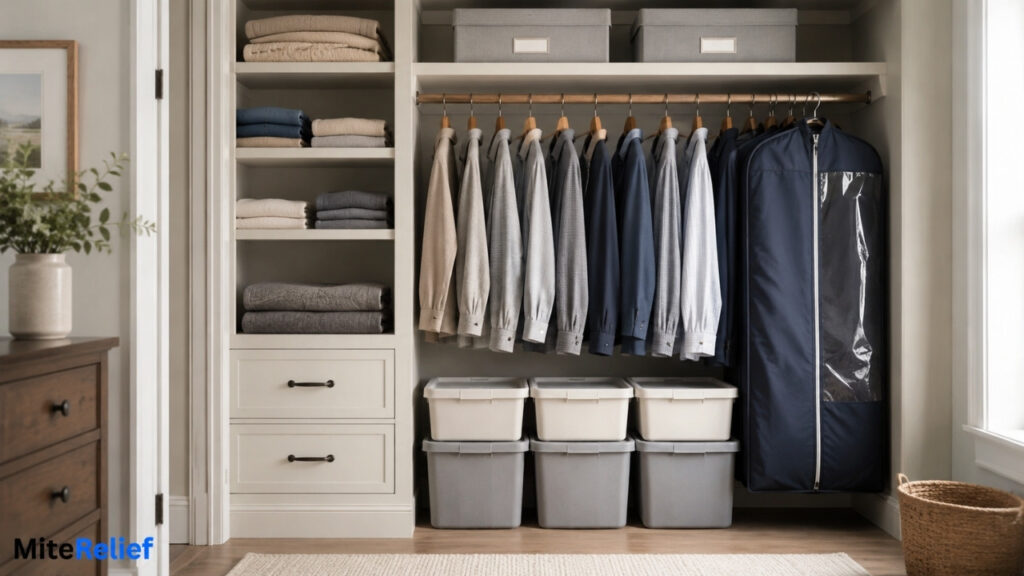
- Store seasonal clothing in closed bins or garment bags
- Avoid damp basements or attics for long-term storage
- Keep worn clothes separate from clean ones, even in a laundry basket
High humidity can make a storage space more welcoming to dust mites, so a dry, closed space is your best bet. To see how storage habits connect to the rest of your bedroom, take a look at dust mites in your bedroom.
Can Dust Mites Travel on Your Clothes?
Clothing can act like a carrier, picking up dust and allergens from one spot and dropping them in another. Sitting on a dusty couch or lying on unwashed bedding can transfer particles straight onto what you’re wearing.
Travel adds another layer to this. Clothes packed in luggage can pick up dust from hotel carpets, bedding, or furniture along the way.
This doesn’t mean your suitcase is crawling with mites; it’s more about the dust and allergens that hitch a ride.
A few simple habits help:
- Keep worn clothes in a separate bag inside your luggage
- Wash washable items once you’re home, if that fits your routine
- Keep luggage away from your clean, folded clothes
Clothing remains a secondary means by which these particles move around. To understand where the bulk of household exposure really starts, see this article on where dust mites come from.
Frequently Asked Questions (FAQs)
Can dust mites transfer from clothes to a bed?
Dust, and sometimes allergen particles, can move from clothing onto bedding through everyday contact. This is more about shared dust than clothes being a major mite habitat on their own.
Do dust-mite allergens remain on clothes after washing?
Washing removes most allergens, though how much depends on the fabric and the cleaning method used. A full wash-and-dry cycle does a better job than a quick rinse.
Can dust mites live in stored clothes?
Rarely disturbed, dusty garments can accumulate more allergens over time than clothes that are washed often. This is more about dust buildup than mites setting up a permanent home.
What should I do with wool clothes that cannot be hot-washed?
Follow the care label for a safe washing temperature, or send the item to a dry cleaner. Store it clean and dry afterward to keep dust from settling back in.
Should I keep worn clothes out of my bedroom?
Keeping worn items away from bedding and clean garments can reduce repeated dust transfer. It’s a small habit that adds up over time, especially for anyone dealing with a dust mite allergy.
What to Read Next
Conclusion
Clothes can pick up dust, dust mite allergens, and occasionally mites themselves from the surfaces around them. But compared to bedding and upholstered furniture, clothing plays a smaller role in the bigger picture.
Wash garments according to the care label, dry them fully, and keep clean clothes separate from worn ones.
Clean wardrobe and storage spaces regularly, and lean on dry cleaning for delicate pieces that can’t handle a hot wash. These small habits go a long way toward keeping dust mites and their allergens out of your closet.
Medical Disclaimer
This content is for general informational purposes only and is not a substitute for professional medical advice, diagnosis, or treatment. Individual health needs can vary, so speak with a qualified healthcare professional about allergies, asthma, skin reactions, medications, or other symptoms. Seek prompt medical care if symptoms are severe, persistent, or getting worse.

Umar Farooq is the founder of MiteRelief, a resource for dust mite control and allergy prevention. After battling allergen sensitivity, he started creating research-backed guides that turn complex indoor air quality science into practical, affordable solutions anyone can implement.