Dust mites don’t just appear because a room gets dusty. They come from other mites. Some mites move from place to place on clothing, bedding, furniture, and other soft items.
Once mites get inside a home, a few things decide if they survive and grow. These things are humidity, warmth, food, and soft fabric.
So where do dust mites come from? They come from other mites, not from dust itself.
Dust mites come from other mites that lay eggs and reproduce. They can also move from place to place on clothing, bedding, and furniture.
Once mites reach a home, humidity, warmth, food, and things like mattresses, carpets, and couches decide if they survive and grow.
Where Do Dust Mites Come From?
Dust mites come from other dust mites. That’s the short answer. Adult mites mate and lay eggs. Those eggs hatch and grow into new mites. A dust mite starts as an egg.
Then it grows through a few early stages. Last, it becomes an adult. This is the mite’s life cycle.
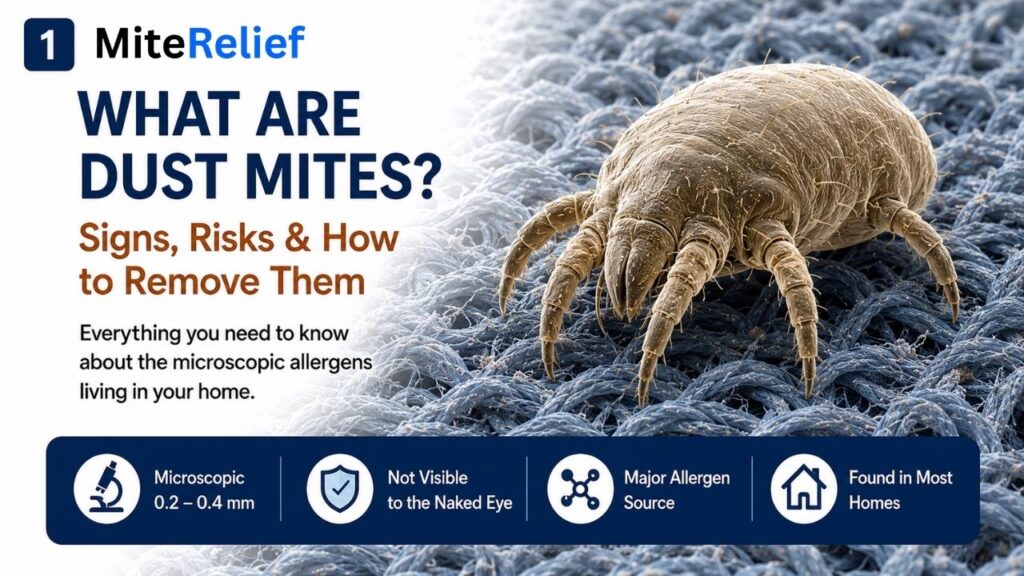
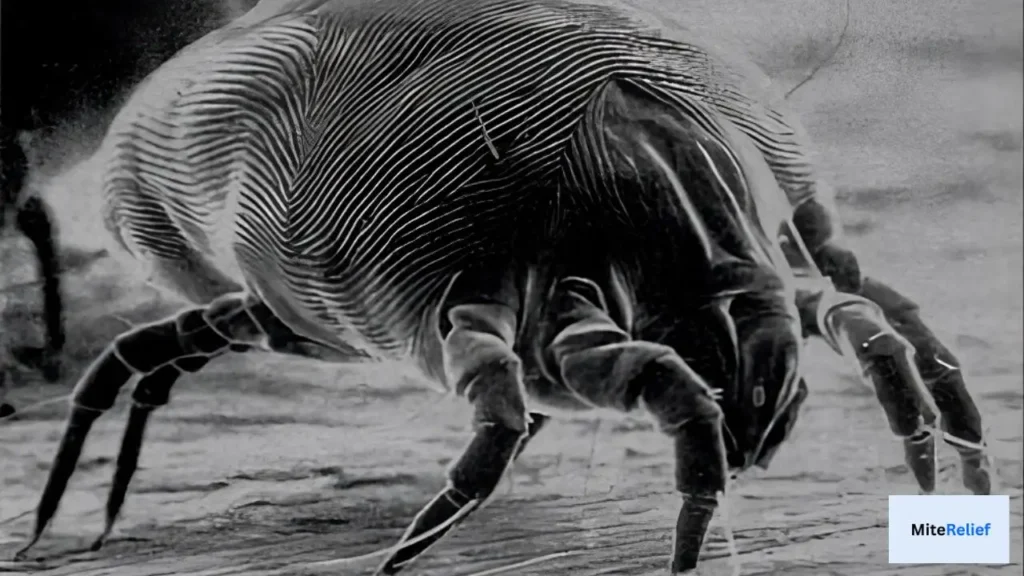
Dust mites are arachnids, not insects. That puts them in the same group as spiders and ticks. But mites are much smaller. You can’t see one without a microscope.
Dust itself does not create mites out of nothing. But dust can hold things mites need to live, like tiny bits of shed skin. That’s food for mites, not a birthplace.
A mite population needs mites to be there already before it can grow. Without mites to start with, dust just stays dust. Want to learn more about the basics? Read what dust mites are.
How Do Dust Mites Get Into a Home?
Dust mites don’t fly into your house like a mosquito. They have no wings. They can’t travel far on their own. Instead, they move by riding along on something else.
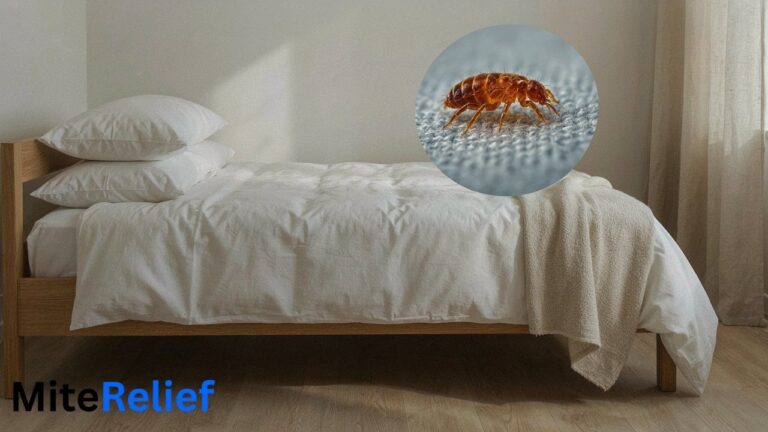
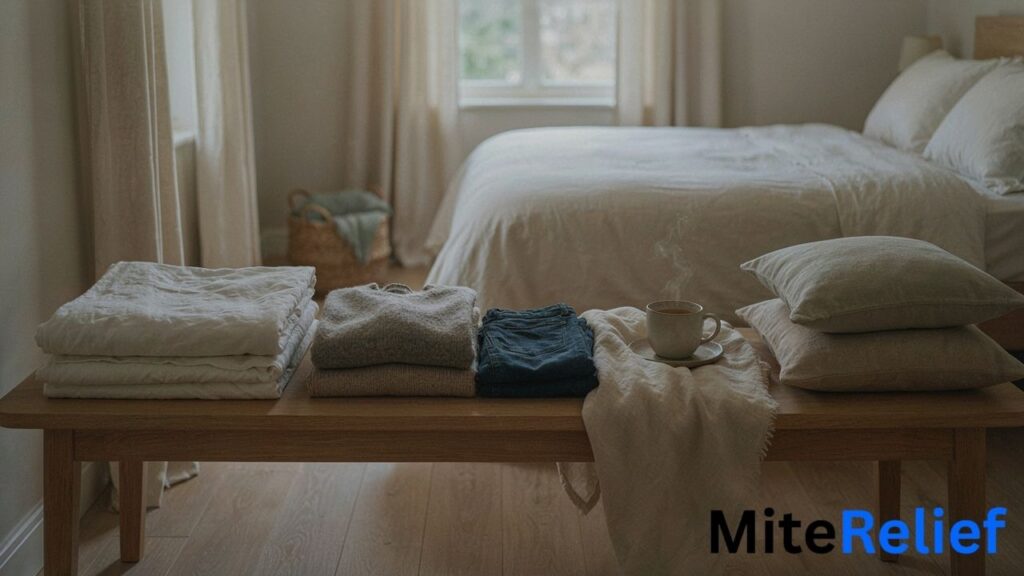
That something else is often fabric. Mites can ride on clothing, bedding, blankets, cloth items, mattresses, and other soft furniture.
People move these items between rooms and homes all the time. Most of the time, they don’t even think about it.
In simple terms: mites don’t choose to hitch a ride. People just move the fabric, bedding, or furniture that mites are already living in. It’s not that the mite travels on its own. It’s that its home moves with it.
This doesn’t mean every piece of fabric carries mites. It just means that when mites do move, this is usually how it happens.
| How mites or allergens move | What may be transferred | Typical example |
| Clothing and fabrics | Live mites or mite-containing dust | Clothes, blankets, or fabric items moved between places |
| Bedding | Mites and built-up allergens | Sheets, pillows, or blankets moved between rooms or homes |
| Used upholstered furniture | Mites, mite remains, and allergens | Sofas, cushions, or upholstered chairs |
| Mattresses | Mites and built-up allergens | A used mattress moved into another room or home |
| Household dust on objects | Mostly allergen particles; mites may also be present | Dusty items or belongings moved between places |
| Disturbed carpet or upholstery | Mostly airborne allergen particles | Walking, cleaning, vacuuming, or shaking bedding |
Can Used Furniture Carry Dust Mites?
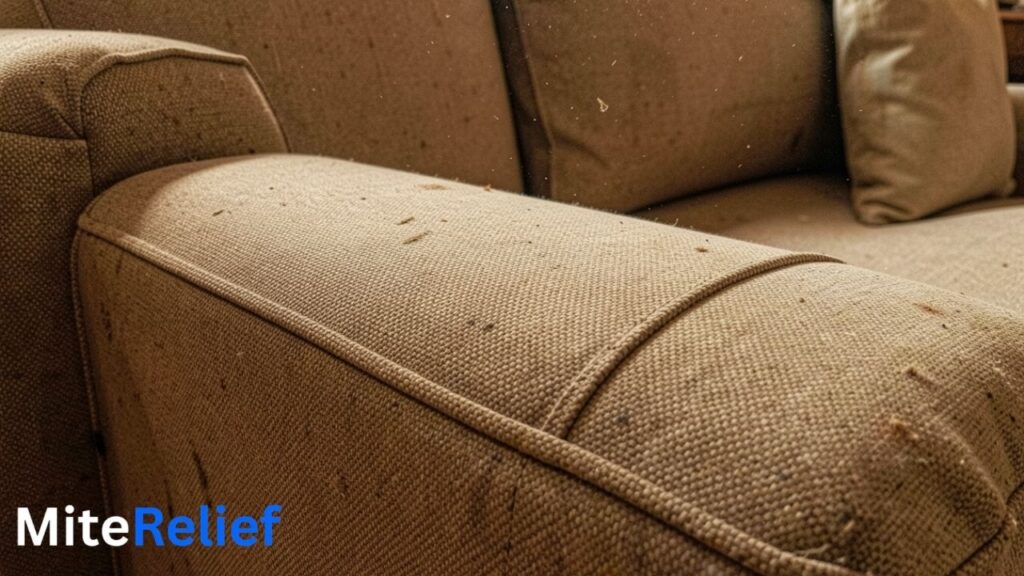
Yes. Used soft furniture can carry mites or mite allergens from one place to another. A used sofa, mattress, or cushion has had time to build up more than just wear and tear.
These items can hold on to things over time. They may hold live mites, dead mite bits, mite waste, and dusty allergens.
Even an old piece of furniture with few live mites left can still hold a lot of built-up allergens.
But this doesn’t mean every used mattress or couch is a problem. Not every used item has mites. Buying used furniture isn’t always unsafe.
It’s just that soft, fabric-heavy items can hold mites and allergens longer than something hard, like a wood table.
Do you have a used mattress? It helps to know deep clean a mattress. The same goes for dust mites in sofas and upholstered furniture.
Cleaning and covering these items can cut down on buildup. A dust mite mattress encasement is another option some people use for mattresses.
Do Dust Mites Spread Between Rooms?
Yes. Mites or mite-filled material can move between rooms. But there are two different things to know here. One is live mites moving around.
The other is allergen particles floating in the air. These are not the same thing, even though people often mix them up.
How Live Mites Move
Live mites move the same way they got into your home in the first place.
Bedding, clothing, blankets, cloth items, cushions, and other moved furniture can carry them from one room to another. Dust stuck to an object can do this too.
This isn’t a case of mites crawling all over the house on their own. It’s more that when you move something with mites in it, the mites go with it.
How Allergens Move
Allergens work a bit differently. When someone makes a bed, walks on carpet, shakes out bedding, moves cushions, or disturbs upholstery, tiny bits of allergen dust can float into the air for a short time. Vacuuming dusty spots can do this too.
It’s not true that vacuuming sends live dust mites flying through the room.
What really happens is that stirred-up dust, which can hold allergen bits, floats in the air for a little while before it settles again.
Better vacuuming for dust mite allergens can help cut down on this dust. Some people also look into how air purifiers affect dust mite allergens to help manage floating dust.
Can Dust Mites Spread Between Homes?
Yes, this is possible. It works the same way as moving between rooms, just on a bigger scale.
Clothing, bedding, blankets, fabric items, moved mattresses, and soft furniture can all carry mites or mite dust from one house to another.
The key point is this: the fabric or furniture is what moves. The mites don’t travel long distances on their own. They ride along inside whatever item is being moved.
What about hotels and travel? Clothing and other fabric items taken from place to place may carry mites or mite dust.
But there isn’t strong proof that luggage is a big source of new mite populations at home. It’s a possible way mites travel, not a sure thing. Hotels shouldn’t always be seen as risky.
What Helps Dust Mites Multiply?
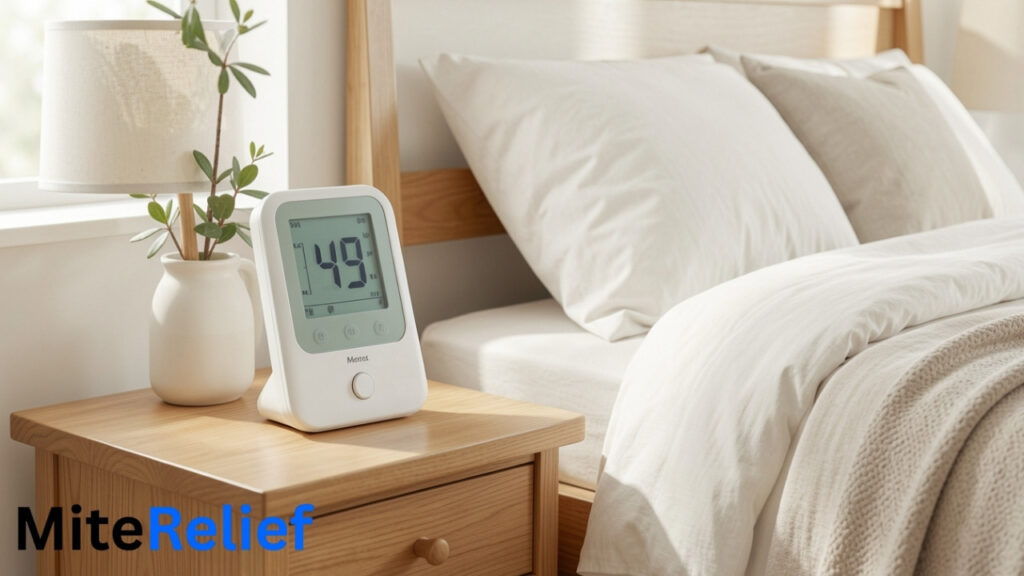
Getting one mite into your home is one thing. Turning that into a real population is another. These are two separate steps.
The second step depends a lot on the conditions inside your home.
Humidity
Humidity is one of the biggest factors for mite survival. Mites get water from the air around them, not by drinking it. So the amount of moisture in the air matters a lot.
Keeping indoor humidity lower can make things harder for mites. This doesn’t mean one exact number instantly kills or creates mites.
It’s more of a general trend. Good airflow helps too, since it changes the small climate of a room.
Temperature and Microclimate
Temperature works together with moisture, not on its own. A mattress or pile of bedding can build its own small climate.
This small climate, called a microclimate, comes from body heat, trapped moisture, the fabric, and low airflow under blankets or sheets.
No single temperature guarantees mite growth. It’s the mix of warmth, moisture, and a sheltered spot that matters most.
Food and Fabrics
Mites eat bits of organic material around them, like shed skin cells. Bedding, mattresses, carpet, and upholstery are common spots where this material builds up.
That’s a big reason these areas often have more mites.
What about cold weather? Do dust mites live in cold weather? Cold, dry air can make it harder for mites to survive.
But cold weather outside doesn’t mean mites inside disappear.
A heated home can still keep the right warmth and moisture for mites, especially inside bedding.
If you have buildup in your bedroom, read about why dust mites build up in bedrooms. For more on humidity, see controlling indoor humidity for dust mites.
How to Limit Their Spread
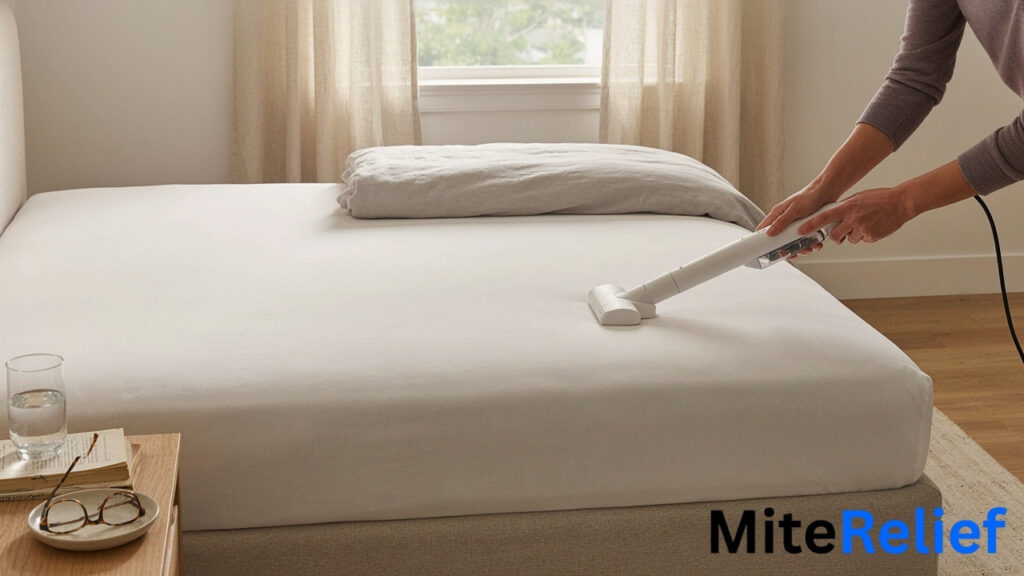
A few simple habits can help cut down on how much mites and allergens move around and build up:
- Clean used soft furniture before you start using it.
- Wash bedding and fabrics based on their care labels.
- Avoid moving unwashed bedding between rooms if you can.
- Keep mattresses, bedding, carpets, and upholstery reasonably clean.
- Use a vacuum with good filters on dusty surfaces.
- Control extra moisture in your home.
- Keep rooms well ventilated.
- Try to keep humidity at a level that’s harder for mites, when you can.
None of these steps will remove every single mite. That’s not realistic. But they can make your home less friendly for mites over time. For more detail, see how to prevent dust mites or what kills dust mites.
Frequently Asked Questions
Can Dust Mites Live in a Brand-New Mattress?
Yes. A new mattress can become a home for dust mites once it’s used. Mites first need to get onto it. Then the right humidity and warmth need to build up over time. There’s no set timeline for when this might happen.
Do Dust Mites Come Into Homes Through Open Windows?
Open windows aren’t seen as a main way dust mites get into a home. Mites are more closely linked to indoor dust, bedding, carpets, mattresses, upholstery, and items that get moved from place to place.
Can I Bring Dust Mites Home From a Hotel?
Mites or mite dust can travel home on your clothes or other fabric. But there’s no strong proof that hotel luggage is a major source of mites at home. Think of it as a possible way, not a common one.
Do Dust Mites Die in Cold Weather?
Cold, dry air can lower mite survival and slow reproduction. But cold weather outside doesn’t mean mites inside your home go away. Heated rooms, indoor humidity, and warm bedding can still give mites what they need.
How Quickly Can Dust Mite Populations Grow in a Home?
There’s no single timeline for every home. Growth depends on things like the starting number of mites, humidity, warmth, food, and the small climate in a mattress or piece of furniture.
What to Read Next
Conclusion
Dust mites are not created out of thin air by household dust. They come from other mites. Mite-filled material can move between rooms and homes on fabric, bedding, and furniture.
Whether a mite population grows depends on humidity, the right fabrics, food, and other conditions in your home.Cleaning, airflow, and humidity control are the most realistic ways to keep mite numbers down.
Medical Disclaimer
This content is for general informational purposes only and is not a substitute for professional medical advice, diagnosis, or treatment. Individual health needs can vary, so speak with a qualified healthcare professional about allergies, asthma, skin reactions, medications, or other symptoms. Seek prompt medical care if symptoms are severe, persistent, or getting worse.

Umar Farooq is the founder of MiteRelief, a resource for dust mite control and allergy prevention. After battling allergen sensitivity, he started creating research-backed guides that turn complex indoor air quality science into practical, affordable solutions anyone can implement.