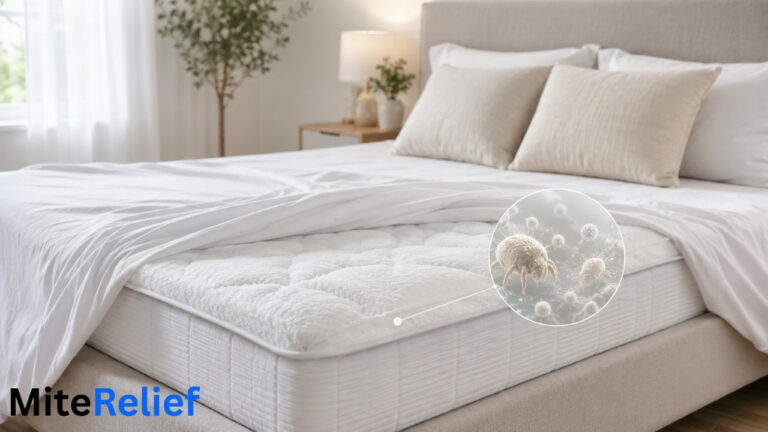
Mattress toppers can collect dust mite allergens over time. This happens for the same reason it happens to the mattress underneath.
A topper sits right against your body. It soaks up sweat, skin flakes, and warmth every night. That environment can make it easier for dust mites to remain in bedding materials.
Some people call this soft layer a dust mite mattress pad instead of a topper. No matter what you call it, the material decides how you should clean it.
This guide covers why toppers collect allergens. It also covers how to clean different materials and how to keep buildup low in your bedroom.
One thing to keep in mind: no cleaning routine makes a topper completely dust-mite-free. The goal is a cleaner surface with fewer allergens. It is not a mite-proof product.
Do Mattress Topper Dust Mites Build Up Over Time?
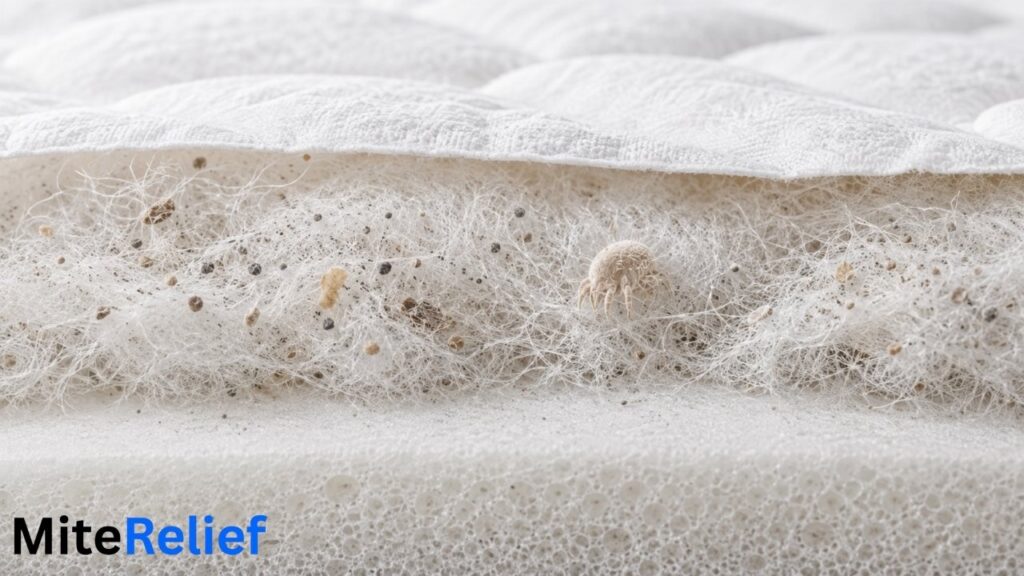
Yes, mattress toppers can get dust mites. These tiny creatures don’t bite or carry disease. But they do feed on dead skin cells that people shed every night. A topper sitting right under your sheets catches a steady supply of those skin flakes.
Moisture plays a big role too. Body heat and sweat raise the humidity level inside the topper’s fibers. This is even more true if the bedroom stays warm or has poor airflow. House dust mites tend to survive better in warm, humid environments. A topper that traps moisture becomes a comfortable home for them.
The mites themselves aren’t the main health concern. What they leave behind is. Dust mite allergens come from their droppings and body fragments. These bits stay in the fabric long after the mites are gone. That’s true for any dust mite mattress pad, whether it’s brand new or years old.
Regular cleaning helps limit this buildup. But it can’t fully stop it. To understand why these allergens cause reactions in the first place, it helps to know what dust mites are and how they survive indoors.
Which Mattress Topper Materials Collect More Dust Mite Allergens?
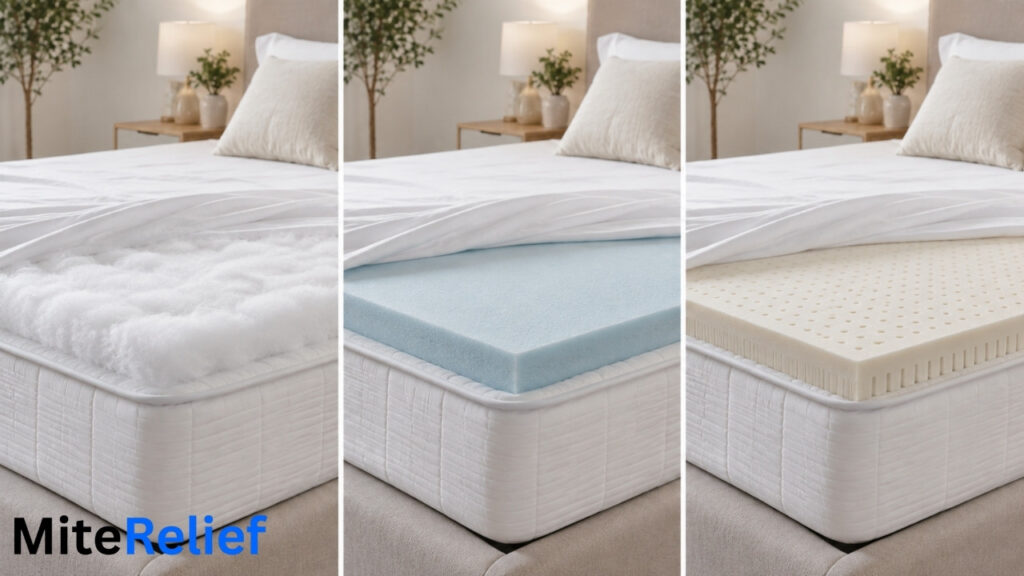
Not all toppers behave the same way. The material affects how much moisture it holds. It also affects how easy it is to wash and how much allergen buildup happens over time.
Polyester Fiber Toppers
Polyester toppers use soft, loose fibers. These fibers trap dust and skin cells fairly easily. The upside is that most polyester toppers can go straight into a washing machine. That makes it easier to remove what builds up inside them.
Memory Foam Toppers
Memory foam has a dense, solid structure. Water doesn’t pass through it easily. Because of this, most memory foam toppers can’t be machine washed. They tend to trap allergens near the surface. That means surface cleaning becomes the main option.
Latex Toppers
Latex toppers are also dense. But they’re naturally more moisture-resistant than foam. They still need gentle, careful cleaning, since soaking them can damage the material.
| Material | Cleaning Difficulty | Allergen Buildup |
| Polyester | Easier | Higher if not maintained |
| Memory Foam | Moderate | Surface buildup |
| Latex | Moderate | Lower buildup |
Can You Wash a Mattress Topper?
It depends on what the topper is made of. Always check the care label first. Washing the wrong material the wrong way can ruin it.
Fabric or polyester toppers are usually the easiest to wash. Many fit into a home washing machine. Larger sizes may need a laundromat’s bigger machines. Mild laundry detergent is usually enough to lift sweat, oils, and dust.
Memory foam toppers are different. Soaking foam in water can trap moisture deep inside. That moisture is hard to dry out and can lead to a musty smell. Most makers recommend against machine washing foam at all.
Latex falls somewhere in between. Latex toppers usually need gentle surface cleaning, according to the manufacturer’s instructions. But you shouldn’t fully soak it or wring it out. Any dust mite mattress pad made from latex needs air drying rather than heavy moisture exposure.
How to Clean a Mattress Topper for Dust Mites
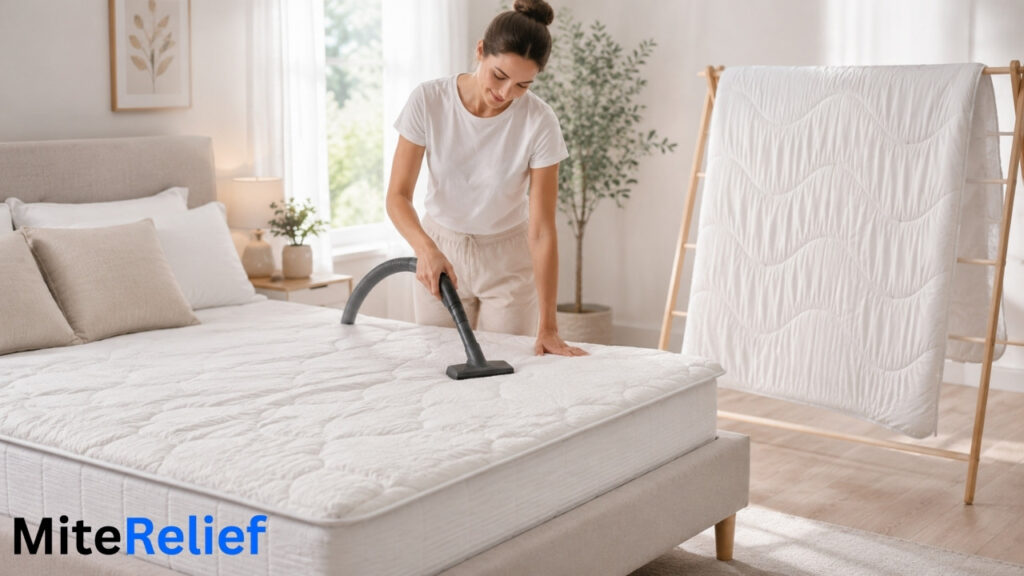
The cleaning method depends on whether your topper can handle water.
Washable Mattress Toppers
If your topper is machine washable, start by checking the tag. It should list the water temperature and detergent to use. Warm water with a gentle laundry detergent typically helps remove skin cells, sweat residue, and allergen particles from the fibers.
Drying completely matters as much as the wash itself. A damp topper left even slightly wet creates the exact moist spot mites prefer. Tumble it on low heat, or let it air-dry fully before putting it back on the bed.
Memory Foam and Latex Toppers
For memory foam and latex, skip the washing machine entirely. A vacuum cleaner with a HEPA filter attachment can pull dust and debris from the surface without adding moisture.
Spot cleaning works well for small stains. Dab, don’t rub, the spot with a cloth lightly dampened with mild soap and water. Let it air dry fully before covering it again.
For a deeper refresh, deep cleaning a mattress uses similar low-moisture steps that work well for foam and latex toppers too. Some people also ask whether steam cleaning kills dust mites.
This can be worth trying on washable fabric layers, though it’s not usually recommended for dense foam.
How to Reduce Dust Mite Buildup in Mattress Toppers

Cleaning is only part of the picture. Keeping conditions less friendly for mites in the first place makes a real difference too.
Wash your bedding often. Sheets sit directly on top of the topper, and they transfer skin cells and moisture into it.
Your bedding choices also matter because sheets, blankets, and pillow covers collect skin cells and moisture that can transfer to the topper. Choosing dust mite-friendly bedding can help reduce allergen buildup around your sleeping area.
Try to cut down overall moisture in the bedroom. Avoid damp laundry piles nearby, and air out the mattress area when you change sheets.
Controlling bedroom humidity also helps. Keeping indoor humidity below roughly 50% makes it harder for house dust mites to survive.
A dehumidifier or simple airflow can support that. Better airflow around the bed helps too, so try not to push it flush against a wall.
Open space lets moisture escape instead of building up. For more ways to limit exposure long-term, see how to prevent dust mites in the bedroom overall.
Do Mattress Toppers Need Dust Mite Covers?
A cover can help, but it isn’t a cure-all. Protection from dust mite allergens works best as one part of a bigger routine, not as a replacement for cleaning.
Some covers are marketed as dust mite-proof mattress pads. This means the fabric weave is tight enough to block mites and their allergens. Even with a cover like this, allergens can still build up on the surface from normal use. So it’s not a way to skip cleaning altogether.
An anti-dust mite mattress topper cover can be especially useful for memory foam or latex toppers that can’t be washed. The cover itself is usually removable and washable. That means it protects a topper that otherwise only gets surface cleaning.
It’s worth knowing the difference between a cover and an encasement. A mattress cover or mattress protector usually covers just the top and sides. A full encasement wraps the entire topper or mattress. For more on that difference, see mattress encasements for dust mites.
When Should You Replace a Mattress Topper?
Even with good care, a topper won’t last forever. A few signs suggest it’s time for a new one:
- The material has lost its support and feels flat or lumpy.
- There’s visible damage like tears, holes, or crumbling foam.
- Cleaning no longer reduces odors or buildup the way it used to
- A musty or sour smell lingers even after washing and drying.
No fixed number of years applies to every topper. It depends on the material, how you use it, and how well you care for it.
Frequently Asked Questions (FAQs)
Do mattress toppers attract dust mites?
Toppers can collect dust mite allergens because they trap dust, dead skin cells, and moisture close to the body. This buildup happens slowly with regular use. No single thing causes it.
Can washing a mattress topper remove dust mite allergens?
Washing can remove many allergens. But how much depends on the material. Fabric and polyester toppers respond best, while memory foam and latex rely more on surface cleaning.
Are memory foam mattress toppers bad for dust mites?
Memory foam isn’t necessarily worse. It just needs different care, since it usually can’t go in a washing machine. That makes surface vacuum cleaning and covers more important for this material.
How can I protect a mattress topper from dust mites?
Regular cleaning, cutting down moisture, and using a suitable mattress cover can all help limit buildup. Combining these steps works better than relying on just one.
Do dust mite covers help protect mattress toppers?
Yes, dust mite covers can help reduce contact with allergens. They work best when combined with regular cleaning and moisture control.
What to Read Next
- Dust Mite Mattress Encasement
- How to Deep Clean a Mattress
- Do Steam Cleaners Kill Dust Mites?
- How to Prevent Dust Mites
Conclusion
Mattress toppers can collect dust mite allergens because they trap dead skin cells, dust, and moisture right where you sleep. Materials like polyester, memory foam, and latex all respond differently to cleaning. That’s why it helps to match your routine to what your topper is actually made of.
Washable toppers are the easiest to maintain, since they can go straight into a washing machine. Foam and latex toppers need more careful, low-moisture care instead, through vacuuming and spot cleaning.
Regular cleaning, thorough drying, and keeping bedroom humidity in check all work together to reduce allergen buildup over time. The goal isn’t a completely dust mite-free topper. It’s a cleaner sleeping surface with fewer allergens.
Medical Disclaimer
This content is for general informational purposes only and is not a substitute for professional medical advice, diagnosis, or treatment. Individual health needs can vary, so speak with a qualified healthcare professional about allergies, asthma, skin reactions, medications, or other symptoms. Seek prompt medical care if symptoms are severe, persistent, or getting worse.

Umar Farooq is the founder of MiteRelief, a resource for dust mite control and allergy prevention. After battling allergen sensitivity, he started creating research-backed guides that turn complex indoor air quality science into practical, affordable solutions anyone can implement.