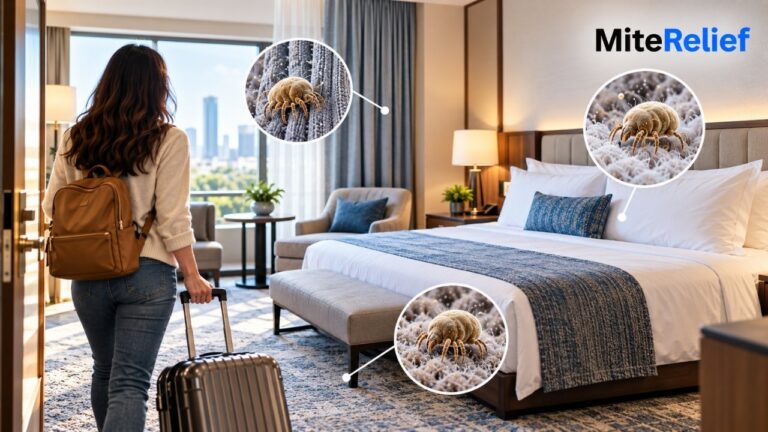
At home, you control your bedding, your cleaning habits, and the feel of your room. On the road, you step into rooms you do not know. A dust mite allergy hotel stay can be harder because mattresses, pillows, carpets, and curtains may hold indoor allergens.
Traveling with a dust mite allergy takes some planning. A few simple steps may help lower your exposure. This guide covers what to ask, what to pack, and what to do once you arrive.
Why Hotel Rooms Can Be Challenging With Dust Mite Allergy
House dust mites are tiny bugs that can live in soft items indoors. They thrive when humidity, warmth, and furnishings suit them. Their droppings and body parts are the dust mite allergens that cause symptoms.
Dust mites in hotel rooms are possible, just as they are in homes. Mattresses, pillows, and hotel bedding can hold dust and allergens. So can carpets, fabric chairs, curtains, and upholstered furniture like headboards.
Cleaning methods differ from one property to the next. Room age, airflow, and fabric choices also differ. This means hotel room allergies from dust mites vary a lot. One room may bother you, while another may not.
The main challenge is control. You cannot pick your own sheets or change the room’s setup. That is why planning can help.
What to Ask Before Booking a Hotel
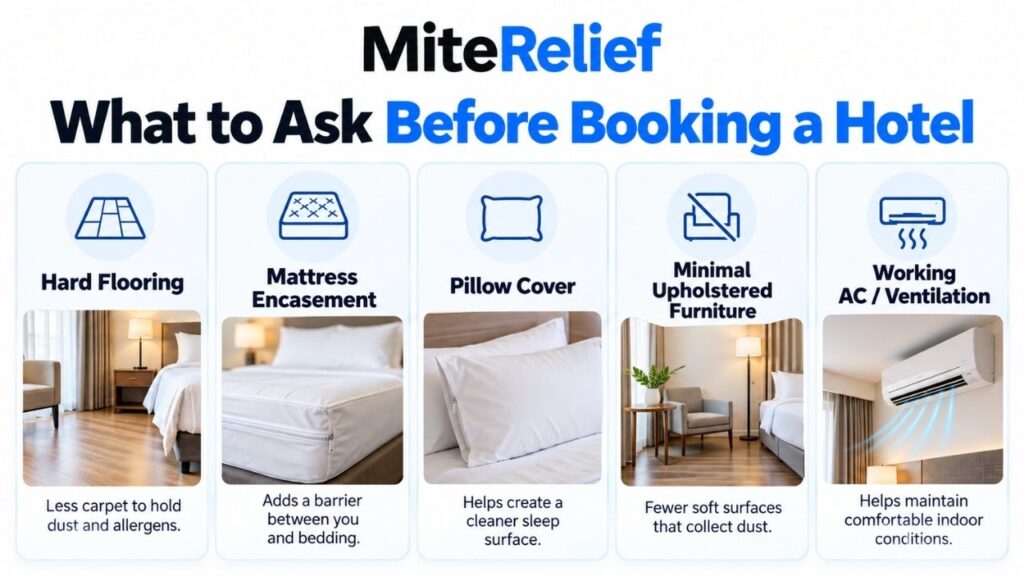
A short call or email before you book can make a difference. If you have a dust mite allergy hotel room need, tell the staff plainly. Ask what they can offer.
Here are good things to ask about:
- Rooms with hard floors instead of carpet
- Allergy-friendly hotel room options
- Mattress encasements and pillow covers
- Rooms with less upholstered furniture
- Recently updated rooms, if they have them
- Working air conditioning and ventilation
- Removal of extra cushions or throws
| Hotel Feature | Why It May Help | What to Ask |
| Hard flooring | Means less carpet to hold dust and allergens | “Do you have rooms with wood or tile floors?” |
| Mattress and pillow covers | Add a barrier between you and your bedding | “Are allergen-resistant covers available?” |
| Allergy-friendly room | May include extra cleaning or bedding steps | “Do you offer allergy-friendly rooms?” |
| Less fabric furniture | Means fewer soft surfaces | “Is a room with less fabric furniture available?” |
| Air conditioning or ventilation | Helps keep the room comfortable | “Does the room have working AC or ventilation?” |
What to Pack When Traveling With Dust Mite Allergy
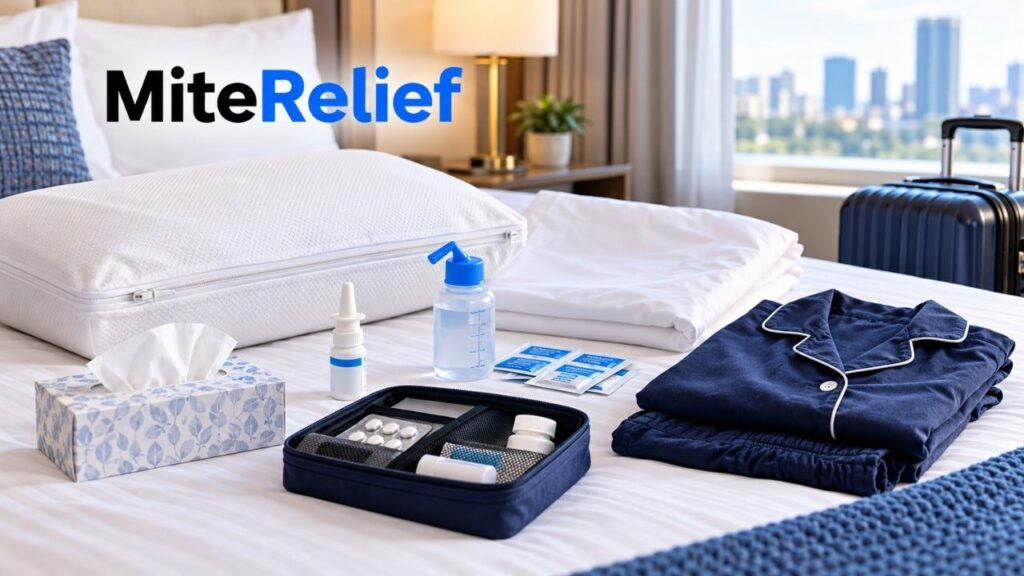
Good packing is one of the best dust mite allergy travel tips. Think about the items in your normal routine. You do not need to buy anything new.
What Should Be in Your Travel Allergy Kit?
Consider bringing these items:
- Your own pillow, or a clean pillowcase
- An allergen-barrier pillow cover, if you already use one at home
- A light bedding barrier, if it is part of your routine
- Your usual prescribed or store-bought allergy medicine
- Your nasal spray, if you already use one
- Supplies for a saline rinse
- Clean sleepwear
- Tissues
Pack your daily items in your carry-on, not your checked suitcase. That way they stay within reach if your bag is delayed. For help with bedding barriers, read our guide to dust mite mattress encasements.
What to Do When You Enter the Hotel Room
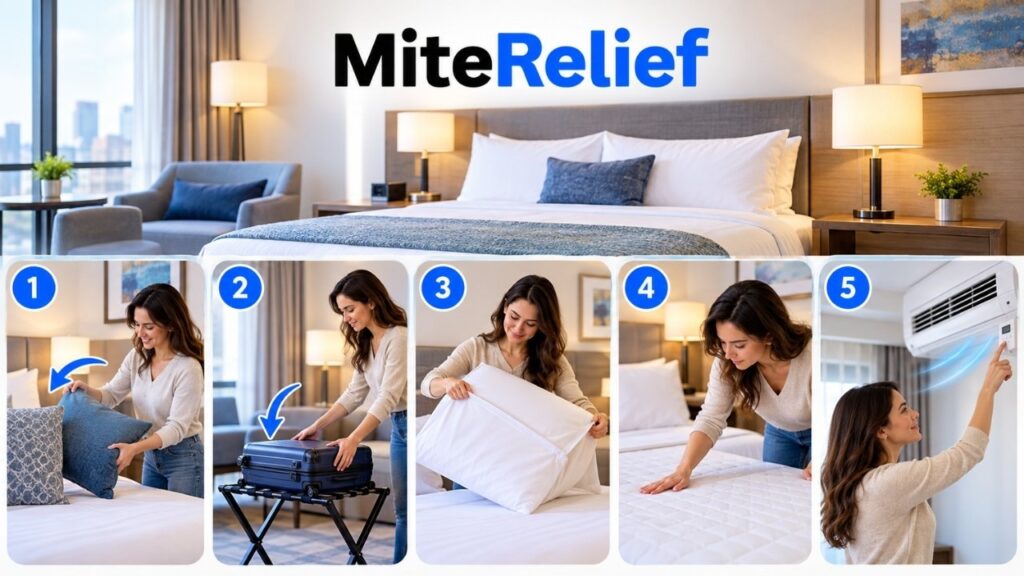
You do not need to clean the whole room. A few quick steps are enough. Most people can do them in about five minutes.
A 5-Minute Hotel Room Check
- Look at the room. Check the bedding and the room’s overall condition. If something smells musty or looks dirty, ask for a different room.
- Move extras off the bed. Put decorative cushions and throws in a closet or on a shelf.
- Use your own protection. Use your own pillow cover or pillowcase if you brought one.
- Keep your luggage off the bed. Use a luggage rack or a hard surface instead.
- Run the air. Turn on the air conditioning or ventilation if it feels right for the room. Good airflow can improve air quality.
- Be gentle with fabrics. Try not to shake out heavy curtains or fabric seats. This may stir up dust.
Think of these steps as ways to lower exposure. They will not remove it. Learn more about how dust builds up in sleeping spaces in our article on dust mites in bedrooms.
Airplanes, Trains, Rental Cars, and Cruise Cabins
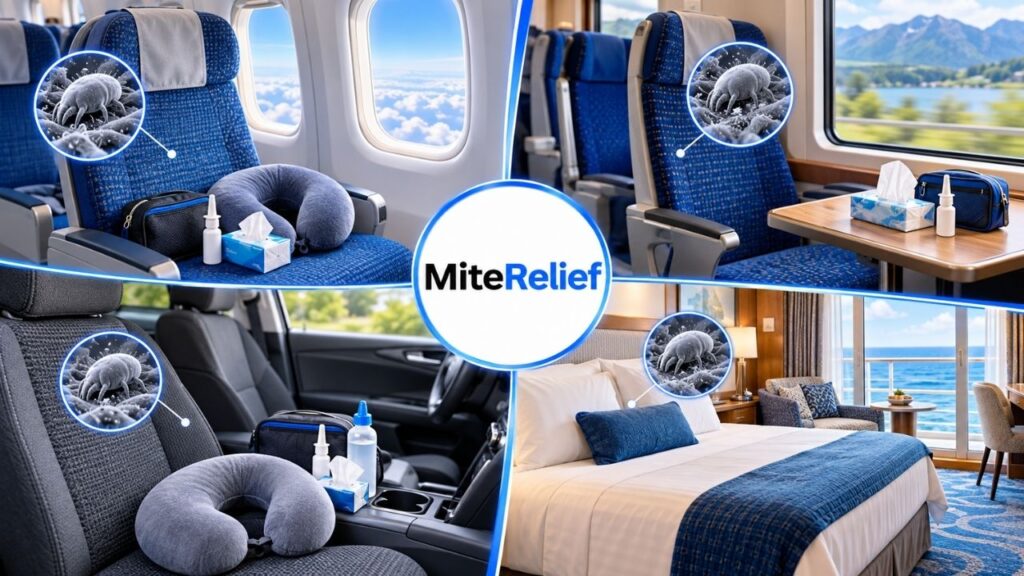
Hotels are not the only place with soft surfaces. Many forms of travel involve fabric seats and unfamiliar rooms. People often ask about dust mites on airplane seats. Fabric seats can collect dust like any soft surface. But that doesn’t mean every seat has dust mites.
Here is where you may meet soft surfaces:
- Airline seats, including headrests
- Train seats and bus seats
- Rental cars with cloth seats
- Cruise cabins, which have mattresses, pillows, and carpet much like hotel room
If a cruise cabin is part of your plan, use the same steps you would use for a hotel. Ask about bedding and carpet before you go. You can also bring your own travel pillow for flights and car rides.
What Changes During Long Travel Days?
Long trips mean more hours in new indoor spaces. Plan a little for that.
- Keep your medicine in a bag you can reach.
- Do not pack key allergy supplies in checked bags.
- Follow your normal medicine directions.
- Watch for symptoms that get worse.
Do not take antihistamines before a flight just because you are flying. Only do so if your healthcare professional or the product label already says to.
Managing Dust Mite Allergy Symptoms Away From Home
You cannot control every part of a trip. Some days you may feel more stuffy or itchy. That is normal for many people with allergic rhinitis.
Common signs include nasal congestion, sneezing, a runny nose, and itching eyes or nose. Our page on dust mite allergy symptoms lists more.
Keep Your Normal Allergy Routine
The best plan is to stay with what already works for you.
- Take prescribed medicine as directed.
- Use your nasal spray as directed by the label or your doctor’s advice. Our guide to nasal spray for dust mite allergy has more details.
- A saline rinse may help clear mucus and allergens from your nasal passages.
- Keep your usual supplies close by.
Don’t start a new medicine or increase your dose just because you are traveling. Ask your allergist or healthcare professional first. Get medical help right away if you have respiratory symptoms like wheezing, chest tightness, or trouble breathing. Do the same if your symptoms are severe or keep getting worse.
What to Do After Returning Home
Coming home is a good time to reset. Keep it simple.
- Unpack away from your bed when you can.
- Wash travel clothes by their fabric care labels. Our article on dust mites in clothes explains more.
- Wipe down your suitcase if it looks dusty.
- Store luggage away from your sleeping area.
- Return to your usual home habits. Our guide to dust mite prevention methods can help.
Frequently Asked Questions (FAQs)
Are dust mites common in hotel rooms?
Mattresses, bedding, carpets, and upholstered furniture can hold dust mite allergens. But exposure varies a lot from room to room and from hotel to hotel.
Are hotel mattresses worse for dust mite allergy?
Not always. A hotel mattress is not automatically worse than one at home. Its age, the humidity, bedding protection, nearby furnishings, and upkeep can all matter.
What should I ask a hotel about allergy-friendly rooms?
Ask about mattress encasements and pillow covers. Ask about hard floors and less fabric furniture. You can also ask how the room is cleaned and whether it has working air conditioning or ventilation.
Can I bring my own pillow when traveling with a dust mite allergy?
Yes, if it is practical. A familiar clean pillow or an allergen-barrier pillow cover can help you keep your normal bedding routine.
Can dust mite allergy be a problem on cruises?
It can be. Cruise cabins have mattresses, pillows, carpet, and other soft items, much like hotel rooms. The same planning steps can apply.
What to Read Next
Conclusion
Traveling with a dust mite allergy can feel harder because hotel rooms, transport, and other temporary stays give you less control. You cannot choose the bedding, the cleaning, or the room conditions. But you can ask good questions, pack smart, and stay with your usual allergy routine.
These steps may lower your exposure, but they can’t eliminate it. If your symptoms are severe or you have trouble breathing, talk to a healthcare professional. With a little planning, your next vacation can be more comfortable.
Medical Disclaimer
This content is for general informational purposes only and is not a substitute for professional medical advice, diagnosis, or treatment. Individual health needs can vary, so speak with a qualified healthcare professional about allergies, asthma, skin reactions, medications, or other symptoms. Seek prompt medical care if symptoms are severe, persistent, or getting worse.

Umar Farooq is the founder of MiteRelief, creating research-backed guides about dust mites, indoor allergens, and practical allergy prevention for healthier homes.