Picking a spray is easy. Knowing what is inside the bottle is harder. Many people grab one without checking its type, and others use it in a way that keeps the medicine from reaching the right spot. A nasal spray for dust mite allergy can ease symptoms, but both the type you choose and how you use it matter.
Dust mite allergy starts when your body overreacts to tiny particles from the house dust mite. This often results in allergic rhinitis, an allergy that mainly affects the nose.
Not sure if mites are the cause? Read about common dust mite allergy symptoms or see how they differ in this dust mite allergy vs seasonal allergy guide.
Below, you will find each kind of dust mite allergy nasal spray, tips for using one the right way, and signs it is time to call a doctor. This article is for learning only. It cannot replace medical advice.
What Happens in Your Nose
One of the best-known allergy triggers is a mite called Dermatophagoides pteronyssinus. Its waste and tiny body pieces float in the air as dust mite allergens. Most people breathe them in without knowing.
In an allergic person, the immune system sees these allergens as a danger. It then produces IgE antibodies, which tell the body to release histamine. Histamine causes inflammation in the soft lining of the nose, called the nasal mucosa.
This is why you may feel nasal congestion, get a runny nose, keep sneezing, or notice itchy eyes. Some people also have breathing problems.
Types of Nasal Spray for Dust Mite Allergy
Each spray does a different job. Some reduce swelling. Some stop histamine from acting. Some wash the nose, and some temporarily shrink swollen tissue.
Your best pick depends on your symptoms, how strong they feel, how often they show up, and your medical history. People often search for the best nasal spray for dust mite allergy, but no one spray fits everyone. For more choices, see these other dust mite allergy medicine options.
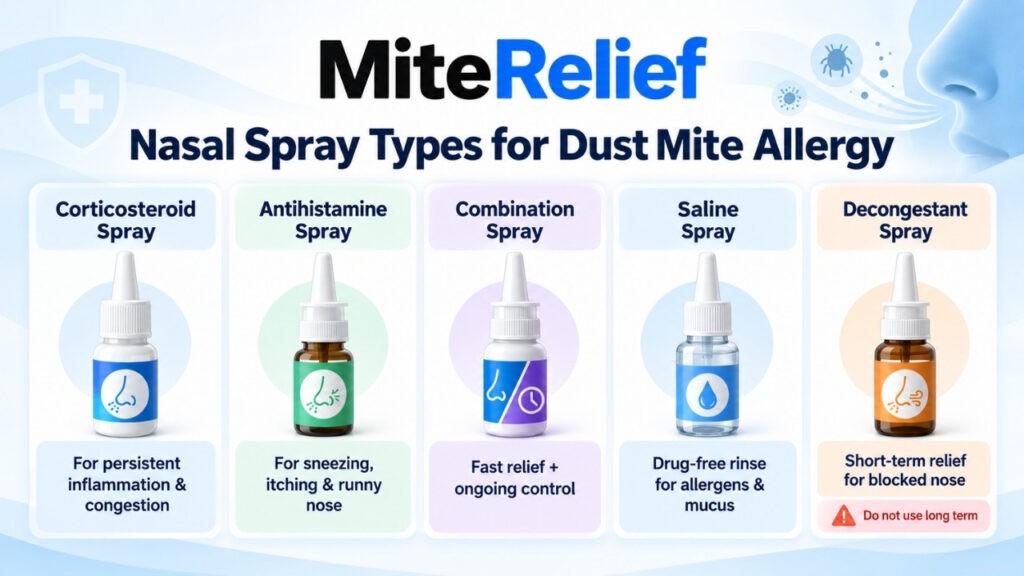
The main groups are:
- Corticosteroid sprays
- Antihistamine sprays
- Combination sprays
- Saline sprays and rinses
- Short-term decongestant sprays
This quick chart shows how they compare:
| Spray Type | Best Known For | Speed | Key Benefit | Watch Out For |
| Corticosteroid | Long-lasting swelling and stuffiness | Builds slowly | Steady control over time | Works best with regular, correct use |
| Antihistamine | Sneezing, itching, runny nose | Quicker | Faster relief | Can cause irritation or sleepiness |
| Combination | Symptoms that are hard to control | Quick and ongoing | Two actions in one bottle | May call for a doctor’s guidance |
| Saline | Rinsing allergens from the nose | Right away | No medicine in it | Use safe water for irrigation |
| Decongestant | Short bursts of heavy blockage | Fast | Opens the nose quickly | Overuse can cause rebound congestion |
Corticosteroid Nasal Sprays: What They Do
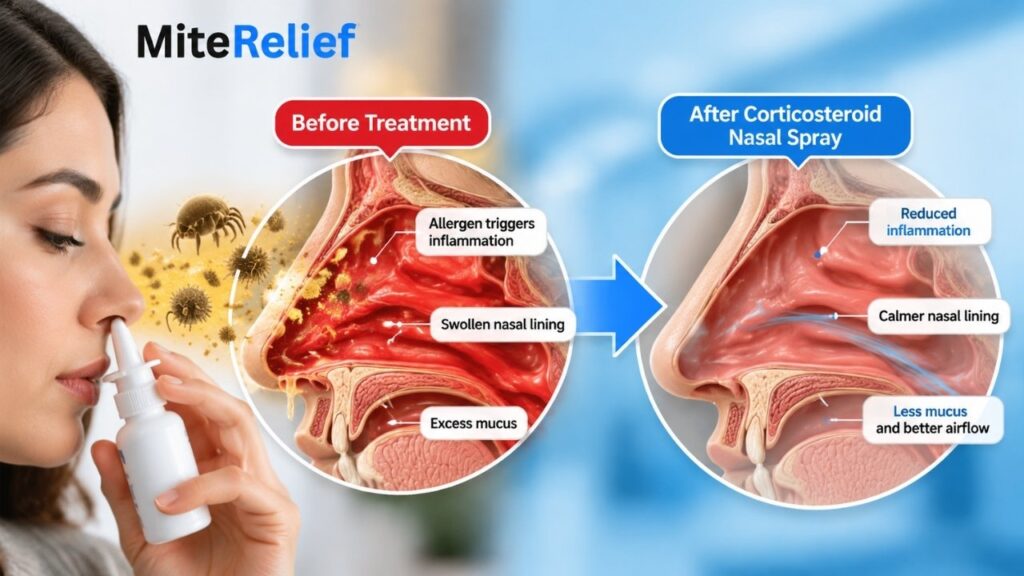
A nasal corticosteroid calms swelling inside the nose. Doctors often suggest it for allergic rhinitis that lasts for weeks or months. That is why a steroid nasal spray for dust mite allergy is so widely used.
A corticosteroid nasal spray does not fix the allergy itself. It settles the inflammation that causes trouble in the nasal passages.
Common ingredients include fluticasone (Flonase), triamcinolone (Nasacort), and mometasone. Budesonide and beclomethasone are also used. These are only examples, not a ranking.
Some are sold over the counter, and others need a prescription. Always follow the package or your healthcare provider‘s directions.
When Will a Steroid Spray Start to Help?
Steroid sprays do not open the nose right away. Many people need to use them on a steady schedule before they see the full effect.
Results differ by person and by product. If nothing changes even though you use the spray as directed, speak with a healthcare provider.
How to Use a Nasal Spray the Right Way
Good technique gets the medicine where it needs to go. Read your product directions first.
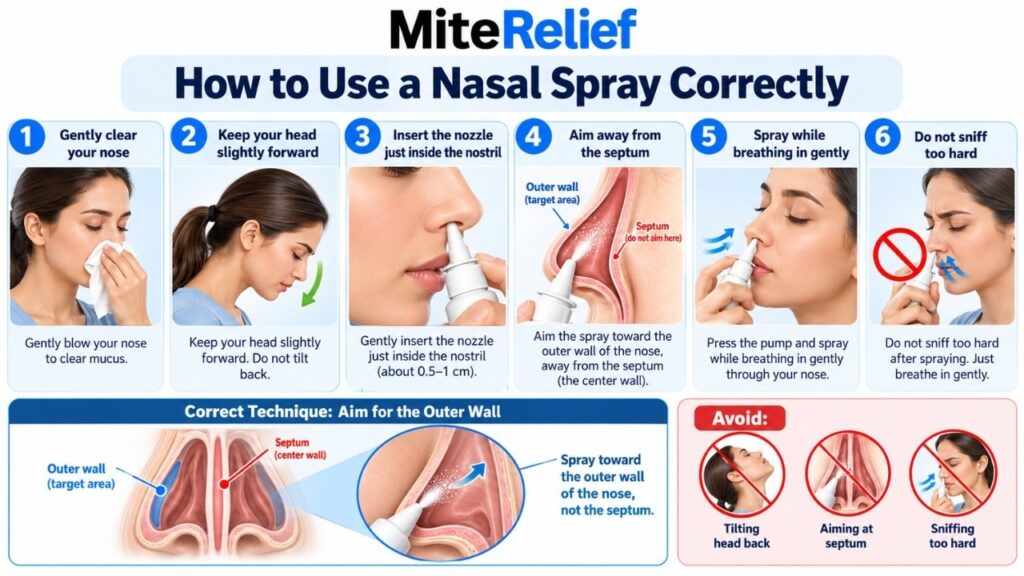
These steps fit many sprays:
- Blow your nose gently.
- Shake the bottle if the label says so.
- Lean your head a little forward.
- Place the tip just inside one nostril.
- Point the tip toward the outer side of the nose, away from the wall between the nostrils (the septum).
- Squeeze while you breathe in softly.
- Skip the hard sniff.
- Do the other nostril if the label tells you to.
- Wipe the tip and put the cap back on as directed.
The goal is to coat the nasal mucosa, not to spray into your throat.
Nasal Spray Mistakes That Are Easy to Make
- Pointing at the septum. This can dry out or irritate the nose and may cause nosebleeds.
- Leaning your head far back. The liquid may drip into your throat.
- Sniffing too strongly. This pulls the medicine past the nose.
- Using a different method each day. A steady routine works better.
- Forgetting to clean the tip. Follow the cleaning steps on the package.
- Believing extra sprays help more. More is not always better and can add side effects.
Antihistamine Sprays and Combination Sprays
An antihistamine nasal spray blocks histamine’s effects inside the nose. Azelastine is one example. These sprays may ease sneezing, itching, and a runny nose. Some people feel relief faster than with a steroid spray.
A few products leave a bitter taste in the mouth. Some can cause sleepiness or nose irritation, so read the label closely.
A combination spray puts an antihistamine and a corticosteroid together in one bottle. It may be an option when symptoms stay strong. Your healthcare provider can tell you if it suits you.
These sprays work differently than steroid-only sprays. Neither is the strongest for everyone. When choosing a nasal spray for dust mite allergy, let your symptoms and health history guide the choice.
Decongestant Nasal Sprays: The Problem With Long Use
A decongestant nasal spray narrows swollen blood vessels in the nose. Oxymetazoline is a common ingredient. These sprays can clear a blocked nose quickly, but they are meant for short-term use only.
Use it too long, and the swelling may come back worse once the effect fades. This is called rebound congestion, or rhinitis medicamentosa. It can trap you in a cycle of needing more spray.
Most labels limit use to about three days, so check yours. A decongestant is not a regular treatment for ongoing dust mite allergy. If you have used one for longer than a few days, ask a healthcare provider what to do next.
Saline Nasal Spray and Nasal Rinsing

A saline nasal spray contains saline solution, or salt water. It helps flush out mucus and allergens and keeps the inside of the nose moist.
Saline has no medicine in it, so it does not act like a steroid or an antihistamine. Many people use it alongside another treatment.
Nasal irrigation flushes the nose with more liquid. You can use a squeeze bottle or a neti pot. Both give you a nasal rinse.
Water safety is very important. Use distilled or sterile water, or water that has been boiled and cooled. Never use plain tap water. Wash and dry your device after each use.
If a Nasal Spray Is Not Enough
Sometimes a spray doesn’t provide enough relief. In that case, a medical review can help.
An allergist can work out what is behind your symptoms. Allergy testing, such as a skin prick test, can show if dust mites are the trigger. Learn more about testing for dust mite allergy.
Your provider might also suggest other allergy medicine, like oral antihistamines. They may also look for other nose or sinus problems.
Some people are offered immunotherapy, a treatment that helps the body slowly get used to allergens. You can read about dust mite allergy immunotherapy here.
Signs You Should See a Doctor or Allergist
Reach out for medical advice if you notice any of these:
- Symptoms that stay even when you use the spray correctly
- Nosebleeds that happen often or are heavy
- Serious congestion that does not get better
- Signs of nasal polyps, such as a long-lasting blockage or loss of smell
- Sinus problems that keep returning
- Wheezing, chest tightness, or other breathing problems
- Doubts about using a spray for a long time
Get urgent care if you have trouble breathing.
Frequently Asked Questions (FAQs)
What is the best nasal spray for dust mite allergy?
No spray is best for every person. The right one depends on your symptoms, how strong they are, and your health background. A healthcare provider or allergist can help you choose.
How long does a nasal spray take to work for dust mite allergy?
That depends on the type. Antihistamine and decongestant sprays may act sooner. Steroid sprays usually build up with steady use. No single timeline fits everyone.
Can I use Flonase every day for dust mite allergy?
Many people use it daily, as long as they follow the label. If you plan to use it long term or have other health concerns, check with a healthcare provider.
Why does my nasal spray run down my throat?
Your aim or head position may be off. Leaning back or sniffing hard can push the spray down. Keep your head slightly forward and point the tip to the outer side of your nose.
Is saline nasal rinse effective for dust mite allergy?
It can help wash allergens and mucus out of the nose. Think of it as a helper, not a replacement for medicine. Always use safe water.
Can a nasal spray for dust mites cure the allergy?
No. Sprays usually manage nose symptoms. They do not remove the allergy itself.
What to Read Next
Conclusion
A nasal spray may help manage dust mite allergy symptoms. Steroid, antihistamine, combination, saline, and decongestant sprays each play a different role. Using a spray correctly is just as important as choosing the right one.
Sprays ease symptoms but do not cure the allergy. If your symptoms last, get worse, or come with breathing problems, talk with a healthcare provider or allergist.
Medical Disclaimer
This content is for general informational purposes only and is not a substitute for professional medical advice, diagnosis, or treatment. Individual health needs can vary, so speak with a qualified healthcare professional about allergies, asthma, skin reactions, medications, or other symptoms. Seek prompt medical care if symptoms are severe, persistent, or getting worse.

Umar Farooq is the founder of MiteRelief, creating research-backed guides about dust mites, indoor allergens, and practical allergy prevention for healthier homes.