People often suggest baking soda and essential oils to get rid of dust mites. But do they work?
Does vinegar kill dust mites? Not in a way you can count on. No strong evidence shows that household white vinegar kills house dust mites in mattresses or bedding. Some essential oils have killed mites in laboratory research. That doesn’t mean they work the same way at home.
Here’s what the research says about each remedy.
Quick Verdict Table
| Natural Product | Evidence for Killing Dust Mites | Evidence for Allergen Reduction | Overall Verdict |
| White vinegar | Not reliably shown | None shown | Not a proven treatment |
| Baking soda | No convincing evidence | None shown | Deodorizer, not a mite killer |
| Tea tree oil | Lab studies show acaricidal activity | Home benefit unproven | Lab evidence, but unreliable alone at home |
| Eucalyptus oil | Lab studies and some laundry studies | Some laundry studies report less allergen | Promising research, limited household evidence |
| Lavender oil | Some lab activity, limited overall | Not shown | Not a proven treatment |
| Clove oil | Lab studies show acaricidal activity | Home benefit unproven | Strong lab activity, household use unproven |
What the labels mean:
- Not reliably shown: No good studies show the product kills house dust mites at household strength.
- Lab studies show: The product killed mites in controlled tests. These often used direct contact and strong oil.
- Home benefit unproven: No solid tests exist on real mattresses or bedding.
- Limited: Only a few studies exist, so conclusions are weak.
Why Natural Dust Mite Remedies May Not Work at Home
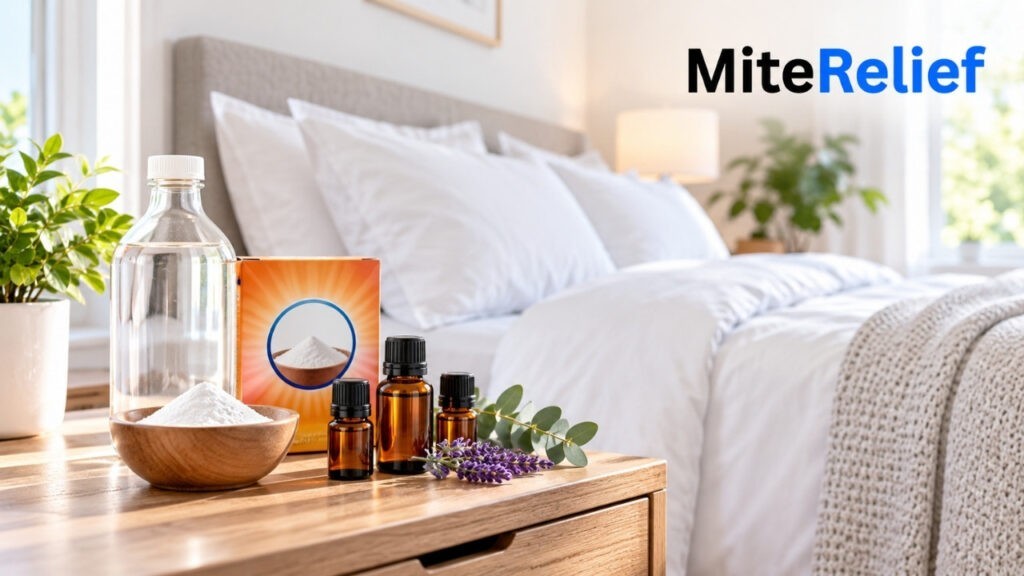
Lab tests and real homes differ greatly. In a lab, scientists put mites in direct contact with a measured amount of a substance. They control concentration and contact time.
At home, you spray a surface and hope it works. Dust mites can live within mattresses, bedding, and upholstered fabrics, making them difficult to reach with surface sprays. A spray may never reach them. It may also dry out before it can do any harm.
Different studies also use different mite species, doses, and methods. That makes results hard to compare. A strong lab result is a good clue, not a guarantee.
For a broader look at your options, see our guide to natural ways to control dust mites.
Why Killing Mites Does Not Always Remove Allergens
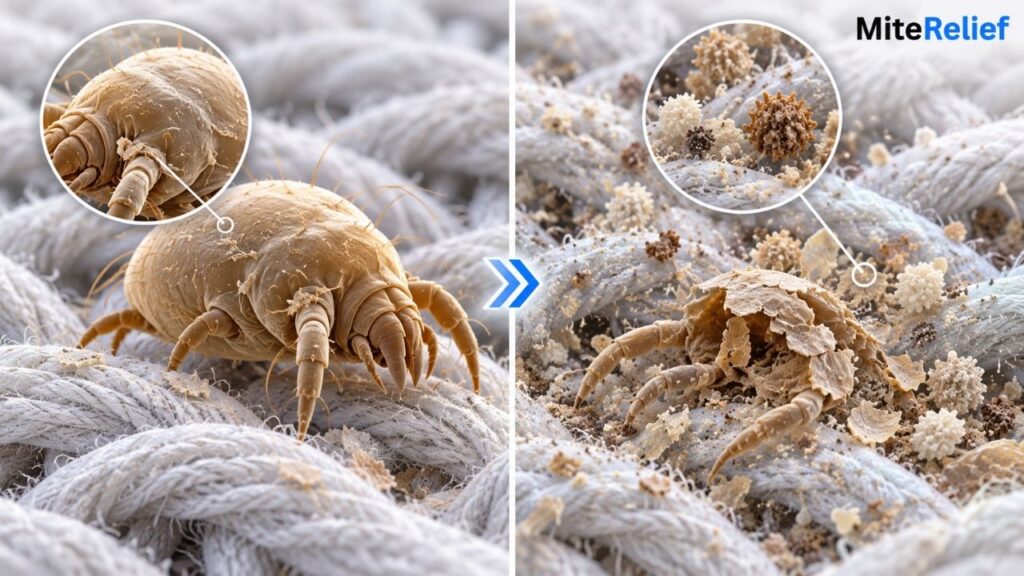
Dead mites still leave things behind. Body parts and dust mite droppings hold the dust mite allergens that trigger allergic reactions. These can stay in fabric after the mites die.
So killing mites and cutting allergens are two separate goals. The Asthma and Allergy Foundation of America offers more on dust mite allergens and allergy control. You can also read about dust mite allergy symptoms to see what these allergens can cause.
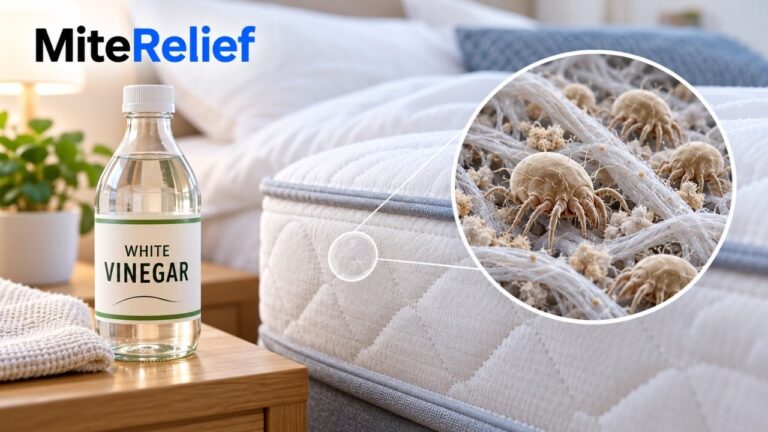
Does Vinegar Kill Dust Mites?
White vinegar is mostly water with about 5% acetic acid. Acetic acid gives vinegar its sour smell and cleaning power. People like vinegar because it’s cheap and seems gentle.
So will vinegar kill dust mites? There’s no solid proof that it does. Studies haven’t shown that household vinegar reliably kills house dust mites in mattresses or bedding.
Even if a substance affects mites under controlled conditions, that does not prove ordinary household vinegar works on mattresses or bedding.
Here’s why vinegar falls short at home:
- Household vinegar is fairly weak.
- A light spray only wets the top layer of fabrics.
- Mites deep inside a mattress won’t get enough contact time.
Vinegar also isn’t proven to remove or break down dust mite allergens. A damp surface isn’t the same as a cleaner one. Spraying vinegar on a mattress may even leave it damp, which isn’t helpful.
Fabric safety matters too. Vinegar can fade some dyes or harm certain materials. Test in an inconspicuous spot first, or check the care label.
For a broader look at methods that do work, see our guide on what kills dust mites.
Verdict: Household white vinegar isn’t a proven dust mite treatment.
Does Baking Soda Kill Dust Mites?
Baking soda is sodium bicarbonate. It’s good at soaking up smells. That’s why people put it in fridges and shoes.
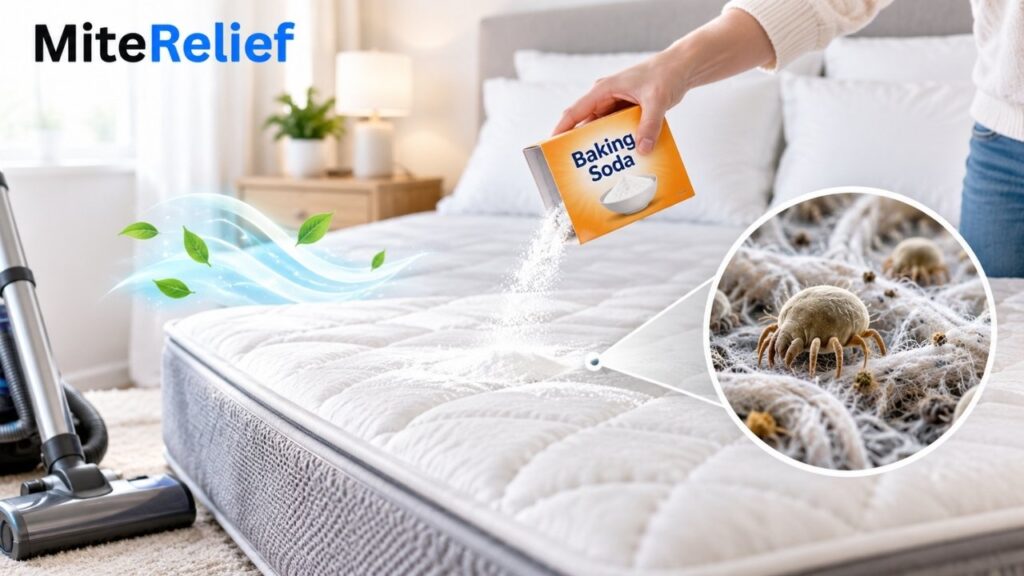
But there’s no convincing evidence that baking soda kills dust mites. Absorbing odors isn’t the same as killing mites. It also isn’t the same as removing dust mite allergens.
Some people sprinkle baking soda on a mattress and then vacuum it up. The vacuuming may pick up some loose surface material. But that doesn’t show the baking soda killed anything. The vacuum did the work.
Verdict: Baking soda freshens a mattress. It isn’t a mite killer.
Can Essential Oils Kill Dust Mites?
Some essential oils have shown acaricidal activity. That means they can kill mites. This was seen in laboratory research. This research on essential oils and house dust mites compared tea tree, lavender, and lemon oils. Tea tree oil worked best. Lavender came second, and lemon oil was weakest.
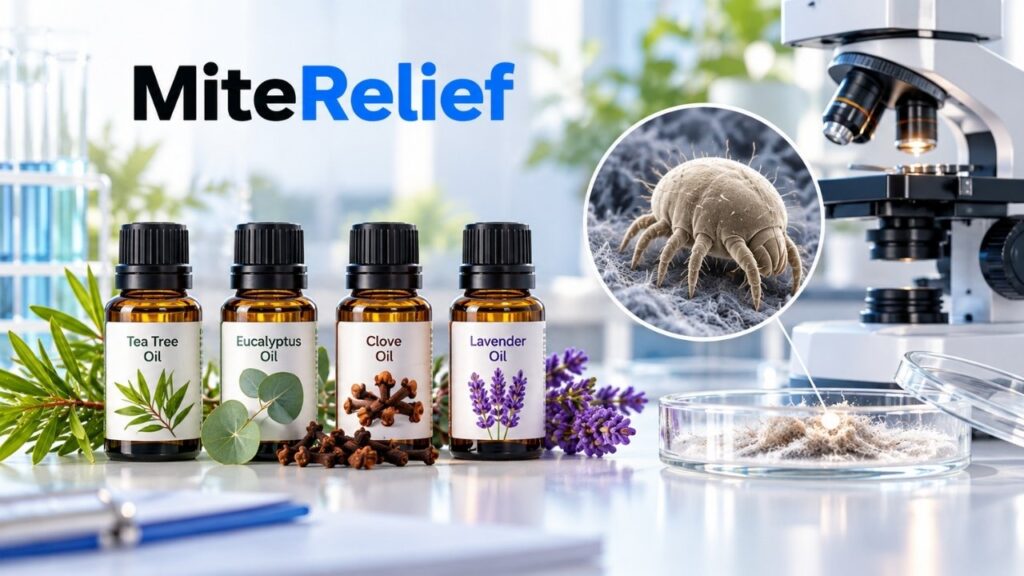
Keep in mind that results depend on the concentrations used and how long the mites were exposed. Lab tests often use direct contact with high oil concentrations. Home sprays are very different.
Tea Tree Oil and Dust Mites
Tea tree oil has shown promising mite-killing activity in laboratory studies, but its effectiveness in ordinary homes remains uncertain. Some studies found it killed mites under controlled conditions.
Still, lab success doesn’t mean a mattress spray works. A diluted spray touches mites for less time and in lower amounts. Real mattresses are also thick and hard to soak through.
There are safety concerns too. Tea tree oil can cause skin irritation. It can also harm pets, especially cats and dogs, if they’re exposed to it.
Verdict: Real lab evidence, but not a dependable stand-alone fix at home.
Eucalyptus Oil and Dust Mites
Eucalyptus oil has been tested in the lab and in laundry. Some laundry studies reported fewer live mites and less dust mite allergen after washing with it. That’s interesting. But it’s laundry research.
Washing bedding is not the same as spraying a mattress. Laundry gives you lots of water, motion, and time. A spray gives you none of that. So you can’t assume the results carry over.
For more on washing products, read about dust mite laundry additives. Eucalyptus oil can also irritate skin and airways, and it’s risky for pets.
Verdict: Promising research, but don’t expect the same results from a mattress spray.
What About Clove Oil and Lavender Oil?
Clove oil has shown strong acaricidal activity under some lab conditions. But lab strength doesn’t make it safe or reliable for home use. It can also irritate skin and stain fabrics.
Lavender oil showed some activity in lab testing. Still, evidence for dependable home use is limited. It also hasn’t been proven to repel mites.
Verdict: Clove oil is strong in the lab but unproven at home. Lavender oil isn’t a proven treatment.
Are Natural Dust Mite Remedies Safe for Household Use?
Natural doesn’t always mean safe. Safety and effectiveness are two separate questions.
Here’s what to watch for:
- Skin irritation: Essential oils can irritate skin, especially undiluted.
- Breathing problems: Strong scents may bother people with allergies or asthma.
- Pets: Tea tree and eucalyptus oils can be dangerous for cats and dogs.
- Fabric damage: Oils and vinegar can stain or fade some fabrics.
- DIY recipes: Homemade mixes may be too strong or untested. Diluting an oil doesn’t automatically make it safe.
One more rule: never mix vinegar with bleach. It creates toxic fumes. Use them separately, if at all.
Frequently Asked Questions (FAQs)
Does white vinegar repel dust mites?
No dependable evidence shows that it does. Vinegar’s smell or acidity may make it seem like it keeps mites away. But that hasn’t been proven.
Can vinegar remove dust mite allergens from a mattress?
It isn’t a proven method. Wiping a surface isn’t the same as removing dust mite allergens from inside the mattress.
Can I spray tea tree oil on my mattress for dust mites?
There’s no good proof it works at home. It also brings risks, like irritation, pet exposure, and stains. It’s safest not to rely on it.
Which essential oil has the strongest evidence against dust mites?
Tea tree oil, clove oil, and eucalyptus oil have all shown activity in lab studies. Results depend on how each study was done. No single oil is a proven, safe mattress treatment.
What to Read Next
Conclusion
Here’s the short version. White vinegar isn’t a proven dust mite treatment. Baking soda has no convincing evidence that it kills mites. Tea tree oil, eucalyptus oil, and clove oil worked in some lab studies, but that doesn’t prove they work at home.
Remember that killing mites and reducing allergens are different goals. Dead mites can still leave allergens behind. Read research claims with care. If a remedy sounds too good to be true, it probably hasn’t been tested in a real home.
Medical Disclaimer
This content is for general informational purposes only and is not a substitute for professional medical advice, diagnosis, or treatment. Individual health needs can vary, so speak with a qualified healthcare professional about allergies, asthma, skin reactions, medications, or other symptoms. Seek prompt medical care if symptoms are severe, persistent, or getting worse.

Umar Farooq is the founder of MiteRelief, creating research-backed guides about dust mites, indoor allergens, and practical allergy prevention for healthier homes.