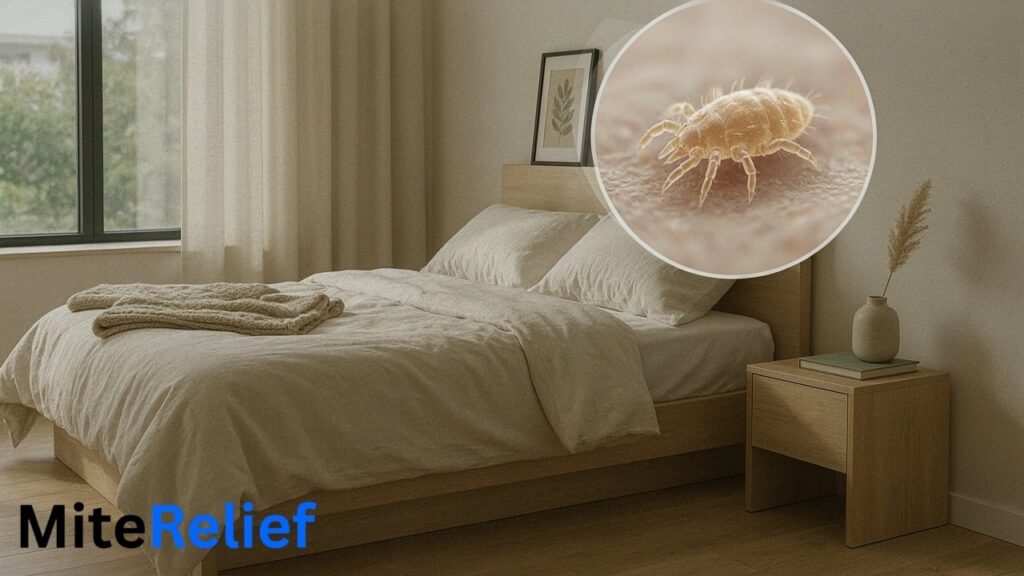
Ever lie in bed and sense a tickle or crawl across your face? Or do you worry that dust mites got into your ears? Many people wonder the same thing.
Your skin is not a normal home for house dust mites. Finding dust mites on your face is rare. These mites stay in your bedding and in the dust that settles around your house.
A different tiny mite, called Demodex, does live on human skin. Most of the time, it causes no trouble. This article explains the difference, what your symptoms could mean, and when to see a doctor.
Do House Dust Mites Live on Your Face or Skin?

No. House dust mites live in mattresses, bedding, carpets, and household dust. Their food is the dead skin cells that fall off your body each day.
They do not bite, burrow into, or feed on living skin. A parasite lives off a living host, and these mites do not. So they are not human parasites.
So dust mites on humans are not a real infestation. A mite that lives in your pillow has not moved onto your face.
There is an important difference here. Breathing in or touching dust mite allergens is not the same as carrying mites on your body.
Allergens are tiny bits of mite waste and broken body parts. In sensitive people, they can set off allergic reactions even if no mite ever touches the skin. The AAAAI has a helpful guide to indoor allergens.
You can learn more about the common house dust mite species that live in homes.
What Are Demodex Face Mites?
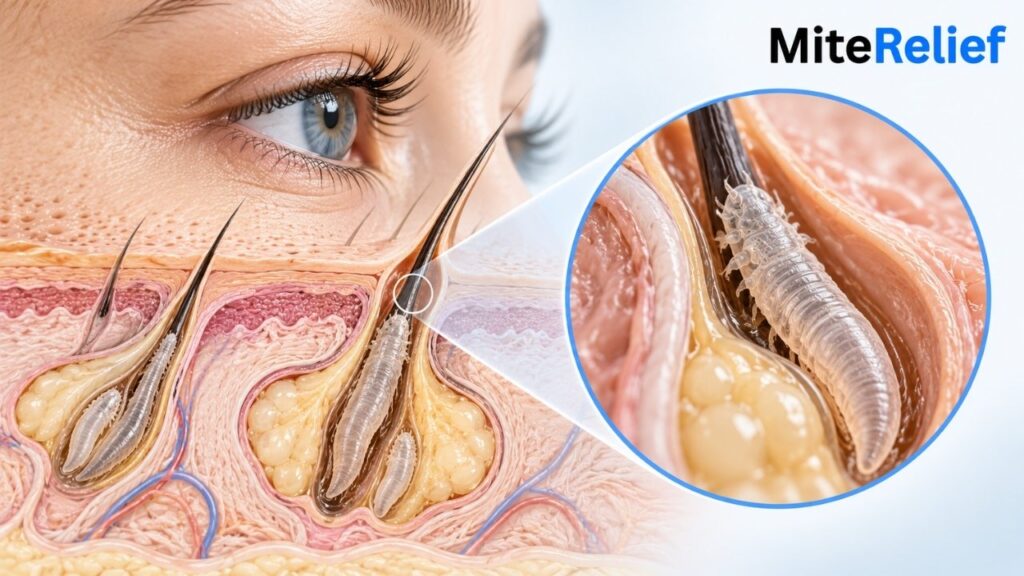
Demodex mites are tiny, microscopic mites that live on people. Two types live on humans: Demodex folliculorum and Demodex brevis.
Demodex folliculorum lives mostly in hair follicles. These are the small openings where hairs grow. This includes follicles around the eyelashes. Demodex brevis lives deeper in the sebaceous glands. These glands make sebum, the natural oil that keeps skin soft.
The two species also differ in their feeding habits. Demodex folliculorum feeds on cells within hair follicles, while Demodex brevis feeds on cells in the oil glands. Both differ from house dust mites in their habitat and relationship with humans.
Demodex can sit on the skin for years without a person ever knowing. Having these mites does not prove you have a skin problem.
In some cases, too many mites may be linked to certain skin conditions, such as demodicosis. A doctor is the one who can check whether this fits your case. DermNet also has a page on Demodex.
How Are Demodex Mites Different From House Dust Mites?
| Feature | House Dust Mites | Demodex Mites |
| Typical habitat | Bedding, mattresses, carpets, and household dust | Human hair follicles and sebaceous glands |
| Food source | Mainly shed skin flakes and other suitable organic material | Skin oils and material associated with hair follicles |
| Relationship with humans | Do not normally live on or infest human skin | May naturally be present on human skin |
| Possible health effects | Their allergens can trigger allergic reactions in sensitive people | Overgrowth may be associated with certain skin conditions |
Overgrowth may be associated with certain skin conditions.
Can you feel them crawling? They are not normally felt crawling on the body. Their presence does not mean they can be felt crawling.
Why Does Your Face Feel Itchy or Tingly at Night?

Facial itching at night has many possible causes. Dry skin is a common one. Skin can lose moisture overnight, especially in dry or heated rooms.
Skin irritation is another cause. Face wash, creams, or laundry soap can bother the skin barrier. This is called contact dermatitis when the skin reacts to something it touched.
In some people, environmental allergens may add to the problem. Dust mite allergens that build up in pillowcases are one example.
None of these signs proves that mites live on your skin. Itching and tingling are common signs. Many different problems can cause them.
Common Reasons for Facial Crawling Sensations
A crawling feeling on the face does not point to one single cause. Dry skin, irritated skin, and allergies can all make the skin feel odd. Tired nerves and stress can also change how skin feels.
A doctor can sort out the cause. You cannot work it out from the feeling alone.
For more on skin reactions, read about dust mite allergy symptoms.
Can Dust Mites Get Into Your Ears?
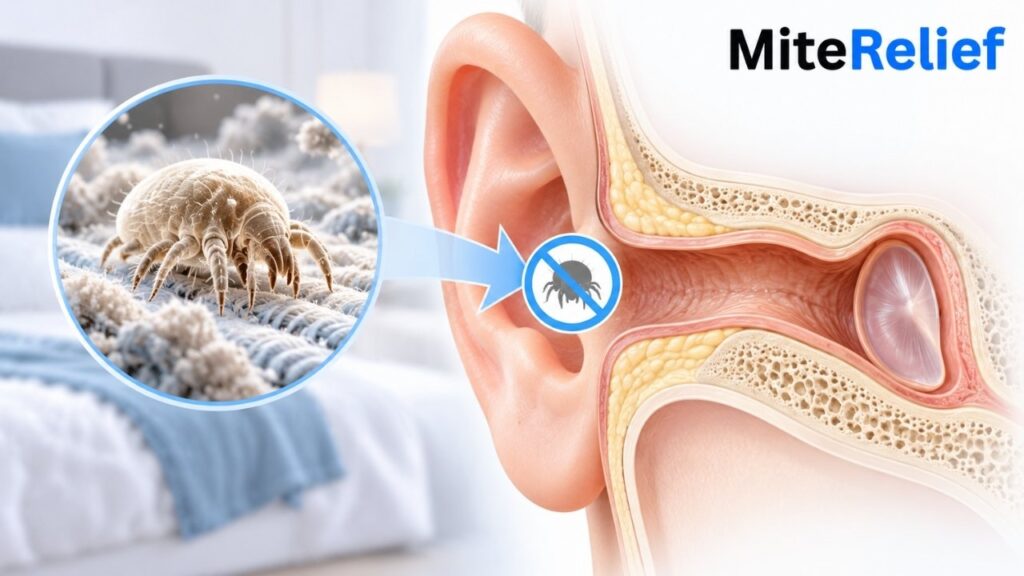
Demodex mites are different from house dust mites and can also be found in the external ear canal. However, ear itching or unusual sensations alone do not establish that mites are present or causing the problem.
Still, ear problems are real. Itching, a full feeling, or an odd movement sensation can have many causes. Dry skin in the ear, trapped water, or irritation can all play a role. Cleveland Clinic explains why ears get itchy. There is no way to know the exact cause of your symptoms without an exam.
Do not guess that a mite is the cause. Also, never put cotton swabs, pins, or other objects into your ear to find or remove one. This can hurt the ear.
See a healthcare provider if you have ongoing itching, pain, discharge, or hearing changes. Get care quickly if the pain is severe or your hearing changes suddenly.
Can You Feel Dust Mites Crawling on You?
Usually, no. House dust mites are far too small to feel as they move on your skin. You need a microscope to see them.
Still, the crawling feeling is real, and it can be upsetting. Doctors call this feeling formication. It can come from dry skin, allergies, skin irritation, or other health issues. The feeling alone is not proof of insects or mites on your skin.
If you wonder about bites, read whether dust mites bite humans.
Talk to a healthcare provider if the feeling lasts, gets worse, or causes real distress. After an exam, they can work out what is really going on.
What Should You Do If Your Face or Ears Keep Bothering You?
Start with small, safe steps:
- Wash your face gently. Avoid harsh scrubs and strong skin products.
- Skip vinegar, essential oils, and insecticides on your face and in your ears.
- Launder your bedding on a regular basis as part of everyday allergen care.
- Avoid repeated treatments for mites that no one has confirmed.
- See a doctor if symptoms last or get worse.
A dermatologist can check your facial skin and find the cause. A doctor can also check your ears if they keep bothering you.
Frequently Asked Questions (FAQs)
Can house dust mites live on your face?
No. House dust mites live in homes, in places like bedding and carpets. They do not normally live on human skin.
What is the difference between dust mites and Demodex?
House dust mites live in household dust and fabrics. Demodex mites live in human hair follicles and oil glands. Dust mites can trigger allergies. Demodex is often present with no problems.
Can you feel dust mites crawling on your skin?
Not normally. They are too small to feel. A crawling feeling can come from dry skin, irritation, allergies, or other causes. A doctor can help find out which one.
Can dust mites live inside human ears?
House dust mites are not known to live in the ear canal. Ear itching or discomfort can have other causes. See a healthcare provider if symptoms last.
What to Read Next
- Dust mites in hair and on the scalp
- Dust mite allergy symptoms
- Whether dust mites bite humans
- Common house dust mite species
Conclusion
House dust mites live in your home, not on your face. Demodex mites are a different kind. They live in hair follicles and are often harmless.
Itching or a crawling feeling does not prove that mites live on your body. Many things can cause these signs. If they last or get worse, see a doctor or dermatologist.
Medical Disclaimer
This content is for general informational purposes only and is not a substitute for professional medical advice, diagnosis, or treatment. Individual health needs can vary, so speak with a qualified healthcare professional about allergies, asthma, skin reactions, medications, or other symptoms. Seek prompt medical care if symptoms are severe, persistent, or getting worse.

Umar Farooq is the founder of MiteRelief, creating research-backed guides about dust mites, indoor allergens, and practical allergy prevention for healthier homes.