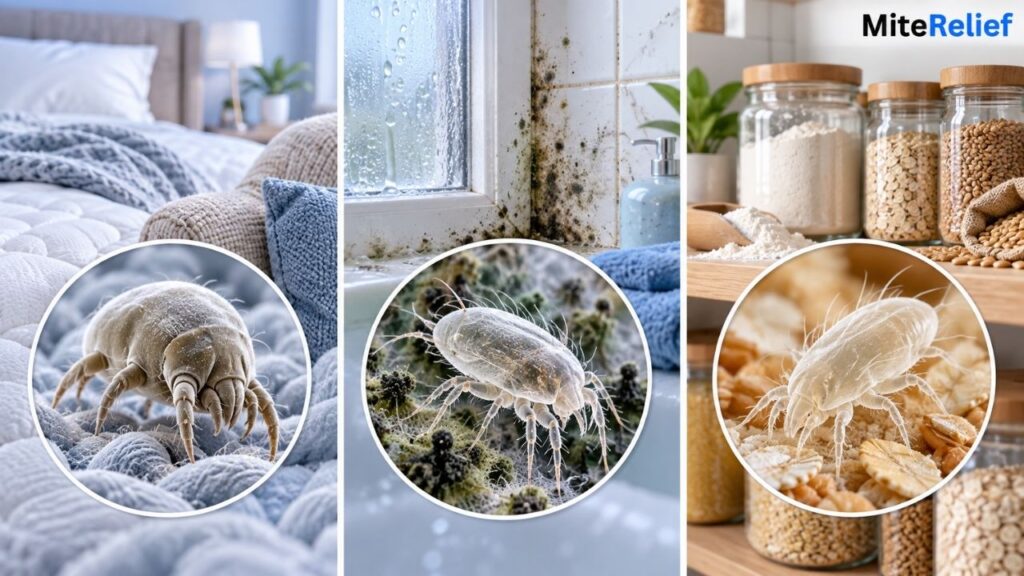
Not every tiny white bug in your home is a dust mite. Some live in your mattress. Some grow where moisture builds up. Others hide in flour or cereal.
When you’re comparing dust mites vs mold mites, the first thing to know is that they’re not the same bug at all. They live in different spots, eat different things, and cause different problems.
This guide covers the most common tiny bugs found in homes, so you know what you’re really dealing with.
Dust Mites vs Mold Mites vs Grain Mites at a Glance
Here’s a quick side-by-side look at all three.
| Feature | Dust Mites | Mold Mites | Grain Mites |
| Where they live | Mattresses, bedding, furniture | Damp areas, mold growth | Stored food, grains |
| What they eat | Dead skin flakes | Mold and fungi | Flour, grains, dried foods |
| Size | Microscopic | Microscopic | Slightly larger |
| Visible | No | Sometimes in groups | Sometimes in groups |
| Main concern | Allergies | Moisture problems | Food contamination |
How to Identify Tiny Mites in Your Home
You probably can’t tell these mites apart just by looking at them. They’re all tiny, and two of the three are too small to see without help. So instead of studying the bug itself, look at where you found it.
- Found dust mites in your bedroom? It’s likely a dust mite.
- Found it near a damp wall or in the bathroom? That points to a mold mite.
- Found it in your pantry or a food container? That’s probably a grain mite.
Where you find them is usually a better clue than what they look like. A microscope is really the only way to confirm which species you’re looking at, so location is your best everyday hint.
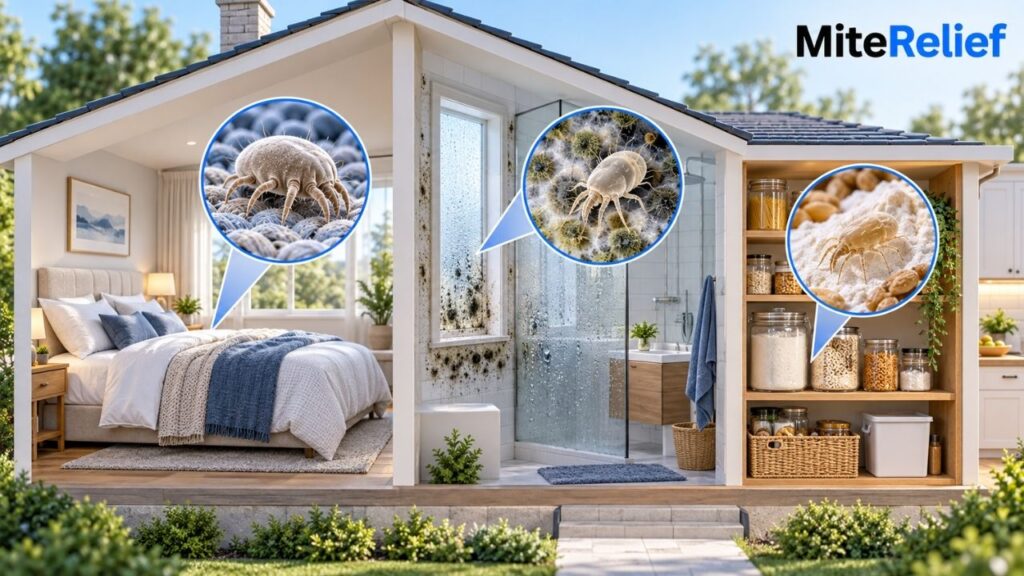
Think about what’s nearby, too. Old flour or a forgotten box of pasta points toward grain mites. A recent leak or a foggy bathroom mirror points toward mold mites.
A pillow you haven’t washed in a while points toward dust mites. Matching the spot to the habit that feeds it will usually get you close to the right answer.
Dust Mites: The Bedroom Allergy Trigger
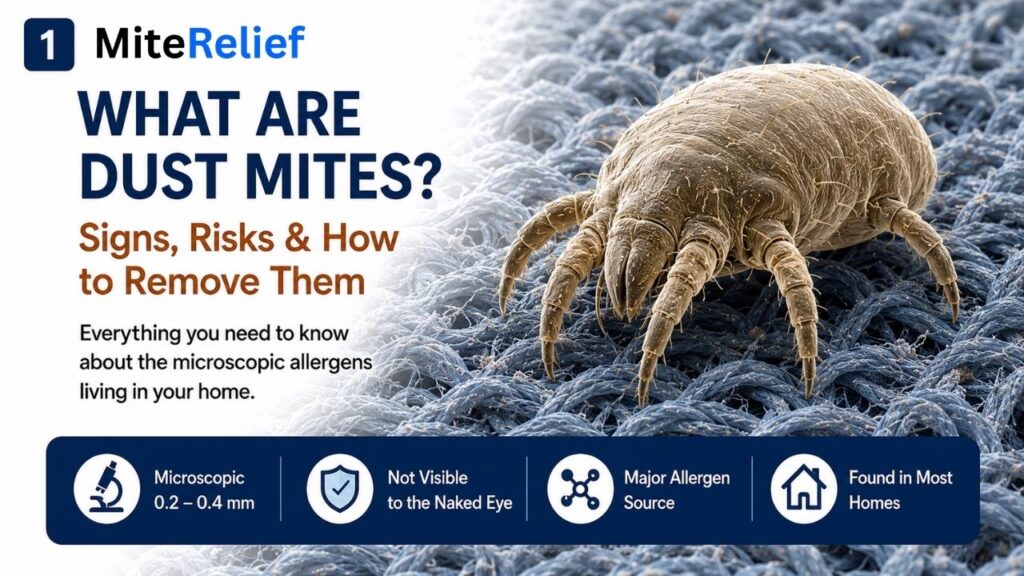
Dust mites, sometimes called house dust mites, are among the most common mites found indoors. They live in bedding, mattresses, pillows, and upholstered furniture.
They eat tiny flakes of dead skin cells, which people shed all day, every day. That’s why bedrooms are their favorite hangout.
Dust mites don’t bite. The real issue is the waste they leave behind. Their droppings and body fragments can act as allergens, triggering reactions in people sensitive to them. This can lead to:
- Sneezing
- A runny or stuffy nose
- Itchy, watery eyes
- Flare-ups of asthma
- Worsening of eczema in some people
For a closer look at these reactions, see our guide to dust mite allergy symptoms. If you notice these symptoms getting worse indoors, especially in the morning, a dust mite allergy could be part of the picture.
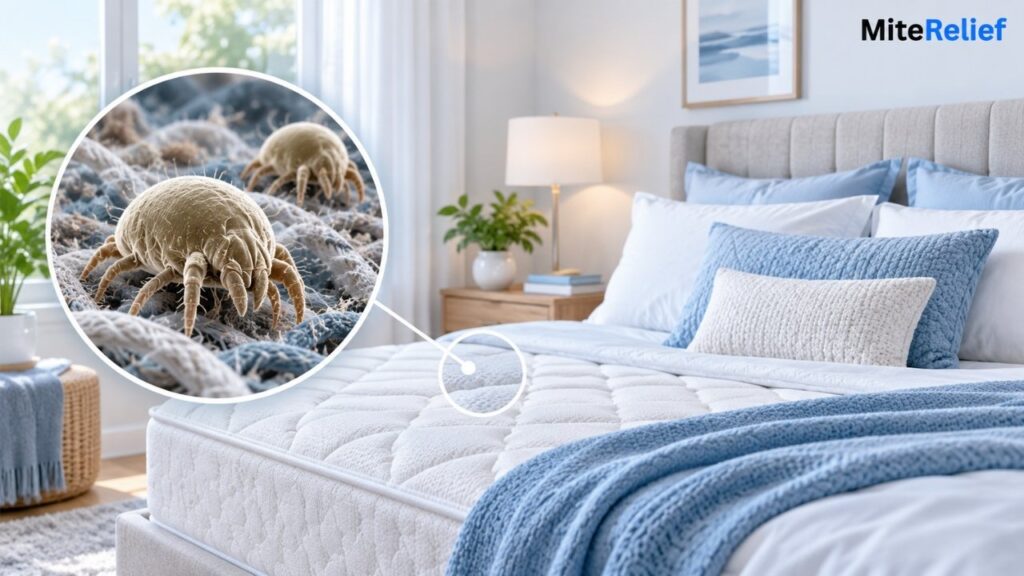
Dust mites thrive in warm, slightly humid rooms, which is exactly what most bedrooms offer. They don’t need much to survive, just a steady supply of skin flakes and a comfortable spot to hide, like the inside of a mattress or a thick blanket.
That’s part of why they’re so common and so hard to get rid of completely. For a closer look at what dust mites look like under magnification, our full guide breaks it down.
Mold Mites: Tiny Bugs Linked to Moisture Problems
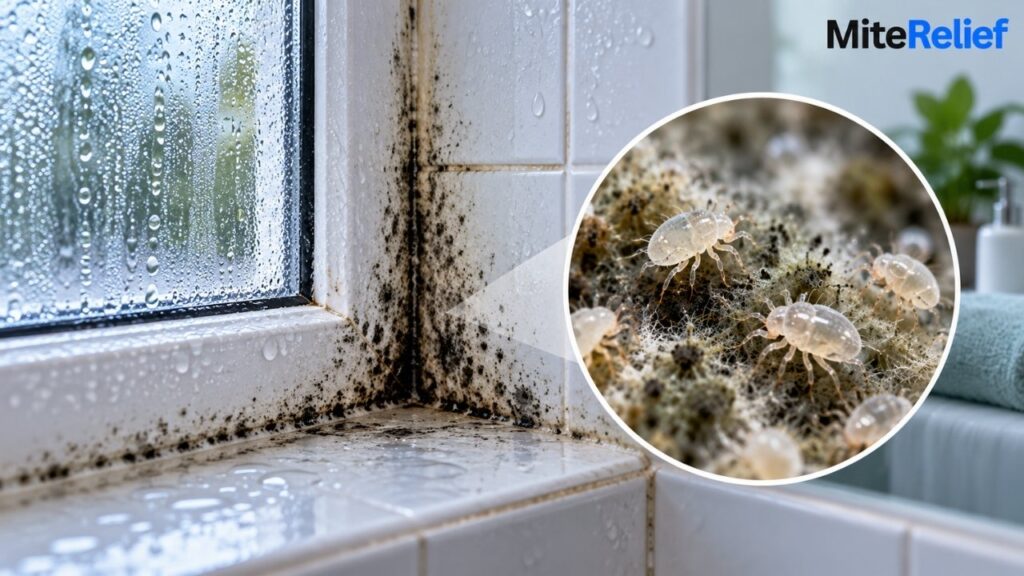
Mold mites show up in a very different setting than dust mites. They’re drawn to damp, humid spots, like a leaky bathroom, a musty basement, or a wall with hidden water damage. Wherever mold or mildew grows, mold mites often follow.
Unlike dust mites, which eat skin flakes, mold mites feed on fungi and organic matter growing in those wet areas. One species you might come across is Tyrophagus putrescentiae, which is often linked to mold and stored organic material.
Mold mites usually signal excess moisture in an area. If you spot them, it’s worth checking for a hidden leak or a humidity level that’s too high, rather than just treating the bugs themselves.
They tend to show up in clusters rather than one at a time, which can make them easier to notice than dust mites. If you see a small patch of tiny moving specks near a damp windowsill or under a sink, that’s a strong sign of mold mites, not the other two types.
Grain Mites: The Food Storage Mite

Grain mites, also known as flour mites, live somewhere completely different from the other two: your pantry. They’re found in flour, cereal, spices, and other dry goods stored for a while, especially in a warm, slightly humid kitchen.
They are different from dust mites because they don’t live in mattresses or bedding. Instead, they feed directly on stored food. A package of flour or grain that’s been open too long, or kept in a humid spot, is exactly the kind of place they thrive.
You might notice a fine, powdery buildup around the edge of a container, sometimes described as grain mite dust. That’s a mix of shed skins, waste, and mite bodies, and it usually means you should toss out the food inside.
Dust Mites vs Mold Mites: What Is the Difference?
Let’s compare these two side by side, since they’re the ones most often confused.
Habitat
- Dust mites: fabrics, bedding, upholstery
- Mold mites: damp surfaces, areas with mold growth
Food source
- Dust mites: dead skin cells
- Mold mites: fungi and mold
Health effects
- Dust mites: a stronger, more direct connection to allergy symptoms
- Mold mites: linked more to possible allergic reactions and underlying moisture issues in the home
The short version: dust mites vs mold mites really comes down to dry fabric versus damp surfaces.
Grain Mites vs Dust Mites: Are They the Same?
No, and the differences are pretty clear once you line them up.
| Feature | Dust Mites | Grain Mites |
| Location | Bedroom | Kitchen/pantry |
| Food | Skin flakes | Food products |
| Problem | Allergies | Food contamination |
When it comes to grain mites vs dust mites, the biggest giveaway is where you spotted them. A bug in your cereal box is not the same bug living in your pillow.
Can Your Home Have More Than One Type of Mite?
Yes, you can have all three at once, just in different rooms. Dust mites might be settled into your bedroom furniture. Mold mites could be building up in a damp bathroom corner. Grain mites might be living quietly in an old bag of flour.
Each type needs its own approach, since they survive in different conditions and eat different things. Treating one won’t help the others.
Which Type of Mite Is More Harmful?
It depends on what “harmful” means to you.
Dust mites matter most for human allergy and asthma symptoms. They’re the ones most closely tied to sneezing, itchy eyes, and breathing trouble.
If your symptoms persist, dust mite allergy testing can confirm whether they’re the cause.
Mold mites aren’t usually harmful on their own, but they’re a useful warning sign. Their presence usually points to a moisture problem that needs fixing.
Grain mites are mostly a food safety concern. They can contaminate stored grains and, for some people, cause mild skin irritation after contact.
How to Prevent Mite Problems in Your Home
You don’t need anything fancy to keep all three types in check. A few habits go a long way.
- Keep indoor humidity in a moderate range.
- Clean and dry damp areas, like bathrooms and window sills
- Store flour, cereal, and other dry goods in sealed containers
- Wash bedding regularly in hot water.
- Vacuum and dust your bedroom often to cut down on buildup
- Use a dehumidifier in rooms that tend to feel muggy.
- Wipe surfaces with a microfiber cloth, which traps dust better than a dry rag.
- Check under sinks and around windows for early signs of leaks.
For a full breakdown of ways to prevent dust mites, along with natural ways to reduce dust mites, check out our dedicated guides.

None of these steps require special equipment. They’re mostly about keeping moisture down and reducing the buildup of skin flakes and food debris that these mites depend on.
Frequently Asked Questions (FAQs)
Are dust mites and mold mites the same?
No. They’re different species with different habitats and different food sources.
Can mold mites live in mattresses?
Usually not. They prefer damp environments with mold growth, not dry bedding.
Are grain mites harmful to humans?
They mainly affect stored food. Some people notice mild skin irritation after handling infested grains.
How can I tell if I have dust mites or mold mites?
Look at where you found them. Bedrooms point to dust mites, while damp, moldy spots point to mold mites. Knowing where dust mites come from can also help you rule them out.
Can you see dust mites with your eyes?
No. Individual dust mites are too small to see without a microscope.
WHAT TO READ NEXT
- What Are Dust Mites?
- Dust Mite Allergy Symptoms
- How to Prevent Dust Mites
- Where Do Dust Mites Come From?
Conclusion
Dust mites, mold mites, and grain mites may all be tiny, but they don’t share the same home. Dust mites stick to bedrooms and are linked with allergy symptoms. Mold mites show up wherever there’s moisture and mold.
Grain mites stay in the pantry, feeding on stored food. Once you know where you found your tiny visitor, you’re already most of the way to identifying it.
Medical Disclaimer
This content is for general informational purposes only and is not a substitute for professional medical advice, diagnosis, or treatment. Individual health needs can vary, so speak with a qualified healthcare professional about allergies, asthma, skin reactions, medications, or other symptoms. Seek prompt medical care if symptoms are severe, persistent, or getting worse.

Umar Farooq is the founder of MiteRelief, a resource for dust mite control and allergy prevention. After battling allergen sensitivity, he started creating research-backed guides that turn complex indoor air quality science into practical, affordable solutions anyone can implement.