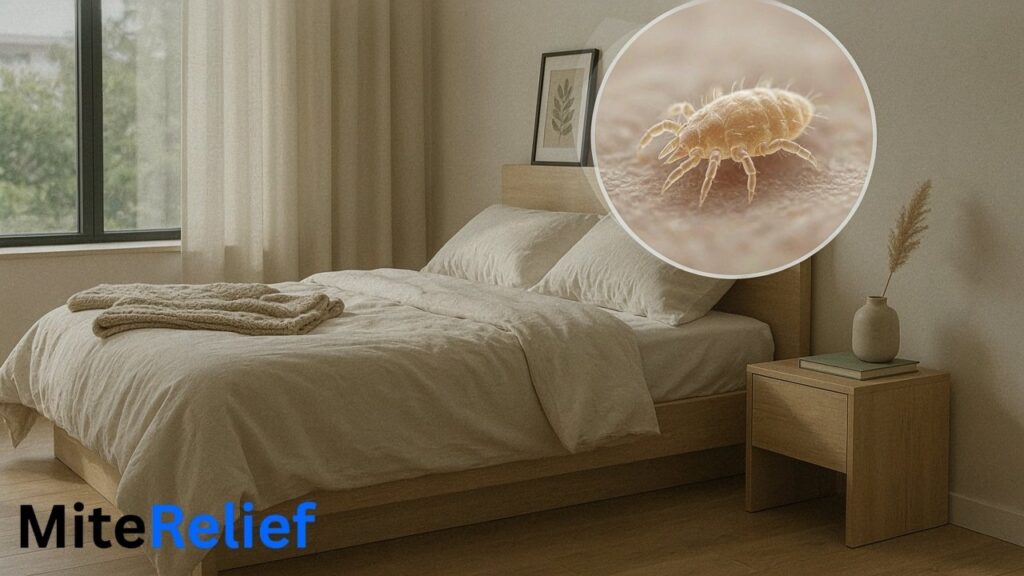
Does your allergy feel better on weekends? Then gets worse at your desk? Your office might be part of the problem. Dust mites in office spaces are more common than most people think.
These tiny bugs don’t need a bedroom. They need dust, warmth, and a little moisture in the air.
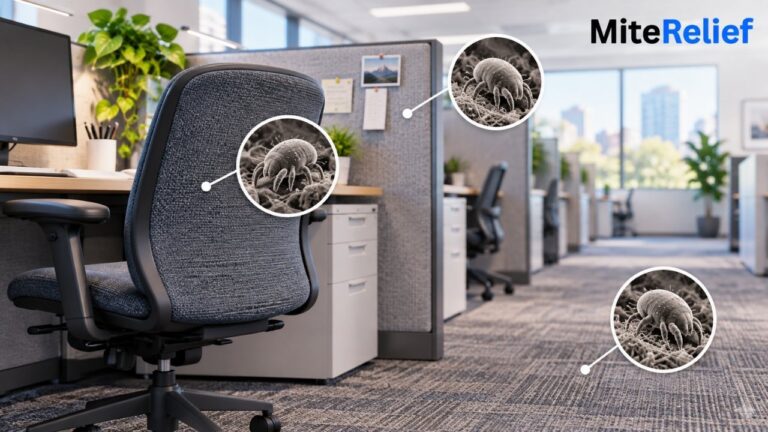
Offices have all three. Carpets, fabric chairs, and cubicle walls all collect dust over time.
For people with a dust mite allergy, that dust can bring on dust mite allergy symptoms right in the middle of a workday.
This guide shows you where dust mites in the office tend to build up. It also explains why your symptoms might be worse at work. And it gives you real steps you can take, even if you don’t run the cleaning schedule.
Can dust mites live in offices?
Yes. Dust mites don’t care if they’re in a bedroom or a break room. They’re tiny bugs you can’t see. They feed on dead skin cells, and offices make plenty of those from busy days at a desk.
Understanding dust mites in the workplace can help employees recognize possible allergen sources.
House dust mite populations tend to grow wherever dust piles up and isn’t disturbed. That includes upholstered furniture, carpets, and fabric-covered cubicle walls. At home, you control the cleaning. At work, you often don’t.
This is what makes dust mites in workplace settings different from home exposure. You might vacuum your own bedroom every week. But you can’t say when the office carpet gets a deep clean. That loss of control can feel frustrating if you have allergies.
One more thing to know: seeing dust in your office doesn’t mean you have a huge mite problem. Dust and dust mite allergens often show up together. But the amount can change a lot from one building to the next.
Common office areas where dust mite allergens collect
Workplace allergens like to hide in a few common spots. Here’s where dust mite allergens build up most in a typical office.
- Fabric office chairs – daily use traps dust, skin flakes, and allergens in the seat and back
- Carpeted floors – carpets hold onto dust far more than hard flooring does
- Cubicle dividers – fabric-covered walls catch airborne dust that settles and stays
- Meeting room furniture – shared seats get heavy use but often get cleaned less
- Reception area seating – more foot traffic means more dust over time
- HVAC systems – a building’s HVAC system can pull in and spread dust through the vents
- Dusty storage areas – closets and supply rooms often get skipped during regular cleaning
| Office area | Why allergens collect |
| Fabric chairs | Trap dust, skin flakes, and allergens from daily use |
| Carpets | Hold dust and allergen particles |
| Cubicle fabrics | Collect airborne dust buildup |
| Shared furniture | Frequent use adds up over time |
| HVAC systems | Can spread indoor dust particles |
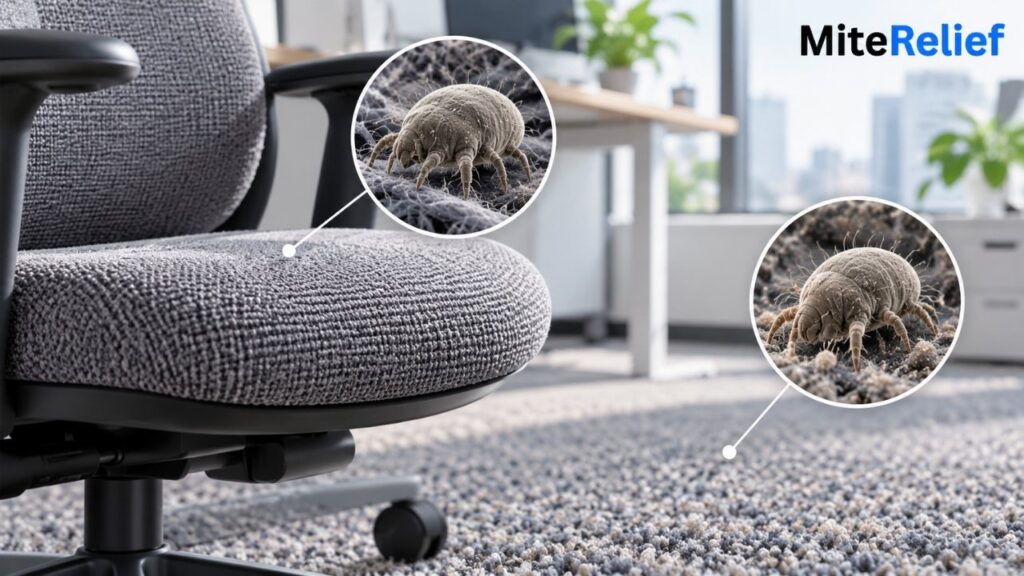
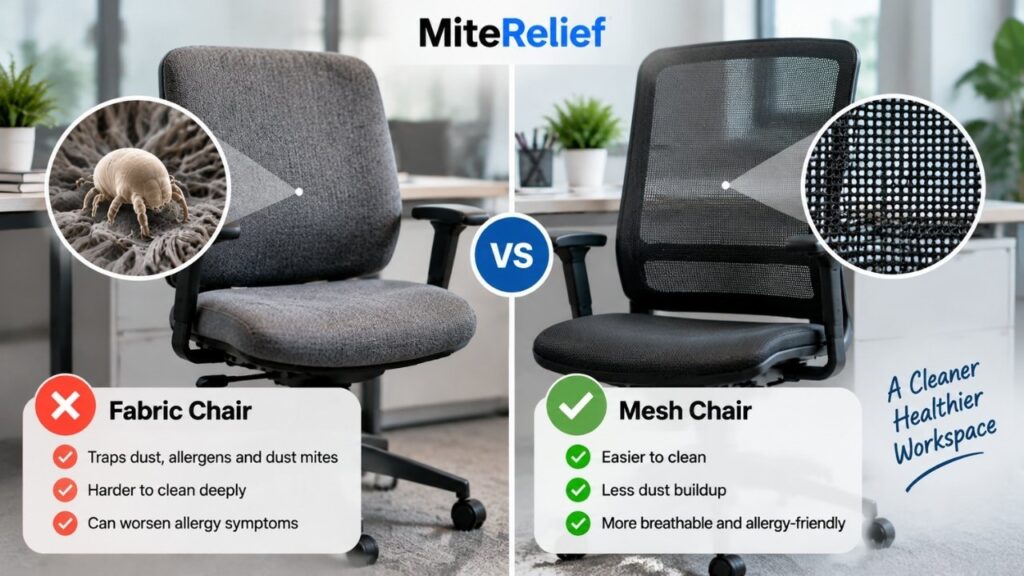
Dust mites are common in office chairs. Chairs get used every day and rarely get vacuumed. The same goes for dust mites in office carpet. Foot traffic pushes dust deep into the fibers, where it’s hard to remove.
Signs your office may be triggering dust mite allergies
Dust mite allergy at work can look like plain old seasonal allergies. That’s part of what makes it hard to spot.
Watch for a pattern. Do your symptoms show up mostly during work hours? Common signs are sneezing, a runny nose, stuffiness, and itchy eyes while you’re at your desk. Some people with asthma also notice more chest tightness during the day.
Certain rooms or chairs might bother you more than others. If you always feel worse in one meeting room, or after sitting in a certain chair, that’s a useful clue.
Symptoms that improve away from work
Timing is one of the clearest signs of office dust mite exposure. Do your symptoms ease up on weekends? Or on holidays and vacations? If so, your workplace is likely playing a role.
This pattern doesn’t prove anything on its own. But it’s a strong clue worth paying attention to. Telling a doctor about this pattern can help figure out what’s really triggering your allergy symptoms.
How to reduce dust mite exposure at work
You can’t redesign your office. But you can control your own little corner of it. Here are realistic steps for most workers.
Keep your personal workspace clean.
Start by clearing out desk clutter. Papers and knickknacks all collect dust over time. Wipe your desk, keyboard, and phone with a microfiber cloth a few times a week. Skip the extra fabric items, stuffed toys, or old paperwork that just sits there gathering dust.
Reduce fabric and dust-trapping materials.
Soft items like fabric cushions or throw blankets give dust more room to settle. If you bring personal items to your desk, wash them often. Fewer fabric surfaces usually means fewer allergens building up around you.
Request workplace cleaning improvements.
You can also ask facilities staff about the cleaning schedule. Regular carpet care and more frequent vacuuming in busy areas can help a lot. Even a simple request for better cleaning methods for dust mite control in shared spaces is worth making.
How workplaces can improve dust mite allergen control
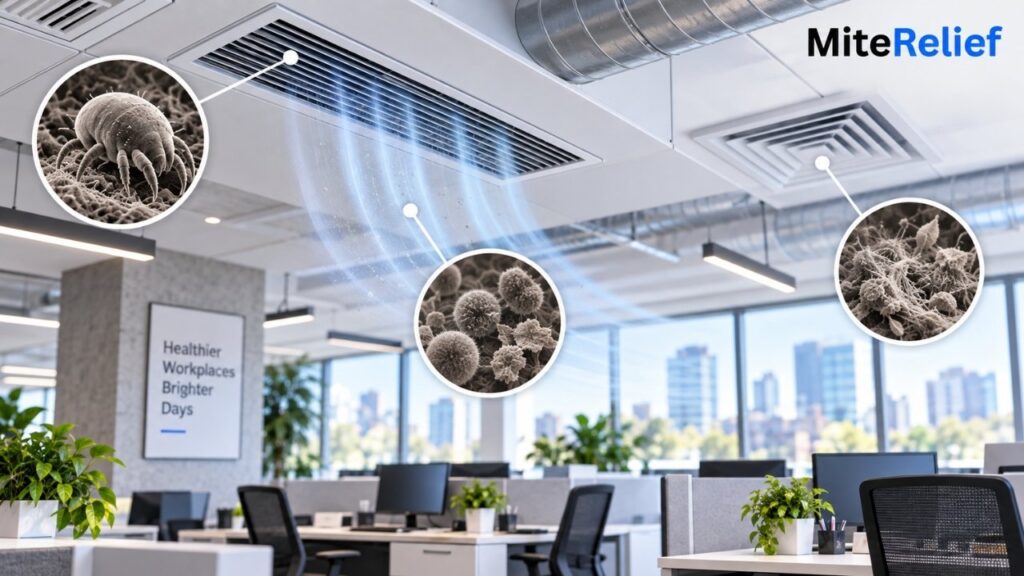
Building-wide changes make a bigger difference than anything one person can do alone. Regular deep carpet cleaning removes buildup that a normal vacuum can’t catch.
HVAC system upkeep matters too. Clogged filters can spread more dust instead of removing it. Better airflow improves indoor air quality for the whole office, not just one desk.
Some workplaces add an air purifier with a HEPA filter in shared spaces to capture airborne particles. You can read more about whether air purifiers help with dust mites.
Newer furniture made from leather or vinyl, instead of fabric, can also reduce long-term dust buildup in upholstered furniture.
Working from home and dust mite exposure
Working from home fixes some office problems. But it can create new ones if you’re not careful. Working from your bed turns your sleep space into another allergen hotspot.
Dust mites in your bedroom already tend to gather in bedding and mattresses.
Try to keep your work area separate from where you sleep.
A real desk is easier to clean than a bed covered in blankets and pillows. Good indoor air quality and steady humidity control at home also help limit dust mite growth near your workspace.
Managing dust mite allergy symptoms during the workday
Once you spot a pattern, it’s easier to handle symptoms as they pop up. Pay attention to which rooms or furniture seem to bother you the most.
Keep a small stash of tissues or eye drops at your desk for sudden flare-ups. Changing your clothes after work can help too, since dust mites in clothes can hitch a ride home. This guide sticks to office prevention. For more on symptom relief, see dust mite allergy symptoms.
Frequently asked questions (FAQs)
Can office carpets cause dust mite allergy symptoms?
Yes, carpets can collect dust mite allergens over time, especially in busy areas. This buildup may worsen symptoms in people sensitive to dust mites. But carpets aren’t always the only cause.
Why are my dust mite allergy symptoms worse at work?
Office carpets, fabric furniture, and spotty cleaning schedules can all play a part. Ventilation and HVAC system performance also affect how much dust floats around your desk
Can office chairs trigger dust mite allergies?
Fabric office chairs often hold dust and skin flakes, which can attract dust mites. Chairs that rarely get vacuumed build up more allergens over time.
Does office ventilation affect dust mite allergies?
Yes. Poor ventilation lets dust settle and pile up. A well-maintained HVAC system with clean filters can help reduce airborne dust.
Can I reduce dust mite exposure if I cannot control my office?
Yes. Keeping your own desk clean, cutting back on fabric surfaces, and asking for better cleaning schedules can all help. This is true even if you don’t control the whole building.
What to read next
- Dust Mite Allergy Symptoms
- How to Prevent Dust Mites
- Dust Mites in Clothes
- Do Air Purifiers Help With Dust Mites
- Dust Mites in Your Bedroom
Conclusion
Offices can increase your dust mite exposure, even though most people think about this problem only at home. Carpets, fabric chairs, and shared furniture all give dust mites a place to build up over time.
You can’t control the whole building. But small changes to your own workspace can still make a real difference.
If your symptoms improve away from work, that’s a strong sign your office deserves a closer look. Spotting these workplace triggers is often the first step toward controlling your symptoms.
Medical Disclaimer
This content is for general informational purposes only and is not a substitute for professional medical advice, diagnosis, or treatment. Individual health needs can vary, so speak with a qualified healthcare professional about allergies, asthma, skin reactions, medications, or other symptoms. Seek prompt medical care if symptoms are severe, persistent, or getting worse.

Umar Farooq is the founder of MiteRelief, a resource for dust mite control and allergy prevention. After battling allergen sensitivity, he started creating research-backed guides that turn complex indoor air quality science into practical, affordable solutions anyone can implement.