Finding tiny bugs in an old book is more common than you’d think. Most people assume the bugs in books are dust mites, but that’s usually not true. Most of the visible bugs on paper are actually booklice, or psocids (order Psocodea, historically called Psocoptera), a completely different kind of creature.
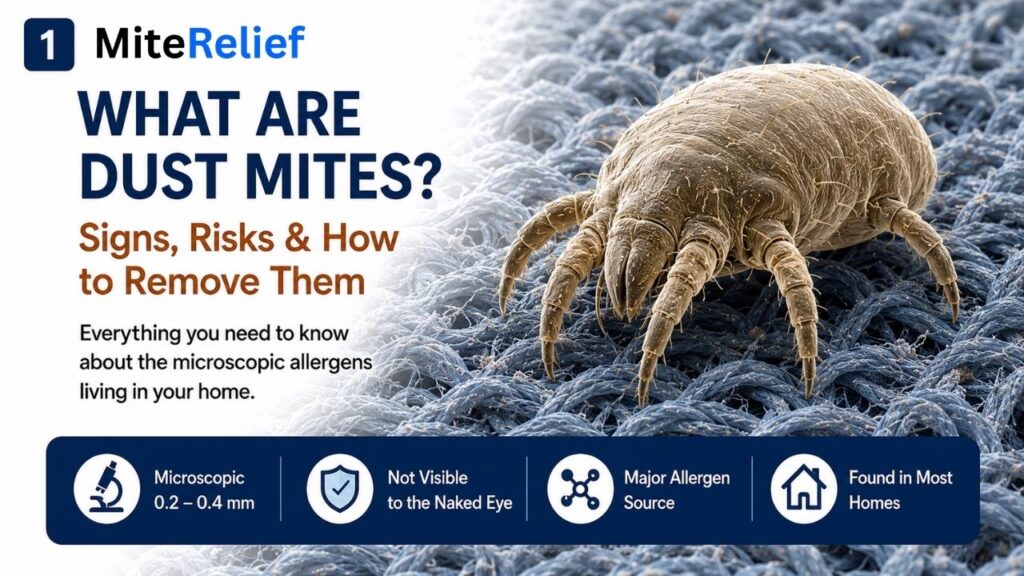
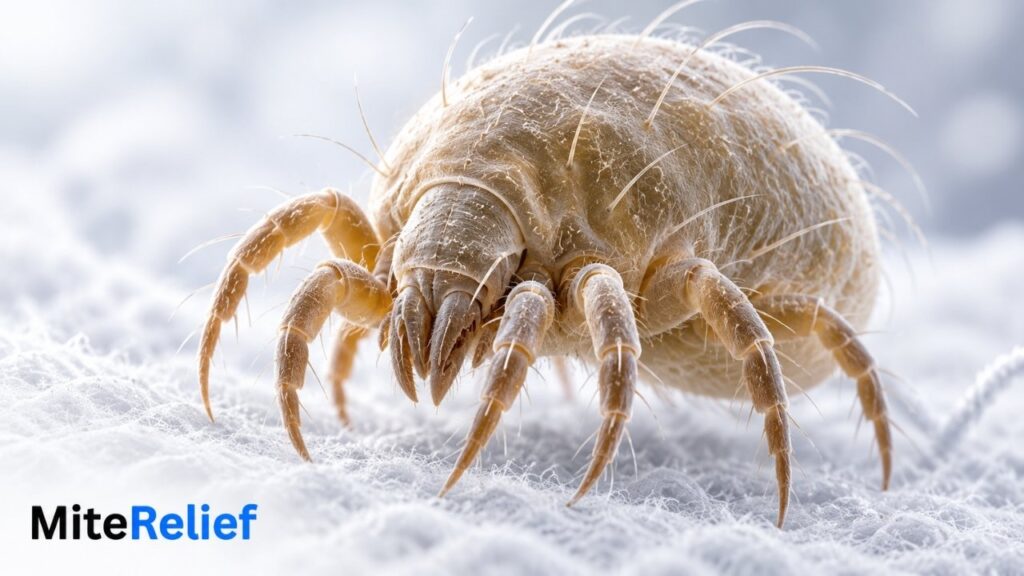
Dust mites are microscopic arachnids. They’re so small you can’t see them with your naked eye. Books can still accumulate dust particles and dust-mite allergens over time, even though they aren’t a favorite home for house dust mites.
This guide explains the real difference between booklice and dust mites. It also covers how to reduce dust and allergens from your book collection. For a full breakdown of these creatures, check out our guide on dust mites.
Can Dust Mites Live in Books and Paper?
Dust mites aren’t picky, but books aren’t their first choice. They prefer soft, warm spots like bedding, mattresses, carpets, and upholstered furniture. These places hold moisture and skin flakes, which mites need to survive.
Paper doesn’t offer much of that. Books and paper don’t retain moisture the way fabrics do, so dust mites on paper are rare. Still, a bookshelf can gather dust just like any other surface in your home.
Here’s the key difference to remember: living mites and allergen particles aren’t the same thing. A book might carry dust mite allergens without a single live mite ever crawling on it.
Most of the time, dust mites in old books really just means dust and allergen buildup, not an active mite colony living inside the pages.
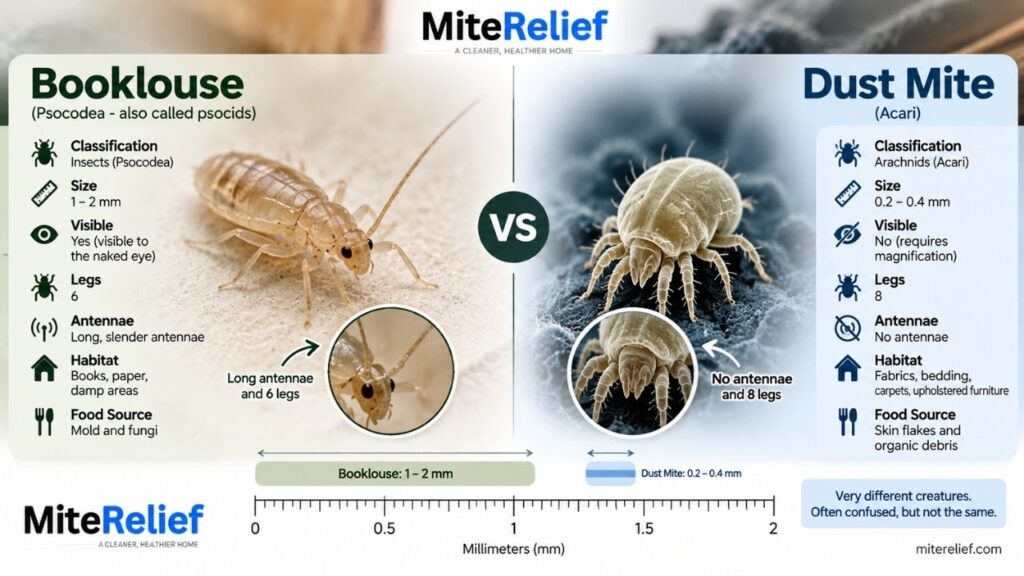
Tiny Bugs in Old Books Are Usually Booklice, Not Dust Mites
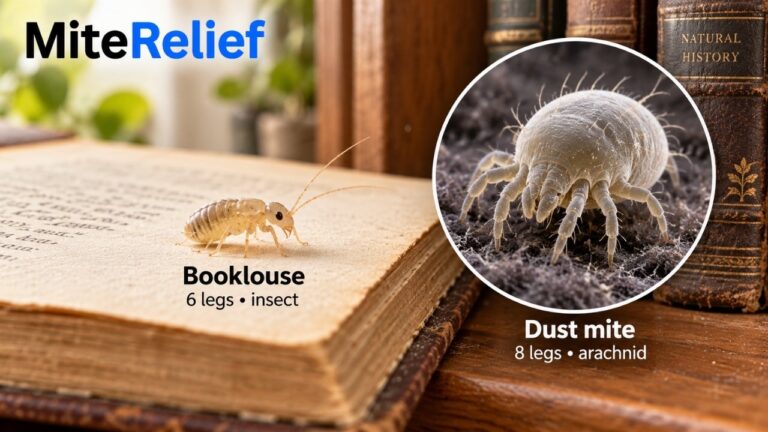
If you’ve spotted small, pale bugs crawling across a page, you’re probably looking at booklice. These insects belong to a group called Psocoptera, sometimes called psocids. People often mix them up with dust mites because both words sound similar and both bugs are tiny.
Booklice love damp, undisturbed spots. Old books stored in basements, attics, or closed cabinets make a perfect home for them. They don’t feed on paper itself. Instead, they eat mold and fungi that grow on paper when humidity is high.
That’s the real reason damp bookshelves attract these bugs. When moisture builds up, mold starts to grow, and mold is exactly what booklice want to eat. Dry, well-ventilated shelves rarely have this problem.
So why do visible bugs get blamed on dust mites? Simple: people can actually see booklice, but they can’t see real dust mites at all. Anything crawling on a page is a much easier target to notice than an invisible mite.
Here’s a quick comparison to clear up the confusion around dust mites, booklice size, and other differences:
| Feature | Booklice | Dust Mites |
| Size | 1–2 mm | 0.2–0.3 mm |
| Visible | Yes | No |
| Legs | 6 | 8 |
| Classification | Insects (Psocoptera) | Arachnids (Acari) |
| Habitat | Books, paper, damp areas | Fabrics, bedding, carpets |
| Food Source | Mold and fungi | Skin flakes and organic debris |
Dust Mite Allergens on Books: The Real Concern
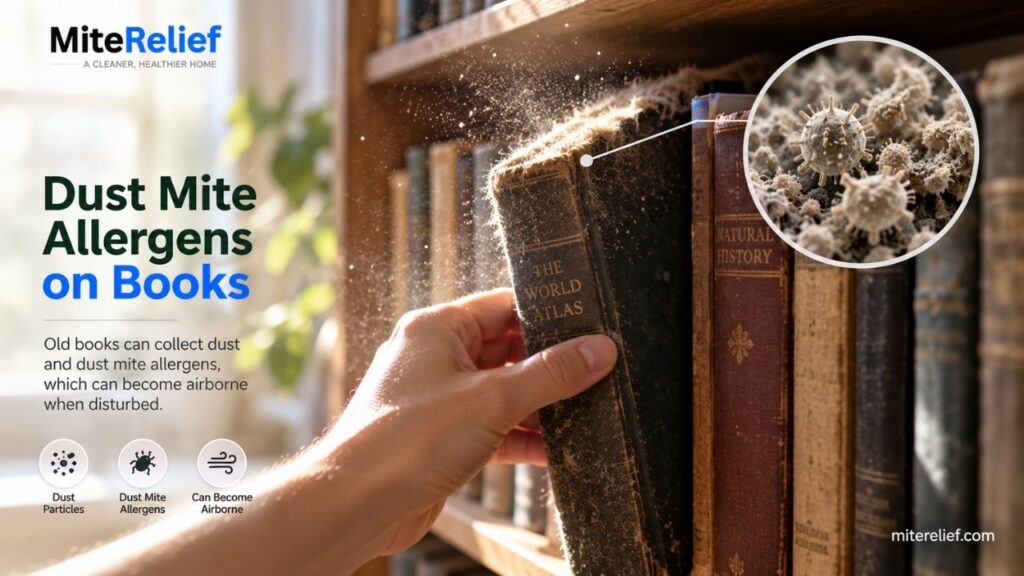
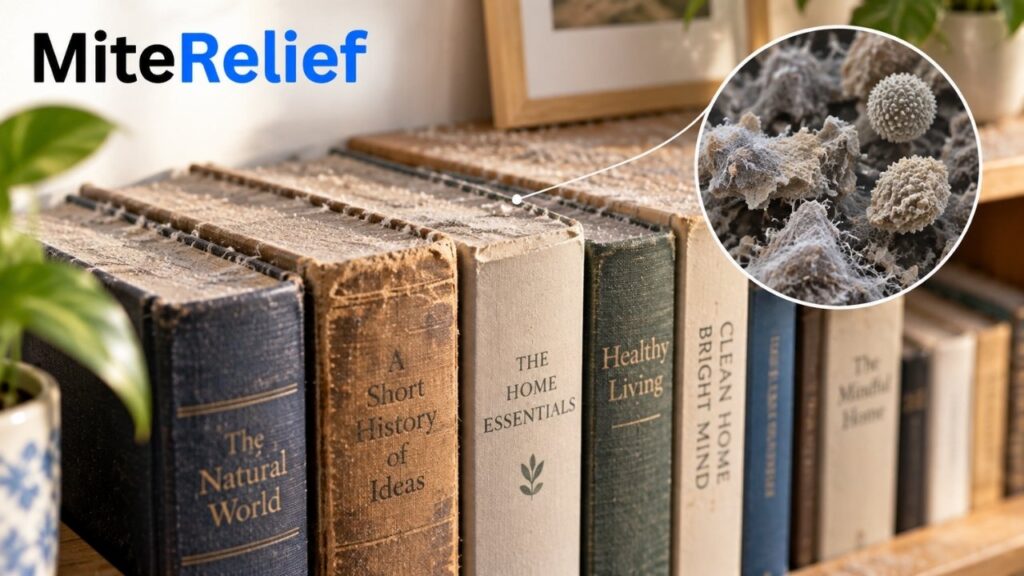
Even if live dust mites rarely live inside books, their allergens can still land there. Dusty shelves collect tiny allergen particles that drift through the air and settle on nearby surfaces, including book covers and pages.
Pulling an old book off a shelf can stir up that settled dust. If your books sit close to where you sleep, this can raise your exposure without you even noticing. A bedroom bookshelf packed with old titles can quietly add to your daily dust load.
The specific proteins that trigger reactions are called Der p1 and Der p2. These are two of the main dust mite allergens linked to dust mite allergy symptoms like allergies, asthma, and sneezing. Breathing in dust disturbed by old books can affect your indoor air quality, especially in a small or enclosed room.
When Do Books Become an Allergen Problem?
A few conditions can turn a normal bookshelf into a bigger source of allergens. High humidity is one of the biggest triggers, since damp air lets dust and mold build up faster.
Old, rarely touched collections are another factor. Books that sit untouched for years accumulate layers of dust, with no one disturbing or cleaning them.
Poor ventilation makes this worse by trapping stale, moisture-laden air around your bookshelves.
Books stored near sleeping areas raise the stakes even more. Combine that with damp conditions, and you get a setup where mold, fungi, and even mildew can start to form on covers and pages.
How to Remove Dust Mite Allergens From Old Books
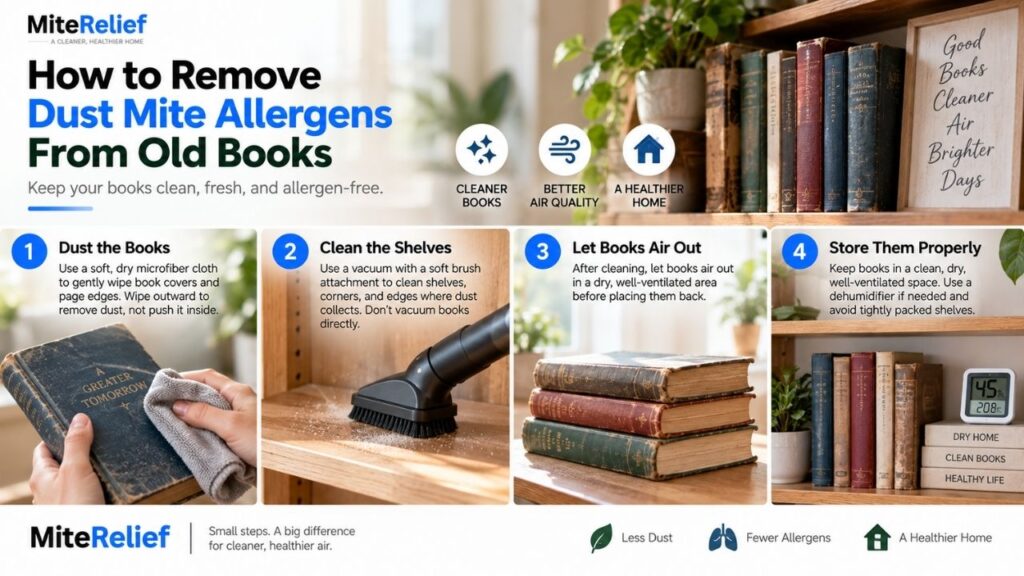
Cleaning your books doesn’t need to be complicated. A soft microfiber cloth works well for wiping down covers and edges without damaging the pages.
Start with gentle outward wipes to lift dust particles away rather than pushing them deeper into the pages. If you’re cleaning a full shelf, use a vacuum with a soft brush attachment for the shelf itself, not the books directly.
Try to avoid shaking books indoors, since this just spreads dust into the air you breathe. Once your books are clean, focus on proper storage: keep shelves dry and let air move freely around them.
If your home tends to run high on humidity, a dehumidifier can help with long-term humidity control. This one step covers both how to remove dust mites from old books and how to get rid of dust mites in books, since drier conditions discourage dust and allergen buildup overall.
How to Get Rid of Booklice in Books

Remember, booklice aren’t dust mites, so the fix looks a little different. Since these insects feed on mold and thrive in moisture, cutting off that food source is the real solution.
Start by reducing humidity around your book storage area. Better ventilation helps a lot here, letting damp air escape rather than settle on your shelves.
Move books to a dry, open shelf if possible, and avoid tightly packed, closed cabinets.
For a heavily affected book, sealing it in a bag and placing it in a freezer for a few days can kill off booklice without damaging most pages. Keeping shelves dry going forward prevents mold and fungi from returning.
Should You Keep Books Out of the Bedroom?
You don’t have to get rid of your bedroom library, but it’s worth thinking about placement. Large, dusty bookshelves near your bed can quietly add to nighttime allergen exposure.
If you’re sensitive to allergens, closed cabinets or glass-front bookcases can significantly reduce dust exposure. This simple swap keeps your favorite titles close while protecting your indoor air quality.
Frequently Asked Questions (FAQs)
Are tiny bugs in old books dust mites?
Usually not. Most visible bugs crawling on book pages are booklice, not dust mites. Real dust mites are too small to see without a microscope.
What is the difference between booklice and dust mites?
Booklice are insects that eat mold and fungi, while dust mites are arachnids that feed on skin flakes over their short dust mite lifespan. Booklice are visible; dust mites aren’t.
Can dust mites live on paper?
It’s rare. Dust mites prefer fabric-based spots like bedding and carpets over paper, though books can still collect settled dust and allergens.
How do I remove dust mites from old books?
Gently wipe books with a microfiber cloth, keep shelves dry, and use a dehumidifier if your home tends to be humid. Regular cleaning helps limit allergen buildup.
Can booklice cause allergies?
Booklice themselves aren’t a major known allergy trigger, but the damp, moldy conditions they thrive in can affect indoor air quality and worsen allergy symptoms for sensitive people.
How do I get rid of dust mites in books?
Focus on lowering humidity, cleaning shelves regularly, and storing books away from damp areas. This reduces both dust buildup and the allergens that come with it.
What to Read Next
Conclusion
Most bugs you spot in old books are booklice, not dust mites. Real dust mites are microscopic arachnids that rarely live inside books at all. Still, books can collect dust mite allergens and dust particles over time, especially on shelves with high humidity and moisture.
Keeping your shelves clean, dry, and well-ventilated goes a long way toward limiting both problems. A little regular care, along with steps to prevent dust mites, keeps your book collection safe to enjoy for years to come.
Medical Disclaimer
This content is for general informational purposes only and is not a substitute for professional medical advice, diagnosis, or treatment. Individual health needs can vary, so speak with a qualified healthcare professional about allergies, asthma, skin reactions, medications, or other symptoms. Seek prompt medical care if symptoms are severe, persistent, or getting worse.

Umar Farooq is the founder of MiteRelief, a resource for dust mite control and allergy prevention. After battling allergen sensitivity, he started creating research-backed guides that turn complex indoor air quality science into practical, affordable solutions anyone can implement.