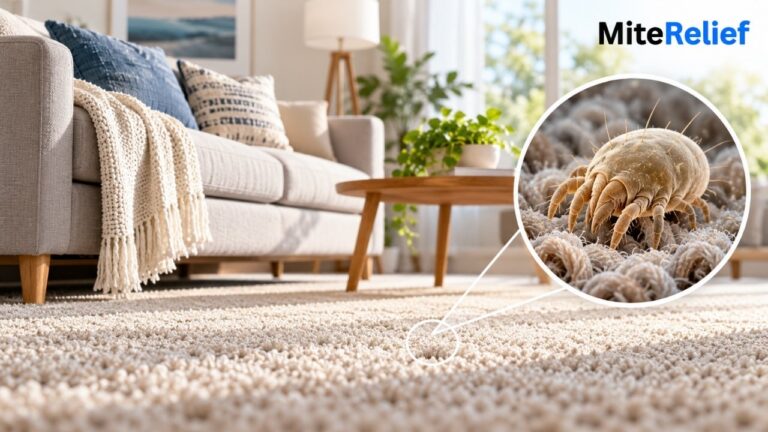
Do you have carpet at home and wonder if it adds to your allergy trouble? You are not alone. Dust mites in carpet are a common worry for many homeowners and renters.
Here is the short answer. Carpets and rugs can collect dust mite allergens. They may also support house dust mites when food and moisture are present. Living mites and the allergens they leave behind are not the same thing. The good news is that you can lower your exposure without tearing out your floors.
Do Dust Mites Live in Carpets and Rugs?
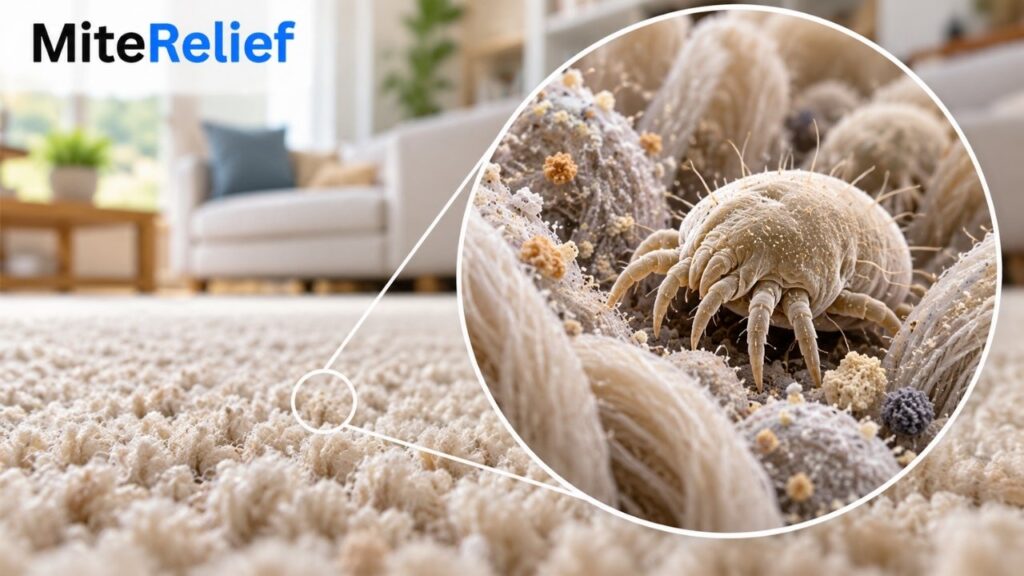
Yes, they can. House dust mites are tiny creatures you cannot see. They feed on shed skin flakes and other bits of dust and debris. Carpet fibers hold that material well.
Mites do best in warm rooms with high relative humidity. Dry air makes life harder for them. That is why carpet in a damp room may be a bigger concern than carpet in a dry one.
Even after mites die, their dust mite allergens can remain in dust. That is why cleaning matters, not just killing mites.
Carpets are not the only place these allergens gather. Mattresses and upholstered furniture can hold them too. For help with sleeping areas, see our guide on dust mites in the bedroom.
Having carpet doesn’t mean you have a mite problem. Seeing dust does not prove it either. It also does not confirm an allergy. Only a healthcare professional can do that.
How Do Carpet Types Affect Allergen Removal?
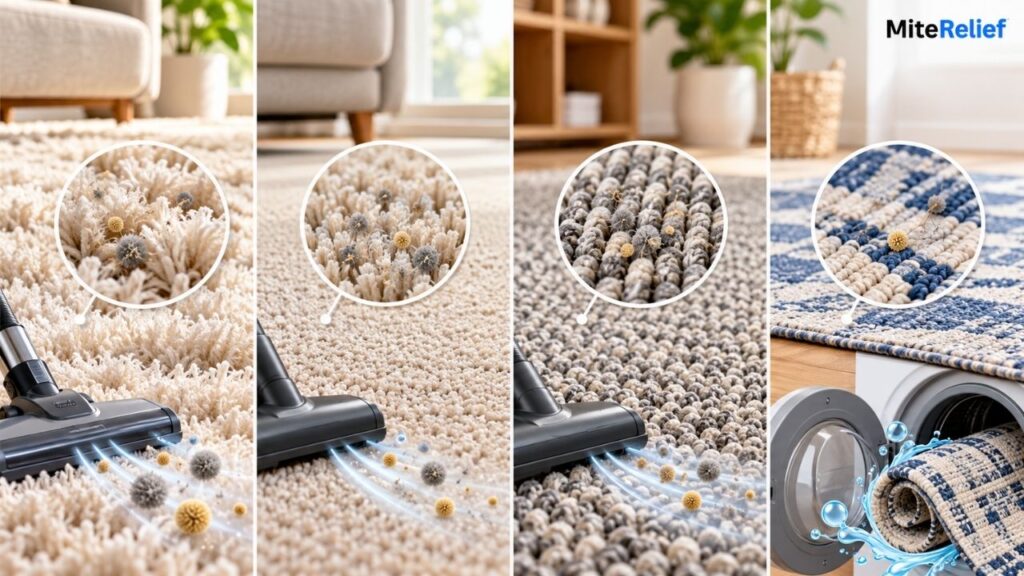
Not all carpets are the same. Their build changes how easy they are to clean. Research has looked at how carpet pile height may affect dust collection. Still, no one carpet type always holds more allergens than another.
Here is a simple way to compare your options.
| Surface or Type | Cleaning Considerations | Practical Approach |
| Wall-to-wall carpeting | Cannot be removed. Edges and the carpet padding underneath are hard to reach. | Vacuum often. Dry fully after any wet cleaning. |
| High-pile carpet | Long textile fibers can trap dust deeper down. | Use a vacuum made for thick pile. Go slowly. |
| Low-pile carpet | Shorter fibers are usually easier to vacuum. | Vacuum on a steady schedule. |
| Loop-pile carpet | Loops can snag on some vacuum brushes. | Check your vacuum’s brush settings first. |
| Washable rugs | Can often go in the washing machine. | Follow the care label and dry completely. |
| Hard flooring | Easy to wipe, but still collects dust. | Damp-mop often. |
The best choice depends on your home, your budget, and how well you can keep the surface clean.
Where Do Dust Mite Allergens Accumulate in Carpets?
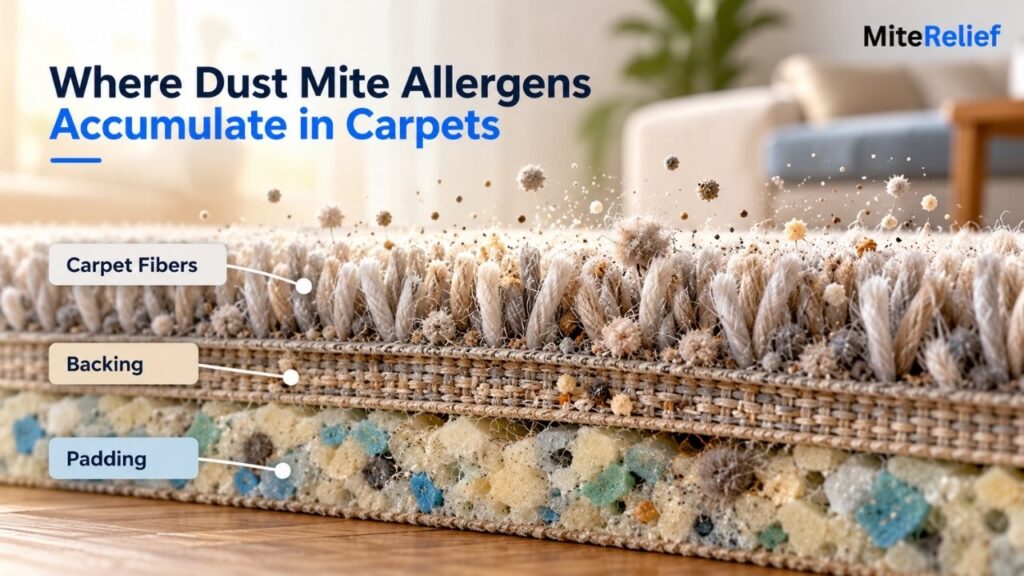
Allergens do not spread evenly. Where they gather depends on the carpet, how you use the room, and how often you clean. You cannot tell how much is there just by looking.
These spots deserve attention:
- Deeper pile: Fine dust sinks beneath the carpet’s surface.
- Edges and under furniture: Vacuums often miss these areas, so dust builds up.
- Backing and padding: Where you can reach them, these layers can hold dust and moisture.
- Busy rooms: Living rooms and hallways get lots of foot traffic, which grinds dust into the fibers.
- Damp areas: Carpet hit by leaks or spills may grow mold. This adds another trigger and needs quick action.
When you walk on carpet or vacuum it, dust can lift into the air. These airborne particles can affect your indoor air quality. That’s why good filtration matters.
How Can You Reduce Dust Mite Allergens in Carpet?
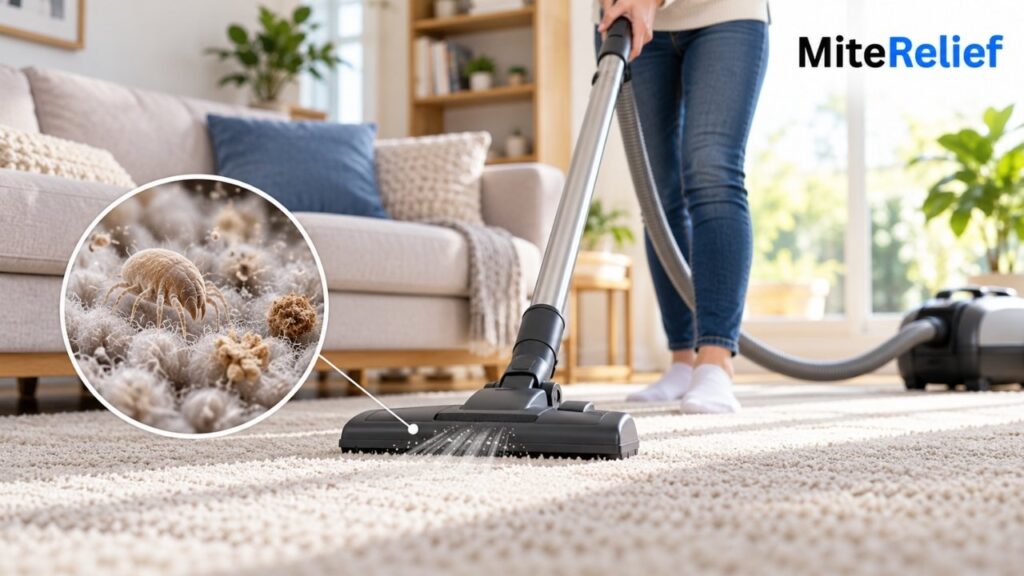
You do not need a perfect plan. Small, steady habits work best. Here is what to focus on:
- Vacuum regularly. Use a vacuum cleaner that suits your carpet type. Go over each area slowly.
- Follow the manufacturer’s care steps. Your carpet manufacturer knows what cleaning methods are safe.
- Do not skip edges. Clean along the walls and under furniture you can reach.
- Control humidity. A dehumidifier can help in damp rooms. Aim to keep indoor air from feeling sticky.
- Fix leaks fast. Wet carpet should be dried quickly.
- Dry carpets fully after cleaning. Damp carpet is a bigger problem than dusty carpet.
- Get help for big water damage. A professional can check the carpet and padding.
For a full plan, read our dust mite prevention tips. To pick the right machine, see our guide to vacuum cleaners for dust mites.
No method removes every allergen. The goal is lower exposure, not zero.
Can Carpet Cleaning Remove Dust Mite Allergens?
It can help, but one key difference matters. Killing living mites is one thing. Removing the allergens left behind is another. Dead mites still leave allergen-filled dust in the carpet.
Studies on allergen removal methods show that results vary. Your results will depend on your tools, your carpet, and your cleaning method. Learn more about heat and other treatments in our article on methods used to kill dust mites.
Does Vacuuming Remove Dust Mite Allergens?
Vacuuming can remove some dust and allergen-filled debris. It will not remove everything. It also will not kill every mite.
The filter matters. A vacuum with a weak filter can blow fine dust back into the room. A well-sealed HEPA filter can capture very small particles. That keeps more of them out of the air you breathe.
Keep in mind that a HEPA filter traps particles. It does not kill mites. Studies on carpet allergens can help you understand what the research shows, and what it doesn’t.
Does Steam Cleaning or Carpet Spray Work?
Steam cleaning and hot-water extraction use heat and water. Heat can harm mites, but results depend on several things:
- How hot the water or steam gets
- How long it touches the carpet
- How thick the carpet is
- How well the carpet dries afterward
Even if mites die, allergens may remain in the fibers. Cleaning that leaves carpet damp can also make problems worse.
Carpet sprays and powders vary a lot. Do not assume they remove all allergens. Always follow the label. Never mix cleaning products. Avoid adding chemicals you do not need.
Should You Replace Carpets With Hard Flooring?
Not always. Here is a fair look at both sides.
Why some people choose hard flooring:
- Hardwood and other smooth flooring are easy to damp-clean.
- No fibers trap dust.
Why it is not a perfect fix:
- Hard floors still collect dust and allergens.
- Dust can blow around more easily if you dry-sweep.
- Replacing floors costs money and can be a big job.
- Carpet can feel warmer and softer.
Other options to think about:
- Washable rugs can make cleaning easier, as long as you wash and dry them fully.
- Renters can use washable rugs over hard floors, vacuum often, and ask the landlord before any changes.
- If you have serious water damage or damp that keeps coming back, ask a professional whether repair or replacement makes sense.
If you notice ongoing sneezing, itchy eyes, or other allergic reactions, talk to a healthcare professional. You can also read about dust mite allergy symptoms.
Frequently Asked Questions (FAQs)
Can dust mites live in all types of carpets?
Mites need the right conditions, such as food, warmth, and moisture. Carpet type alone doesn’t tell you whether mites are present. Any carpet can hold dust, but mites are more likely to thrive in damp, warm spaces.
Does HEPA vacuuming kill dust mites?
No. A HEPA filter captures fine particles, including some allergens. It does not kill mites. It helps keep dust from returning to the air, but it is only one part of a good cleaning routine.
Do washable rugs help reduce dust mite allergens?
They can. Washable rugs are easier to clean than wall-to-wall carpet. If the care label allows it, you can launder them often. Dry them completely so moisture does not build up and cause new problems.
Is steam cleaning enough to remove dust mite allergens?
Not on its own. Heat may kill living mites, but allergens can remain in the fibers after they die. Regular vacuuming and proper drying are still important. Results depend on your carpet and the method used.
Can carpet sprays eliminate dust mite allergens?
Sprays vary, and you shouldn’t rely on them to remove every allergen. Physical cleaning, like vacuuming, plays the bigger role. Always follow the label and avoid unnecessary chemicals.
What to read next
Conclusion
Dust mites in carpet are a real concern, but you do not have to rip out your floors. Carpets can collect allergens, yet smart habits can lower your exposure.
Vacuum with a suitable machine. Clean as your carpet maker recommends. Keep humidity in check, and dry everything fully after cleaning. The right plan depends on your carpet, your home, and your own needs.
Want to go further? Start with our dust mite prevention tips for simple steps that work across your whole home.
Medical Disclaimer
This content is for general informational purposes only and is not a substitute for professional medical advice, diagnosis, or treatment. Individual health needs can vary, so speak with a qualified healthcare professional about allergies, asthma, skin reactions, medications, or other symptoms. Seek prompt medical care if symptoms are severe, persistent, or getting worse.

Umar Farooq is the founder of MiteRelief, creating research-backed guides about dust mites, indoor allergens, and practical allergy prevention for healthier homes.