Many people say they have a “dust allergy,” but what does that mean? The dust allergy vs. dust mite allergy question has a simple answer. Household dust contains many tiny particles, and dust mite allergens are only one possible trigger.
Dust can also hold pet dander, mold, pollen, pest debris, and plain dirt. That is why “dust allergy” does not point to one exact cause. Symptoms alone cannot tell you which one is bothering you.
What Is Household Dust Made Of?
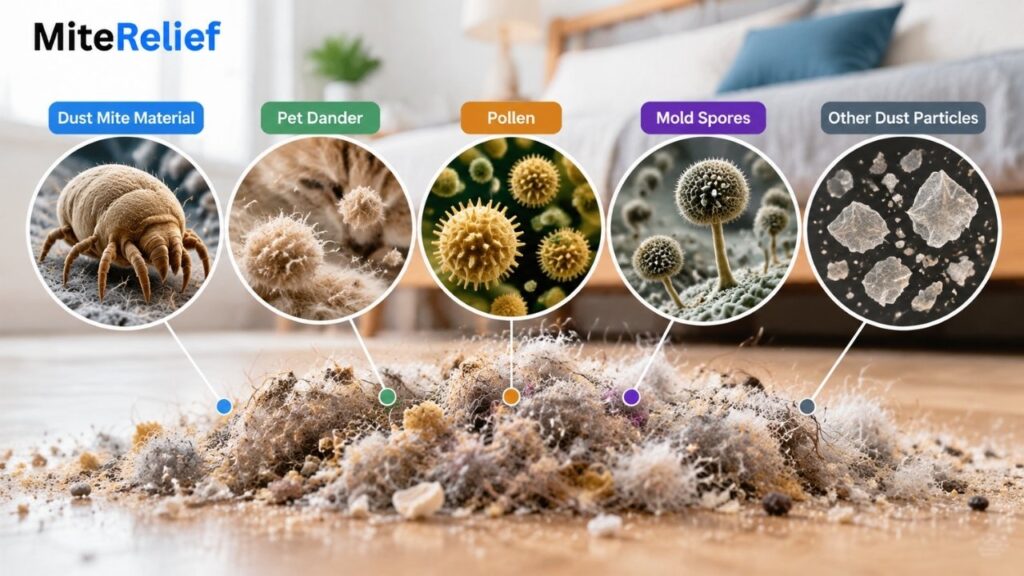
Household dust is not one thing. It is a mix of dust particles from inside and outside your home. MedlinePlus says it can include pollen, mold, and fibers from clothing and fabric.
The American College of Allergy, Asthma & Immunology (ACAAI) also notes that bits of cockroach, mold, and pollen often end up in dust. Any of them could be the true source of a so-called dust allergy. For a broader look, see ACAAI’s guide to dust allergies and common household triggers.
The table below shows what dust can contain. Your home will not necessarily have every item shown. It may have a few, many, or very few.
| Component | Possible Allergen or Concern | Usual Sources |
| House dust mite material | Mite allergen proteins | Bedding, upholstered furniture, carpets |
| Pet dander | Animal allergen proteins | Pets, furniture, floors |
| Cockroach debris | Cockroach allergen proteins | Areas with cockroach activity |
| Mold spores and fragments | Mold-related allergens | Damp rooms and affected materials |
| Pollen brought indoors | Plant allergens | Clothing, windows, outdoor air |
| Rodent debris | Rodent allergen proteins | Areas with rodent activity |
| Nonallergenic particles | Irritation from dust and debris | Soil, lint, and other household particles |
Bedding and mattresses are common places for mite material to collect. Our guide to dust mites in your bedroom explains why.
Is Dust Allergy the Same as Dust Mite Allergy?
Not exactly. People use “dust allergy” in everyday talk, but the term does not point to a single trigger. Someone who says they are allergic to dust or dust mites may not know which part of the dust affects them.
Someone who feels allergic to dust and dust mites may actually react to just one or two indoor allergens in the dust.
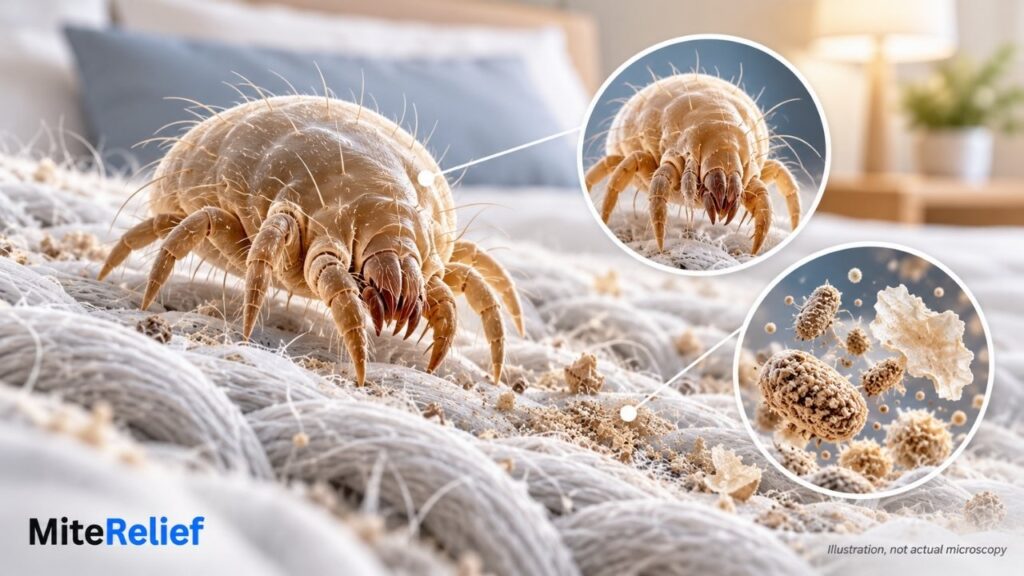
House dust mites are tiny living things that you can only see under a microscope. They feed on household dust. The mites themselves are not the allergen.
The allergens are proteins found in mite material, including dust mite droppings. One well-known example is Der p 1, a protein linked to Dermatophagoides pteronyssinus, one of the Dermatophagoides mites.
Dust mite allergy happens when your immune system treats these proteins as a threat. That immune response causes an allergic reaction. ACAAI says dust mites are the most common cause of house dust allergies.
Not all dust is an allergen, though. Lint and soil can irritate your nose and throat without causing an allergic reaction. You may feel the same way either way, but the reason is different.
What Else in Household Dust Can Trigger Allergies?
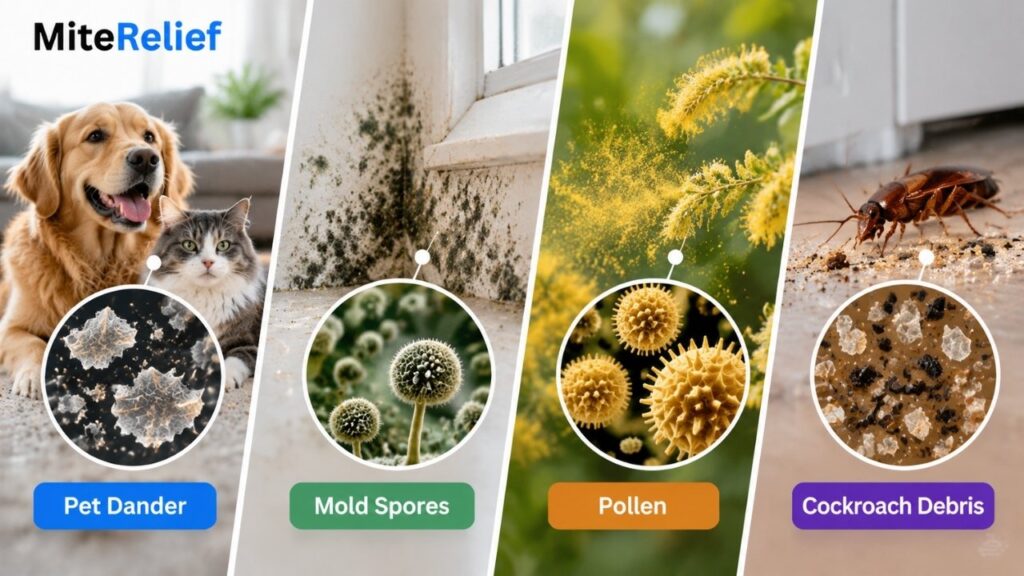
So, what causes dust allergy? Often it is one or more indoor allergens in the dust, not just mites. Here are the main ones.
Pet Dander and Animal Allergens
Pet dander is made of tiny flakes from an animal’s skin. Animal allergen proteins can settle on floors, furniture, and fabric. Eventually, these proteins mix into the dust around your house.
Pet hair is not the only source. You can have a pet dander allergy even when you don’t see much hair.
Mold and Pollen
Mold spores and small pieces of mold may be present in damp rooms or on damp materials. Pollen can enter through open windows, stick to clothing, and be in the air.
Neither one is a dust mite allergen. A mold allergy or pollen allergy is different from a dust mite allergy.
Cockroach and Rodent Allergens
Cockroach allergens come from tiny particles of the insect. Rodent allergens similarly come from mice and rats. Both can add to indoor allergen exposure, but only in homes where these pests are present.
Can Symptoms Identify the Allergen?
Sneezing, a stuffy or runny nose, and itchy eyes can happen with many allergies. Doctors often call this pattern allergic rhinitis. Mite, pet, mold, pollen, and pest allergies can look alike. That is why dust mite allergy vs dust allergy symptoms are so hard to tell apart.
Timing and place can give clues. Your symptoms might flare up in a certain room or when a pet is nearby. But clues are not proof.
Our dust mite allergy symptoms guide goes into more depth. If your symptoms seem to follow the seasons, see dust mite allergy vs seasonal allergy.
How Can You Find Out Which Allergen Affects You?

An allergist is a doctor who focuses on allergies. They usually start with your medical history. They ask about your symptoms, when they happen, and where you spend your time.
Then they decide whether allergy testing makes sense. The American Academy of Allergy, Asthma & Immunology (AAAAI) explains how allergy testing identifies specific triggers.
Skin Prick Tests and Specific IgE Blood Tests
In a skin prick test, a clinician puts small amounts of allergen on your skin to see whether it reacts. A specific IgE blood test measures antibodies to particular allergens in your blood.
Both can show allergen sensitization. That means your body has made antibodies to an allergen.
A positive result alone cannot confirm that the tested allergen is behind your symptoms. Doctors interpret results alongside your history. When a test and your real-life symptoms match, that points to a clinical allergy.
To learn what to expect, see our dust mite allergy test guide.
How Does Identifying the Allergen Help?
The right next step depends on the trigger. Here are a few examples:
- Dust mites: You and your doctor can discuss mite exposure and appropriate household steps. Our guide on how to prevent dust mites covers those steps.
- Pet allergens: You may need to focus on where the animal spends time.
- Mold: You may need to look for damp areas or affected materials.
- Pests: You may need to deal with cockroach or rodent activity.
- Pollen: The steps differ from those for indoor mite exposure.
Better indoor air quality may help some people, but the fix depends on the source.
Testing does not always give a clear answer. Finding one allergen also may not end every symptom. If your symptoms last or worry you, talk with a qualified healthcare professional.
Can You React to More Than One Indoor Allergen?
Yes. A person can be sensitized to more than one allergen. Someone might react to mites and pet allergens, or to mold and pollen.
A positive test only shows sensitization. Your doctor must still ask whether each allergen is a real trigger for you. Your history and symptoms help answer that.
Frequently Asked Questions (FAQs)
Can You Be Allergic to Dust but Not Dust Mites?
Yes. “Dust allergy” is a broad term and doesn’t name a single allergen. You may react to other allergens in indoor dust, such as pet dander or mold. Some people also experience irritation from dust that isn’t an allergy.
Is a Dust Allergy Test the Same as a Dust Mite Allergy Test?
Not always. Tests check for particular allergens, and house dust mite allergens are one option. A doctor picks tests based on your history and your likely exposures. This applies to any dust or dust mite allergy concern.
Can Cleaning Help Reduce Indoor Allergens?
Cleaning can remove some built-up particles. But the best approach depends on the source. Mite material, pet allergens, and mold each need different steps. Cleaning does not replace medical care.
Can Mold or Pet Allergens Be the Main Trigger?
Yes. Either one can be the main trigger, depending on your exposure and your doctor’s findings. Symptoms alone cannot confirm the source.
What to Read Next
Conclusion
Household dust contains particles from many sources. Dust mite allergy is a reaction to specific mite proteins, not to every particle in dust. That is the key point in dust allergy vs. dust mite allergy.
The phrase “dust allergy” alone does not name the cause. Your symptoms can offer clues, but a healthcare professional can help you sort out which allergens matter for you.
Medical Disclaimer
This content is for general informational purposes only and is not a substitute for professional medical advice, diagnosis, or treatment. Individual health needs can vary, so speak with a qualified healthcare professional about allergies, asthma, skin reactions, medications, or other symptoms. Seek prompt medical care if symptoms are severe, persistent, or getting worse.

Umar Farooq is the founder of MiteRelief, creating research-backed guides about dust mites, indoor allergens, and practical allergy prevention for healthier homes.