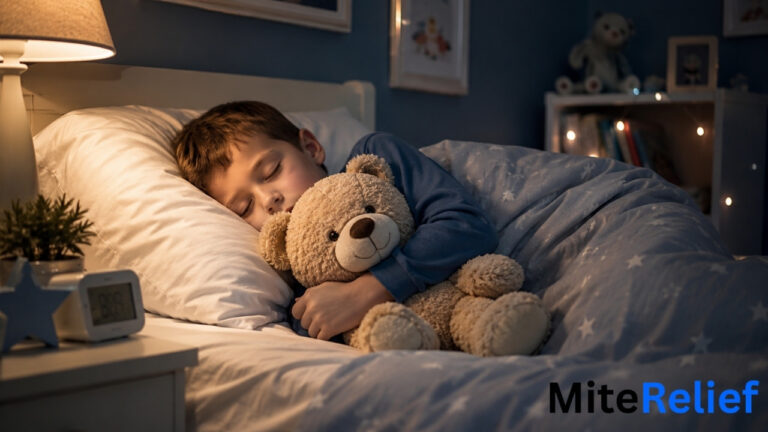
Does your child sleep with the same teddy bear every night? You might wonder what’s actually living in it.
Dust mites in stuffed animals are a real concern for many parents, especially when a toy sits on a bed or pillow for months at a time.
Stuffed animals can collect dust, skin flakes, and other dust mite allergens just from everyday use.
This buildup happens slowly. Most parents don’t notice it until they start looking closely.
Children often keep favorite toys near where they sleep, and that means more contact with skin cells and moisture than a toy left in a toy box.
The good news is that a few simple methods can help: freezing, washing, and steam cleaning. None of them require you to throw the toy away.
Do Stuffed Animals Have Dust Mites?
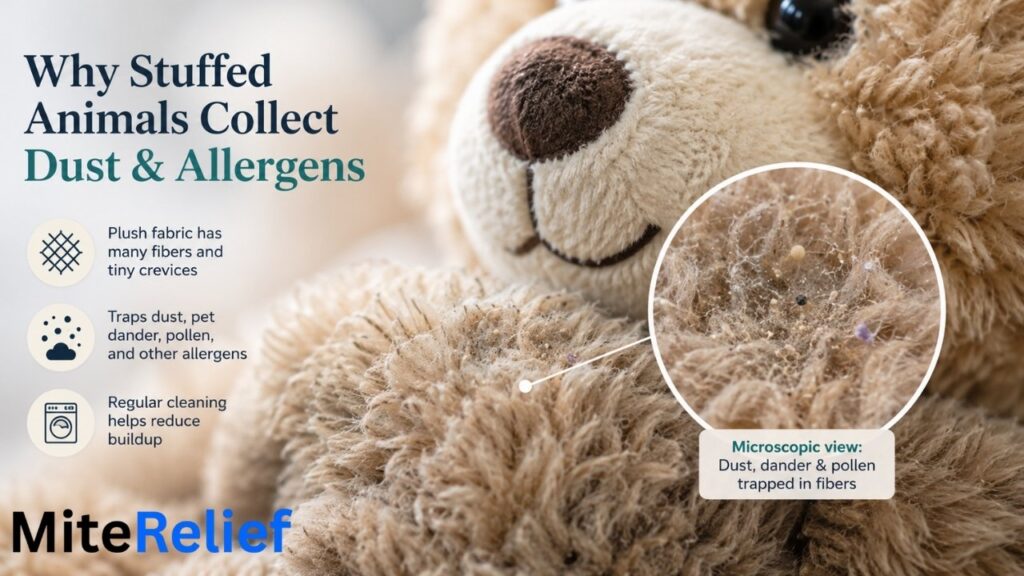
Soft, textured materials give dust mites plenty of places to settle. Plush toys are made from fabric with a lot of surface area.
That texture traps dead skin cells, much like a couch cushion or a pillow does. House dust mites feed on these skin flakes, so mites can follow wherever skin cells collect.
Warmth and moisture matter too. Mites tend to do best in humid conditions. A toy that sits in a warm bedroom night after night can offer just enough humidity to help them survive.
Stuffed toys kept near sleeping areas, like on a bed or against a pillow, are more likely to build up allergens than toys stored somewhere else.
To learn more about what dust mites are and how they live, check out that guide.
Which Stuffed Animals Collect More Dust Mite Allergens?
Not every toy collects the same amount of allergens. A stuffed animal’s material, age, and washability all affect how much buildup it’s likely to have over time.
Long-haired plush toys tend to trap more dust and skin cells. This is because of their thick fabric and deep stuffing.
Older toys also carry more buildup, simply because they’ve had more years to collect it.
Short-fabric toys, washable stuffed animals, and plastic toys are usually easier to clean and tend to hold less.
| Toy Type | Allergen Buildup |
| Long plush toys | Higher |
| Older toys | Higher |
| Washable toys | Lower |
| Plastic toys | Minimal |
Materials like cotton and polyester can both hold allergens. But a washable stuffed animal design makes ongoing cleaning much easier than a toy that needs hand-cleaning every time.
How to Get Rid of Dust Mites in Stuffed Animals
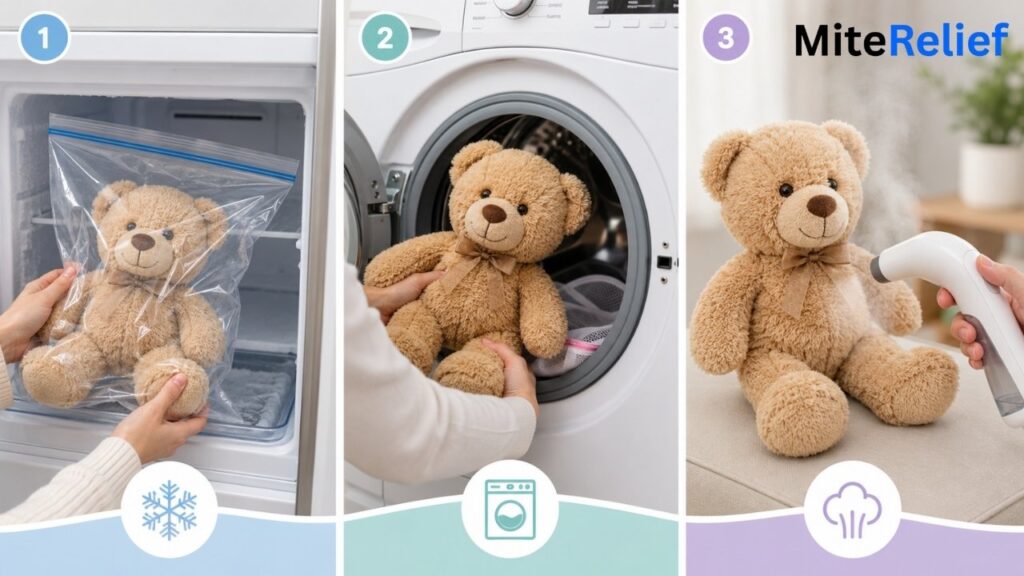
There isn’t one single best way to clean every toy. The right method depends on the toy’s material, its care instructions, and whether it has any electronic parts inside.
Some stuffed toys can go straight into the washing machine. Others need a gentler touch.
Knowing which method fits which toy helps you actually reduce dust mite allergens instead of just moving them around.
Method 1: Freezing Stuffed Animals to Kill Dust Mites
Freezing stuffed animals is a simple option for toys you don’t want to wash often, like ones with delicate trim or older fabric.
Cold temperatures can kill dust mites. This method works best as one part of a bigger cleaning routine, not the only step.
Here’s how it typically works:
- Place the toy inside a sealed plastic bag.
- Put it in the freezer for 24 to 48 hours.
- Let it warm back up to room temperature before handling.
- Use a vacuum cleaner or brush to remove loose dust and allergens.
Freezing stuffed animals kills dust mites in many cases, but this step alone doesn’t remove the allergen particles left behind.
Dead mites and their waste can still trigger a reaction. That’s why freezing usually needs to be followed by washing or vacuuming.
For more ways to cut down on mites without chemicals, see these natural ways to reduce dust mites.
Method 2: Washing Stuffed Animals
Washing is usually the most thorough option when the toy allows it. Start by checking the care label. Some toys are machine-washable, while others need hand-washing or spot-cleaning instead.
Use a gentle cycle with a mild laundry detergent. Dry the toy completely afterward. A tumble dryer on low heat works well for many fabric toys, and full drying matters a lot.
Leftover moisture inside the stuffing can actually help mites instead of getting rid of them. If you want detergent options built with dust mites in mind, this guide on dust mite laundry methods breaks it down further.
Method 3: Steam Cleaning Non-Washable Stuffed Toys
Steam cleaning is a good middle-ground choice for delicate stuffed toys that can’t handle a full wash cycle.
Steam heat can help loosen dust mite allergens trapped in the fabric without soaking the whole toy.
This method isn’t a good fit for toys with electronic parts, batteries, or sound boxes. Moisture and heat can damage these components.
Always let a steam-cleaned toy dry completely before handing it back to your child. You can read more about how this method compares to others in steam cleaning and dust mites.
Can Cleaning Stuffed Animals Remove Dust Mite Allergens?
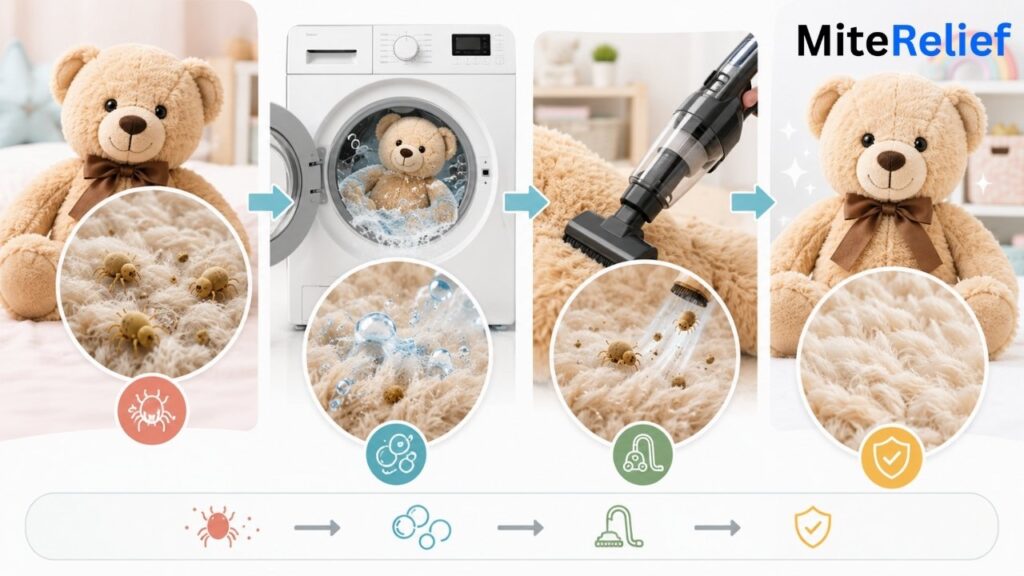
It helps to know the difference between killing dust mites and removing the allergens they leave behind.
These are two separate jobs. Skipping one usually means the work isn’t finished.
Freezing or heat can kill live dust mites. But dead mites, their shed skin, and their droppings can remain in the fabric.
Allergens don’t disappear just because the mites are gone.
Washing helps pull these tiny particles out of the material, while a vacuum cleaner ideally one with a HEPA filter can lift loose debris from the surface.
Regular cleaning matters more than any single deep clean. A toy that gets washed or vacuumed on a steady schedule will typically carry a lighter allergen load than one cleaned just once a year.
If your child already shows signs of a reaction, review common dust mite allergy symptoms so you know what to watch for.
Are Dust Mite Resistant Stuffed Animals Available?
Some toys are sold as dust mite resistant stuffed animals. These usually rely on tightly woven fabric that makes it harder for allergens to settle in deep.
A washable materials design makes a bigger real-world difference than the weave alone, since it means the toy can actually be cleaned often.
Still, no plush toys can fully stop dust from building up over time. Even a well-made, easy-to-wash stuffed toy needs regular cleaning to stay low in allergens.
Think of these designs as a head start, not a permanent fix.
How to Reduce Dust Mite Exposure From Stuffed Animals
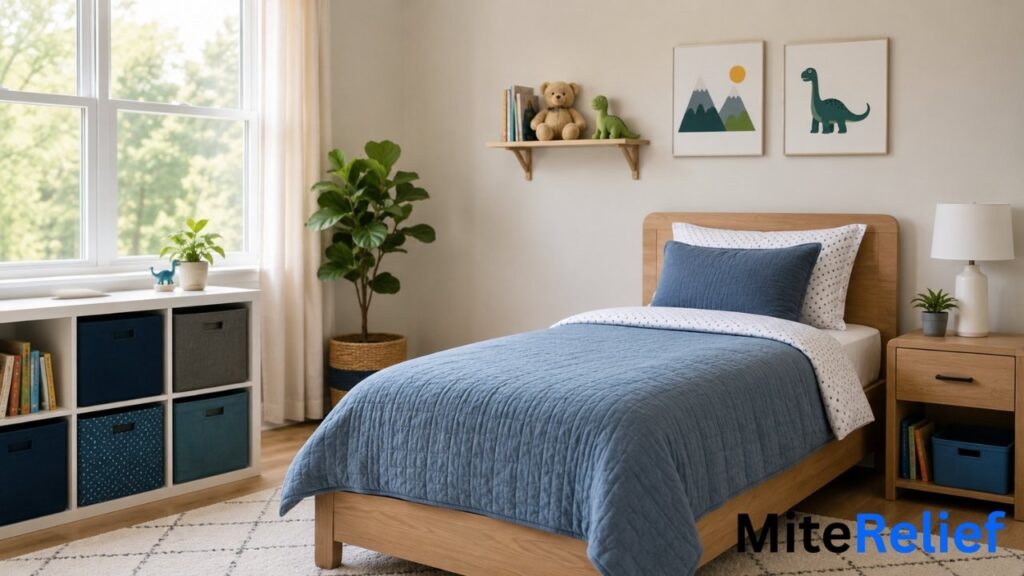
A few small habits can make a real difference for children who sleep near a lot of soft toys. None of these mean getting rid of favorite items. They’re mostly about routine and where you keep toys.
- Keep only one or two favorite toys on the bed.
- Wash or freeze the most-used toys on a regular schedule.
- Store toys that aren’t used daily in a closed bin or closet
- Keep bedroom humidity in check, with a dehumidifier if needed.
- Choose washable stuffed animals when buying new toys.
Toys that sit right next to pillows and bedding tend to pick up the most allergens. This is because skin cells and moisture build up there overnight.
Small changes to where toys are stored can meaningfully lower exposure for a child with a dust mite allergy. For a broader look at cutting down mites around the home, see how to prevent dust mites.
Frequently Asked Questions (FAQs)
Can Dust Mites Live in a Brand-New Mattress?
Yes. A new mattress can become a home for dust mites once it’s used. Mites first need to get onto it. Then the right humidity and warmth need to build up over time. There’s no set timeline for when this might happen.
Do Dust Mites Come Into Homes Through Open Windows?
Open windows aren’t seen as a main way dust mites get into a home. Mites are more closely linked to indoor dust, bedding, carpets, mattresses, upholstery, and items that get moved from place to place.
Can I Bring Dust Mites Home From a Hotel?
Mites or mite dust can travel home on your clothes or other fabric. But there’s no strong proof that hotel luggage is a major source of mites at home. Think of it as a possible way, not a common one.
Do Dust Mites Die in Cold Weather?
Cold, dry air can lower mite survival and slow reproduction. But cold weather outside doesn’t mean mites inside your home go away. Heated rooms, indoor humidity, and warm bedding can still give mites what they need.
How Quickly Can Dust Mite Populations Grow in a Home?
There’s no single timeline for every home. Growth depends on things like the starting number of mites, humidity, warmth, food, and the small climate in a mattress or piece of furniture.
What to Read Next:
- What Are Dust Mites?
- How to Prevent Dust Mites
- Best Laundry Detergents & Additives for Dust Mites
- Do Steam Cleaners Kill Dust Mites?
- Dust Mite Allergy Symptoms
Conclusion
Stuffed animals aren’t off-limits just because they can collect dust mite allergens. A routine of freezing, washing, or steam cleaning goes a long way toward keeping favorite plush toys low in buildup.
Small habits, like limiting how many toys sit on the bed and keeping bedroom humidity in check, add up over time.
With a bit of consistency, children can keep their favorite teddy bear without it becoming a bigger source of exposure. The goal isn’t a perfectly mite-free toy, since that’s not realistic, but a noticeably cleaner one.
Medical Disclaimer
This content is for general informational purposes only and is not a substitute for professional medical advice, diagnosis, or treatment. Individual health needs can vary, so speak with a qualified healthcare professional about allergies, asthma, skin reactions, medications, or other symptoms. Seek prompt medical care if symptoms are severe, persistent, or getting worse.

Umar Farooq is the founder of MiteRelief, a resource for dust mite control and allergy prevention. After battling allergen sensitivity, he started creating research-backed guides that turn complex indoor air quality science into practical, affordable solutions anyone can implement.