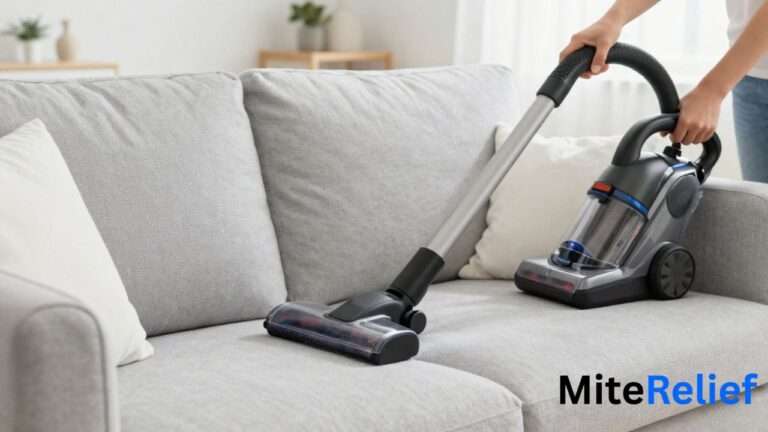
Most people, and I get it, will scrub their mattress every few months, flip it, vacuum it, and the whole deal. Then just kind of forget the sofa exists? Which is weird if you actually stop and think about it. That’s where you spend half your evenings, right? Eating crisps, dozing off mid-movie, scrolling your phone at 1am when you should be asleep. But it never once crosses anyone’s mind that the sofa needs cleaning too.
And here’s the bit that catches people out. Your couch can hold just as many couch dust mites as your bed does. Sometimes more, actually, depending on how often it gets used. These things love warmth; they love moisture, and a sofa that’s sat on for hours every single day gives them both without even trying. So if you’ve been sneezing more on the sofa than, say, in the kitchen or out in the garden, that’s not random. Dust mites in sofa fabric are almost certainly behind it. Worth dealing with now rather than later, genuinely, before it turns into a bigger headache.
How bad are dust mites in your sofa?

Here’s the thing. Sofas are basically a five-star hotel for dust mites, and nobody wants to hear that, but it’s true. Skin cells fall off us constantly (gross, I know, but true), and they collect deep down in the cushions where you can’t see them. Add body heat and a bit of humidity from sitting there for hours on end, and yeah, you’ve got a near-perfect breeding ground going.
It gets worse, too, if pets are allowed up on the furniture. Pet dander is basically a second buffet for them. People who work from the sofa all day, or nap there most afternoons, tend to end up with higher mite counts, mostly because they’re feeding the problem without even realizing it. If anyone in the home struggles with allergies, honestly, this room needs just as much attention as the bedroom. Maybe more.
Kids’ playrooms with a sofa in them are another spot people forget about; all that time spent sitting on the floor and climbing over cushions kicks up dust constantly. The same goes for a reading chair by a window; oddly enough, warmth from sunlight through the glass can actually make the fabric a touch more inviting for mites during the day. None of this means panic; it just means the whole living space deserves a proper look, not only the sofa itself.
Which types of sofas harbor the most dust mites?

Not all sofas are equal here, not even close. Fabric sofas are, hands down, the worst offenders. Mites burrow straight into the cushion filling, deep in there, where a quick wipe just can’t reach them at all. Microfiber sits somewhere in the middle. Better than cotton. Worse than leather.
Leather and faux leather? Much, much better. There’s no weave for mites to hide in, so you can wipe the surface clean in about five seconds. One thing worth checking before you buy, though, or honestly before you panic about the one you already own, is whether the cushions actually have removable covers. Can you take them off and wash them at 60 degrees? If yes, great, you’re already in a far better spot to manage this long term.
Worth mentioning, the materials underneath the visible fabric matter too; foam fillings tend to hold onto moisture a little longer than feather or fiber blends do, which isn’t ideal. If you’re shopping for a new sofa and allergies are a concern in the household, ask about the filling as well as the outer fabric, not just the color and the price tag. It’s a small question that saves a lot of hassle down the line.
How to get rid of dust mites in your sofa, step-by-step:
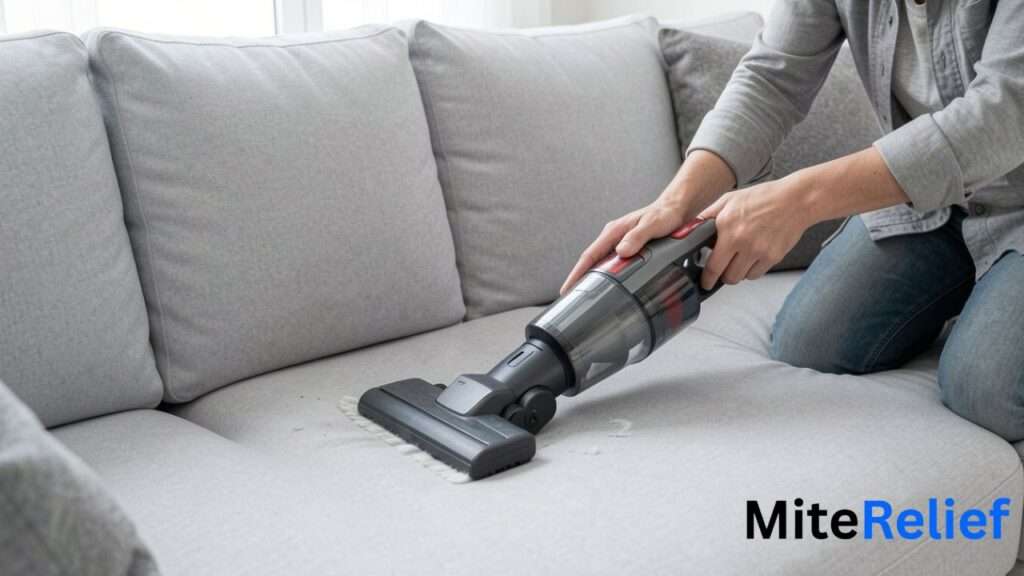
Right, let’s get practical. None of this is hard; it just needs a bit of consistency, week after week, not a one-off panic clean.
1. Remove any removable cushion covers and hot wash them. 60 degrees does the job, killing most mites and their eggs in one go.
2. Go over every surface and crevice with a vacuum fitted with a HEPA filter. Don’t rush this bit. The gaps between cushions, down the sides, and under the arms, That’s exactly where mites love to hide.
3. For the parts you just can’t wash, steam cleaning for dust mites is genuinely one of the better options out there. The heat kills them on contact; no need to soak the fabric right through.
4. Once everything’s properly dry, apply dust mite sprays for furniture to catch whatever the vacuum and steam missed. Some people swear by an essential oil-based spray at this stage too; results seem to vary a fair bit person to person, but it’s worth a try.
5. Let everything dry all the way before anyone sits back down. Damp fabric is basically an open invitation for mites to move right back in, so don’t rush this last part either.
Do this every few weeks and you really will notice a difference, especially if allergies have been dragging on in your household for a while.
How to protect your sofa from dust mites long-term
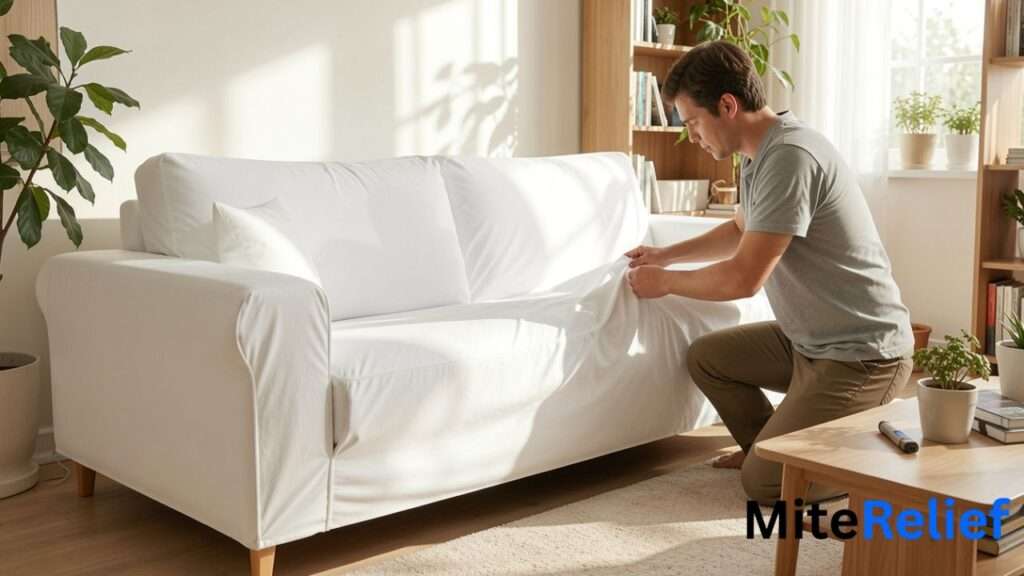
Cleaning it once isn’t enough, unfortunately; wish it were. A washable sofa cover or throw makes life so much easier; honestly, just chuck it in the wash weekly, and you’ve already cut down a huge chunk of the problem. Keep pets off fabric sofas if you possibly can, easier said than done with a dog who’s basically claimed the cushions as his own.
Vacuum with a HEPA attachment weekly, and use an allergen spray monthly to keep numbers down between the deeper cleans. One thing people always overlook is the room’s humidity level. Mites really can’t survive in dry air, so keeping indoor humidity under control with a dehumidifier, or just better ventilation honestly, makes a genuine difference over time. A little baking soda sprinkled on the cushions before vacuuming can help lift trapped odors and debris too, an old trick, but it still works.
A quick word on cleaning products: you don’t need anything fancy or expensive. A mild solution of white vinegar and water works well on spot stains and has a mild deodorizing effect too; just always spot test an inconspicuous patch first and check the care label before using anything you haven’t tried on that fabric before. Some fabrics really don’t like moisture at all, so it pays to check first rather than find out the hard way.
Dust mite carpet cleaner: What works?
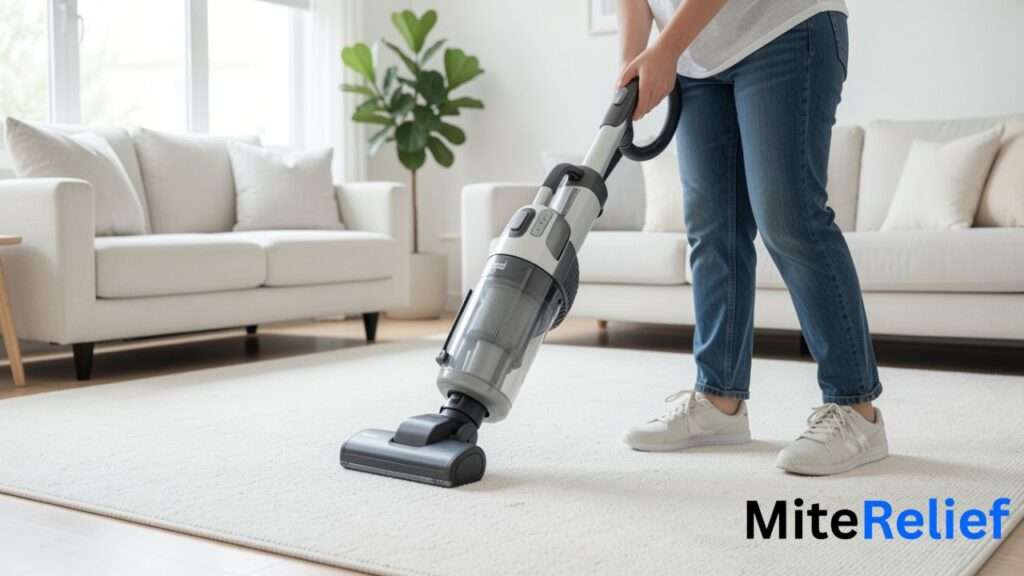
Carpets are a whole different battle, honestly. The first step, always, is vacuuming with a HEPA vacuum, which pulls out surface debris and a good chunk of allergens before you touch anything else.
After that you’ve got two real options: a carpet-safe allergen spray for regular maintenance or a steam cleaner for a proper deep clean. Steam tends to be more thorough because the heat actually kills mites rather than just disturbing them for a moment.
One thing to avoid: wet shampoo methods. They leave the carpet damp for hours, sometimes longer, which basically invites mites straight back in. If you’re dealing with a high-traffic area, once a week is the bare minimum for how to get rid of dust mites in carpet effectively.
| Method | Removes mites | Removes allergens | Best for |
| HEPA Vacuum | Yes | Partial | Weekly cleaning |
| Steam Cleaner | Yes | Yes | Deep cleaning |
| Carpet Spray | Partial | Partial | Maintenance |
| Carpet Shampoo | No | Limited | Stains only |
Rugs and dust mites: should you remove them?
Honestly? For allergy sufferers, hard flooring wins every single time, no contest really. Easier to keep clean, and there’s simply nowhere for mites to hide in the first place.
That said, not everyone wants to rip out every rug in the house; fair enough, I get it. If you’re keeping yours, stick to washable flat weave and run it through the machine monthly at 60 degrees. Thick-pile rugs, though. That’s a different story entirely. They trap dust and skin cells so deep that no amount of vacuuming ever really gets it all out, not fully anyway. If rug dust mites keep setting off symptoms despite you cleaning regularly, swapping thick pile for hard flooring, or at least a thin, washable option, is probably worth it in the end.
Other soft furnishings to tackle: curtains, cushions, throws

Curtains get forgotten about constantly, don’t they? They just hang there collecting dust for months, sometimes way longer than any of us would like to admit out loud. Swapping to roller blinds solves the whole problem, or if you love your curtains too much to part with them, go washable fabric and hot wash monthly instead.
Cushions are the easy win here; just pick ones with removable, washable covers. For the ones that can’t go in the wash, popping them in the freezer for a few hours kills mites off too. It sounds strange, I know, but it genuinely works.
Throws, lying on the sofa, should get washed weekly if they’re in regular use. They pick up moisture and skin cells just as fast as the cushions sitting underneath them, maybe faster.
Best Sofa Materials for Allergy Sufferers
A quick side-by-side, in case you’re choosing a new sofa or just want to know where yours stands.
| Material | Dust Mite Risk | Easy to Clean |
| Leather | Low | Very high |
| Faux Leather | Low | Very high |
| Microfiber | Moderate | High |
| Cotton Fabric | High | Moderate |
| Velvet | Very high | Low |
Frequently asked questions:
Q: Can dust mites live in a leather sofa?
Not really, no. Leather just doesn’t give mites anywhere to burrow into, so numbers stay very low next to a fabric sofa.
Q: How do I know if my sofa has dust mites?
Sneezing more than usual, itchy eyes, and a stuffy nose right when you sit down—those are the usual giveaways. Especially if it eases off once you move to another room.
Q: How often should I clean my sofa for dust mites?
Weekly vacuuming with a HEPA filter, then a deeper clean, steam or spray, once a month. That combo keeps most households in a pretty good place.
Q: Do dust mites live in curtains?
Yep. Curtains collect dust and skin cells just like any other fabric does, and honestly they get cleaned far less often than they should.
Q: Is vacuuming a sofa enough to get rid of dust mites?
No, not on its own. Vacuuming only lifts what’s on the surface. Pair HEPA vacuuming with steam cleaning or an allergen spray if you actually want the numbers down.
What to read next
- Best Dust Mite Sprays for Mattresses, Beds & Furniture (2026)
- Do Steam Cleaners Kill Dust Mites? (Does UV Light Work?)
- Best Vacuum Cleaners for Dust Mites (2026 Buying Guide)
Conclusion
Look, your sofa deserves the same attention your mattress gets, arguably more if you’re being honest about how many evenings you actually sink into it. A weekly vacuum, an odd steam session now and then, and keeping humidity in check.
None of it eats up much time, really. Small habits, done over and over without thinking too hard about it, beat one big frantic deep clean every few months. Every time, honestly. And look, nobody’s expecting perfection here. Miss a week, it’s not the end of the world; just don’t let it turn into three months. Get the basics right most of the time, and your sofa, your carpets, the whole living room, really, will thank you for it, allergies and all.
Medical Disclaimer
This content is for informational purposes only and is not a substitute for professional medical advice, diagnosis, or treatment. Always consult a qualified healthcare provider regarding persistent allergy symptoms, asthma, or breathing difficulties. We assume no liability for any health outcomes resulting from the use of this information.

Umar Farooq is the founder of MiteRelief, a resource for dust mite control and allergy prevention. After battling allergen sensitivity, he started creating research-backed guides that turn complex indoor air quality science into practical, affordable solutions anyone can implement.