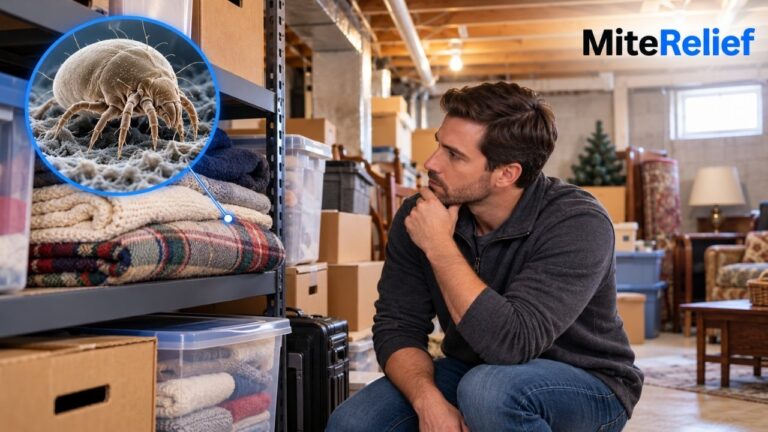
You may wash your sheets and clean your bedroom regularly, yet your symptoms linger. The cause could be somewhere you rarely visit.
Dust mites in basements may become more likely when humidity is high and stored fabrics collect dust over time. Old dust can also carry dust mite allergens after the mites themselves are gone. Below, you will see what to check and what to do.
Can Dust Mites Live in Basements?
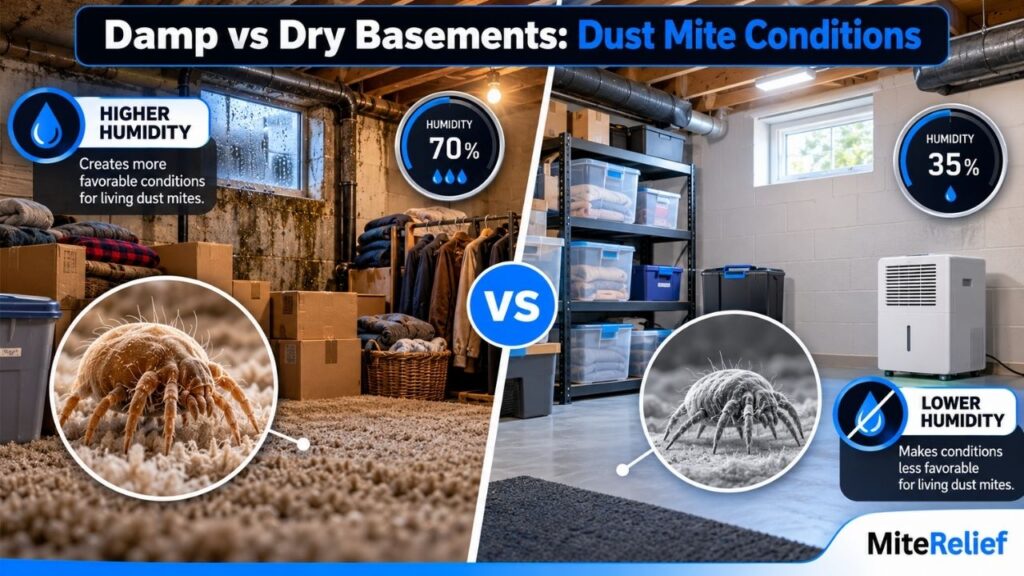
Yes, they can. A house dust mite needs warmth, moisture, and food. Dust mites feed mainly on organic debris, including shed skin flakes. A damp basement with carpet, old couches, and stored fabrics can offer all three.
Humidity matters most. Mites absorb water from the air, so high relative humidity helps them survive. The Asthma and Allergy Foundation of America explains the link between dust mite allergens and humidity. For more detail, read about how humidity affects dust mites.
A dry basement is usually a poorer home for mites. But dry does not mean allergen-free. Allergens are tiny bits of mite bodies and waste. Even after the mites die off, those particles can linger in dust that has settled.
This is why living mites and allergens are two different things. A dusty shelf may hold allergens without holding any live mites. Basements are not always worse than bedrooms either. Allergen levels differ from home to home and room to room.
Where Do Dust Mite Allergens Collect in Storage?
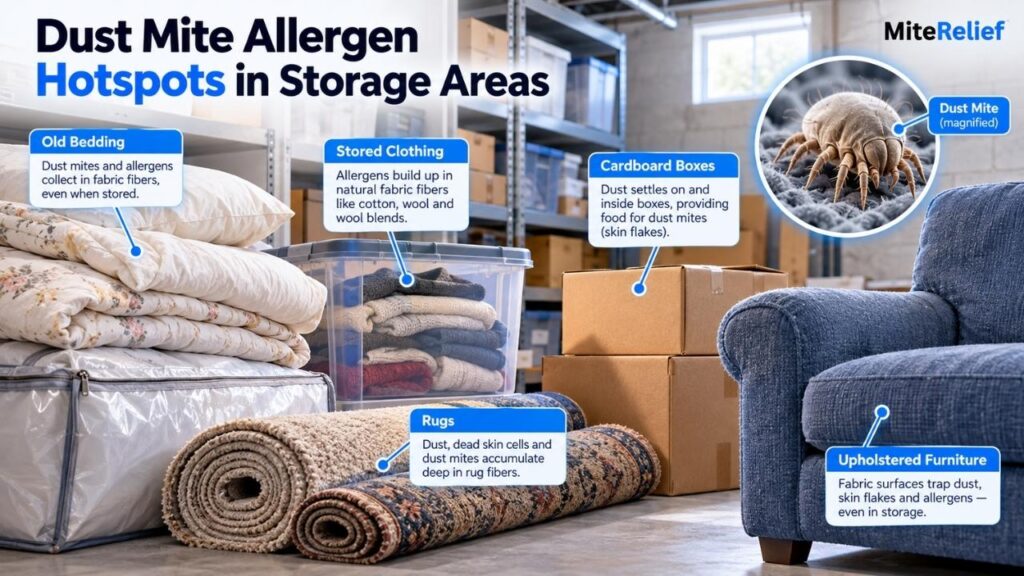
Storage areas collect dust because nobody disturbs them. Fabrics are the main concern. Stored clothing, old blankets, pillows, rugs, and cushions can trap dust in their fibers. Upholstered furniture and old sofas can do the same. Many of these items sit for years without a wash.
Visible dust does not tell you how much allergen is present. A heavy coat of dust on a bare shelf can be less of a worry than a light coating deep in a cushion. Fabric is the better place to focus.
Check how things are stored, too. Cardboard boxes gather surface dust and can soak up moisture in a damp room. That does not mean every box holds mites. It means boxes are harder to keep clean and dry.
Learn more about dust mite allergens in clothing and dust mites in upholstered furniture in our dedicated guides.
| Stored Item | Possible Concern | Practical Action |
| Old bedding and blankets | May collect dust and allergens | Launder before reuse |
| Stored clothing | Fabric may hold accumulated allergens | Store clean and dry in closed bins |
| Rugs and cushions | Dust can settle within textiles | Clean according to care instructions |
| Cardboard boxes | Collect surface dust and may be affected by dampness | Consider wipeable storage bins |
| Old upholstered furniture | Fabric and padding may retain allergens | Assess condition and clean before reuse |
Can Basement Dust and Allergens Reach Living Areas?
They can move, but not in a constant stream. Research does not show that basement allergens keep spreading through a home. The risk comes from specific moments.
Sweeping or shifting boxes stirs up settled dust, and some of it can end up in your airways. Carrying old bedding, clothes, or furniture upstairs can bring dust along too. Some of it could settle on floors and bedding.
Airborne particles can drift between rooms that are connected by stairs or open doorways. Your HVAC system may play a part in some homes. But it does not always spread basement dust everywhere. The safest move is to handle stored items with care and clean them before you bring them into living areas.
How Does Clutter Affect Dust Mite Allergen Exposure?

The more household clutter you have, the more spots dust can settle on. Each box, bag, and shelf item also adds one more thing to clean. Clutter can keep your vacuum cleaner from reaching floors and corners, so dust keeps building up in the same places.
The AAFA guide on controlling indoor allergens supports reducing clutter and dust-collecting surfaces. Still, clutter alone does not prove a mite problem. Dust buildup and a living mite population are not the same thing.
Wall Hangings and Stored Textiles
Wall hangings such as tapestries, quilts, and fabric art can collect dust. They often hang for years without cleaning. Dust settles into the fibers and stays there.
Check the care label first. Some pieces can be washed. Others need a gentle vacuum with a brush attachment. If a piece is hard to clean, consider a framed print or a wipeable alternative.
Artificial Flowers, Knickknacks and Decorations
Artificial flowers do not attract living dust mites by themselves. They mostly collect dust that has settled, and fabric ones with many petals and folds hold more. Knickknacks on open shelves act the same way.
These items are easy to forget about. Hard pieces can be cleaned with a slightly damp cloth. For fabric flowers, a gentle vacuum may help. Fewer small items mean less dusting.
How to Clean Basements and Storage Areas for Dust Mites
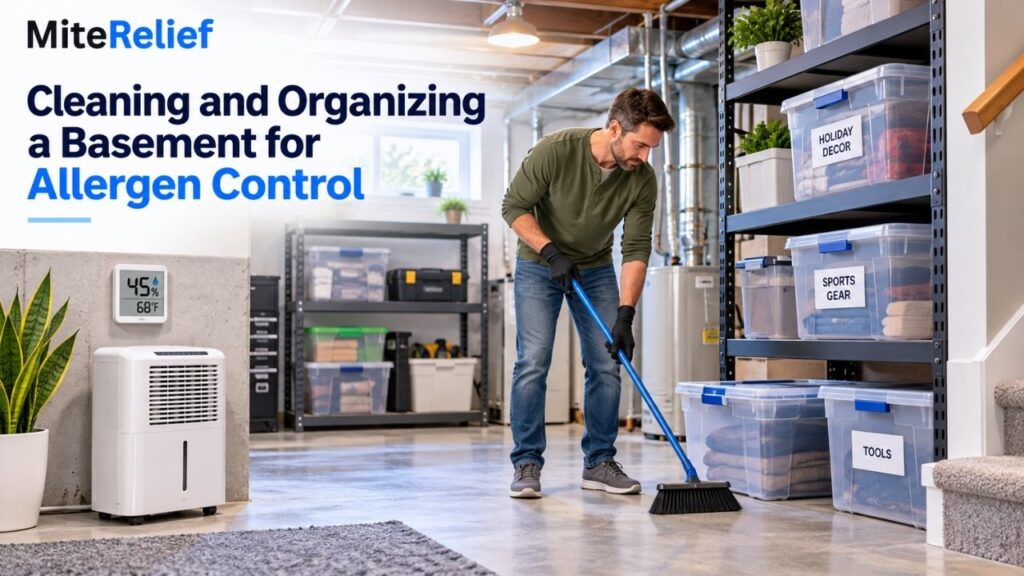
Start with moisture. Look for leaks, damp walls, and wet spots on concrete flooring. Waterproofing or repairs may be needed. For serious water damage or mold, get qualified help rather than handling it yourself.
Then follow these steps:
- Measure humidity. Use a hygrometer. Try to keep indoor relative humidity generally below 50% where practical.
- Lower moisture. A dehumidifier can help in a damp basement. Good airflow also helps.
- Sort your items. Remove things you no longer need.
- Clean before storing. Wash fabrics and let them dry fully.
- Use sealed storage bins. Choose dry, closed containers. They reduce dust, but they cannot promise zero exposure.
- Remove dust carefully. Use damp dusting cloths on hard surfaces. A vacuum with HEPA filters can help on floors and fabrics. It will not remove every allergen.
Managing moisture and reducing dust sources can help improve indoor allergen control. For a wider view, see these ways to reduce dust mite exposure.
Cleaning can kick up dust, so a dust mask may be a good idea if you are sensitive to it.
Bedroom or Basement: Which Comes First?
Start with the bedroom. You spend many hours there each night, so it is usually the most important place to manage. You can find steps for reducing dust mites in the bedroom in our bedroom guide.
Then look at the basement. Check it if it feels damp, if you store lots of fabric there, or if you bring items upstairs often. Basements may also hold mold and other triggers, so not every symptom comes from dust mites. Cleaning the basement will not guarantee relief.
Frequently Asked Questions (FAQs)
Can dust mites live in a dry basement?
It is less likely, since mites need moisture. But allergens can remain in dust even when living mites are not present.
Do cardboard boxes and stored clothes contain dust mite allergens?
They may collect dust and allergens, especially if stored for a long time. That does not mean each box or garment holds live mites. Washing clothes and using dry, closed bins can help.
Can bringing stored items upstairs spread dust mite allergens?
It can. Moving items stirs up dust, and the dust can settle in other rooms. Clean or wash items first, and handle them gently.
Should I throw away old fabric items stored in my basement?
Not always. Many can be washed or cleaned. Throw away items that are moldy, water-damaged, or impossible to clean safely.
Does reducing clutter help with dust mite allergy?
It may help. Less clutter means fewer dust-collecting surfaces and easier cleaning. It cannot guarantee fewer symptoms.
What to Read Next
Conclusion
Basements and storage areas may hold dust mite allergens, especially when the space is damp and full of stored fabric. Control moisture, store clean items in dry bins, and clean with care. A cluttered room is not automatically a mite problem. Small steps can lower your exposure over time.
Medical Disclaimer
This content is for general informational purposes only and is not a substitute for professional medical advice, diagnosis, or treatment. Individual health needs can vary, so speak with a qualified healthcare professional about allergies, asthma, skin reactions, medications, or other symptoms. Seek prompt medical care if symptoms are severe, persistent, or getting worse.

Umar Farooq is the founder of MiteRelief, creating research-backed guides about dust mites, indoor allergens, and practical allergy prevention for healthier homes.