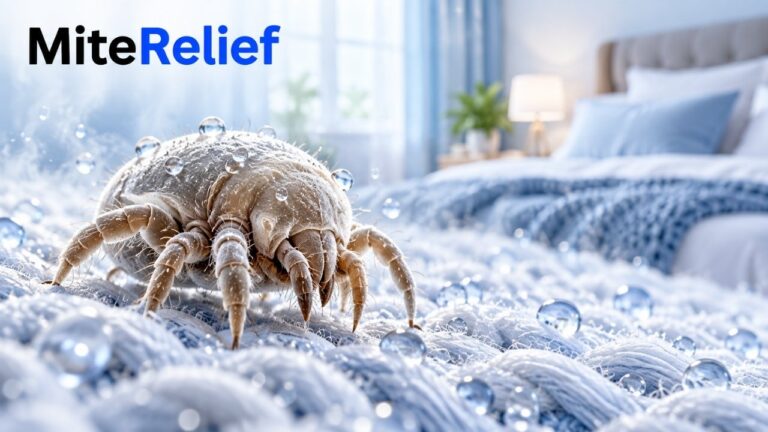
Have you heard experts talk about humidity and allergies? Here’s the short answer: dust mites need moisture to live. Dust mites and humidity are closely linked. That’s why you hear about the “50% rule” so often.
This article explains why relative humidity matters. You’ll learn what happens to house dust mite numbers at different humidity levels. You’ll also learn how to check the moisture in your own home.
Lower humidity can make conditions harder for mites. But it won’t fix things overnight. If you have ongoing allergy symptoms, talk with a doctor too.
Why Do Dust Mites Need Humidity to Survive?

Dust mites eat tiny flakes of shed skin. But skin flakes alone don’t keep them alive. They also need moisture from the surrounding air.
Without enough water vapor nearby, a mite’s body starts to dry out. This makes it harder for the mite to survive. It also makes reproduction harder. That’s why humidity plays such a big role in mite populations.
Think of a sponge. A damp sponge stays soft. A dry sponge turns stiff and brittle. Dust mites similarly react to moisture.
How Dust Mites Absorb Moisture From the Air
Here’s something that surprises people. Dust mites don’t drink water as we do. They can’t sip from a puddle or a wet towel.
Instead, they pull moisture straight from the indoor air. This only works when the air holds enough water vapor. Dry air doesn’t have much moisture to give. So a mite’s body loses water faster than it can replace it.
That’s the main reason dry rooms are tougher for dust mites.
At What Humidity Do Dust Mites Die?
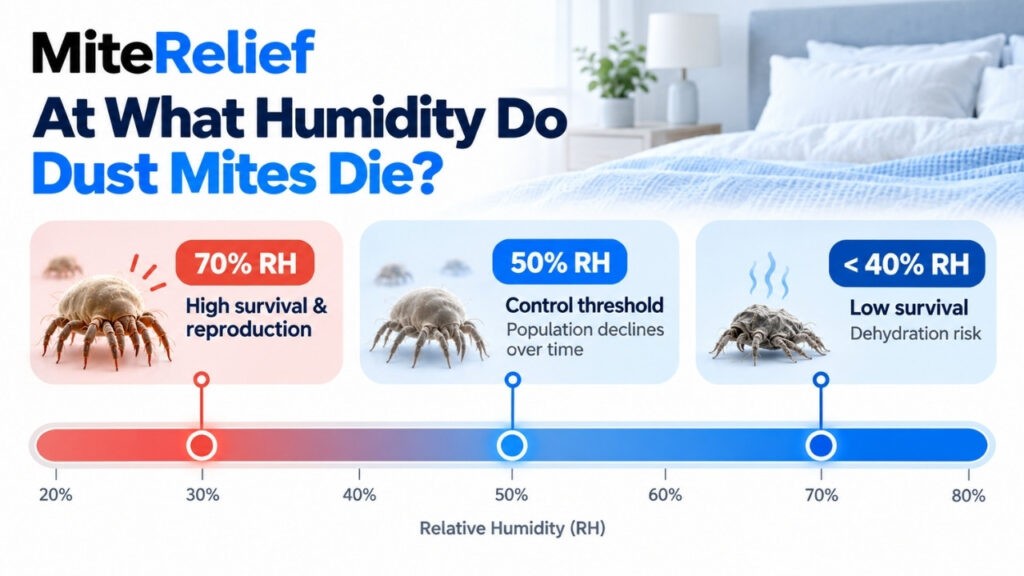
First, let’s cover what relative humidity (RH) means. RH is a percentage. It shows how much moisture is in the air compared to the most that air could hold.
A higher RH number means damper air. A lower RH number means drier air. This one number strongly affects dust mite survival.
That’s where the 50% rule comes from. Many allergy experts suggest keeping indoor humidity levels below about 50%. This creates conditions that are less friendly to mites. It won’t wipe out a mite population right away. But over time, it can slow their growth.
Here’s an important note. Your bedroom air might read one humidity level. But the air trapped inside your mattress or bedding can be different. Fabric holds moisture from sweat and breathing. So it can stay damper than the surrounding room, even when your hygrometer shows a lower number.
Relative Humidity and Dust Mite Survival
| Relative Humidity Level | Effect on Dust Mites |
| Above 70% RH | Ideal conditions for growth and reproduction |
| 60–70% RH | Mites can survive, though reproduction may slow |
| 40–50% RH | Less favorable conditions for dust mites |
| Below 40% RH | Survival becomes difficult due to moisture loss |
Understanding Relative Humidity (RH) and Dust Mite Survival
Checking your home’s average humidity level is a good start. But it doesn’t tell the whole story. A living room reading of 45% RH sounds great. A nearby basement or bathroom could be much damper.
That’s why it helps to check more than one spot. One reading from one room can miss pockets of moisture. Mites love those damp pockets, like inside a couch cushion or under a rug.
What Humidity Level Is Best to Prevent Dust Mites?
Most experts point to a range of about 40–50% relative humidity. This is a practical target for dust mite prevention methods. This range makes survival harder for mites. At the same time, it won’t leave your home feeling too dry.
Very high humidity, above 60%, tends to help mites grow faster. It supports quicker reproduction and population growth. On the other end, very low humidity (under 30%) can dry out your skin and throat. That’s not pleasant either.
The goal isn’t the lowest number possible. The goal is a range that’s hard on mites but still comfortable for you.
Can Dust Mites Survive in Low Humidity?
Not all dust mites handle dry air the same way. Two well-studied species are Dermatophagoides pteronyssinus and Dermatophagoides farinae. Research suggests these two may tolerate dry conditions a bit differently. Some populations hold on longer in low humidity than others.
Dry conditions do cause dehydration stress. Over time, this can lead to desiccation, which means drying out completely. But this process takes time. A short dry spell won’t wipe out an entire mite population. Damp pockets in bedding, carpets, or upholstered furniture can still give mites a place to survive.
This is why humidity control works best as one part of a bigger plan. Pair it with other habits, like washing bedding in hot water often. Together, they form a more complete approach.
How to Measure Humidity in Your Home
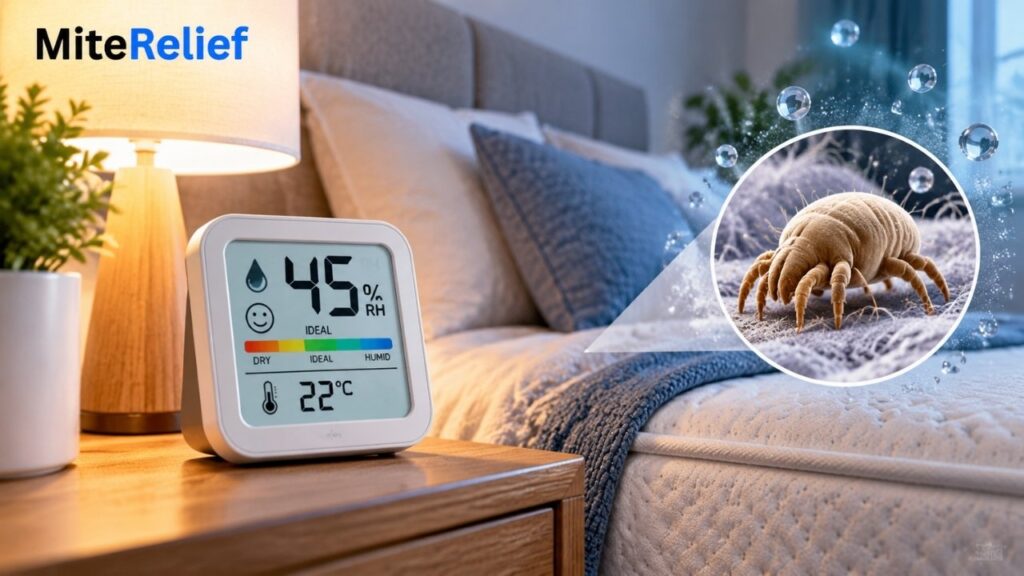
You don’t need fancy tools to check your home’s humidity level. A simple hygrometer does the job. This small device measures moisture in the air. Many are cheap and easy to find at hardware stores.
Check your humidity often, especially in humid summer months. This helps you catch problem spots early. It also helps you see whether controlling humidity for dust mites with a dehumidifier or your air conditioning is actually working.
Where Should You Check Humidity Levels?
Humidity isn’t the same in every part of your house. Check these key spots:
- Bedroom — you breathe and sweat here for hours each night
- Basement — often damp from ground moisture and poor airflow
- Bathroom — spikes fast after a hot shower
- Living areas — usually more stable, but still worth a check
Which Rooms Have the Highest Humidity and Why It Matters
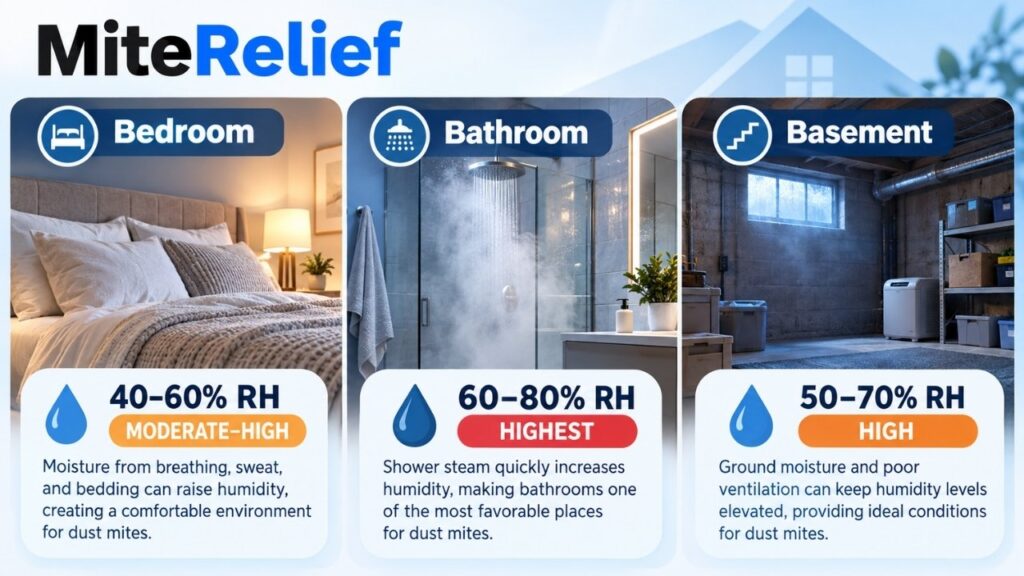
Some rooms hold more moisture than others. That matters because damp rooms are friendlier to dust mites.
Take your bedroom. It picks up moisture from your breath and sweat overnight. Add in mattress, bedding, and pillow fabric that traps moisture.
You get a spot that can stay damp even when the rest of the house feels dry. This is one reason dust mites show up so often in bedrooms. Read more in our guide on dust mites commonly found in bedrooms.
Room Humidity Risk for Dust Mites
| Room | Why Humidity Can Be Higher |
| Bedroom | Moisture from breathing, sweating, and bedding |
| Bathroom | Steam from showers |
| Basement | Ground moisture and poor ventilation |
| Kitchen | Cooking steam and water use |
| Living Room | Usually lower humidity |
Seasonal Humidity Patterns and Dust Mite Population Peaks
Humidity doesn’t stay the same all year. It shifts with the seasons. Mite activity shifts too.
In many parts of the country, summer air holds more moisture.
That extra moisture can speed up reproduction. It can also raise allergen buildup. Winter flips the script. Indoor heating dries out the air. This can push humidity levels down. Lower humidity makes conditions tougher for mites.
This pattern isn’t the same everywhere, though. A humid coastal climate acts differently than a dry inland one. Your home’s seasonal shifts may look a bit different too.
Why Summer Often Increases Dust Mite Activity
Warm, humid summer air gives mites more moisture to absorb. That supports faster population growth. More mites usually means more dust mite allergens in the air. This can affect indoor air quality during peak season.
Frequently Asked Questions (FAQs)
What humidity kills dust mites?
No single number kills every mite instantly. But keeping relative humidity below about 40–50% makes survival much harder over time.
Do dust mites die in low humidity?
Yes, over time. Low humidity causes dehydration. Eventually, it can lead to desiccation. But this happens slowly, not right away.
Can dust mites survive without moisture?
Not for long. Dust mites need moisture from the air. Without it, their bodies can’t work properly.
What is the ideal humidity level for dust mites?
Most experts suggest staying in the 40–50% relative humidity range. This range discourages mite growth.
Does air conditioning reduce dust mites?
Air conditioning can help lower indoor humidity. This may create tougher conditions for mites, especially with a working HVAC system and good ventilation.
Can a humidifier make dust mites worse?
It can. Adding water vapor to the air raises humidity. This may support mite reproduction and population growth if you use it too often or set it too high.
What to Read Next
- Best Dehumidifiers for Dust Mite Allergy
- How to Prevent Dust Mites
- How Long Do Dust Mites Live
- Dust Mites in Your Bedroom
Conclusion
Humidity plays a big role in whether dust mites thrive or struggle in your home. Keeping indoor humidity levels around 40–50% can make conditions less friendly to them.
It won’t clear out a population overnight, though. Pair it with other habits, like regular cleaning, for a fuller approach to managing dust mites. Want to know how long these populations stick around? Check out our guide on dust mite survival and lifespan.
Medical Disclaimer
This content is for general informational purposes only and is not a substitute for professional medical advice, diagnosis, or treatment. Individual health needs can vary, so speak with a qualified healthcare professional about allergies, asthma, skin reactions, medications, or other symptoms. Seek prompt medical care if symptoms are severe, persistent, or getting worse.

Umar Farooq is the founder of MiteRelief, creating research-backed guides about dust mites, indoor allergens, and practical allergy prevention for healthier homes.