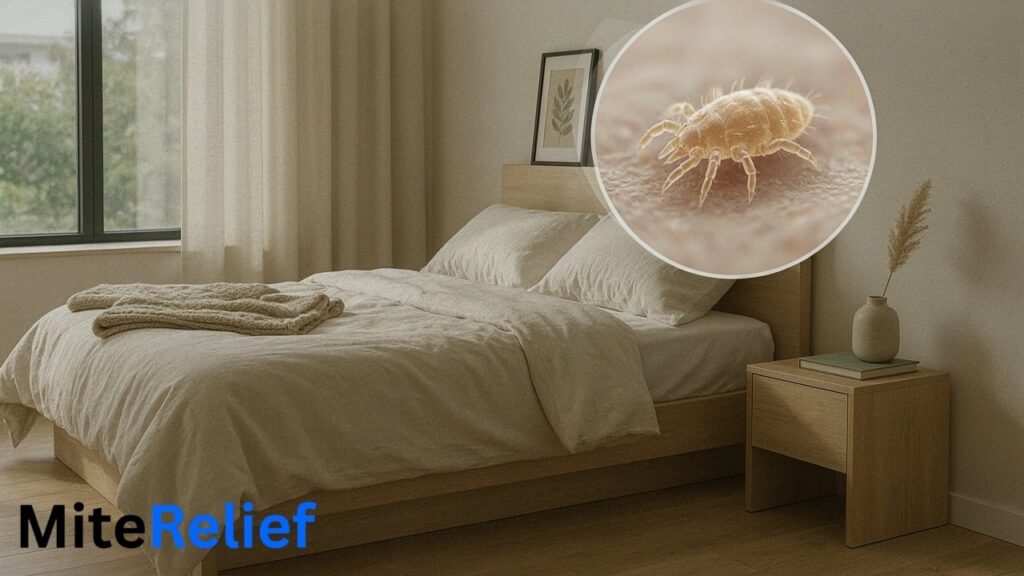
Can dust mites cause asthma? They can trigger asthma symptoms in people who are sensitive to them. Dust mites are tiny bugs that live in most homes.
They are a common indoor allergen and one of many asthma triggers. A dust mite allergy is not the same as asthma. But in some people, the allergy can cause airway inflammation and breathing problems.
This article is for education only. It does not replace medical advice. Talk with a healthcare professional about any ongoing breathing problems.
Can Dust Mites Cause Asthma?
Do dust mites cause asthma? Not in everyone. Dust mites mainly trigger asthma in people who are sensitized to their allergens. That means the body sees the allergens as a threat and reacts.
Asthma has many possible causes and triggers. Family history, viral infections, smoke, cold air, and exercise can all play a role. Dust mites are one piece of the puzzle.
It helps to know the difference between causing asthma and triggering an attack:
- Causing asthma is about how the condition may develop over time. Research suggests that early, heavy exposure to house dust mites may raise the risk of allergic asthma in some children. It is not the only cause.
- Triggering asthma symptoms is about what happens right now. In a person who already has asthma, dust mite allergens can set off wheezing, coughing, or an asthma attack.
People with allergic asthma have asthma that flares up when they breathe in things they are allergic to. The dust mite allergy asthma link is one of the most common examples. House dust mite asthma is well studied, and it affects both adults and children.
Only people with dust mite sensitivity react this way. Someone who is not sensitive can live in the same room with no trouble.
Dust Mite Exposure and Asthma Response
| Dust Mite Factor | Effect on Asthma |
| Dust mite allergens | Can trigger airway inflammation in sensitive people |
| Inhaled allergen particles | May activate an immune response in the airways |
| Bedroom exposure | Can increase overnight allergen contact |
| Ongoing exposure | May contribute to repeated asthma symptoms |
How Dust Mite Allergens Trigger an Asthma Attack
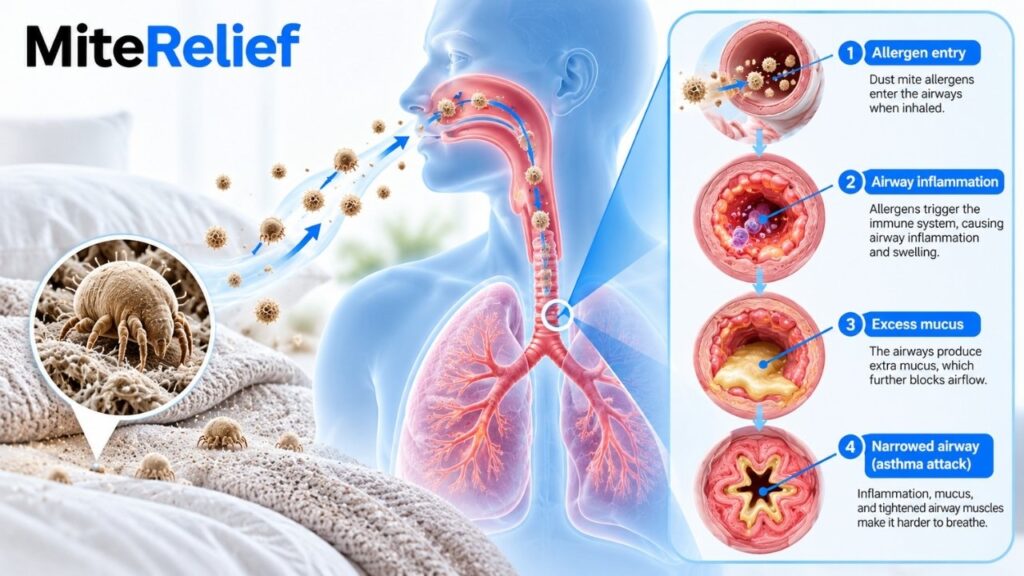
How do dust mites cause asthma symptoms? It starts with tiny particles. Dust mite bodies and droppings break down into very small pieces. These pieces float in the air when you move bedding or walk across a room. You then breathe them in.
Here is what can happen next in a sensitive person:
- The allergen enters the airways. The airways are the tubes that carry air into your lungs.
- The immune system reacts. Your immune system treats the allergen as a danger, even though it is harmless to most people.
- IgE antibodies get involved. IgE antibodies are proteins your body makes when it is allergic to something. They attach to the allergen and start an allergic reaction.
- Inflammation builds. The airway lining becomes red, swollen, and sore. This is inflammation.
- The muscles tighten. The muscles around the airways squeeze. This is called bronchoconstriction.
- Extra mucus forms. Mucus production goes up. Thick mucus can block the narrow tubes.
- Airflow drops. Air has a hard time moving in and out of the lungs.
The result is the wheezing, coughing, and tight chest that many people know well. Long-term exposure may keep the airways inflamed. Irritated airways can then react faster to other triggers, too.
The Role of Dust Mite Proteins in Airway Inflammation
Not every part of a dust mite causes problems. Certain proteins cause the main trouble. Two of the best-known are Der p 1 and Der p 2. These come from the most common house dust mite species.
Der p 1 is an enzyme. It can break down the thin layer that protects the airway lining. This may let allergens reach deeper into the tissue. Der p 2 is often linked with the immune response that leads to allergy.
Both proteins can raise the chance of a reaction in sensitive people. Over time, repeated contact may make the airways more twitchy. That means they can react to smaller amounts of allergen.
Dust Mite Asthma Symptoms: What to Look For
Dust mite asthma symptoms are the same as other asthma symptoms. What sets them apart is when and where they happen. Common signs include:

- Wheezing. This is a whistling or squeaky sound when you breathe out.
- Chest tightness. It may feel like a band around your chest.
- Shortness of breath. You may feel out of breath during simple tasks.
- Persistent cough. The cough lingers for days or weeks.
- Night coughing. Coughing fits wake you up or keep you from sleeping.
- Morning breathing problems. You wake up with a tight chest or noisy breathing.
- Symptoms that feel worse indoors. You feel better outside or in a different building.
Dust mite allergy can also cause sneezing and a runny nose. You can read about those in this guide to common dust mite allergy symptoms. This article focuses on lung-related signs.
How Dust Mite Asthma Patterns Differ From Other Triggers
Patterns can offer clues. Dust mite asthma often shows up like this:
- Bedroom link. Symptoms get worse after you lie down or when you make the bed.
- Better away from home. You breathe easier on vacation or at a friend’s house.
- Ongoing pattern. Symptoms can happen all year, not just in one season.
Other triggers look different. Exercise-triggered asthma starts during or right after activity. Cold-air asthma flares up when you step into chilly weather. Dust mite asthma often follows time spent in rooms with mattresses, bedding, and soft furniture.
Dust Mite Asthma Symptoms vs Common Allergy Symptoms
| Asthma-Related Signs | General Allergy Signs |
| Wheezing | Sneezing |
| Chest tightness | Itchy eyes |
| Night coughing | Nasal congestion |
| Breathing difficulty during activity | Throat irritation |
Some people have both sets of signs at the same time. If you are not sure which one you have, a healthcare professional can help sort it out.
Why Dust Mite Asthma Often Gets Worse at Night
Many people notice that asthma is worse at night. Dust mites may be part of the reason.
Think about how much time you spend in your bedroom. Most people sleep six to nine hours a night.
During that time, your face sits close to your mattress, pillow, and bedding. Dust mites and their allergens collect in these soft materials. Every breath brings you close to them.

Other things add to the problem at night:
- Long contact. You are near the allergens for hours without a break.
- Moving around. Turning over in bed can stir allergens into the air.
- Natural body changes. Airways tend to be more sensitive at night and in the early morning.
- Lying flat. This position can make breathing feel harder for some people.
Together, these can lead to night coughing and wheezing. To learn more about this link, read about night time allergy and breathing symptoms.
Managing Asthma Triggered by Dust Mite Allergens
Good asthma care works best as a team effort. Work with your doctor, follow a plan, and reduce your contact with triggers. ways to lower dust mite exposure can be part of an asthma trigger management plan.
Here are the main steps:
- Follow your doctor’s guidance. Take your medicines as directed, even on days you feel fine.
- Reduce allergen exposure. Focus on the places where you spend the most time, such as the bedroom.
- Track your symptoms. Notice when and where they happen. A simple diary can show patterns.
- Get checked. An allergist can test whether you are sensitive to dust mites. This helps confirm whether they trigger your asthma.
No single step is a cure. But together, these steps can make asthma easier to manage.
Asthma Medicines Used for Dust Mite-Triggered Asthma
Asthma medications are the base of treatment. Your doctor picks what fits your age and how severe your asthma is. Please do not start or stop any medicine on your own.
Common types include:
- Reliever medicines. These work fast to open tight airways. Most people use them in a quick-relief inhaler. Use them when symptoms flare up.
- Controller medicines. Take these daily to keep airways calm and prevent attacks.
- Inhaled corticosteroids. These are a common type of controller. They reduce airway swelling over time.
- Other medicines. Some people need extra treatments. A healthcare professional will decide if you do.
Why Asthma Medication Does Not Remove the Trigger
Medicine helps control inflammation and ease symptoms. But it does not remove dust mite allergens from your home. If you keep breathing in allergens, your airways may keep getting irritated.
That is why exposure reduction and medical care work best together. Medicine manages the body’s reaction. Allergen reduction lowers how often that reaction starts.
Creating a Dust Mite Asthma Action Plan
An asthma action plan is a written guide made with your doctor. It tells you what to do each day and what to do when things get worse. It helps adults and parents of children with pediatric asthma.
A good plan usually includes:
- Daily medicines. What to take and when.
- Known triggers. Such as dust mites, so you know what to avoid.
- Warning signs. Signs that asthma is getting worse, like more coughing, more wheezing, or needing your reliever more often.
- Steps to take. What to do at each stage, such as using your reliever inhaler.
- Doctor contact. When to call your healthcare provider.
Call your provider if your symptoms happen more often, wake you at night, or do not improve with your usual medicine.
Get emergency help right away if you or your child has severe trouble breathing, cannot speak in full sentences, has blue or gray lips, or gets no relief from a reliever inhaler.
Bedroom Changes That May Help Reduce Asthma Triggers
Your bedroom is a smart place to start. Here are changes that may help lower dust mite allergens:

- Cover your mattress and pillows. Allergen-proof covers can create a barrier. Learn more about mattress protection for asthma triggers.
- Wash your bedding often. Wash sheets and pillowcases weekly in hot water if the labels allow it.
- Control humidity. Dust mites do better in damp air. A dehumidifier can help keep humidity lower. Many experts suggest keeping indoor humidity below about 50 percent.
- Use filtration. A HEPA filter can trap tiny particles in the air. It may improve indoor air quality, but it works best as part of a bigger plan. Read more about HEPA filtration for airborne allergens.
For a full list of steps, see this guide to reducing dust mite exposure.
Can Reducing Dust Mites Improve Asthma Control?
For some people, yes. If dust mites are a trigger for you, lowering your exposure may lead to fewer symptoms. It may also mean less need for quick-relief medicine.
But results vary. Here is why:
- One method rarely does it all. A mattress cover alone may not be enough. Combining several steps usually works better.
- Asthma has other triggers. Smoke, pets, mold, and colds can all contribute.
- Progress takes time. Allergen levels may drop slowly, and airways may need time to calm down.
Think of exposure control as a long-term habit. It does not replace medical care. It supports it.
Frequently Asked Questions (FAQs)
Can dust mites trigger asthma attacks?
Yes, they can in people who are sensitive to them. Breathing in dust mite allergens may cause airway inflammation and lead to an asthma attack.
How do dust mites affect people with asthma?
Dust mite allergens can inflame the airways, tighten the muscles around them, and increase mucus. This can cause wheezing, coughing, chest tightness, and shortness of breath.
Are dust mites worse for asthma at night?
They can be. You spend many hours close to your mattress and bedding while you sleep. Airways are also more sensitive at night for many people.
Can reducing dust mites help asthma symptoms?
It may help if dust mites are a trigger. Reducing exposure works best when paired with your doctor’s treatment plan.
Should people with dust mite asthma use air filtration?
A HEPA filter may help remove some airborne allergens. It should not be your only step. Ask your healthcare professional what fits your needs.
If I am allergic to dust mites, will I get asthma?
Not always. Many people who are allergic to dust mites never develop asthma. But if you are allergic and have asthma symptoms, it is worth talking with an allergist.
What to Read Next
- Dust Mite Allergy Symptoms
- Dust Mites and Sleep
- HEPA Filters for Dust Mites
- How to Prevent Dust Mites
- Dust Mite Mattress Encasement
Conclusion
Dust mites can trigger asthma symptoms in sensitive people. They do not cause asthma in everyone, and asthma can have many triggers. Knowing how dust mite allergens affect the airways can help you spot patterns and take action.
The best approach combines medical treatment with exposure reduction. Medicine helps control inflammation. Fewer allergens in your bedroom can help lower how often symptoms start.
If you or your child has ongoing wheezing, night coughing, or trouble breathing, talk with a healthcare professional. They can help find your triggers and build a plan that works for you.
Medical Disclaimer
This content is for general informational purposes only and is not a substitute for professional medical advice, diagnosis, or treatment. Individual health needs can vary, so speak with a qualified healthcare professional about allergies, asthma, skin reactions, medications, or other symptoms. Seek prompt medical care if symptoms are severe, persistent, or getting worse.

Umar Farooq is the founder of MiteRelief, creating research-backed guides about dust mites, indoor allergens, and practical allergy prevention for healthier homes.