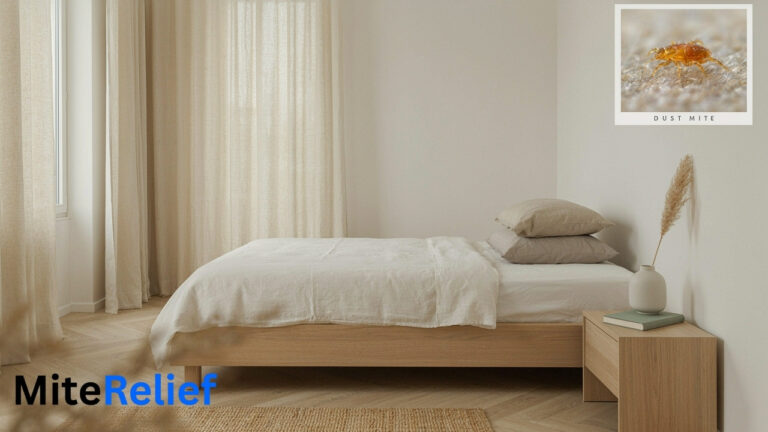
Finding the best bed for dust mite allergy takes more than checking for the word hypoallergenic on a label: the mattress material and the fabric on top matter.
How much air moves through your bedroom, the base underneath, and the frame all play a role in how easy your bed is to keep clean.
A lot of shoppers assume one material or one label will solve the problem. In reality, the answer is usually a mix of choices working together.
Here’s the main thing to know before you shop: no single mattress material stops House dust mites completely.
So instead of picking one winner, this guide looks at the real strengths and limits of each option, from the mattress itself down to the frame it sits on. If you want the basics first, check out how house dust mites live in bedding.
Does Mattress Type Affect Dust Mite Allergen Buildup?
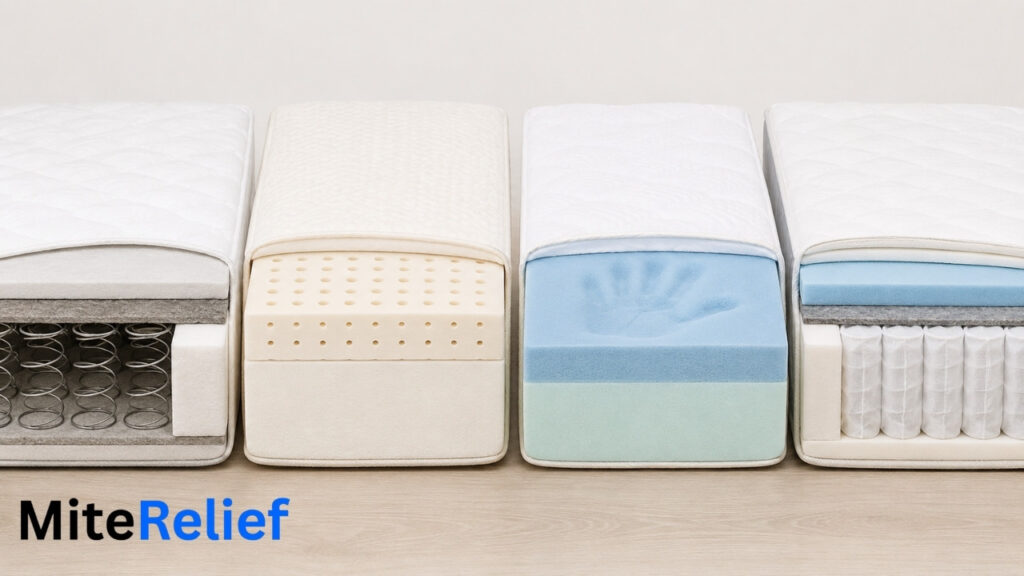
It’s easy to think a new mattress type will fix allergen buildup by itself. But mattress type is just one part of the picture.
Bedroom humidity, how old the mattress is, the fabric on top, and how much dust and skin cells build up over time all play a part too.
Airflow plays a role as well. A mattress that traps moisture creates a better environment for mites, no matter what it’s made of.
A room that stays warm and damp gives mites more of what they need to survive, even under a mattress marketed as allergy-friendly.
Studies comparing foam and spring mattresses haven’t found a clear winner. So it’s not accurate to say one type always has more mites than another.
In short: mattress material is worth thinking about, but it works alongside your other habits, not instead of them.
Two people could own the same mattress and end up with very different allergen levels, depending on how they care for their bedroom.
To learn more about how your room affects mites, see dust mite conditions in the bedroom.
Innerspring Mattresses and Dust Mites
An innerspring mattress usually has metal coils inside, topped with foam or padding and a quilted fabric cover. The coils themselves aren’t the real problem.
Mites don’t live inside metal springs, and coil count or coil type isn’t something you need to weigh for allergy purposes.
What counts more is everything around those coils. The fabric cover, the padding, and how much dust, skin cells, and allergens build up over time that’s what counts.
This is true for basic innerspring mattresses and more heavily padded ones alike.
A thin quilted top and a thick pillow-top cover will behave differently, even on the same coil system underneath.
Innerspring mattresses shouldn’t be ruled out if you have allergies. Studies comparing springs to foam are still mixed, with no clear pattern either way.
Some research points one direction, some the other, and neither side has settled the question.
Whatever mattress you choose, make sure it fits a proper allergen-proof cover. You can read more in choosing a dust mite mattress encasement.
Latex Mattress Dust Mites: Pros and Limitations
Natural latex is a dense type of foam. How it’s built can vary a lot between brands. Some mattresses use one solid latex layer.
Others add foam or fabric layers on top, which changes how the surface feels and how it needs to be cared for.
Here’s the catch: even with a latex core, the outer cover is still fabric. And fabric still collects dust and skin cells over time.
Just because a latex mattress is marketed as hypoallergenic doesn’t mean it’s dust mite-proof.
That label is more about marketing than a guarantee, and it doesn’t come with independent testing behind it in most cases.
Latex mattresses also tend to be heavy, which is worth knowing if you plan to flip, rotate, or move the mattress regularly.
Care instructions differ from product to product, so it’s worth reading the manufacturer’s guide rather than assuming all latex products are treated the same way.
Some latex has antimicrobial treatment, but that doesn’t mean mites can’t live in or around it. It also doesn’t replace regular cleaning or a good mattress cover.
Material plays a part, but it’s not the whole story; how the mattress is built and maintained plays just as big a role.
Memory Foam Dust Mites: What Should Allergy Sufferers Know?
Memory foam is a type of polyurethane foam. Density can be very different from one product to the next; some are thick and slow to spring back, others are softer and quicker to respond.
The outer cover and top layers vary by product too, and that’s often what determines how the mattress feels and how it holds up to daily use.
One thing to know: memory foam reacts to body heat. That warmth, combined with humidity, shapes the surface where you sleep. Still, there’s no strong proof that memory foam traps more mites than other materials.
There’s also no proof that cooling gel reduces mite numbers, even though some products are marketed with that idea in mind.
A full memory foam mattress usually can’t go in the washing machine. So always follow the manufacturer’s care instructions instead of guessing at what will and won’t damage the foam.
If you want tips on keeping any mattress clean, cleaning different mattress materials covers that separately from choosing one in the first place.
Hybrid Mattresses and Dust Mite Allergy
Hybrid mattresses mix parts from other types. They might combine coils with foam or natural latex, often topped with a quilted or pillow-top fabric layer.
The word hybrid alone doesn’t tell you much about how easy the mattress will be to care for, since the term covers a wide range of builds.
It’s not fair to call hybrids the best of both worlds. Latex-topped hybrids aren’t automatically better either. What really matters is more specific:
how much fabric sits on the surface, what the cover is made of, how deep the mattress is, and what the manufacturer says about airflow and care.
Two hybrids can look nearly identical on a store floor and still differ a lot once you check the materials list.
A thinner hybrid with a simple cover might be easier to maintain than a thick pillow-top version, even within the same category.
It’s also smart to check the mattress depth against your encasement size before buying,
since some hybrids are deeper than standard covers are made for. Getting this wrong means either returning the mattress cover or leaving the mattress unprotected, so it’s worth measuring before you order anything.
Bed Base, Platform Bed or Divan: What Matters?
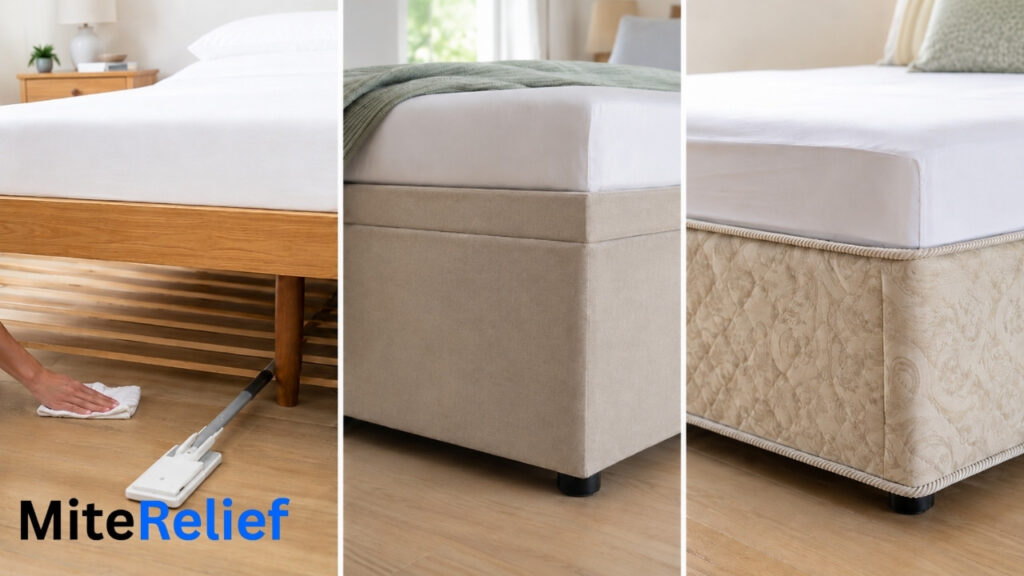
The base under your mattress affects dust control almost as much as the mattress itself. This mostly comes down to how much fabric it has and how easy it is to clean around.
It’s a part of the bed that’s easy to overlook, since most of the focus goes to the mattress on top.
Platform or Slatted Base
Wood or metal slatted bases are usually easy to wipe down since there’s little or no fabric involved. Fewer fabric surfaces mean less space for dust and allergens to collect.
The open design also makes it easier to reach under the bed to clean, vacuum, or check for dust buildup.
Just check that the slat spacing matches what your mattress maker recommends for support, since gaps that are too wide can affect certain mattress types.
Upholstered Divan Base
A divan base adds fabric to the base of the bed.
That means more surface where dust and allergens can settle over time, especially in the seams and folds of the fabric.
This doesn’t mean a divan base causes dust mite allergies on its own.
It just may need more regular care than a smooth wood or metal base, particularly if it isn’t vacuumed as often as the rest of the room.
Box Spring
Box spring designs vary by manufacturer, and many have fabric-covered outsides, similar to a divan.
What matters more than the name box spring is the actual surface material and how easy it is to clean.
No one base type deserves to be called the best or the worst, since so much depends on the specific product and how it’s maintained.
Bed Frame Material and Upholstered Headboard Dust Mites
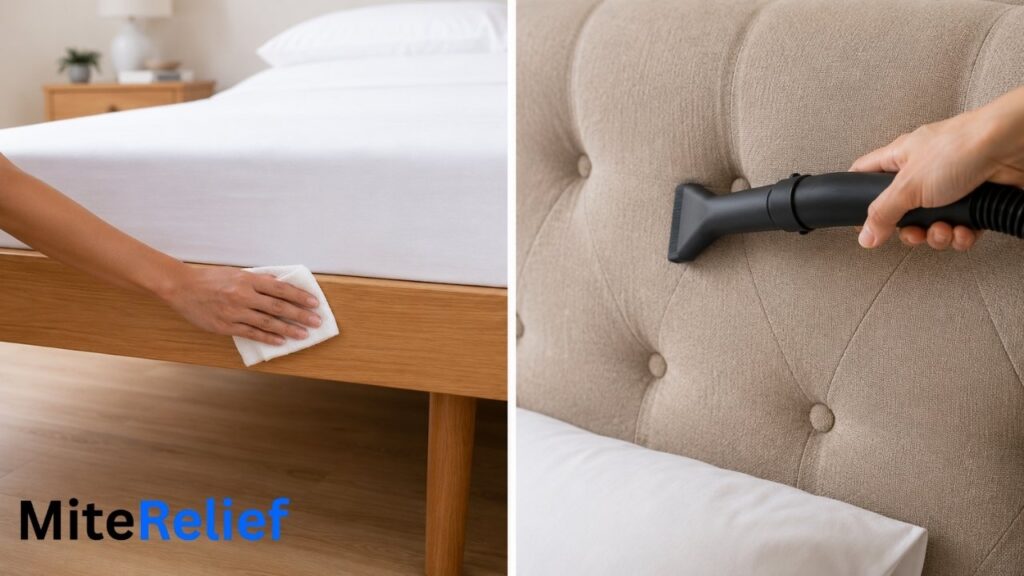
The frame and headboard finish off the picture. This is where upholstered headboard dust mites become worth thinking about for some shoppers.
Headboards are often left out of the cleaning routine entirely.
Wood and Metal Frames
Smooth wood, metal, and lacquered frames are usually simple to wipe clean. With fewer soft fabric surfaces built into the frame, dust control around the bed tends to be easier.
A quick wipe-down during regular cleaning is usually enough to keep these frames from becoming a dust collection point.
Upholstered Headboards
Fabric and padding on a headboard sit close to where you sleep. That fabric can collect dust, skin cells, pollen, and other allergens over time, just like any other fabric surface in the room.
This doesn’t mean an upholstered headboard is automatically full of mites; it just adds one more surface to think about when you’re planning your cleaning routine.
Some upholstered headboards come with removable, washable covers, which can make cleaning much easier than fixed fabric panels that have to be vacuumed in place.
For more on fabric furniture and mites, see dust mites in upholstered furniture.
What to Look for When Choosing the Best Bed for Dust Mite Allergy
Mattress size isn’t a real factor here. A king mattress doesn’t have more mites than a smaller one, and thickness alone doesn’t decide allergen levels.
Skip that thinking and focus on features that actually affect your daily routine:
- A mattress you find comfortable and are willing to care for
- Little unnecessary fabric on the mattress, base, and frame
- Smooth frame surfaces that are easy to wipe
- Easy access under the bed for regular cleaning
- Good airflow around and through the mattress
- Clear care instructions from the manufacturer
- A removable or easy-care mattress cover, if available
- A mattress depth that fits a proper encasement
- Base support that matches the manufacturer’s guide
- Regular bedroom humidity control
- Looking past the hypoallergenic label alone
None of these features work in isolation. A smooth wood frame paired with a heavily padded divan base still leaves plenty of fabric in the room.
So it helps to think about the bed as a whole system rather than judging each piece on its own.
| Bed Feature | What It Means for Dust Control |
| Smooth wood or metal frame | Easier to wipe and inspect |
| Upholstered headboard | Adds fabric surface |
| Slatted/platform base | Easier access underneath |
| Fabric-covered divan | Adds upholstered surface |
| Removable mattress cover | May make routine care easier |
| Hypoallergenic mattress label | Does not prove dust mite resistance |
Once you’ve picked your bed setup, the right sheets and covers finish the job. See choosing allergy-friendly bedding for that next step.
Frequently Asked Questions
Is a Latex Mattress Better Than Memory Foam for Dust Mite Allergy?
There isn’t enough proof to call natural latex the clear winner over memory foam. The way the mattress is built, the fabric cover, bedroom humidity, and your own cleaning habits all play a part alongside the foam type.
Can Dust Mites Live in a New Mattress?
A new mattress won’t stay allergen-free forever once you start using it. Dust, humidity, skin cells, and your bedroom conditions can all lead to buildup over time. There’s no set timeline for when that starts.
Is a Platform Bed Better for Dust Mite Allergy Than a Divan?
A platform or slatted bed may be easier to clean around simply because it has fewer fabric surfaces. That’s a practical cleaning benefit, not proof that a platform bed stops dust mites completely
Does a Firm Mattress Have Fewer Dust Mites Than a Soft Mattress?
Firmness mostly affects comfort and support. There’s no strong evidence that a firmer mattress alone means fewer dust mites.
Does a Hypoallergenic Mattress Mean It Is Dust Mite-Proof?
No. The word hypoallergenic doesn’t prove a mattress blocks House dust mite allergens on its own. Look closely at the materials, how it’s built, the care instructions, and how well it works with things like mattress covers.
What to Read Next
- Best Dust Mite Mattress Encasements That Actually Work
- How to Deep Clean a Mattress for Dust Mites
- Best Bedding for Dust Mites: Covers, Sheets & Pillows
Conclusion
The best bed for dust mite allergy isn’t about picking one perfect material. Natural latex, memory foam, innerspring, and hybrid mattresses all have their own strengths and limits.
For most sleepers, things like less unnecessary fabric, easy-to-clean frames, good airflow, an accessible base, humidity control, and a mattress that works with allergen-control covers count more than any hypoallergenic label.
Medical Disclaimer
This content is for general informational purposes only and is not a substitute for professional medical advice, diagnosis, or treatment. Individual health needs can vary, so speak with a qualified healthcare professional about allergies, asthma, skin reactions, medications, or other symptoms. Seek prompt medical care if symptoms are severe, persistent, or getting worse.

Umar Farooq is the founder of MiteRelief, a resource for dust mite control and allergy prevention. After battling allergen sensitivity, he started creating research-backed guides that turn complex indoor air quality science into practical, affordable solutions anyone can implement.