Most dust mite problems don’t actually need a pest control company. I know that sounds strange coming from an article about dust mite pest control, but it’s true, and honestly, the sooner you know it, the less money you waste. For severe cases, though, knowing what professionals can do and what they genuinely can’t saves you both cash and a lot of frustration down the road.
Dust mites aren’t like roaches. They don’t scatter when the lights come on; they don’t hide in cracks waiting to be sprayed once and gone forever. pest control for dust mites These tiny creatures live inside fabric, bedding, carpeting, furniture, basically anywhere soft, feeding on skin flakes we shed constantly. Moisture and warmth keep them going. So the real question isn’t how do I kill them permanently; it’s how do I keep numbers low enough that allergy symptoms calm down?
If you’ve ever woken up with a stuffy nose or that itchy eye feeling that’s somehow worse in your bedroom than anywhere else in the house, you already get it. You clean everything, feel better for maybe a week, and then it creeps back. That cycle right there is exactly why people end up here, googling whether pest control is worth it. Sometimes it is. A lot of the time it’s really just a cleaning routine problem. We’ll get into both.
Can professional pest control actually get rid of dust mites?
Short answer, no. Not for good anyway. Professionals can knock the numbers down significantly, sometimes really dramatically depending on how bad things were to begin with, but full elimination just isn’t realistic. Not with how these creatures live, buried deep in cloth, pillows, blankets, and every soft surface in your home.
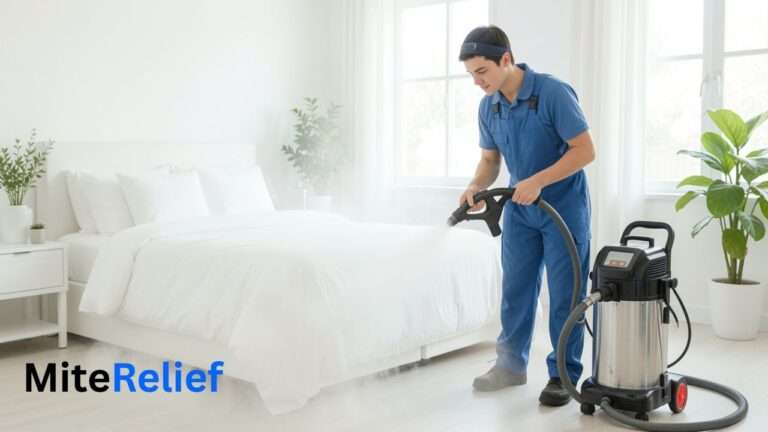
What pest control companies bring to the table is access. Commercial-grade acaricides, industrial steam equipment, fogging tools, stuff you and I can’t just buy off a shelf. That’s genuinely valuable in the right situation. But here’s the catch nobody likes hearing: the mites come back. They always do, because your mattress and your couch and your carpet are basically five-star hotels as far as they’re concerned.
Important: No pest control company can permanently eliminate dust mites. Treatment can meaningfully reduce allergen levels, sure, but ongoing cleaning, humidity control, and regular maintenance are still on you. Dust mites naturally repopulate over time; that’s just how it works.
So if a company promises permanent elimination, take that as a warning sign, not a selling point. Honestly, if you want to understand why people confuse this with other pest issues, it helps to look at the difference between dust mites and bed bugs, since the two get lumped together constantly even though they’re completely different problems needing completely different fixes.
There’s also something people don’t talk about much. Once you’ve paid for treatment, there’s a temptation to stop the follow-up cleaning. That’s actually when allergen levels creep right back up.
DIY pest control vs. professional pest control: Comparison
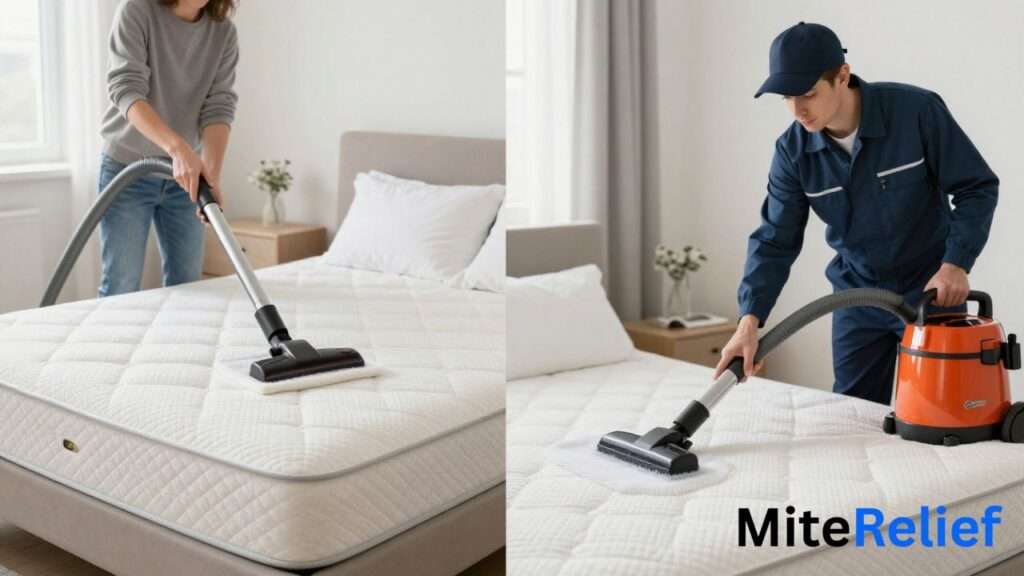
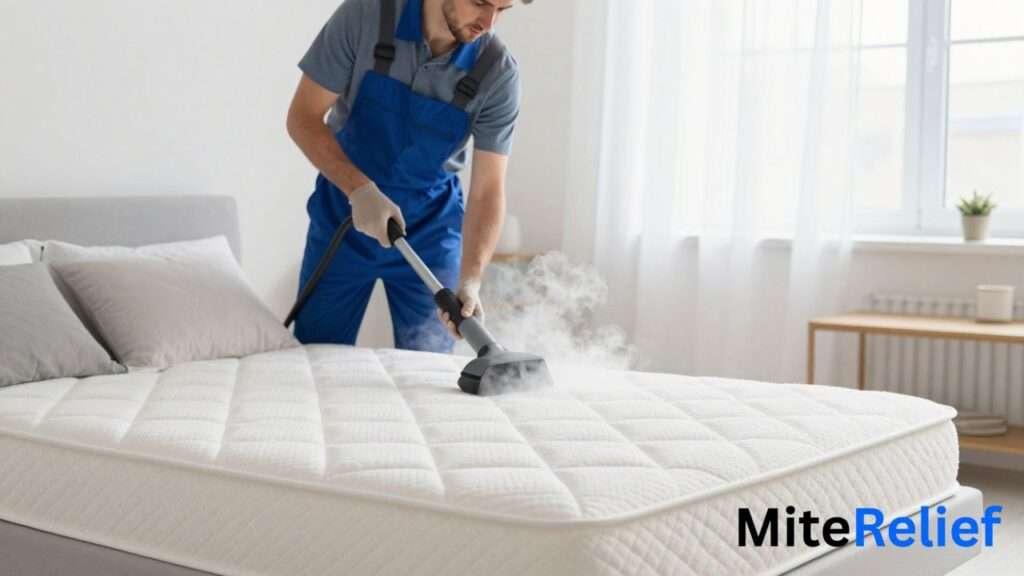
So do you actually need to call someone, or can hot water and a decent vacuum handle this? For most homes, honestly, DIY works. Hot washing your sheets and covers, running a HEPA vacuum over mattresses and carpeting, steam cleaning the box spring occasionally, and keeping a dehumidifier running if humidity‘s an issue are the same core methods that kill dust mites in the vast majority of homes. We’re talking somewhere around 80 to 90 percent of cases resolved this way. That’s not a small number.
Professional help really only adds value once you’re past that point, in the more stubborn or severe situations.
| Method | DIY Approach | Professional Approach |
| Vacuum | Standard household HEPA vacuum | Commercial-grade equipment |
| Steam cleaning | Consumer steam cleaner | Professional steam equipment |
| Acaricides | Usually unavailable to consumers | EPA-registered products, where applicable |
| Air filtration | Portable HEPA unit | Commercial HEPA air scrubbers |
| Typical cost | Lower | Higher |
| Best suited for | Mild to moderate allergy conditions | Severe or persistent cases |
You’ll notice the pattern here: professional tools are basically bigger, stronger versions of what you already have access to. That’s not a knock on pest control companies. It’s just how the equipment gap actually works.
What trips a lot of people up is assuming DIY equals cheap and ineffective. It really doesn’t. A vacuum used consistently, twice a week on mattresses and carpeting, does more for allergen levels than one professional visit with zero follow-through. Consistency wins here, almost every time.
What does professional dust mite extermination involve?
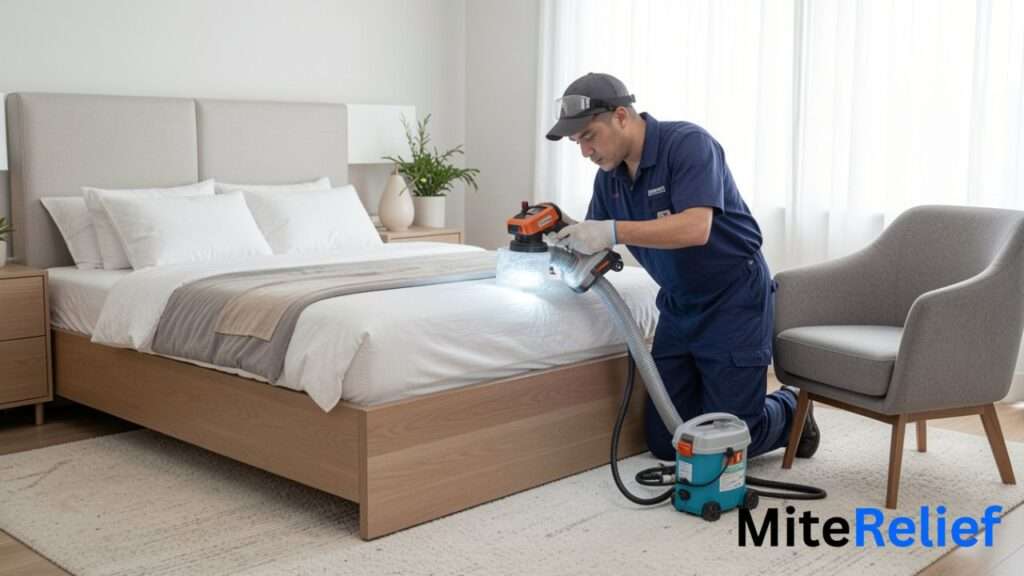
Say you’ve decided to go pro. What actually happens?
Usually it starts with an inspection walk-through. A technician checks bedrooms first, then carpeting, upholstered furniture, curtains, drapes, and blinds where humidity tends to collect near wood surfaces or window frames. From there they applied commercial acaricides, often benzyl benzoate- or permethrin-based, worked directly into fabric and carpet fibers.
pest control for dust mites Then comes the steam treatment, and this is at a much higher temperature than anything you’d use at home, hot enough to kill mites and their eggs on contact. A lot of companies also bring HEPA air scrubbing units to pull loose allergen particles out of the air while they work and after.
A few other things worth knowing, if you’re doing your homework before booking:
- Commercial HEPA air filtration
- An Integrated Pest Management, or IPM, approach rather than chemicals alone
- EPA registered acaricides, where your state allows them
- A written treatment report so you actually know what was used and where
Most legit companies offer either full home treatment or a room-by-room option, depending on severity and, let’s be honest, budget.
Bedrooms usually get priority since people spend the most hours there, and body heat plus moisture from sleeping creates near-perfect conditions for mites. Living rooms with heavy furniture come next, then anywhere flooring or thick curtains trap dust. Even kids’ toys sitting on carpet or bedding can end up on a technician’s list.
How much does professional dust mite pest control cost?
This is usually what people actually want to know, so let’s not tiptoe around it.
In the US, single-room treatment typically runs somewhere between 150 and 400 dollars. A whole-home treatment lands between 400 and 1,000 dollars, sometimes more depending on square footage and how severe things have gotten. And here’s the part companies don’t always lead with: most recommend follow-up visits every three to six months. Because again, the mites come back.
| Service | Typical Cost (US) |
| Single room treatment | 150 to 400 dollars |
| Whole home treatment | 400 to 1,000 dollars |
| Follow-up visit | Every 3 to 6 months, varies by provider |
| DIY setup: HEPA vacuum plus steam cleaner | About 200 to 500 dollars, one time |
Now compare that to a one-time DIY setup, roughly 200 to 500 dollars for a decent vacuum and steam cleaner, tools that’ll last you years. The math looks pretty different once you lay it out like that. Not saying professional treatment is never worth it, just saying, run the numbers before you sign anything.
Some companies fold dust mite treatment into a broader pest control package too, which can actually work out cheaper if you’re dealing with other household pests at the same time. Worth asking, especially if cost is the thing holding you back.
When should you actually call a dust mite exterminator?
Truthfully? Most average homes don’t need one. If symptoms improve once you start a real cleaning routine, you’re probably fine handling this yourself.
But there are situations where professional help genuinely makes sense. Severe asthma that isn’t responding to regular cleaning efforts. Someone immunocompromised living in the house. Humidity that stays stubbornly high no matter what you try. Or a real whole home infestation where allergen amounts are elevated in nearly every room, not just the bedroom.
| Situation | DIY Cleaning | Professional Help |
| Mild dust mite allergies | Suitable | Not needed |
| Symptoms improve after cleaning | Suitable | Not needed |
| Persistent severe allergy symptoms | Limited help | Recommended |
| Severe asthma triggered by dust mites | Limited help | Recommended |
| High indoor humidity that’s difficult to control | Limited help | Recommended |
| High dust mite allergen levels throughout the home | Not enough on its own | Recommended |
If humidity is your ongoing battle, it might actually be worth reading up on controlling indoor humidity before spending money on extermination, since fixing the moisture problem often does more long-term than any spray treatment. Dust mites need moisture; keep indoor air under roughly 50 percent humidity, and their numbers start dropping naturally. No chemicals needed at all.
One more honest note, symptoms alone don’t always point to the actual cause. Pollen, pet dander, and dust mite allergen can all overlap in how they make you feel. If you’re not totally sure, an allergist can test for it before you spend money assuming it’s mites.
How to choose a dust mite pest control company
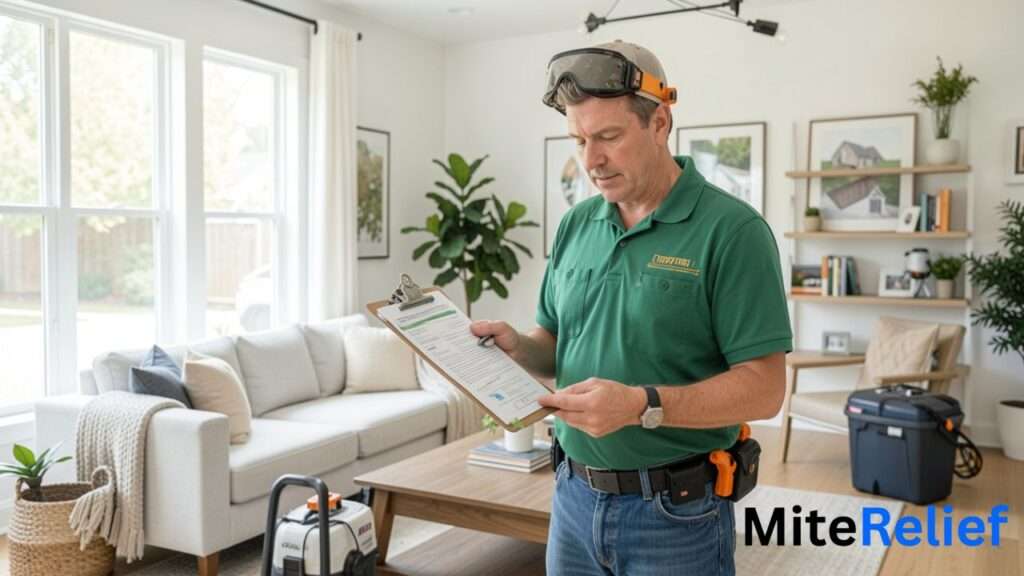
Not every dust mite exterminator operates the same way, and some, honestly, oversell what they can actually deliver. A little vetting up front goes a long way.
Ask whether they specialize in allergen-specific treatments rather than just general pest control. Ask exactly what chemicals they use and whether those are safe around children and pets, because that matters more than most people think to check. Get a written treatment plan before anything starts. And confirm the follow-up inspection is actually included in the price, not tacked on as an upsell later.
Checklist Before Hiring
- Do they offer allergy-specific treatments?
- Do they clearly explain which products they’ll use?
- Is follow-up included in the quoted price?
- Do they guarantee reduced allergen levels rather than claiming permanent removal?
- Are the treatments safe for children and pets?
If a company can’t answer these clearly or starts dodging around the questions, that’s your cue to keep looking elsewhere.
DIY
Pros: lower cost, easy to keep up with, works well for most households.
Cons: requires consistency, doesn’t clear all allergens immediately.
Professional
Pros: faster allergen reduction, commercial-grade equipment, genuinely useful for severe allergy sufferers.
Cons: expensive, not a permanent fix, maintenance is still required afterward.
What to do between professional treatments
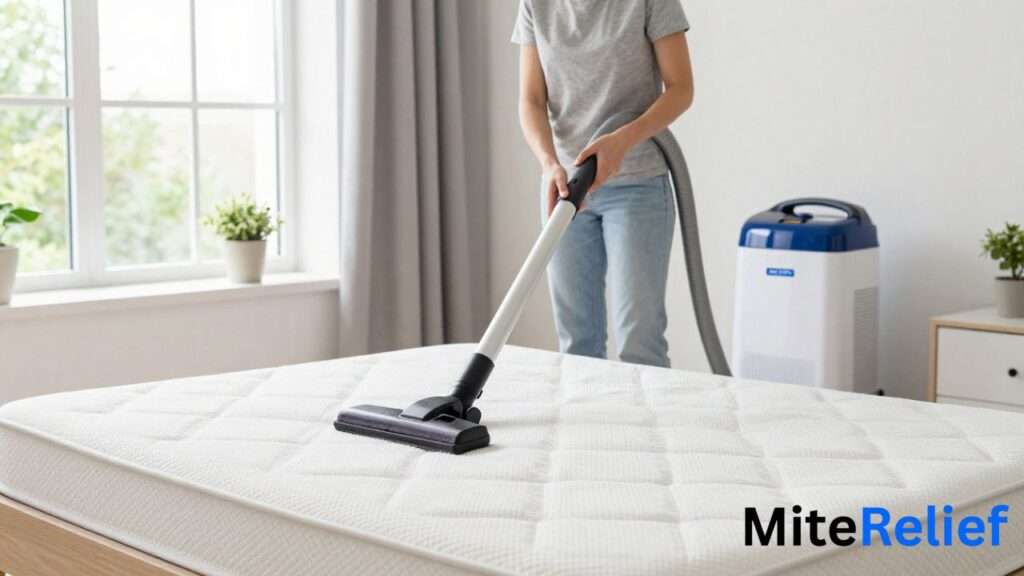
Here’s the part nobody really wants to hear. Professional treatment only holds up if you keep doing the basics in between visits. Otherwise, you’re just paying to reset the clock every few months, over and over.
That means hot-washing bedding on a regular schedule, staying consistent with vacuuming, and watching humidity levels closely in bedrooms, especially since that’s where dust mites cluster the most. If you want a full routine to follow, there’s a guide on preventing dust mites from coming back that pairs nicely with whatever professional work gets done. And if your mattress hasn’t had a proper deep clean in a while, there’s also a piece on deep cleaning your mattress that walks through the whole process.
Think of professional treatment as a reset button, not a permanent fix. The daily habits, boring as they are, are what actually keep numbers low over the long run.
Frequently asked questions
How do you exterminate dust mites?
No. You cannot permanently exterminate dust mites because they naturally return over time. The best approach is to combine professional treatment with regular HEPA vacuuming, hot washing, steam cleaning, and humidity control to keep dust mite populations and allergen levels low.
Does professional pest control work on dust mites?
Yes, it reduces populations and allergen levels significantly, though it won’t eliminate them completely since dust mites live throughout fabric in the home.
How long does professional dust mite treatment last?
Results typically hold for a few months, which is why most providers recommend follow-up visits every three to six months.
Is professional dust mite extermination safe for children?
Reputable companies use EPA-registered products and should be able to explain exactly what’s being applied, so ask directly before booking if you’ve got kids or pets at home.
Can pest control companies permanently eliminate dust mites?
No. Management is the realistic goal here, not permanent removal, and any company claiming otherwise is worth being skeptical of.
What is an acaricide, and is it safe to use indoors?
It’s a chemical made specifically to kill mites. Applied correctly by a licensed professional, it’s generally considered safe, though ventilation and drying time matter, so ask the technician how long you should stay out of the treated room.
What to Read Next
- Dust Mites vs Bed Bugs: What’s the Difference?
- How to Deep Clean a Mattress for Dust Mites (Step-by-Step)
- How to Prevent Dust Mites: 9 Habits That Work
Conclusion
Pest control for dust mites isn’t a bad option by any means; it’s just not usually the first one you should reach for. Try the DIY route first. Hot wash your sheets and covers, steam clean the mattress and box spring every so often, run a HEPA vacuum cleaner regularly, and keep a dehumidifier going if humidity is a real factor in your home. Don’t forget curtains, drapes, blinds, and carpeting either; these surfaces trap allergens just as easily as bedding does. People tend to forget that part.
If symptoms stick around despite all that effort, or there’s a genuine health reason like asthma pushing you to move faster, then yes, call a professional and ask the right questions before committing to anything. Whichever route you end up choosing, the same basic conditions apply either way: control moisture, keep fabric clean, and stay consistent. That’s really the only thing that keeps dust mite allergy symptoms from coming right back.
Medical Disclaimer
This content is for informational purposes only and is not a substitute for professional medical advice, diagnosis, or treatment. Always consult a qualified healthcare provider regarding persistent allergy symptoms, skin reactions, asthma, or breathing difficulties. Never delay or disregard seeking professional medical advice because of information you have read on this website

Umar Farooq is the founder of MiteRelief, a resource for dust mite control and allergy prevention. After battling allergen sensitivity, he started creating research-backed guides that turn complex indoor air quality science into practical, affordable solutions anyone can implement.