Let’s get something straight right away. An air purifier is not going to crawl inside your mattress and wipe out a colony of dust mites. It just doesn’t work that way. And look, I know some websites out there will tell you otherwise, but that’s mostly just sales copy doing its thing. What a decent purifier actually does and does genuinely well is pull the particles mites leave behind out of the air. The waste fragments. The shed debris. Do Air Purifiers Help With Dust Mites The stuff you’re actually breathing in every night without realizing it.
If you wake up with a stuffy nose every single morning or your eyes start itching the moment you get into bed, there’s a real possibility dust mite allergens are hanging around your bedroom air. A purifier with an actual HEPA filter can genuinely help with that. Not in a magical, fix-everything-overnight kind of way. More of a slow, consistent improvement over time, especially if you’re using it right. We’ll get to the “using it right” part shortly. First, though, go check your dust mite allergy symptoms
This article covers how air purifiers help with dust mites, which filter type actually does the job, which models are worth the money, where to place the unit, and why ionizers are in most situations probably the wrong move. Let’s get into it.
Do Air Purifiers Actually Help With Dust Mites?
Yes. Sort of. It really depends on what help means to you here. If the expectation is that a purifier wipes out the mite population in your home, no. That’s not happening. Mites live buried in fabric. Deep in mattresses. Tangled into the fibers of pillows and upholstered furniture. No air filter has ever reached them there, and honestly, none ever will. That’s just physics doing what physics does.
Here’s the thing, though. You’re not actually allergic to the mites themselves. You’re reacting to what they produce, the tiny waste particles and debris they shed constantly, and those do get airborne. Every time you roll over in bed at 2am or shake out a blanket or plop onto the couch, a small cloud of microscopic allergen particles kicks up into the air around you. A True HEPA air purifier running in that space catches those particles before they drift into your lungs or land back on your face. do air purifiers help with dust mites Studies looking at indoor air quality have found measurable drops in airborne allergen levels when HEPA units run consistently in enclosed spaces. That’s a real reduction in exposure. Not imaginary.
So yes, they help. Just not by themselves. You still need to deal with the source, meaning the actual mite concentration living in your bedding. Think of the purifier as the cleanup crew that handles the air after you’ve already tackled the surfaces. Not the exterminator. The crew.
What Kind of Filter Actually Traps Dust Mite Allergens?
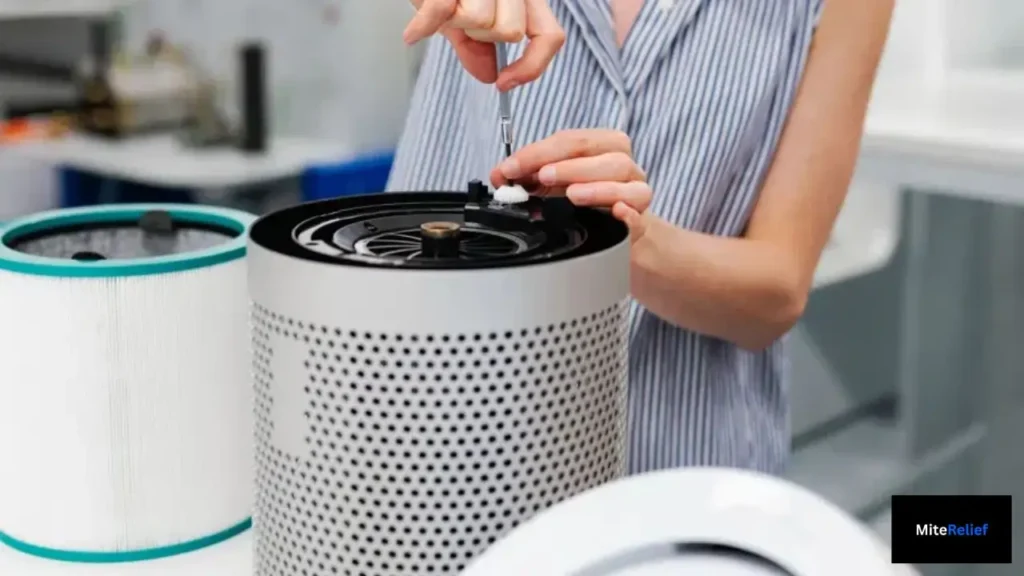
This part trips a lot of people up, and honestly the air filter marketing landscape does not help. Walk through any store and you’ll see HEPA plastered on half the boxes. But there’s a real, meaningful difference between a true HEPA filter and something labeled “HEPA-type” or “HEPA-style.” Those second two? Marketing terms. No certification backing them up. They just look the part.
A genuine True HEPA filter has been tested and verified to capture 99.97% of particles at 0.3 microns. Dust mite allergen particles sit in the 10 to 40 micron range, which is actually much larger than what HEPA is even designed for at minimum. Meaning they’re relatively easy to trap. The issue comes when someone buys a cheap “HEPA-style” unit and wonders why nothing seems better. It’s not a HEPA filter. It just has a similar-looking box.
Some units also include activated carbon as an extra layer. That won’t do much specifically for dust mite allergens, but it handles odors well, which is useful if you have pets or just want the air to smell cleaner overall. Not a must-have. But the True HEPA rating? Non-negotiable. Don’t compromise on that one.
Best Air Purifiers for Dust Mite Allergies
Alright, so what should you actually buy? There’s a wide range of options, and the price gap between them is significant, so let’s focus on what actually matters for dust mite control: True HEPA filtration, a CADR rating sized for your room, quiet overnight operation, and replacement filters that won’t cost a fortune every few months. That last point. People underestimate it constantly. A cheap unit with expensive filters costs more in the long run than a mid-range unit with affordable ones.
The Levoit Core 300 and its app-enabled version, the Levoit Core 300S-P, are solid choices for smaller to mid-sized bedrooms. Quiet enough for overnight use, true HEPA, and reasonable filter replacement costs. The Core 300S-P adds scheduling and remote control, which honestly is more useful than it sounds when you’re half-asleep and don’t want to fumble for a button.
Step up in budget, and the Coway Airmega AP-1512HH Mighty has been a reliable workhorse for years. It’s AHAM Verifide certified, which means the CADR numbers were independently tested and verified rather than just self-reported by the manufacturer. That matters. The Airmega 100 is the smaller sibling if space is tight. Both are trustworthy.
For larger rooms, the Blueair Pure 211i Max and the Blueair Pure 311i+ Max handle serious square footage without turning into white noise machines. The Blueair Pure 211i is the older version and still worth a look if your budget is tighter. The Mila Air 3 is a good pick if you want real-time air quality data alongside the filtration. And the Allen BreatheSmart 75i, along with the Windmill Air Purifier, covers the higher end of the market for large home spaces. One thing: always check your room’s square footage before buying and match the unit to it. Getting that wrong is one of the most common, and easily avoidable, mistakes people make.
Best Placement: Bedroom Air Purifiers for Dust Mites
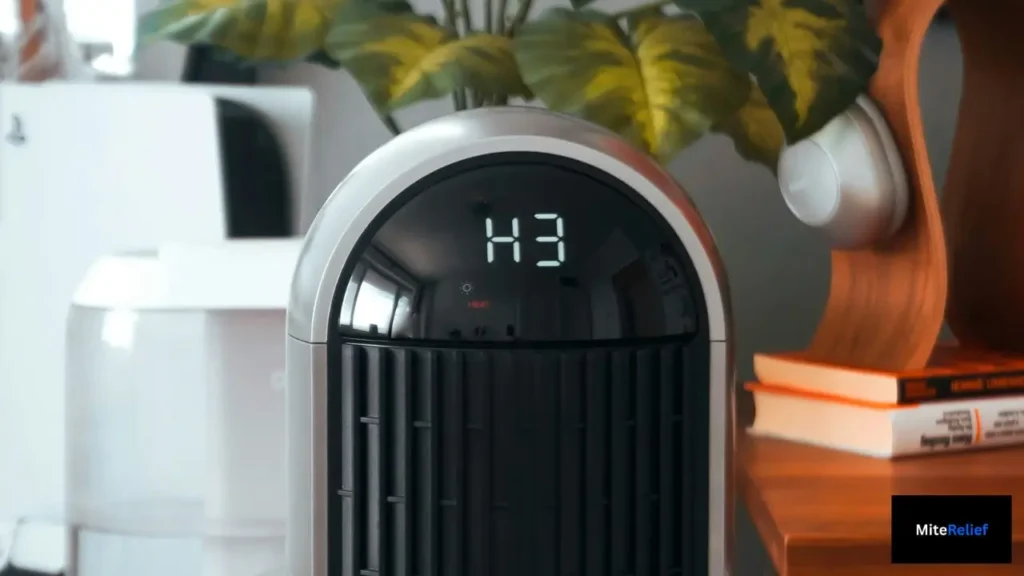
You bought a good unit. Then you shoved it in the corner behind the nightstand. And now you’re wondering why you’re still waking up congested. Placement matters way more than most people realize, and it’s not complicated once you know what to do.
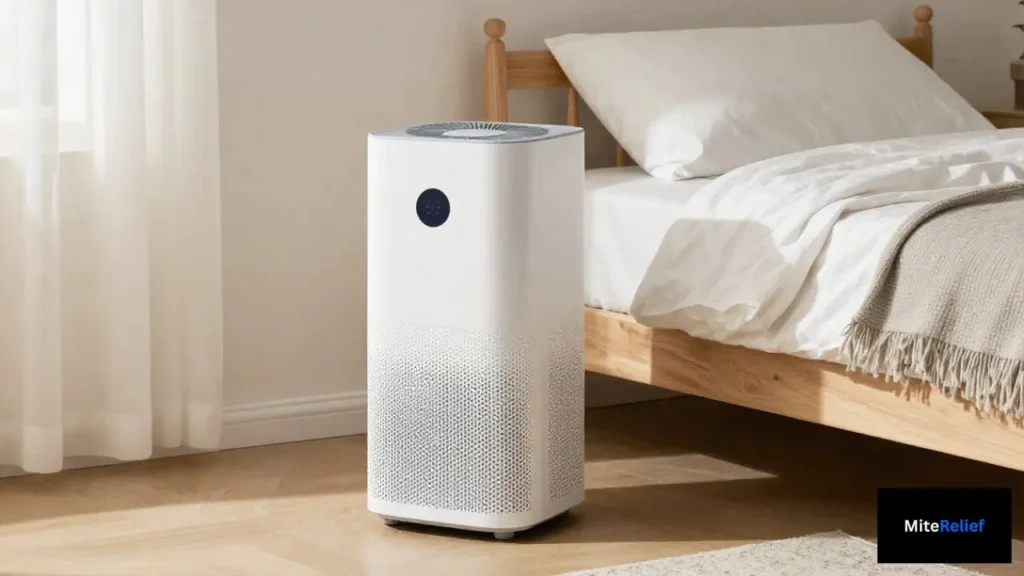
The bedroom is where a dust mite air purifier earns its keep most because it’s where you’re spending the most time in a closed, poorly ventilated space. Position the unit within a few feet of where you sleep if you can manage it. Not behind the door. Not tucked in the far corner. Air needs to actually circulate through the unit, and that works best when it isn’t hemmed in on three sides by furniture and walls. If your unit has feet or sits on a stand, getting it off the floor a bit also helps; allergen-heavy air tends to pool lower.
Run it overnight. The whole night, not just for an hour before you fall asleep. Think about it: you’re in a sealed room for seven or eight hours. That’s a long time to be breathing unfiltered air if the machine isn’t running. Most modern units have a sleep mode that drops the fan speed and dims any lights so it’s not disruptive. Use it. It exists for exactly this reason. And if you want to make the whole sleep space genuinely low-allergen, looking at dust mites in your bedroom from every angle is worth the read.
Air Ionizers vs. HEPA Purifiers: What’s the Difference for Dust Mite Allergies?
An air ionizer for dust mites sounds appealing in theory. Charge the particles, they get heavy, they fall out of the air, and done. Except not quite. Ionizers don’t actually filter anything. They make particles heavy enough to drop, but those particles land somewhere. On your surfaces. On your mattress. On your pillows. They haven’t left your environment. They’ve just relocated temporarily. Any airflow or movement stirs them right back up.
The bigger problem is ozone. Some ionizers, and basically all ozone generators, produce ozone as part of their operation. Ozone is a respiratory irritant. For someone who already deals with asthma or allergies, adding ozone to their bedroom air at night when windows are closed and it has nowhere to go actively makes things worse. That’s not a minor side effect. That’s a real health concern that tends to get glossed over in marketing materials.
HEPA works differently in a fundamental way. It physically pulls particles through a dense fibrous filter and holds them there. They don’t get stirred back up. That’s the mechanical advantage, and it’s why most allergists land on True HEPA over ionizers for people managing dust mite reactions. Some higher-end units combine HEPA with a very low-level ionizing function, which is generally fine. But if ozone output shows up anywhere in the product specs, put it down and walk away.
Air Purifiers Won’t Fix Everything. Here’s What to Pair Them With
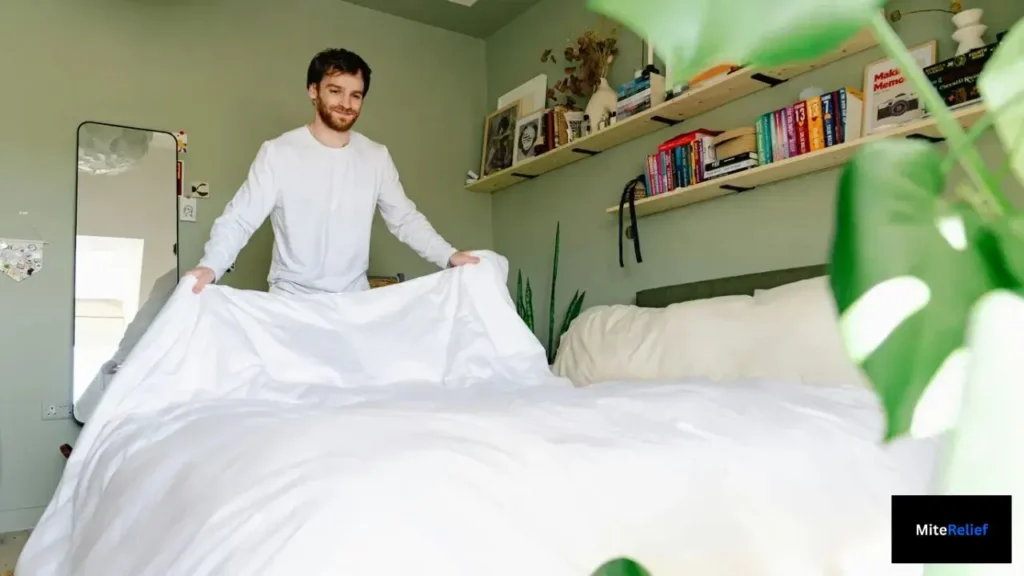
Here’s the section most reviews skip because it’s not exciting to write about. An air purifier is one piece of a larger approach. Use it alone, without changing anything else, and you’ll get some relief, but you won’t solve the actual problem. The mites are still in your bedding, still producing allergens faster than any filter keeps up with, as long as the source stays untouched.
Washing bedding weekly in hot water above 130 degrees Fahrenheit kills mites directly and removes allergens from the fabric. Allergen-proof covers on mattresses and pillows create a physical barrier between you and the mite colonies living in them. These two habits, by themselves, make a bigger dent than any purifier running alone.
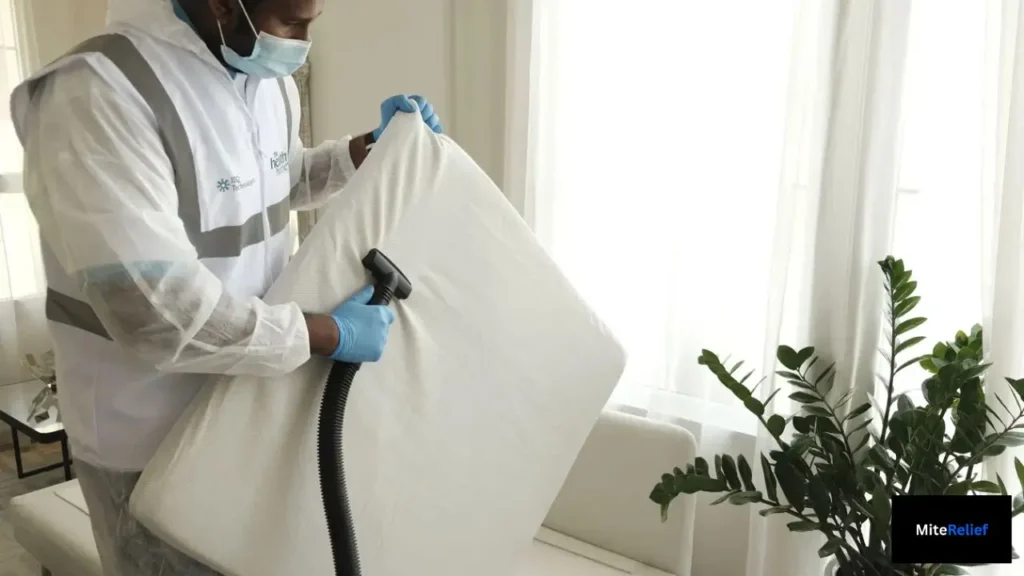
Regular vacuuming for dust mite control with a HEPA-equipped vacuum pulls mites and allergens off surfaces, out of carpets, and out of upholstered fabrics. Without that, those particles keep getting redistributed into the air constantly, and your purifier just cycles through the same load indefinitely. Humidity matters more than most people expect too. Dust mites reproduce faster and thrive above 50% indoor humidity. Even just consistent air conditioning use through summer can slow mite population growth noticeably.
For low-effort things that actually move the needle, natural ways to reduce dust mites are worth a follow-up read. The point is everything works better together. The air purifier becomes genuinely effective when it’s the last layer, not the only one.
Frequently Asked Questions
Can an air purifier reduce dust mites?
Not in the way most people picture. Air purifiers don’t kill mites or extract them from your mattresses and pillows. What they do is capture the airborne allergen particles mites produce. That’s still genuinely useful, especially overnight in a closed bedroom, because it reduces the amount of those particles you’re breathing in. Just don’t expect the mite concentration in your bedding to drop because of the purifier.
Do air purifiers help with dust mite allergies specifically?
Yes, and this is where they genuinely shine. Dust mite allergies are triggered by airborne particles, not by direct mite contact. A True HEPA air purifier running consistently in your bedroom reduces the concentration of those particles over time. Many people with moderate symptoms like sneezing, congestion, and itchy eyes notice real improvement within a few weeks of using one overnight. Results vary, but the mechanism is sound.
Should I leave my air purifier running all night?
Yes, definitely. Your bedroom with the door closed is the highest-risk environment for dust mite exposure because you’re sealed in there for seven or eight hours straight. Running the unit on sleep mode keeps it filtering through the night at low noise and low light. Turning it off at bedtime and running it during the day misses the point entirely. The overnight hours are exactly when it needs to be working.
Are ionizers safe for dust mite allergies?
Standard ionizers aren’t the best fit here. They deposit particles onto surfaces rather than removing them, and units that produce ozone can irritate the airways, which is the last thing you need if you already have asthma or allergies. Stick with True HEPA for dust mite allergen control. If a unit includes a low-level ionizer as a secondary feature and doesn’t list ozone output anywhere in the specs, that’s generally fine. But ionizer-only units are not a substitute for HEPA filtration.
What to Read Next
• Best Vacuum Cleaners for Dust Mites 2026 Buying Guide
• How to Prevent Dust Mites: 9 Habits That Actually Keep Them Away
• Dust Mite Allergy Symptoms: How to Know If You’re Allergic
Conclusion
They do. With realistic expectations. A true HEPA air purifier placed correctly in your bedroom and run consistently through the night will lower the amount of allergen particles you breathe in, and that reduction is real enough to matter for most people dealing with dust mite allergies. It isn’t a miracle device. It won’t fix your mite problem alone. But it’s a genuinely useful tool when it’s part of a broader routine rather than a standalone solution.
That routine isn’t complicated. Hot water washes on bedding once a week. Allergen-proof covers on mattresses and pillows. Regular vacuuming with a HEPA machine. Indoor humidity kept below 50%. And a good air purifier running through the night to handle whatever allergens make it into the air anyway.
Skip any one of those pieces, and the others work less effectively. Stack all of them together and you end up with a home environment that’s genuinely harder for mites to thrive in and genuinely easier for you to breathe in. That’s the goal. The purifier just happens to be one of the more satisfying parts because you can actually hear it doing something.
Medical Disclaimer
This content is for informational purposes only and is not a substitute for professional medical advice, diagnosis, or treatment. Always consult a qualified healthcare provider regarding persistent allergy symptoms, asthma, or breathing difficulties. We assume no liability for any health outcomes resulting from the use of this information.

Umar Farooq is the founder of MiteRelief, a resource for dust mite control and allergy prevention. After battling allergen sensitivity, he started creating research-backed guides that turn complex indoor air quality science into practical, affordable solutions anyone can implement.