You can’t see dust mites. Nobody can, not with the naked eye, not even if you squint at your mattress in bright light like some people apparently try. But here’s the thing, you actually can find out how many are living in your home right now. That’s what a dust mite test kit is for, and it takes the guesswork out completely.
Most people don’t think about testing until they’ve already been sneezing for weeks. Maybe months, honestly. how to test for dust mites at home A stuffy nose that won’t go away. Itchy eyes first thing in the morning, every morning. Your kid keeps scratching their arms, and you’ve already switched detergents twice, so that’s probably not it. This guide covers the real ways to check for dust mites at home, when a kit is genuinely worth buying, and when, frankly, it’s overkill.
Do you actually need to test, or is it obvious?
Here’s the honest answer: not everyone needs a lab test to know something’s wrong. If your symptoms are noticeably worse in the bedroom, and they ease up the moment you’re somewhere else, that’s already a pretty loud clue.
So before spending a dime, ask yourself a few things. how to test for dust mites at home Do the symptoms stick around all year, not just during allergy season? Is there a family history of allergy issues, asthma, or that kind of thing? Do you notice more sneezing, an itchy eye, or a stuffy nose right after making the bed or fluffing pillows?
If a lot of that sounds familiar, you probably already know the answer, deep down. But testing confirms it instead of just going off a gut feeling. And that matters because chasing the wrong problem for weeks or months wastes time, money, and honestly, patience too.
Think about it this way for a second. Someone with a pet allergy could easily blame dust mites and spend months on the wrong fix entirely. Someone with a mold sensitivity might do the same thing. A quick self-check narrows things down, sure, but it’s not going to hand you a final answer by itself.
If you want a closer look at what to actually watch for day to day, this guide on dust mite allergy symptoms covers it in more detail, including a few small signs people tend to brush off.
DIY ways to check for dust mites without a kit
Before spending money on anything, there are a handful of low-cost ways to get a rough sense of what’s going on. None of these are lab-accurate, not even close, honestly, but they’re a decent first step and cost basically nothing.
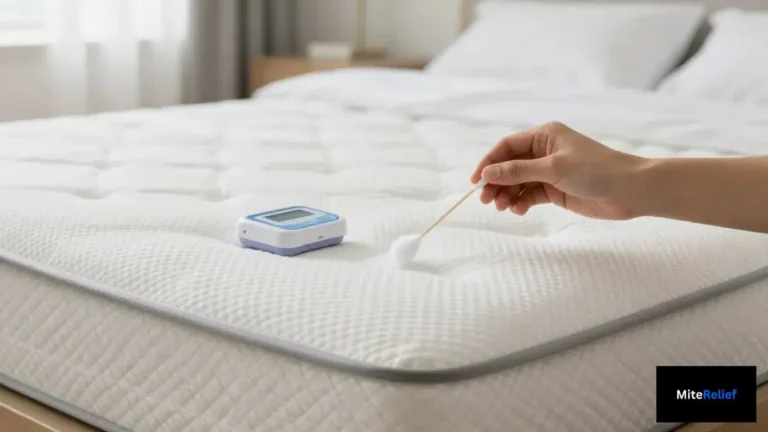
Try the white sheet test. Lay a white sheet or pillowcase over the mattress, vacuum the surface like normal, then check the sheet under bright light for fine residue. It’s not scientific. But it’s telling, in its own weird little way.
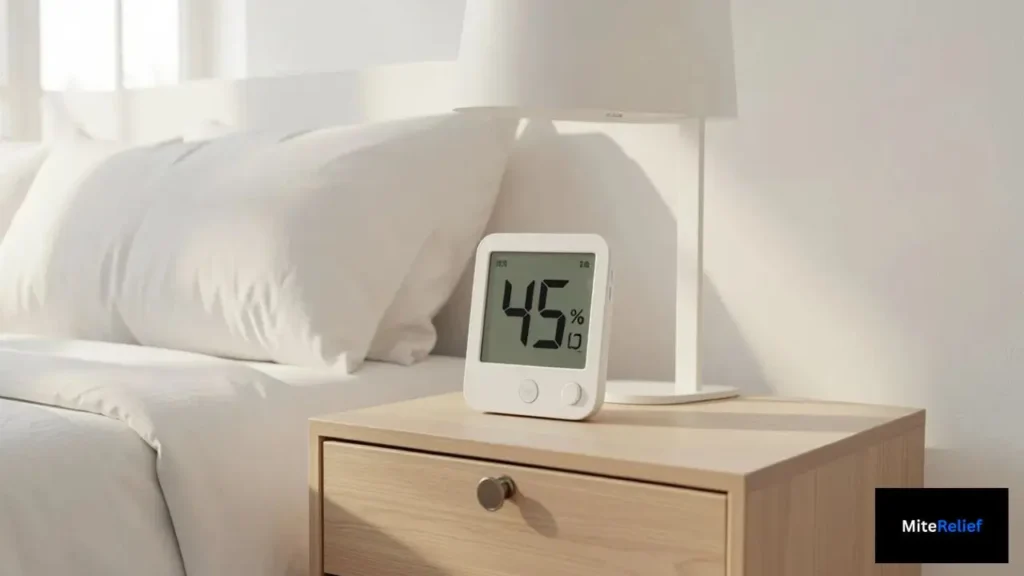
Humidity matters more than most people realize. Dust mites thrive once humidity climbs above 50%, and a cheap hygrometer from any hardware store tells you exactly where your bedroom sits. If that number stays high day after day, a dehumidifier might already solve half the problem without anything else needing to change.
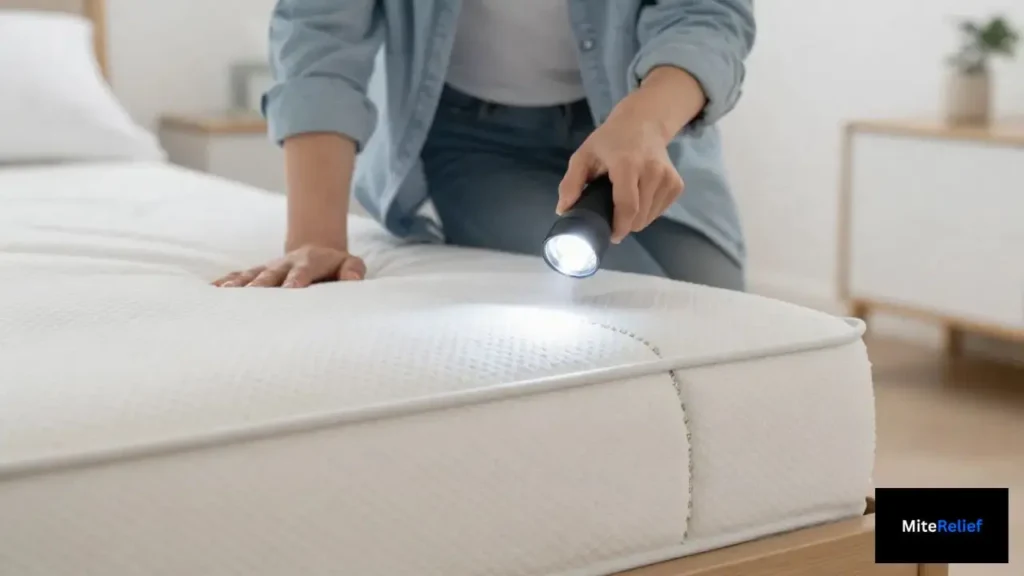
Also check the seams on your mattress and the edges of your carpet, especially near baseboards. Buildup collects in these tight spots because mites mostly feed on skin cells that we shed while sleeping, which sounds gross, I know, but it’s just biology. Not glamorous work, but a flashlight and five spare minutes tell you a lot.
Older mattresses and pillows tend to be worse off, simply because there’s been more time for buildup to happen. If yours is a few years old and has never had a protective cover, that alone might explain a good chunk of what you’re dealing with.
Curious what these things actually look like up close? This piece on what dust mites look like under a microscope has real photos, which is a little unsettling, if we’re being honest, but genuinely useful once you see it.
Is there a device that actually detects dust mites?
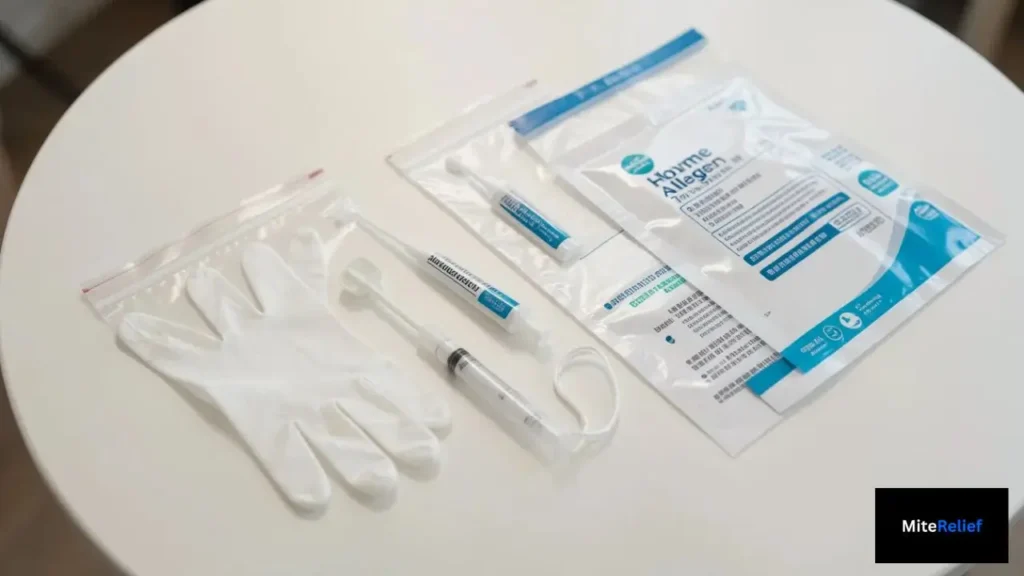
Yes, and people ask this constantly. Home allergen test kits and swab kits exist specifically for this purpose. You collect a dust sample from the bed or carpet, mail it to a laboratory, and get results back within a week or two, sometimes faster depending on the lab.
Most kits don’t count live mites directly; that would be nearly impossible to do accurately at home anyway. Instead, they measure Der p1 and Der f1, the specific proteins found in mite droppings that trigger allergic reactions in the first place. This happens through ELISA analysis, a lab method that reads allergen levels with real precision, not just a rough estimate.
So when someone asks, “Is there a device that detects dust mites?” the honest answer is sort of yes and no. It’s less a single gadget and more a collection kit paired with actual lab analytical work behind the scenes. That combination gives you a number worth trusting, instead of a vague reading from some cheap sensor or app.
Turnaround time really depends on the brand you pick. Some labs return results within five business days; others take closer to two weeks, depending on how backed up they are.
Best dust mite test kits
Not every kit on the market is worth your money, so a few things matter before you buy one. Look for lab-verified results, an easy swab or dust collection process, and a reasonable turnaround time. Nobody wants to wait a month for an answer that’s supposed to help them feel better now, not later.
The Ventia Rapid Home Allergen Test is a solid choice if you want something fast and simple, built specifically for quick at-home screening without much hassle. For something a bit more established, the House Dust Mite Allergen Test Kit from EMSL is one of the more recognized names in this whole space. EMSL has been doing environmental lab work for a long time, decades actually, so there’s a track record there.
If the budget’s tight, the Basic Indoor Allergen Test Kit by SimpleLab is a fair starting point. It won’t give you every single detail a full lab panel would, but for a first pass, it does the job well enough.
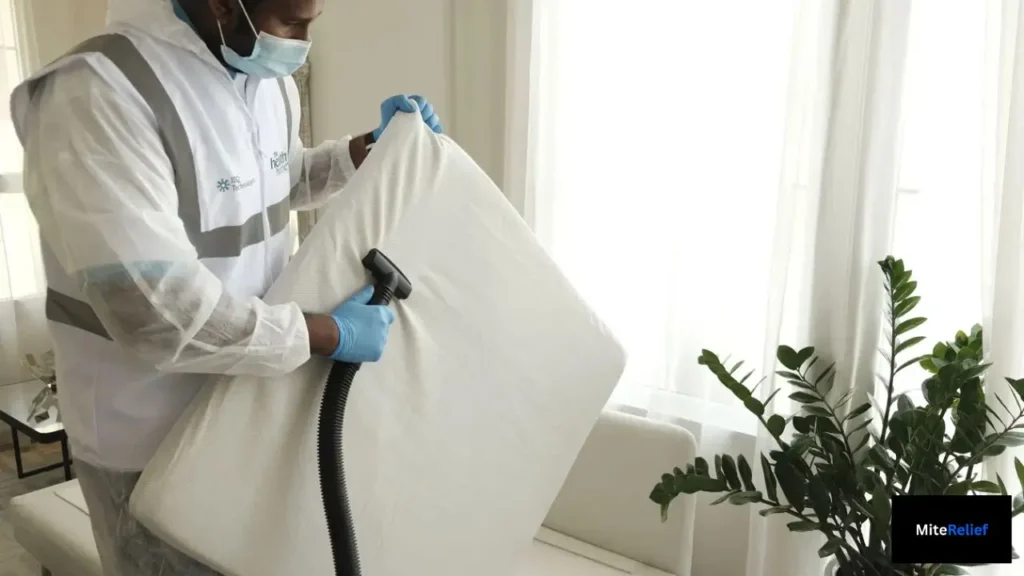
One thing worth remembering here is that these kits typically test surfaces like bedding, carpets, and upholstery, not the air itself. If air quality is the bigger concern, that’s a separate conversation altogether, usually involving air sampling equipment rather than simple surface swabs. Testing dust from these areas can also help you evaluate how effective your cleaning routine is, especially when using a HEPA vacuum to reduce dust mite allergens.
Price-wise, most of these land somewhere between twenty and sixty dollars, lab fees already included. That’s genuinely cheap compared to months of guessing or buying allergy medication over and over that never quite fixes the actual issue underneath.
Home test kits vs. a doctor’s allergy test: what’s the difference?
This trips a lot of people up, and honestly, it’s a fair question. A home kit tells you about your environment, meaning how many mites or allergens are actually present inside your home. It’s an environmental measurement, plain and simple, nothing more complicated than that.
A doctor’s skin prick or blood test tells you something else entirely: whether YOU personally are allergic to dust mites at all. You could live in a home packed with allergens and have zero reaction. Or the complete opposite, a fairly clean home but a strong personal sensitivity regardless.
Both tests serve a real purpose, and honestly they work best side by side rather than picking just one. One diagnoses the problem in the room. The other diagnoses the problem happening in your own body. If you’ve dealt with ongoing skin rashes, stubborn eczema flare-ups, or congestion that never fully explains itself, doing both might genuinely be worth the extra step.
A quick note on IgE antibodies here, since it comes up a lot in these conversations. A blood test measures IgE levels specific to dust mite proteins, which is basically your immune system’s own fingerprint of a reaction. High IgE paired with a positive home kit result is about as clear a picture as you’re going to get, short of sitting down with a specialist in person.
What to do once you confirm you have a dust mite problem
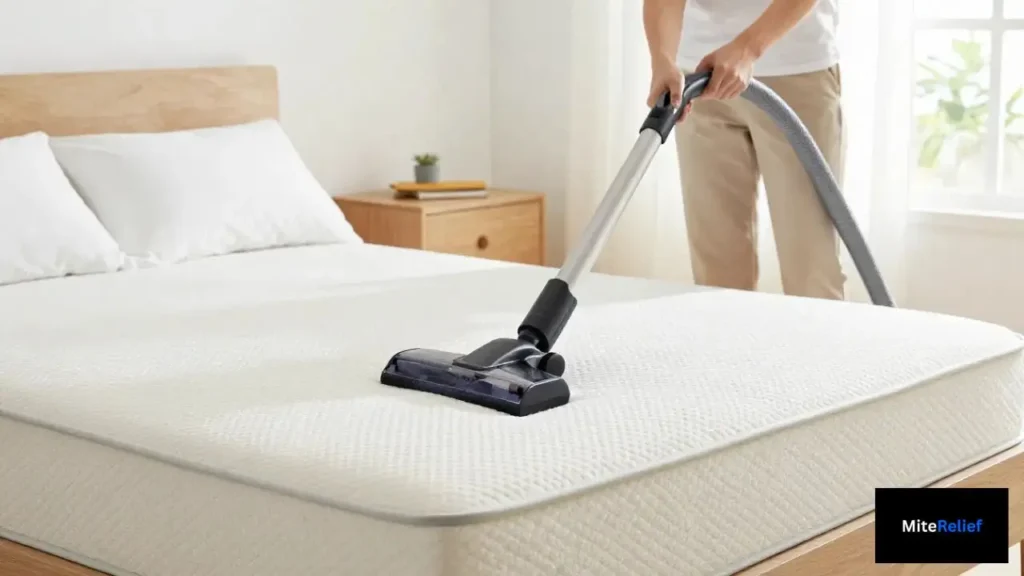
Okay, so the test came back and confirmed exactly what you already suspected. Now what? Testing is really just the starting point here, not the finish line by any stretch. The actual work is reducing the mite population and managing exposure over the long haul.
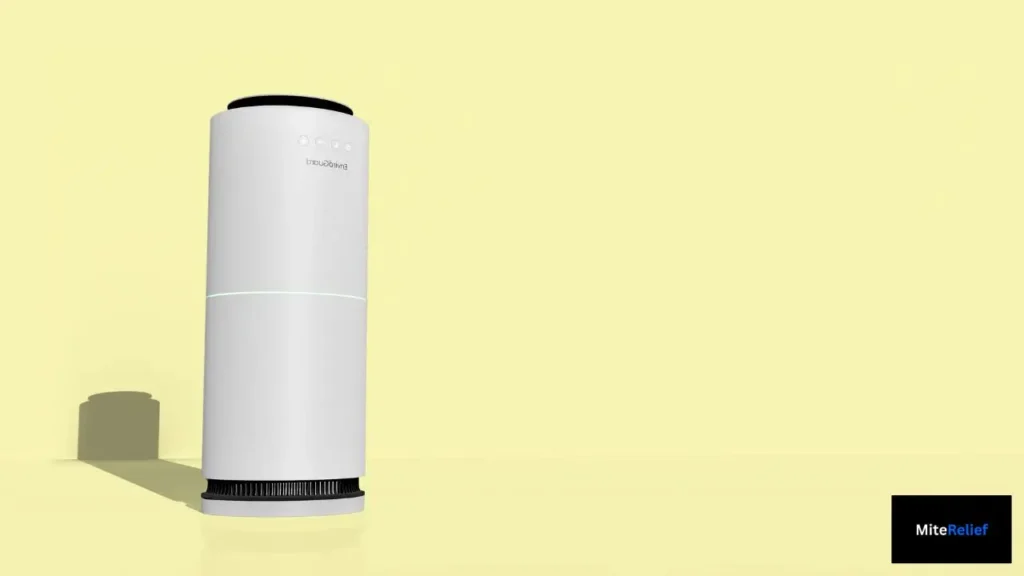
That usually means a mix of things working together, better vacuum habits using a HEPA filter, washing bedding in hot water on a weekly basis, and keeping humidity under control in problem rooms specifically. Some people also look into a MERV 13 air filter for their HVAC system, since it traps allergen particles as air circulates throughout the whole house, not just one room. If you’d rather stop the whole cycle before it starts up again, this guide on how to prevent dust mites walks through the daily habits worth building into your routine.
Weekly cloth dust wipes on shelves and blinds help too, since dust settles right back onto surfaces fast in humid climate areas, sometimes within days. Small habit, sure, but it adds up noticeably over a month or so.
If symptoms are more severe, an allergist might recommend antihistamines, corticosteroids, or, in some cases, allergy immunotherapy for longer-term relief that actually lasts. That’s really a conversation to have with your doctor, though, not something to self-manage entirely off one home test result.
For a full breakdown of methods that actually reduce mite populations, and not just mask the symptoms temporarily, check out what kills dust mites. Also worth a look is this comparison of using HEPA vacuum models built specifically for allergen control around the house. involved, or someone is dealing with severe asthma, paying a little extra for faster processing is usually worth it.
Frequently asked questions
How do I test my bed for dust mites?
Run the white sheet test after vacuuming, then check for fine residue. For something more definitive, use a swab-based kit on the mattress surface and mail it to a lab.
How do you know if your bed is infested with dust mites?
Look for a musty smell, visible dust buildup along the seams, and symptoms that get worse overnight or right after waking up.
Can you feel dust mites crawling?
No, they’re microscopic, far too small to feel on skin. Any crawling sensation you notice isn’t actually mites.
How accurate are home dust mite test kits?
Lab-processed kits using ELISA analysis are fairly reliable for detecting allergen presence. Instant strip tests are less precise and best treated as a first screen only.
What to read next
- How to Prevent Dust Mites: 9 Habits That Actually Keep Them Away
- What Kills Dust Mites? 7 Methods That Actually Work
- Best Vacuum Cleaners for Dust Mites (2026 Buying Guide)
Conclusion
Dust mites aren’t going anywhere completely; honestly, no home ever gets fully free of them, and that’s actually fine. The goal was never zero mites; it’s keeping the numbers low enough that your body stops reacting every single morning. A dust mite test kit just gives you a real number to start from instead of you standing in your bedroom, guessing.
Start small if this feels like a lot. Hygrometer first, the ten-dollar white sheet test second, and then a proper kit only if those first checks point to something concerning. Nobody does everything on day one; that’s not realistic, and it’s not the point either. Small changes, kept up consistently, beat one big weekend overhaul that fizzles out two weeks later anyway.
Medical Disclaimer
This content is for informational purposes only and is not a substitute for professional medical advice, diagnosis, or treatment. Always consult a qualified healthcare provider regarding persistent allergy symptoms, asthma, or breathing difficulties. We assume no liability for any health outcomes resulting from the use of this information.

Umar Farooq is the founder of MiteRelief, a resource for dust mite control and allergy prevention. After battling allergen sensitivity, he started creating research-backed guides that turn complex indoor air quality science into practical, affordable solutions anyone can implement.