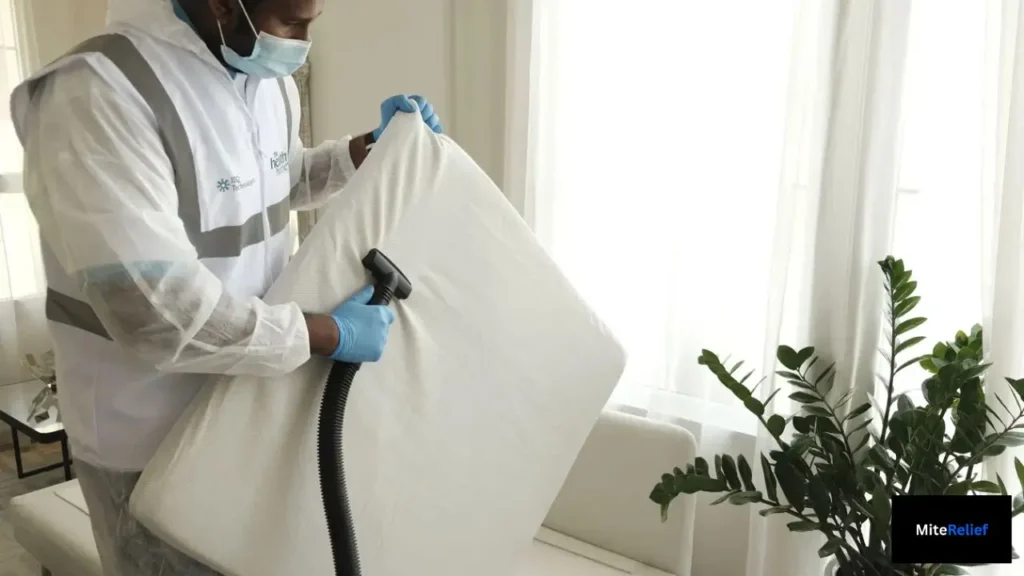
Here’s the thing about a good best dust mite spray: it’s not just killing the mites. It’s breaking down the allergens they leave behind too, and honestly that’s the part almost nobody tells you about. You spray, you wipe it down, you feel accomplished, and job done, right? Except the actual irritant, all that leftover allergen debris, is usually still sitting deep in the mattress fibers doing its thing.
Been sneezing your way through spring? Or waking up stuffy for no reason you can point to? Yeah, this is probably why. best dust mite sprays for mattresses We’re going to walk through what actually works here, what’s mostly marketing fluff, and how you pick the right spray, whether it’s your bed, your couch, or you just want the whole bedroom sorted at once.
One quick thing before we get into it. Most of this really comes down to your own situation, not some universal answer. A person with mild seasonal sniffles doesn’t need the same routine as a house with a baby, a shedding dog, and someone who’s had asthma since they were a kid. Worth keeping in mind as you read, since what works for your neighbor isn’t automatically what works for you.
Do dust mite sprays actually work?
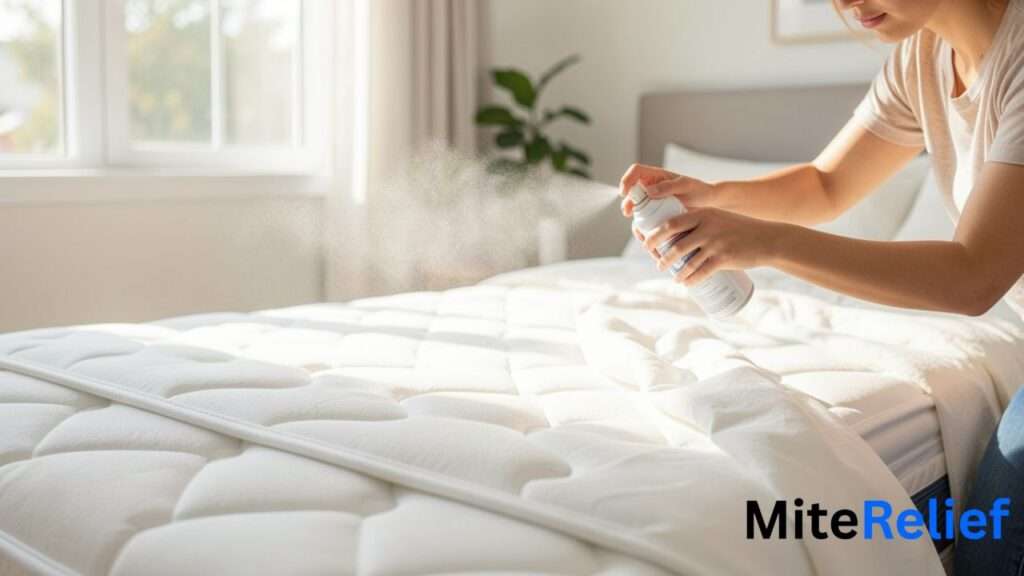
Honest answer? Yes and no. Chemical dust mite spray formulas kill mites on contact, sure, but here’s the catch: they don’t actually remove the allergen debris that’s left behind afterward. And that waste, the tiny fecal particles and shed skin fragments, That’s what actually triggers most allergy symptoms. Not the live mites themselves. Kind of counterintuitive when you first hear it.
Antiallergen sprays work differently. They denature the allergen proteins so your immune system just stops reacting to them, even if a couple mites are still wandering around in there somewhere.
So which one do you need? Both, honestly, depending on where you’re at. Dealing with a heavier mite problem, visible signs, a musty smell, and worsening asthma? A mite-killing formula matters more there. Mostly dealing with allergy symptoms and mild flare-ups instead? An allergen neutralizing spray probably does more for you day to day. Some people just use both, a killer spray once a month and a neutralizer as a quick top-up in between. If you want the deeper breakdown, here is more on what kills dust mites.
And look, no spray, however expensive it is, replaces basic housekeeping. Hot wash the bedding weekly, keep humidity down, and vacuum on a schedule; those three things do more heavy lifting than any bottle ever will. Spray is the finishing step. It’s not the whole solution, not even close.
What to look for in a dust mite killer spray
Not all sprays are made equal, and honestly the label can be genuinely confusing when you’re just standing in an aisle trying to make a decision. A handful of active ingredients keep showing up, though. Benzyl benzoate is one that kills mites on contact. Tannic acid is another that works by denaturing the allergen proteins rather than going after the mites directly. Enzyme-based formula options land somewhere in the middle, breaking down organic debris more broadly.
If anyone in your house has sensitive skin, or asthma, fragrance-free matters a lot more than people assume going in. A heavily scented spray can trigger its own reaction. Which kind of defeats the whole point of buying it in the first place, doesn’t it?
Fabric safety isn’t optional either. Check the label before you spray anything delicate, wool bedding especially, because some formulas leave marks or light discoloration on certain fabrics and you really don’t want to find that out the hard way. Look for an Allergy UK style approval mark too, or something similar, where it’s available. Not a perfect guarantee, but it’s a decent filter for weeding out the weaker stuff.
And price isn’t always a reliable signal, by the way. A cheaper bottle with a well-documented active ingredient can genuinely outperform an expensive one that’s leaning mostly on branding and a nice label. Read the back, not just the front.
Best dust mite sprays overall
So, three picks here, roughly one for each budget.
Budget pick
Allergoff Flea Spray covers a reasonable area for what it costs and uses a light, low fragrance formula, a decent option if you’re just testing the waters before committing to something pricier. It won’t blow you away. It handles the basics, though; no complaints there.
Mid-range
Allertech Anti-Allergen Spray leans more toward the allergen-neutralizing side of things, so it’s a solid pick if your main goal is calming allergy symptoms rather than hunting down every single mite. Safe on most fabrics, low scent, and it goes on without soaking the material through, which matters more than you’d think.
Premium
Natural Armor Bed Bug & Dust Mite Killer sits at the top end. Combines a mite-killing formula with broader surface coverage, which is handy if you’re tackling more than one area, say a mattress and a couch, in the same weekend.
Before you actually buy anything, compare a few things side by side: coverage area per bottle, whether it’s a killer or neutralizer type formula, which surfaces it’s rated safe for, and the real scent level, since some bottles claim unscented and, well, they’re not quite.
Small tip here. Don’t grab the biggest bottle right away if you’ve never used the brand. Get the smallest size, and test it in one room to see how your household reacts before you commit to buying in bulk. Saves money down the line even if it feels slower up front.
Best dust mite spray for bed and mattress
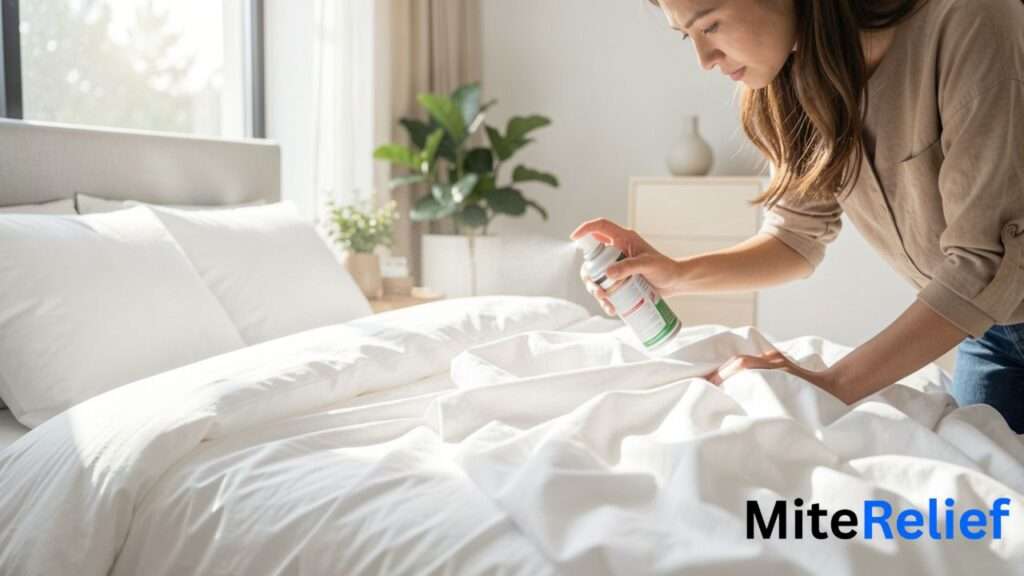
Your mattress and bedding need the most careful treatment out of anything here, honestly, since you’re breathing right above it for something like eight hours a night. Any dust mite spray for bed use has to be fabric-safe and quick-drying, or you’re basically just creating a damp environment mites actually like living in.
Pacagen Dust Allergen Neutralizing Spray is a common pick for this exact job. Formulated to sit on the fabric surface rather than soak all the way through into the foam or padding underneath, which matters a lot more than people tend to assume.
Process matters as much as the product itself, maybe more. Strip the bedding first, spray the mattress surface evenly, then let it dry all the way; we’re talking a few hours here, not a few minutes, before you remake the bed. Skipping the drying time is probably the single most common mistake people make with this whole step.
Want more ideas for the whole room, not just the mattress? This guide on keeping your bedroom free of dust mites goes further into that.
Best dust mite spray for furniture and sofas
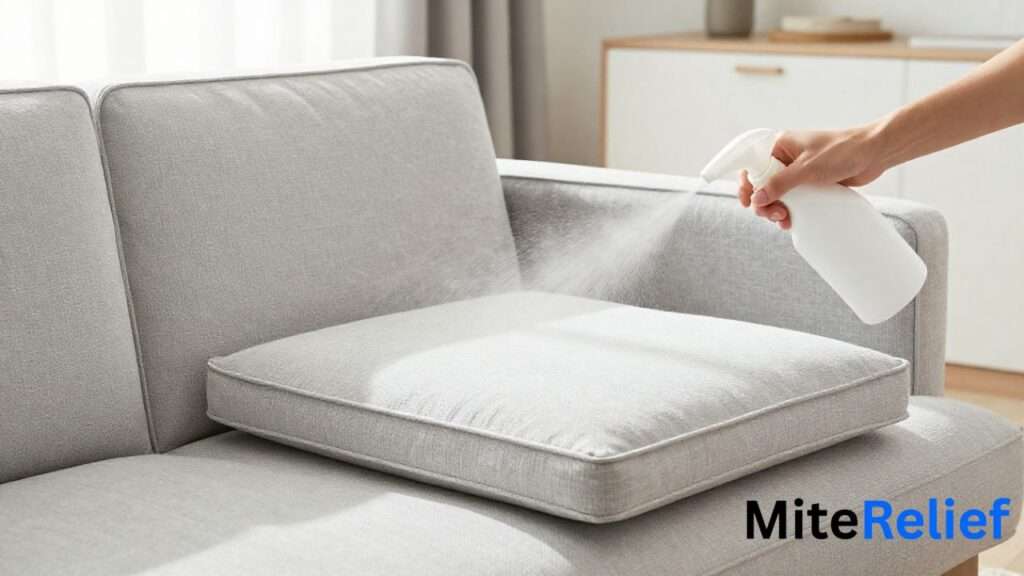
Furniture’s trickier than bedding in some ways, mostly because upholstery varies so much. Velvet behaves nothing like a synthetic blend, and a formula that’s totally fine on one can leave a mark on the other. A proper dust mite spray for furniture needs to say clearly, upfront, what surfaces it’s actually rated for.
Puressentiel Anti-Pest Fabric Spray is generally treated as safe across a wider range of upholstery types, which makes it a reasonably low-risk starting point if you’re not totally sure what your sofa fabric even is. Most of us aren’t, if we’re being honest.
Apply to cushions, armchair fabric, and fabric headboards, the same as you would a mattress, evenly, in overlapping passes, not one heavy soak dead center. Test a hidden patch first if anything’s delicate or dyed. Dust mites love furniture just as much as beds, sometimes more actually, since sofas get vacuumed way less often than people admit.
Natural dust mite spray, does it work?
Essential oil-based sprays, tea tree and eucalyptus mostly, tend to repel mites rather than kill them outright. That distinction actually matters a lot. A natural dust mite spray isn’t going to wipe out an established infestation by itself, and it’s worth just saying that plainly upfront instead of dancing around it.
Where these earn their keep is maintenance, those weeks between actual deep cleans when you just want to stop things building back up. Mite-B-Gone Dust Mite Spray markets itself in this space, positioned more as a gentler, ongoing option than a one-time fix.
Worth noting too, homemade versions, mixing your own tea tree oil with water at home, tend to be way less consistent than commercial natural sprays. Concentration varies a fair bit from one batch to the next depending on how careful you are with measuring or not.
Rather skip sprays altogether for a while? There are other natural ways to control dust mites worth trying alongside or instead.
How to use dust mite spray correctly, step by step
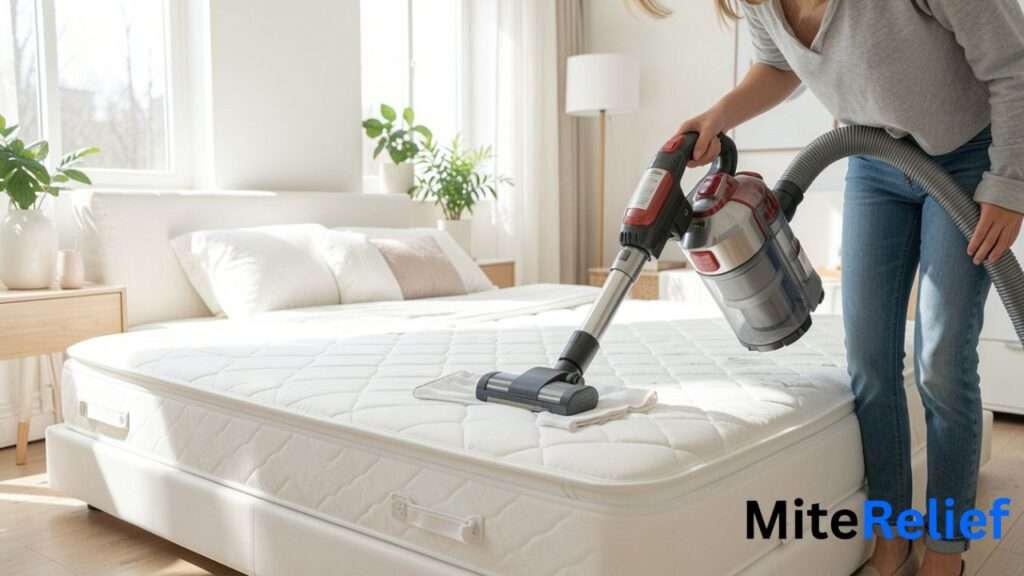
A few steps here, none of them complicated on their own, but skip one and your results basically get cut in half.
- Vacuum first. Clears surface debris so the spray can actually penetrate the fabric instead of sitting on top of dust and dead skin.
- Spray evenly, overlapping passes; don’t just concentrate on one spot for ages.
- Let it dry fully, thirty to sixty minutes minimum, or longer for thicker mattresses or heavily padded furniture.
- Repeat every four to six weeks for ongoing control; mites rebuild their numbers faster than most people expect.
A lot of people spray once, feel great for a week, then completely forget about it for six months. That’s really where most routines fall apart, not in the spraying itself, in sticking to any kind of schedule. A recurring phone reminder genuinely helps more than any premium formula ever will.
Steam cleaning pairs well with spraying too, especially for mattresses that haven’t seen a deep clean in a while. For the full method, this piece on steam cleaning mattresses and upholstery covers it in detail.
Frequently asked questions
How often should I spray my mattress for dust mites?
Every four to six weeks as a general rule, though people with heavier allergy symptoms sometimes go every two to three weeks during peak season.
Is dust mite spray safe for babies?
Most fragrance-free, low-toxicity formulas are fine once fully dried, but check the label, let the surface air out completely before a baby has contact, and ask a pediatrician if you’re at all unsure.
Can I spray my pillow for dust mites?
Yes, most fabric-safe sprays work on pillows too. Just make sure it’s fully dry before use, and check if the pillow has a removable, washable cover you can treat on its own.
Does Febreze kill dust mites?
No. Febreze neutralizes odor; that’s it, not mites or their allergens. It’s not a real substitute for an actual dust mite spray, whatever the ads might imply.
What is the best chemical to kill dust mites?
Benzyl benzoate is one of the most commonly used and researched active ingredients for killing mites on contact, which is basically why it shows up in so many formulas.
What to read next
- Do Steam Cleaners Kill Dust Mites? (And Does UV Light Work Too?)
- What Kills Dust Mites? 7 Methods That Actually Work
- Dust Mites in Your Bedroom: How to Make It a Mite-Free Zone
At the end of the day the right best dust mite spray comes down to what you’re actually fixing: active mites, lingering allergens, or just keeping things maintained between cleans. Pick the formula that matches your actual problem, respect the drying time, and give it a few cycles before deciding whether it’s working or not.
Conclusion
Real talk, no spray here is some miracle fix, and if a bottle’s telling you otherwise, it’s probably just trying to sell you something. What actually makes the difference is picking a formula that matches what you’re genuinely dealing with, sticking with it even on the weeks you don’t feel like bothering, and not skipping the boring stuff, like washing, vacuuming, and watching the humidity. Keep at that for a few weeks, and most people do notice a real change. Not overnight. But real.
Medical Disclaimer
This content is for informational purposes only and is not a substitute for professional medical advice, diagnosis, or treatment. Always consult a qualified healthcare provider regarding persistent allergy symptoms, asthma, or breathing difficulties. We assume no liability for any health outcomes resulting from the use of this information.

Umar Farooq is the founder of MiteRelief, a resource for dust mite control and allergy prevention. After battling allergen sensitivity, he started creating research-backed guides that turn complex indoor air quality science into practical, affordable solutions anyone can implement.