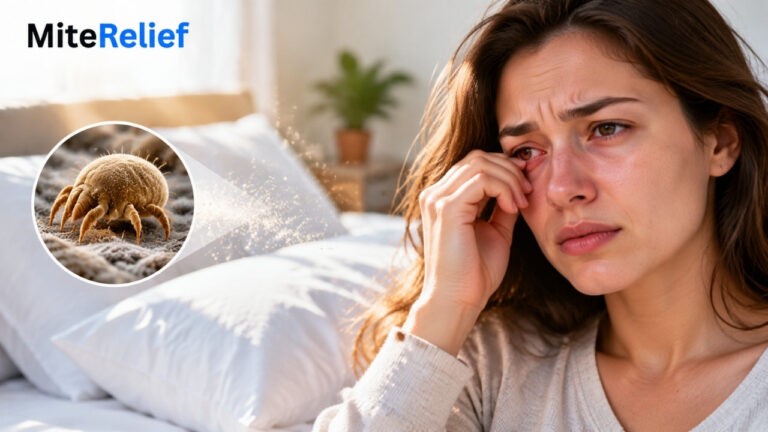
Yes, dust mite allergy in the eyes is a real concern. Dust mite allergens can trigger allergic conjunctivitis in sensitive people. This can cause itchy, watery, and red eyes. Still, these symptoms don’t confirm that dust mites are to blame, since many other triggers can bother your eyes.
Keep in mind that house dust mites and Demodex mites are two different kinds of mites. Demodex mites live in hair follicles, including eyelash follicles. This guide explains the difference, what else may be going on, and when to see an eye doctor.
Can Dust Mite Allergy Cause Itchy or Watery Eyes?
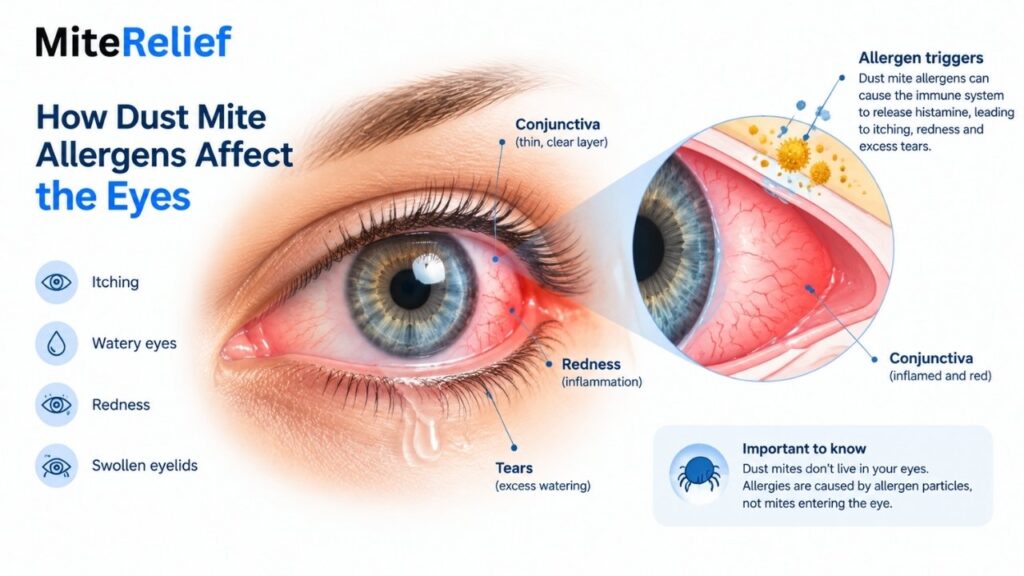
It can, in some people. Allergic conjunctivitis happens when the conjunctiva reacts to an allergen. The conjunctiva is the thin, clear layer that covers the white of your eye and lines the inside of your eyelids.
Here is how it works. In an allergic person, the immune system treats a harmless allergen as a threat. The body makes IgE antibodies, and the allergen sets off histamine release. Histamine causes itching, inflammation, and extra tears.
Tiny particles from household dust can reach your eyes. Common eye symptoms of dust allergy include itching, watering, redness, and swollen eyelids. Sneezing or a runny nose may come along with them. Dust mite allergy symptoms can last year-round instead of appearing in one season.
Other allergens can cause the same symptoms. That is why itchy eyes alone cannot point to dust mites. For the full picture beyond the eyes, read our guide to dust mite allergy symptoms.
Can Dust Mites Live in Your Eyes?
No. Ordinary house dust mites do not live in your eyes. They are tiny creatures found in household dust, often in bedding and soft furniture. Allergies come from allergen particles, not from mites living in your eye.
Worries about dust mites in eyes often come from confusing two separate types of mites.
House Dust Mites vs. Demodex
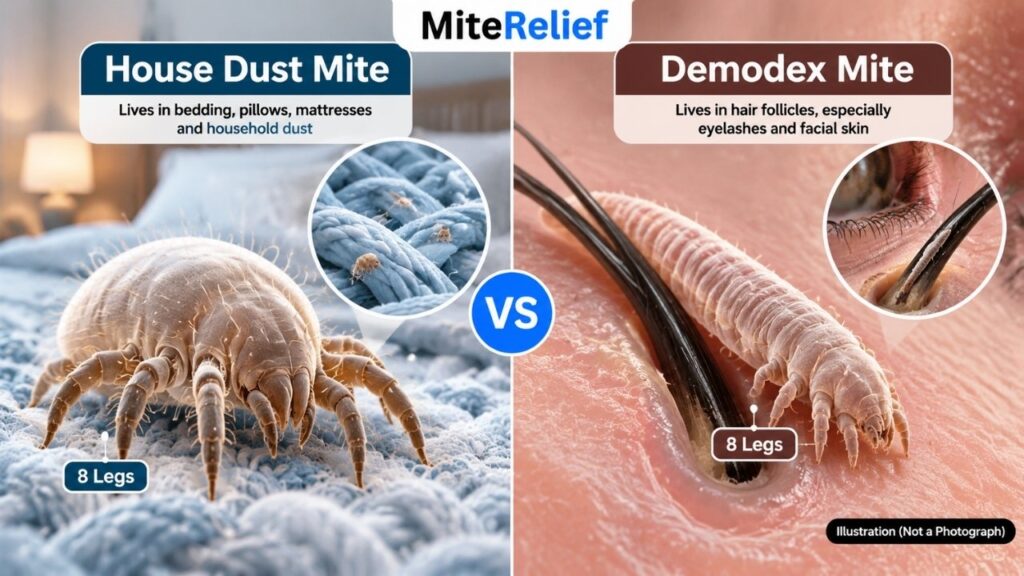
Demodex mites are a different type of mite. They are considered a normal resident of human hair follicles. One type, Demodex folliculorum, clusters around eyelash follicles.
In some people, these mites are linked to blepharitis. Blepharitis is irritation and inflammation along the eyelid margins. Doctors link it to several causes, such as allergies, bacteria, certain skin conditions (seborrheic dermatitis and rosacea), and Demodex.
So crusty or itchy eyelids do not automatically mean dust mites or Demodex. An eye doctor can tell you what is going on. You can read more about Demodex mites and eyelid conditions on EyeWiki. To learn how these mites relate to skin, read our article on dust mites on face.
Is It an Eye Allergy or Another Eye Problem?
Several eye conditions look alike. Allergic conjunctivitis, dry eye disease, and blepharitis can all cause redness and discomfort. Wearing contact lenses can also irritate the eyes.
Use this table for clues. It is not a diagnosis.
| Symptom or Concern | Possible Explanation | When Evaluation Matters |
| Itching and watering in both eyes | Allergic conjunctivitis is one possibility | Persistent or recurrent symptoms |
| Burning or gritty sensation | Dry eye disease, irritation, or other conditions | Ongoing discomfort |
| Crusting around eyelids | Eyelid inflammation or other eyelid conditions | Persistent crusting or irritation |
| Eye pain or light sensitivity | May point to a condition beyond mild allergy | Prompt medical assessment |
| Blurred or changed vision | Several possible eye conditions | Urgent assessment |
Itching is the symptom most tied to allergy. Pain, light sensitivity, and vision changes aren’t typical of a mild allergy, so take them seriously.
Why Might Eye Allergy Symptoms Feel Worse Around Bedding?
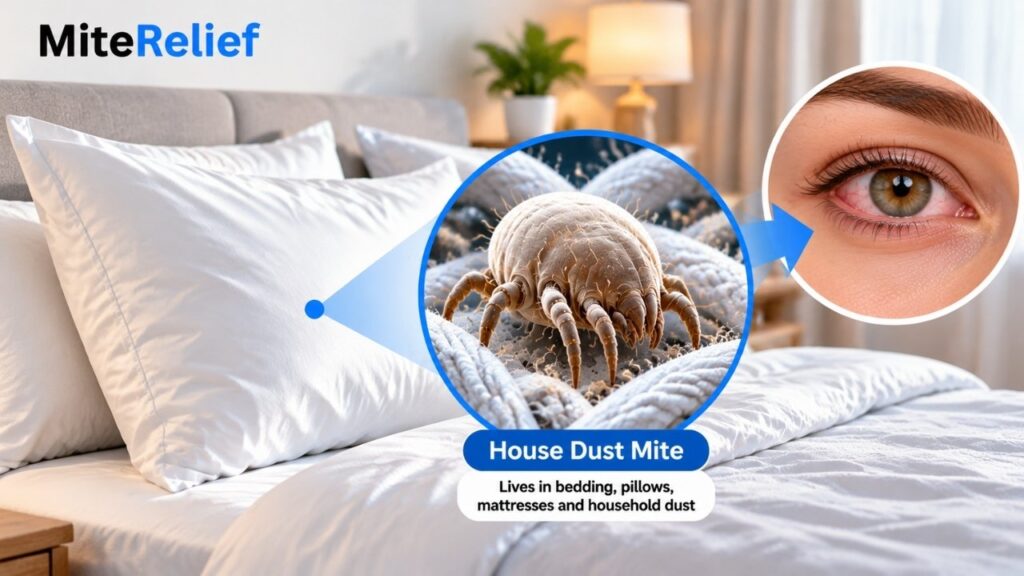
Bedding can trap dust mite allergens. Your face rests on the pillowcase for hours, so that exposure may add up at night.
Still, bedroom symptoms don’t prove dust mites are the cause. Dry air, other allergens, or eye conditions can also flare up there. If you want to learn how mites collect in sleeping spaces, see dust mites in your bedroom.
What Can Help Relieve Eye Allergy Discomfort?
Simple steps may bring some comfort. Results vary, and none replace medical care.
- Don’t rub your eyes. Rubbing can make symptoms worse.
- Try a clean, cool compress. A cold compress may ease swelling and itching.
- Wash your hands first. Clean hands matter before you touch anything near your eyes.
- Cut back on allergen exposure. For example, wash pillowcases often and keep dusty items away from your sleeping area.
- Ask about eye treatments. Your pharmacist or doctor can help you pick between artificial tears and allergy eye drops.
- Ask about contact lenses. Some guidance recommends skipping lenses until symptoms settle.
What Should You Avoid?
Never put vinegar, essential oils, or household cleaning products in or near your eyes. They can burn and injure the eye.
Avoid unapproved eye products, and don’t use old or shared drops. Never adjust or quit a prescription on your own. Talk to your doctor first.
When Should You See an Eye Doctor?

Schedule a visit with an eye doctor if symptoms persist, return often, or worsen. Also get advice if you notice unusual discharge or ongoing eyelid irritation.
An ophthalmologist is a medical doctor who specializes in eye care. A slit-lamp examination lets the doctor look closely at the front of your eye. This can help sort out allergies, dry eye, and eyelid problems.
If an allergy seems likely, a doctor may suggest allergy testing. Our dust mite allergy test guide explains how that works.
Warning Signs That Need Prompt Attention
Don’t assume these are mild allergies. Get urgent medical care for:
- Significant eye pain
- Light sensitivity
- Blurry or changed vision
- Severe or worsening redness
- Symptoms in one eye that get worse quickly
Corneal problems, the clear front surface of the eye, can cause pain and light sensitivity. These need to be checked quickly.
Frequently Asked Questions (FAQs)
Can Dust Mite Allergies Cause Red Eyes?
Yes, they can. Allergic conjunctivitis often causes redness along with itching and watering. But red eyes can also have many nonallergic causes, so persistent redness warrants a checkup.
Can House Dust Mites Live in Your Eyelashes?
No. House dust mites don’t live there. Demodex mites can live in eyelash follicles, and they are a different mite. If you worry about dust mites in eye tissue, remember that allergies come from allergen particles, not mites on your body.
Do Allergies Always Cause Eye Irritation?
No. Dry eye, blepharitis, contact lens problems, and infections can feel similar. Symptoms alone can’t tell you the cause.
Can Changing Pillowcases Help With Eye Symptoms?
It may help some people by lowering exposure to dust mite allergens. It won’t work for everyone, and it won’t fix eye symptoms caused by other issues.
When Should I Get an Eye Exam for Itchy Eyes?
Book an exam if itching lasts, returns often, or doesn’t improve with simple care. Seek urgent care if you have pain, light sensitivity, or vision changes.
What to Read Next
Conclusion
Dust mite allergy eyes can happen when allergens trigger allergic conjunctivitis. But itchy, watery, or red eyes can also come from other conditions. House dust mites are not Demodex mites, and neither lives in your eyes, as many people fear.
Simple comfort steps and lower allergen exposure may help. If symptoms last or warning signs appear, see an eye doctor.
Medical Disclaimer
This content is for general informational purposes only and is not a substitute for professional medical advice, diagnosis, or treatment. Individual health needs can vary, so speak with a qualified healthcare professional about allergies, asthma, skin reactions, medications, or other symptoms. Seek prompt medical care if symptoms are severe, persistent, or getting worse.

Umar Farooq is the founder of MiteRelief, creating research-backed guides about dust mites, indoor allergens, and practical allergy prevention for healthier homes.