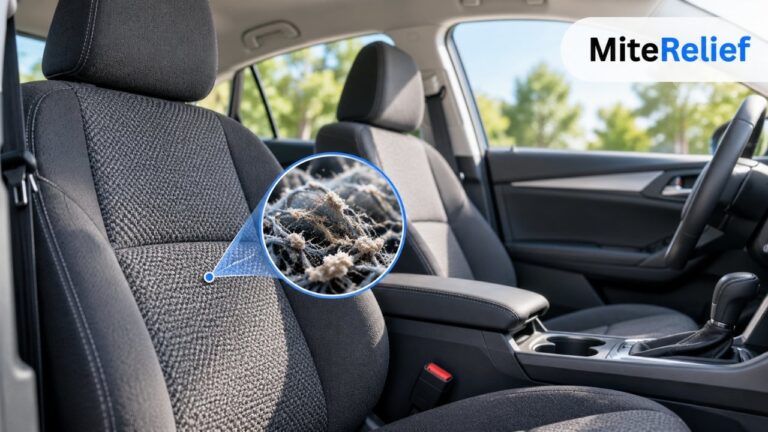
Yes, it can happen. Research has found house dust mites and their allergens in some car seats. That does not mean every vehicle has them.
Whether you find dust mites in a car depends on the car, its fabric, and how it is used. Allergens can also stay in settled dust after the mites are gone.
This guide explains what the research shows. It also covers how to clean safely, including child safety seats.
Can House Dust Mites Live in a Car?
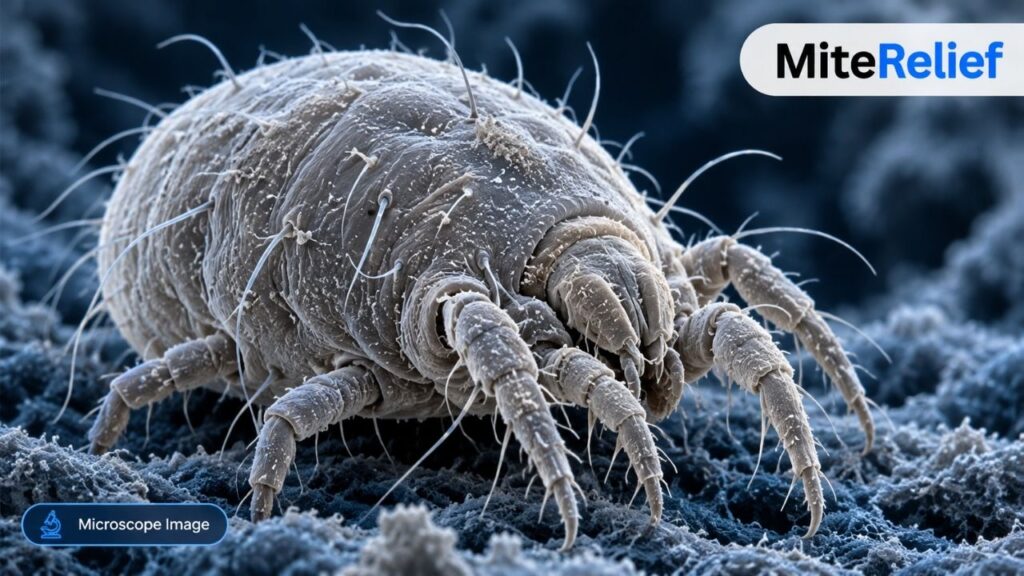
They can, but it is not guaranteed. House dust mites need moisture, mild temperatures, and food. Their food is mostly skin cells that settle into fabric. A car can offer these things at times.
A car is not a steady place, though. Inside it, the air can swing from hot to cold and from damp to dry. Humidity affects dust mite survival, so these swings matter.
A 2015 study in the Annals of Agricultural and Environmental Medicine looked at this question. Researchers collected dust from child seats and driver seats in 106 cars.
They found mites in over 80% of driver seats and over 77% of child car seats. About 12% of driver seats and 15% of child seats had mite levels high enough to be a risk factor for allergic reactions.
Those numbers have limits. The study covered 106 cars, not all cars. A separate 2006 Brazilian study found sensitization-associated dust mite allergen levels in 5% of private cars and 42% of taxis. This shows how much allergen exposure can vary between vehicles.
So results vary a lot. Your car may have more, or far less.
Living mites and allergens differ. Mite allergens come from mite bodies and fecal pellets. They can stay in settled dust after the mites die.
Which Car Surfaces Hold More Dust?
Soft, porous surfaces trap more dust particles. Hard, smooth surfaces are easier to wipe. Neither type is automatically allergen-free.
| Material | Main concern | Safe cleaning approach |
| Fabric seats | Dust and allergens settle into the weave | Vacuum with upholstery-safe tools |
| Child car-seat fabric | Possible allergen buildup | Follow the car-seat maker’s instructions |
| Carpeted floor mats | Dust and debris tracked in from outside | Remove, clean, and dry fully |
| Leather or vinyl | Surface dust and particles | Use products your vehicle maker approves |
| Cabin air filter | Airborne particles | Replace on the maintenance schedule |
Seams, seat folds, and the gap between the seat and the backrest collect the most. Car floor carpet also holds sand, crumbs, and dirt. Cars with kids, pets, or damp gear may collect more.
How to Reduce Dust Mite Allergens in a Car
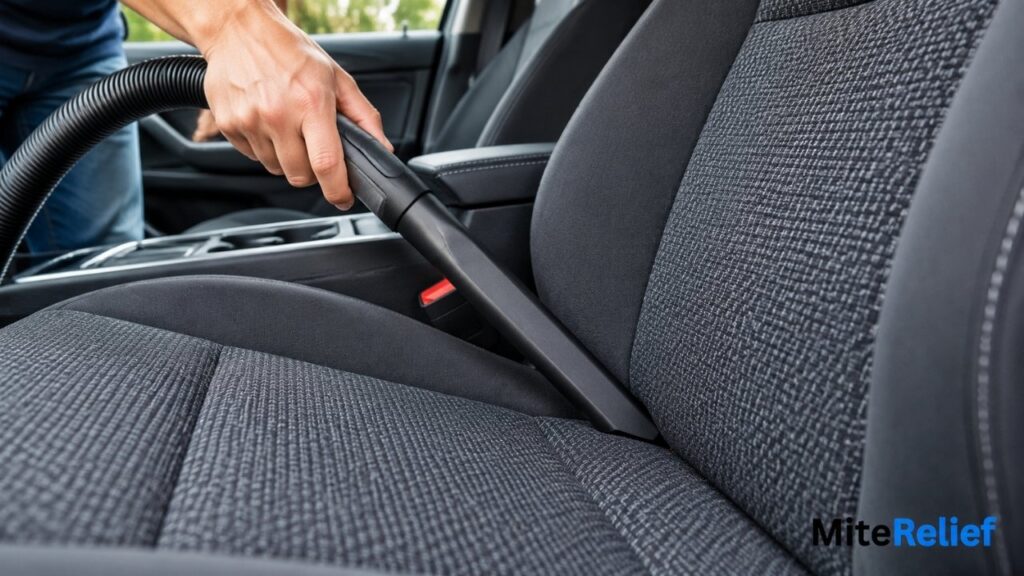
No method removes every mite or allergen particle. Still, regular cleaning can lower the dust that settles in your car. If you’re wondering how to get rid of dust mites and reduce allergens in your car, start by cleaning the surfaces where dust collects.
Vacuum Fabric Seats, Carpets, and Floor Mats
Vacuuming is a practical way to remove settled dust and some dust mite allergens from car upholstery. Use a brush or upholstery tool and go slowly. Work along the seams, seat folds, and other crevices you can reach.
Remove the car’s floor mats first. Shake them outside, then vacuum both sides. Let them dry fully before putting them back.
A vacuum with a HEPA filter can help keep fine particles from blowing back into the air. Make sure the filter is clean and the bag or bin is sealed when you empty it. For more on features, see our guide to vacuum cleaners for dust mite allergens.
Control Moisture and Avoid Harsh Products
Damp fabric can encourage mold, and mold is a trigger in its own right. Do not soak seats or carpet. If you use any liquid cleaner, follow the vehicle or upholstery maker’s directions. Then let the area dry completely.
Skip heavy fragrance sprays and strong chemicals. They can irritate your airways. Insecticides, foggers, and essential oil sprays don’t remove dust mite allergens. Do not use them for routine cleaning.
Wipe leather and vinyl with a damp microfiber cloth, or use a cleaner your vehicle maker approves. Dry the surface afterward. Leather is easier to wipe, but dust and allergens can still collect in stitching and seams.
How to Clean a Child Car Seat Without Compromising Safety

A child car seat is safety equipment. Ordinary upholstery methods don’t automatically apply. A 2015 study found mites in child seats, but it didn’t test cleaning methods for restraint parts.
Parents concerned about recurring symptoms can also learn more about dust mite allergy in children.
Follow the Car Seat Manufacturer’s Cleaning Instructions
Find the manual before you start. If you lost it, check the manufacturer’s website or contact the company. Cleaning rules vary by brand and model. The American Academy of Pediatrics also recommends following the car-seat manufacturer’s cleaning instructions.
The manual will tell you what you can remove and how to reassemble it. Do not take the seat apart beyond what the manual allows. Cover rules also vary. Some covers can go in a washing machine, and others need hand washing or spot cleaning.
Avoid Damaging Harness Straps and Safety Components
The safety harness and webbing protect your child in a crash. Cleaning them incorrectly can weaken them. Unless the manufacturer says it is allowed:
- Do not soak the straps.
- Do not machine-wash the straps or other restraint parts.
- Do not use bleach, solvents, strong detergents, or disinfectants.
- Do not use steam.
Let every part air-dry as the manual directs before using the seat again. If the straps are frayed or heavily soiled, contact the manufacturer. Do not change or modify any strap, padding, or other safety part.
Does the Cabin Air Filter Remove Dust Mites?
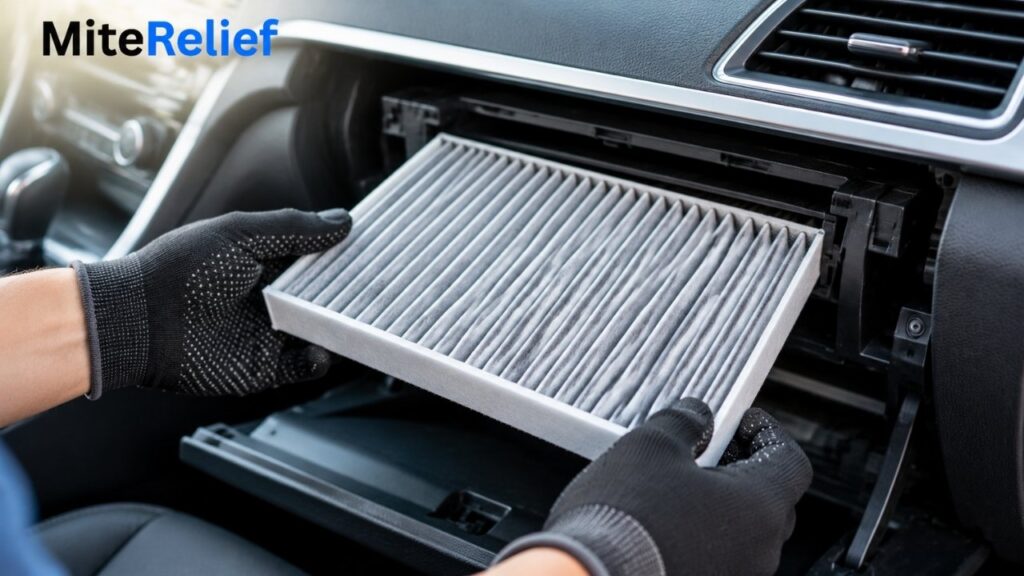
Not in the way many people hope. A cabin air filter catches particles in the air moving through the vents, such as pollen and dust. It can help with the air you breathe while driving.
But it doesn’t remove allergens that have settled into seats or carpets. It also does not treat mites living in upholstery. A fresh filter is still a good habit. Replace it on your vehicle’s maintenance schedule.
Settled dust and airborne particles are different problems. Vacuuming helps remove settled dust, while the cabin air filter captures some particles passing through the vehicle’s ventilation system.
When Vehicle Symptoms Need a Broader Allergy Assessment
Sneezing, a stuffy nose, or itchy eyes in the car do not prove a dust mite allergy. Many things inside a car can cause similar symptoms:
- Pollen coming in through open windows or vents.
- Mold from damp carpet or a wet air-conditioning system
- Air fresheners and other fragrances
- Smoke, exhaust, and other airborne irritants
Cleaning may help, but removing visible dust does not guarantee relief. Our guide to common dust mite allergy symptoms explains why sneezing, congestion, and itchy eyes can be difficult to distinguish from other allergic reactions.
If symptoms keep returning or worsen, talk to a doctor or allergy specialist. Allergy testing can help identify possible triggers, but results must be considered alongside symptoms and medical history. Do not change any prescribed medicine on your own.
Frequently Asked Questions (FAQs)
Can dust mites survive in a parked car?
Sometimes, but it depends on the conditions. Heat, cold, and dryness can swing widely in a parked car. A parked car does not necessarily support a stable mite population. Allergens in settled dust can remain either way.
Are leather seats better for dust mite allergies?
Leather is easier to wipe than fabric, so dust is simpler to remove. It is not allergen-free. Dust can still collect in seams and stitching, and on floor mats.
Can I steam-clean a car seat?
For ordinary vehicle upholstery, only if the vehicle or upholstery maker allows it. Even then, avoid soaking the material. For child safety seats, don’t use steam unless the manufacturer allows it.
Does sunlight kill dust mites in a car?
You cannot count on it. Sunlight’s heat is uneven and hard to control. It does not reliably remove every mite or allergen from deep in the fabric.
Can cabin filters eliminate dust mites?
No. A cabin filter works on air moving through the vents. It does not remove mites or allergens already in seats and carpets.
What to Read Next
Conclusion
Dust mites in a car are possible, but not guaranteed. Research has found house dust mites and allergens in some car seats, and results vary from one vehicle to the next. Allergens can also linger in settled dust even after the mites are gone.
Start with regular vacuuming, dry fabric, and clean floor mats. For a child safety seat, follow the manufacturer’s instructions before you clean anything. If symptoms keep coming back, ask a doctor or allergy specialist what is causing them.
Medical Disclaimer
This content is for general informational purposes only and is not a substitute for professional medical advice, diagnosis, or treatment. Individual health needs can vary, so speak with a qualified healthcare professional about allergies, asthma, skin reactions, medications, or other symptoms. Seek prompt medical care if symptoms are severe, persistent, or getting worse.

Umar Farooq is the founder of MiteRelief, creating research-backed guides about dust mites, indoor allergens, and practical allergy prevention for healthier homes.