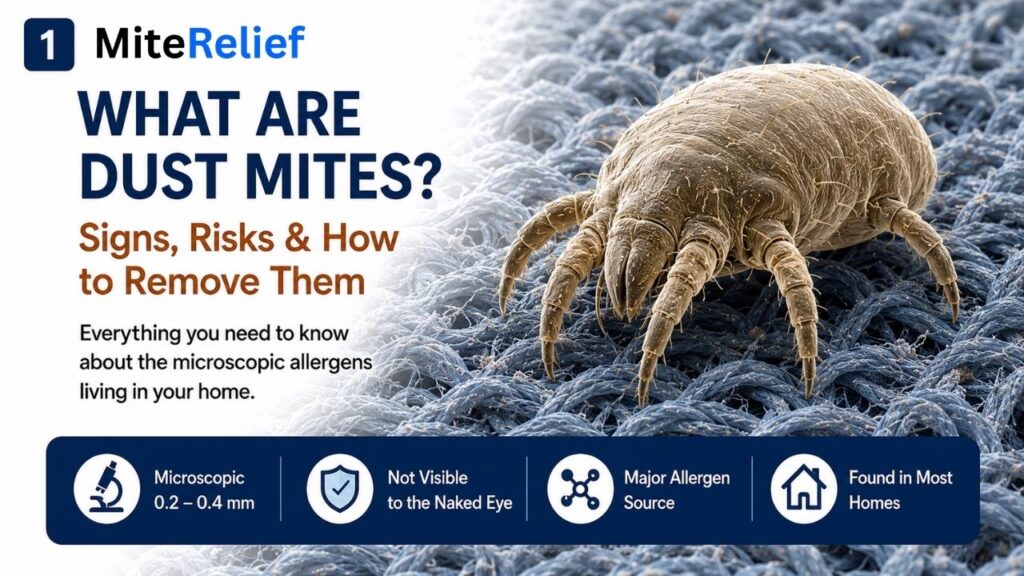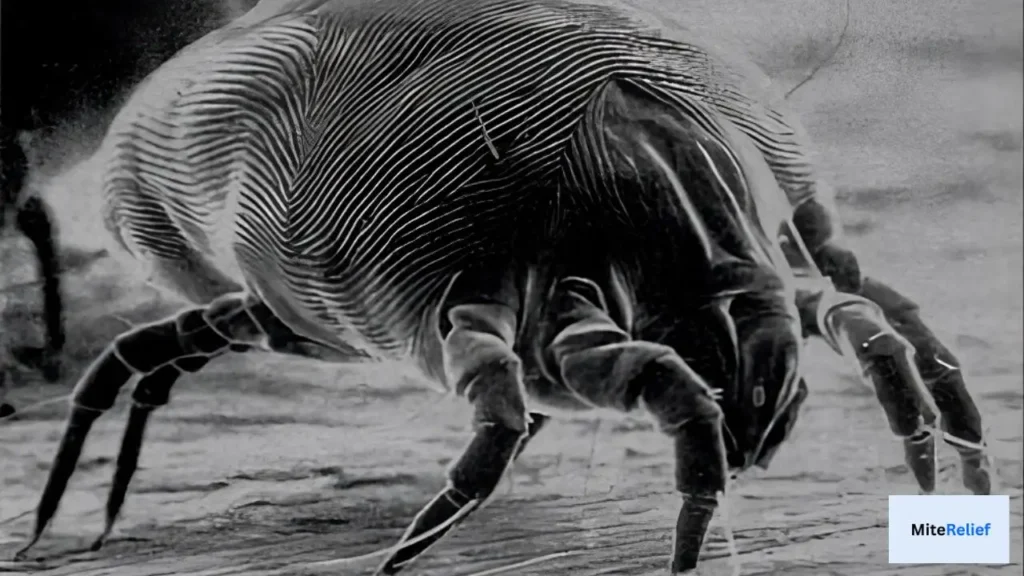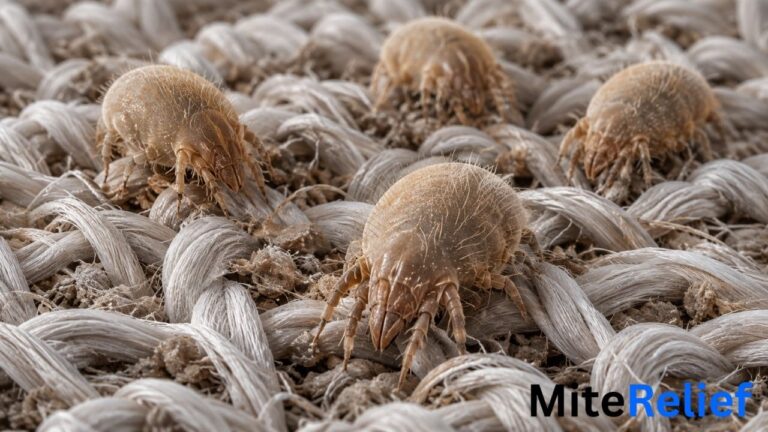
Dust mites don’t live very long on their own. But that short lifespan doesn’t mean they disappear from your home fast.
So how long do dust mites live? Most adult mites survive for several weeks to a few months.
The exact time depends on the species, the temperature, and the humidity around them.
Their life cycle includes eggs and earlier stages. That’s why a home rarely runs out of mites just because a few die off.
Even after a mite dies, its allergens can stick around in bedding and dust for a long time.
Knowing how long dust mites live and what shortens or extends that time helps explain why allergy symptoms don’t always improve right away, even after cleaning.
How Long Does a Dust Mite Live?
There isn’t one single number that fits every house dust mite. Adult house dust mites often live for several weeks in good conditions.
Their lifespan can change based on the species, sex, temperature, and humidity. Some female mites may live longer.
That’s true under good conditions. The exact life expectancy shifts based on species, temperature, and humidity.
Some studies on mated females found they can survive up to about 70 days. During that time, they lay eggs.
Males tend to have shorter lives than females. But exact numbers vary between studies.
Two species show up most often in home studies. These are Dermatophagoides farinae and Dermatophagoides pteronyssinus.
Their biology is similar. But lifespan estimates differ slightly between them, depending on the research.
Humidity helps dust mites survive, while temperature affects how fast they grow and develop.
Warmer conditions can speed up their life cycle, but they do not always help adult mites live longer.
Cooler or drier rooms slow things down. They can also cut mite lives short. That’s the main reason you’ll see different lifespan numbers across different sources.
The mites themselves are consistent. Home environments are not.
Dust Mite Life Cycle and Lifespan by Stage
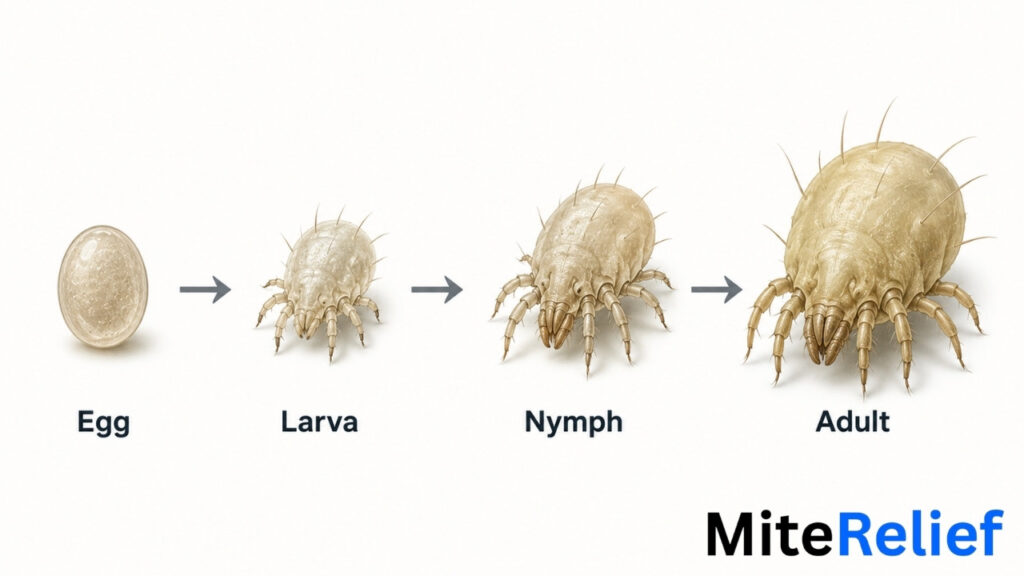
A dust mite doesn’t start as an adult. It passes through several stages first. Each one takes time.
The house dust mite life cycle starts when a female lays an egg.
After it hatches, a six-legged larva comes out. Next, the mite molts into a protonymph. Then it molts again into a tritonymph.
These two stages are often grouped as nymphs. Finally, the mite becomes an eight-legged adult.
At a typical room temperature, the full trip from egg to adult takes around a month. Warmer rooms can speed this up. Cooler rooms can slow it down a lot.
Here’s a general breakdown based on published research:
| Life Stage | Approximate Duration |
| Egg | About one to two weeks before hatching |
| Larva | A few days, with enough warmth and moisture |
| Nymph stages | Roughly one to two weeks combined, across two molts |
| Adult | Several weeks up to a few months, depending on conditions |
These ranges shift with temperature and relative humidity. Treat them as general patterns, not fixed rules.
One interesting detail from acarology research: The protonymph stage can handle dry conditions better than active mites.
This stage may survive much longer when the air is too dry for other mites. This helps the population wait out a dry spell instead of dying off completely.
If you want the broader biology instead of just lifespan, check our guide to what dust mites are. It covers their traits and behavior in more detail.
What Affects Dust Mite Lifespan?
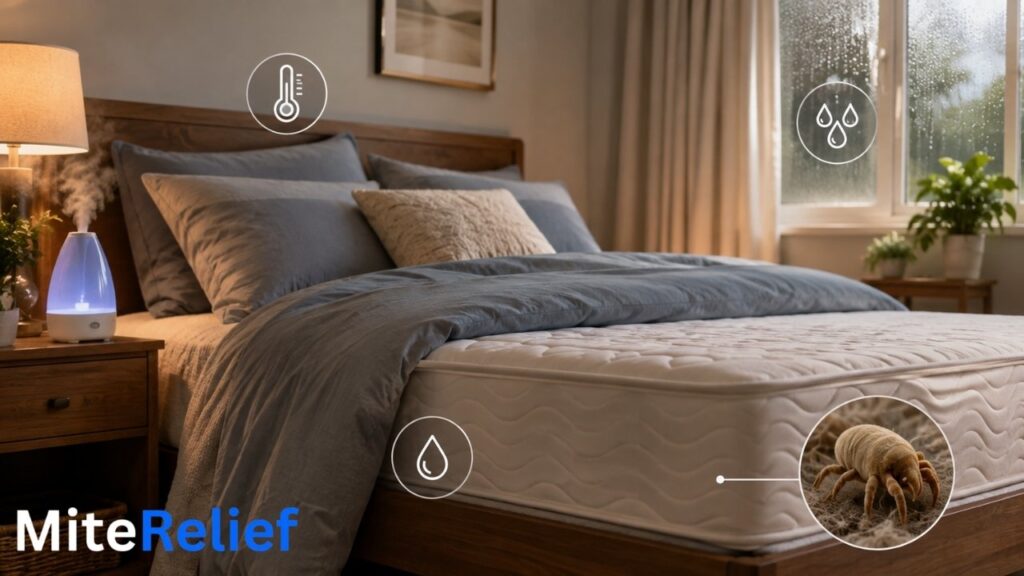
A few things decide whether a dust mite lives closer to a few weeks or a few months.
Relative humidity matters most. Dust mites don’t drink water the way larger animals do.
Instead, they absorb moisture from the air around them, right through their bodies.
That means a humid indoor environment helps them survive longer. Dry air shortens their time a lot.
Temperature plays a supporting role too. Mild, warm rooms tend to favor faster growth and longer adult survival.
Cold rooms slow the life cycle down. Food access matters as well. Mites feed mainly on shed human skin cells.
These flakes collect in house dust, bedding, mattress fabric, carpets, and furniture.
A steady food supply, combined with the right humidity, gives mites the best shot at reaching their full lifespan.
These factors don’t work alone. A warm mattress holds moisture from sleep and collects skin flakes every night checks every box a dust mite needs.
How Long Can Dust Mites Live Without Food or Moisture?
Food and moisture aren’t the same survival factor. Dust mites don’t run out of either one on the same timeline.
A mite can sometimes go without fresh food for a while, especially if old debris is still nearby. But moisture is the more urgent need.
House dust mites pull most of their water from the surrounding humidity, not from drinking it directly.
That’s why dry air is often more dangerous to them than a short lack of food. Research on active mites kept at or below 50% relative humidity found that survival drops sharply.
In dry conditions, they may only last around a week or so. In steady, humid conditions, they might reach a few months instead. Survival time isn’t fixed, though.
It depends on temperature, starting humidity, and which life stage is involved. The protonymph stage can survive dry conditions much longer than active mites.
This is one reason lowering indoor humidity is such a common tip for managing mite populations. It won’t wipe them out overnight, though.
If you want practical ways of controlling indoor humidity, see our separate humidity guide.
How Long Do Dust Mite Allergens Remain After Mites Die?
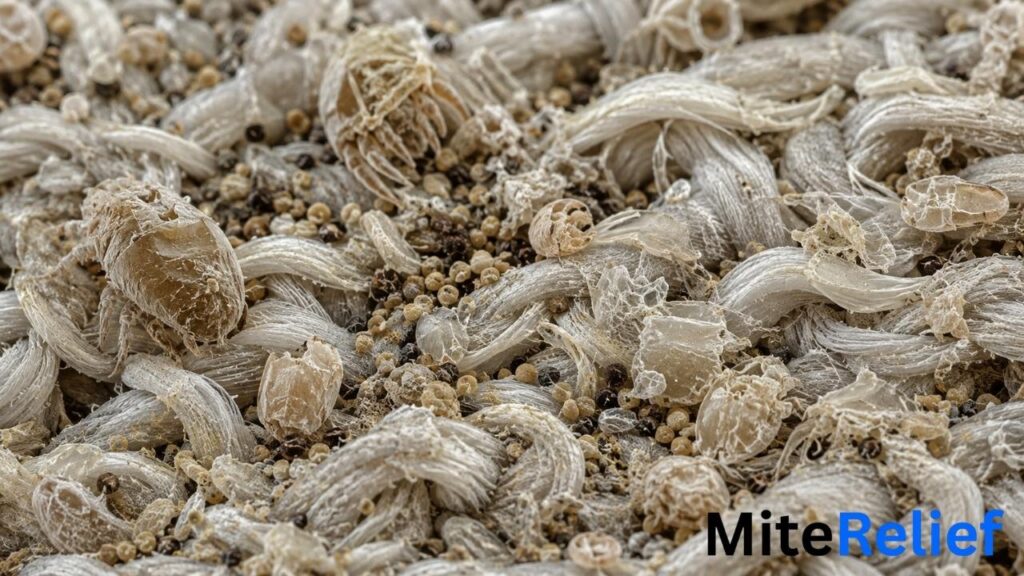
Here’s a mix-up that trips a lot of people up. A dust mite’s lifespan and how long its allergens stick around are two very different things.
When a mite dies, it doesn’t take its allergenic material with it.
Body fragments break down into house dust. Fecal particles, which research points to as the main source of dust mite allergen, stay behind in bedding, carpets, and other fabrics.
They can remain long after the mite that made them is gone. These particles are small enough to settle deep into fibers. They can also become airborne again when disturbed, like when you make the bed or run a vacuum.
That means killing live mites doesn’t clear the allergen problem on its own.
Studies that looked at allergen levels after mite numbers dropped found something important.
Accumulated allergen material in fabrics and dust can stay elevated for months afterward. The material itself doesn’t vanish just because the mites that made it are dead.
This is part of why some people with dust mite allergy still notice symptoms after starting a cleaning or humidity-control routine.
The mites may be gone. But the allergenic debris they left behind hasn’t been removed yet.
For the hands-on cleaning steps, see our guide to removing dust mite debris from a mattress.
Why Can Dust Mites Return After Cleaning?
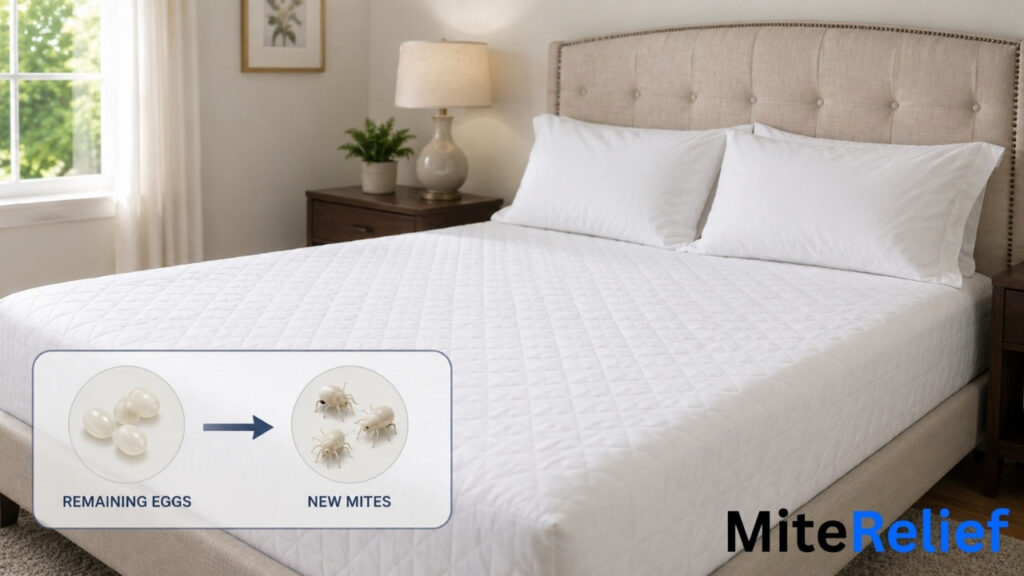
A thorough cleaning can knock a mite population down a lot. But it rarely wipes it out completely.
Some mites, eggs, or young life stages may remain after cleaning, depending on the cleaning method and where they are hiding.
If the same humidity and temperature that supported the original population are still there afterward, the surviving life cycle stages can rebuild their numbers over time.
Cleaning removes material that’s already there. But it doesn’t change the room’s warmth or moisture level on its own.
Something else, like a dehumidifier or better airflow, needs to handle that part. How fast a population comes back varies a lot from home to home.
It depends on how many mites or eggs survived, and how favorable conditions stay afterward.
Long-term steps that help prevent dust mites from building up again are covered in our dedicated prevention guide.
Frequently Asked Questions
How long do dust mites live in a mattress?
A mattress often gives dust mites everything they need. There’s warmth from body heat, humidity from sleep, and a steady supply of skin flakes trapped in the fabric. Because of that, adult mites in a mattress may reach the longer end of their typical lifespan, compared to less favorable spots around the home.
How long do dust mites live on clothes?
Clothing usually doesn’t hold moisture and warmth as steadily as bedding does. So survival there tends to be shorter and more variable. It depends a lot on how the clothes are stored, how humid the space is, and whether enough food material sits in the fabrics.
How long do dust mite eggs take to hatch?
Based on published research, dust mite eggs usually hatch within one to two weeks under good conditions. Cooler temperatures or lower humidity can slow this down. So the exact timing isn’t fixed.
Can dust mites survive in a sealed plastic bag?
It depends on what got trapped inside the bag. If humidity, temperature, and food were sealed in along with the mites, some may survive for a while. If the bag was dry and had no food, survival time drops fast. There’s no single fixed number of days that fits every case.
How quickly can dust mites return after cleaning?
No one timeline fits every home. It depends on whether dust mite eggs or young mites survived the cleaning. It also depends on ongoing humidity, temperature, and how well prevention steps get followed afterward.
What to Read Next
- What Kills Dust Mites? 7 Methods That Actually Work
- How to Prevent Dust Mites
- Best Dehumidifiers for Dust Mite Allergy
- How to Deep Clean a Mattress
Conclusion
Dust mites move through several life stages. They go from egg to larva to nymph to adult.
Each stage’s length depends on the temperature and humidity around it. Individual mites don’t live forever; most last weeks to a few months.
But the life cycle keeps a population going as long as conditions stay favorable. Removing live mites and removing their allergens are two separate jobs.
Allergenic material can outlast the mites that made it. Knowing how long dust mites live, and why, helps explain why ongoing care matters more than one deep clean.
Medical Disclaimer
This content is for general informational purposes only and is not a substitute for professional medical advice, diagnosis, or treatment. Individual health needs can vary, so speak with a qualified healthcare professional about allergies, asthma, skin reactions, medications, or other symptoms. Seek prompt medical care if symptoms are severe, persistent, or getting worse.

Umar Farooq is the founder of MiteRelief, a resource for dust mite control and allergy prevention. After battling allergen sensitivity, he started creating research-backed guides that turn complex indoor air quality science into practical, affordable solutions anyone can implement.