There are dozens of gadgets out there claiming to wipe out dust mites in one go. Plug it in, spray it, set a trap, and you’re done, right? Not quite. Some of these things genuinely work. Others are, honestly, a waste of money. This article looks at a dust mite fogger, plug-in devices, and traps, three completely different tools, and gives you the honest verdict on each one, no sugarcoating.
If you’ve ever stood in the pest control aisle wondering which box to grab, you’re not alone. Half these products look like they were designed to confuse shoppers on purpose, honestly. We’ll get into it properly below, one device at a time, no marketing fluff, just what actually holds up under testing.
Do dust mite foggers work?
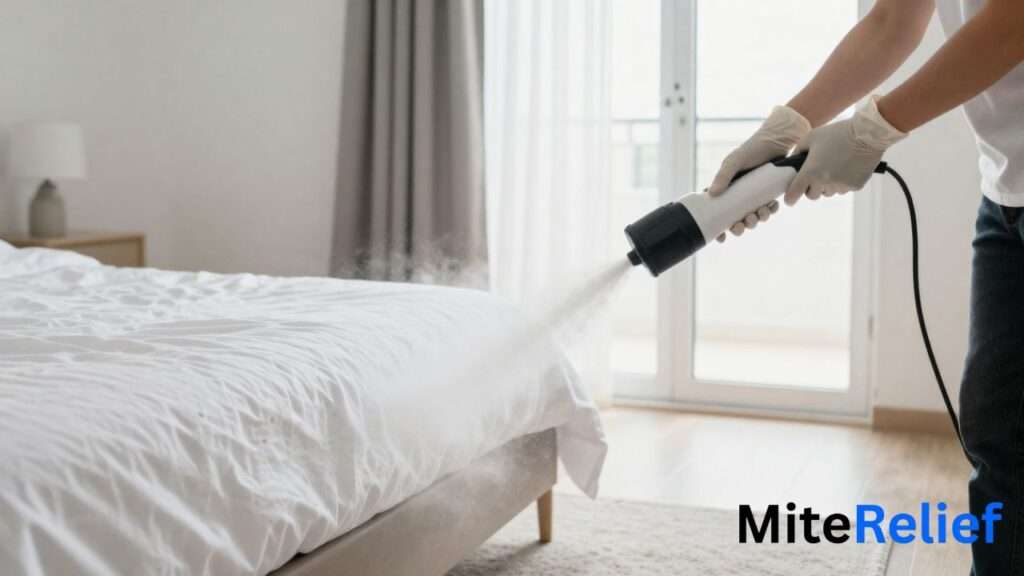
A dust mite fogger (also called a bug bomb) releases insecticide into the air, and it settles over every surface in a room. Sounds thorough. And in open areas, it kind of is; it does kill a decent number of mites sitting out in the open.
But here’s the catch nobody tells you upfront. Dust mites don’t really live out in the open. The two main species, Dermatophagoides pteronyssinus and Dermatophagoides farinae, both need warm, humid conditions to survive. They burrow deep into mattress filling, carpet pile, and the inside of your sofa cushions. A fogger’s mist just can’t reach that deep. It coats the surface and stops there.
So think of a fogger as backup, not your main weapon. Pair it with hot washing bedding and thorough vacuuming, and you’re actually getting somewhere. Use it alone, skip the washing routine, and expect, well, partial results at best. A lot of people buy one, set it off once, and assume the problem’s solved. It usually isn’t. And if you want what kills dust mites covered in full detail, method by method, that guide is a solid next stop.
There’s also the matter of what a fogger doesn’t touch at all. Curtains, upholstered furniture, that pile of stuffed animals in the kid’s room, The mist reaches all of those on the surface, sure, but the mites tucked inside the stuffing barely notice. Worth keeping that in mind before you spend money expecting a total wipeout.
Pros of Dust Mite Foggers
They cover a whole room in one application, which saves time compared to spraying every surface by hand. They’re also fairly cheap and easy to find at most hardware stores. And for people dealing with a broader pest problem, not just dust mites, a fogger can knock out multiple nuisances at once.
Limitations of Dust Mite Foggers
The insecticide doesn’t penetrate deep fabric or filling, which is where most mites actually live. Foggers also require you to vacate the room for hours, sometimes longer depending on the product label. And repeated use isn’t something you want to do often, given the chemical exposure involved. Products like Steri-Fab (Sterifab) are used by pros to treat mattresses directly. Sprays with benzyl benzoate work by breaking down the mite’s exoskeleton.
How to use a dust mite fogger safely
Safety here isn’t optional; it’s non-negotiable. Vacate the room, people and pets both, for however long the label says. Don’t guess; read it. Always check the product has an Environmental Protection Agency (EPA) registration before using it
Seal off ventilation gaps before you set it off; otherwise, the fog just drifts into other rooms (and now you’ve got a bigger cleanup on your hands). Cover any exposed food, dishes, or utensils too, since residue settling on those isn’t something you want to deal with later.
Once the time’s up, ventilate the room fully before anyone goes back in. Open the windows, run a fan, give it real airflow. Rushing this step is where people run into trouble, skin irritation, headaches, and that sort of thing. Take the extra twenty minutes.
Dust mite plug-in devices, Ultrasonic & electromagnetic
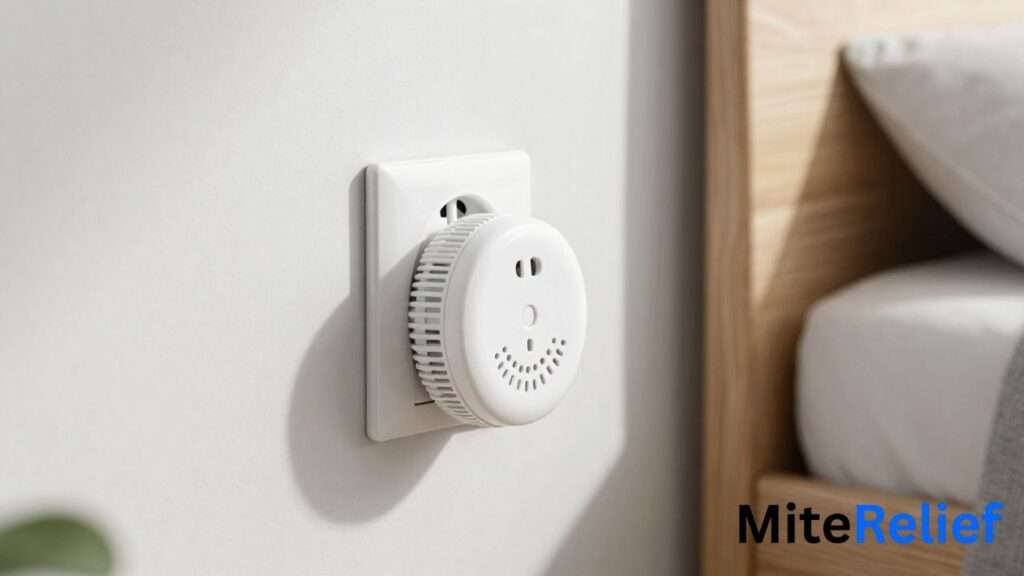
Now, dust mite plug-in devices are a different animal entirely. You plug them into a wall socket, and they claim to repel or kill mites using sound waves or electromagnetic pulses, no chemicals involved. Sounds appealing, chemical-free pest control? Sign me up.
Except, and this is the honest part, the independent evidence just isn’t there. Most studies on these devices show results that barely beat a placebo. Manufacturers love to cite lab tests, but when researchers outside the company run the same tests, the numbers don’t hold up nearly as well.
That doesn’t mean every device on the market does absolutely nothing. It means you shouldn’t rely on one as your only defense against dust mites. Treat it as a maybe, not a guarantee.
Ultrasonic Plug-ins
These emit high-frequency sound waves that are supposedly unbearable for pests. Some rodent studies show mild effects, but for dust mites specifically? The evidence is thin, close to nonexistent in independent trials.
Electromagnetic Plug-ins
These claim to disrupt pest nervous systems through electromagnetic pulses sent through your home’s wiring. Manufacturer claims aside, there’s no solid, peer-reviewed research backing this up for dust mites. Worth knowing before you spend the money.
Dust mite ionizers: Do they make a difference?
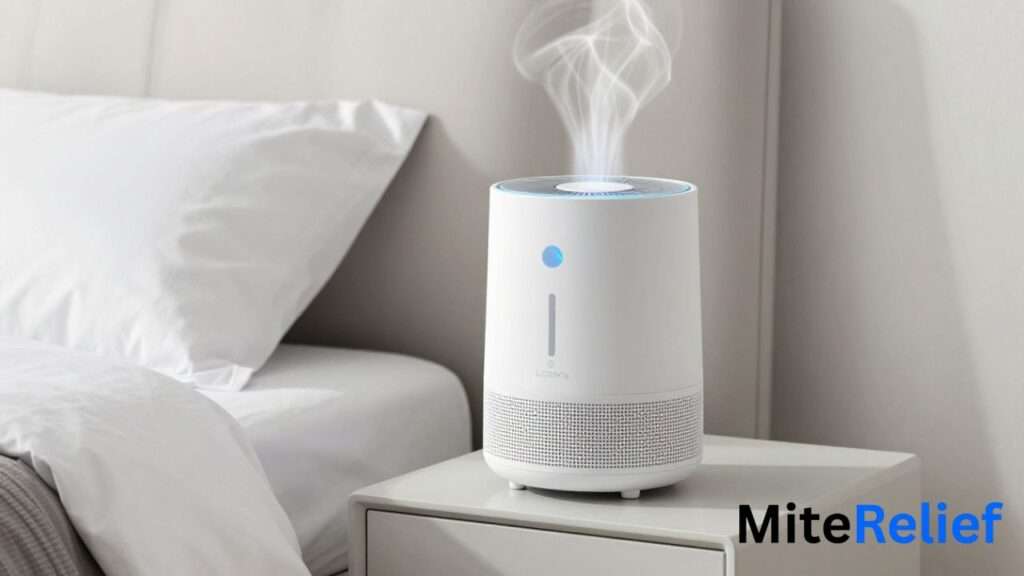
A dust mite ionizer works by charging airborne particles so they clump together and fall out of the air instead of floating around. That does help with airborne allergens, dust, pet dander, the stuff you’re breathing in. But, and this is important, it doesn’t kill mites hiding in your carpet or bedding. Brands like Medklinn™ market ionizers on air-purifying claims, not mite elimination.
So an ionizer is really an air quality tool, not a mite-elimination tool. Ionizers improve indoor air quality but don’t kill mites in fabric. Two very different jobs, and it’s easy to confuse them, especially when the packaging shows a happy family and the word allergen-free in big letters.
If you’re looking at dust mite air-ionizing devices specifically for allergy relief rather than infestation control, they can be part of the picture. There’s also a side effect worth mentioning: some ionizers produce small amounts of ozone as a byproduct, and that’s something asthma sufferers in particular should watch out for. Check the specs before buying, not after. Just don’t expect an ionizer to replace washing your sheets or vacuuming your mattress regularly. For a deeper comparison of how these stack up against traditional filtration, our guide on HEPA air purifiers for dust mite allergies breaks down the airborne side of things in a lot more detail.
Dust mite traps: What are they, and do they work?
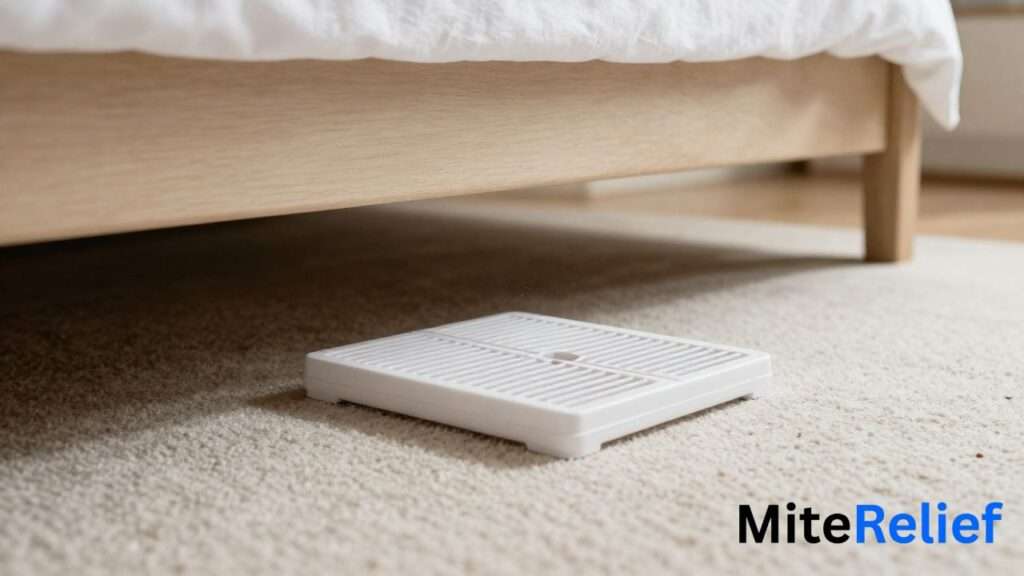
Dust mite trap products usually work through a sticky or glue-based surface that catches mites as they crawl across it. Some include attractants, skin cell bait, basically food, to lure mites in.
Here’s the thing, though. A trap tells you how bad your mite problem is; it’s a monitoring tool. It doesn’t actually eliminate an infestation; it just catches a fraction of what’s crawling around. Useful for testing the waters, not for solving the problem.
If you’re trying to figure out whether you even have a dust mite issue worth addressing, a trap is a reasonable, low-cost starting point. Just don’t expect it to do the heavy lifting.
What Does the Scientific Evidence Say?
This is where things get interesting and a little messy too. Laboratory studies tend to test these devices under controlled conditions, sealed chambers, and fixed humidity. Lab tests often place mites in a petri dish to count survivors after treatment. and no real-world clutter. Researchers use ANOVA to check if results are statistically meaningful. Mites die at certain rates in these setups, sure. But your bedroom isn’t a lab. Real-world home studies paint a different picture, usually a less flattering one. Once you factor in furniture, fabric depth, humidity swings, and actual human activity, effectiveness drops. Dust mites die off once relative humidity drops below 50%. A device that performs well in a chamber often underperforms once it’s sitting in someone’s actual house.
Independent research, meaning studies not funded or run by the manufacturer, is where the real gap shows up. Manufacturer claims frequently cite internal testing, and internal testing has a habit of finding favorable results (shocking, I know). When outside researchers run comparable trials, the numbers tend to be far more modest, sometimes barely above baseline.
None of this means every device is useless. It just means read past the marketing copy and look for who actually ran the study, and honestly, look for a sample size bigger than a dozen households too. A lot of these “studies” are thinner than they sound.
Verdict: Ranked by effectiveness
Honesty builds trust, so here’s the ranking straight, no spin. HEPA vacuuming and hot washing sit at the top, foggers land somewhere in the middle as a surface-level supplement, and ionizers and plug-in ultrasonics trail behind with limited evidence. Traps are useful, just not for the reason most people buy them.
| Method | Kills Mites | Removes Allergens | Overall Recommendation |
| HEPA Vacuum | ⭐⭐⭐⭐☆ | ⭐⭐⭐⭐⭐ | Recommended |
| Steam Cleaner | ⭐⭐⭐⭐⭐ | ⭐⭐⭐⭐⭐ | Highly Recommended |
| Dust Mite Fogger | ⭐⭐⭐☆☆ | ⭐⭐☆☆☆ | Use as a Supplement |
| Ionizer | ⭐⭐☆☆☆ | ⭐⭐☆☆☆ | Limited Evidence |
| Plug-in Repeller | ⭐☆☆☆☆ | ⭐☆☆☆☆ | Not Recommended |
| Sticky Trap | ⭐☆☆☆☆ | ⭐☆☆☆☆ | Monitoring Only |
If you want the short version, vacuuming with a HEPA vacuum and steam cleaning do the actual work. Everything else is either a supplement or, frankly, a marketing story. A blower like the XPOWER F-16 helps dry carpets faster after steam cleaning. The Hurricane Ultra II is another option for speeding up drying time.
Which Dust Mite Device Is Right for You?
It depends on what you’re actually trying to fix, honestly. Surface treatment, airborne allergens, and monitoring an infestation: These all call for different tools, and mixing them up is where people waste money.
A dust mite fogger may help with surface treatment, but it should never replace regular cleaning; that’s the whole point of this article, really. A dust mite ionizer has limited evidence for reducing airborne allergens specifically, which is worth knowing before you buy one expecting mite elimination. A dust mite trap is useful for monitoring, not for controlling an actual infestation, so set expectations accordingly.
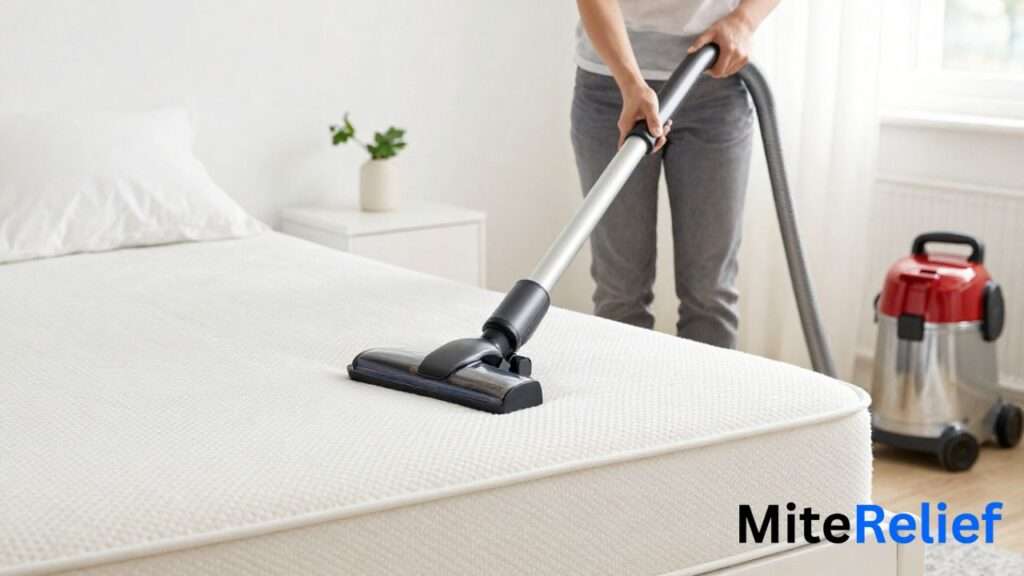
A HEPA vacuum has strong evidence behind it for allergen reduction, and it should be your everyday tool, not an occasional one. And a steam cleaner? It’s one of the most effective methods out there for killing mites with heat alone, no chemicals needed. If you haven’t looked into steam cleaning for dust mites yet, it’s genuinely worth the read.
| Device | Best For | Current Verdict |
| Dust Mite Fogger | Surface treatment | Supplement only, not a standalone fix |
| Dust Mite Ionizer | Airborne particles | Weak, limited independent evidence |
| Dust Mite Trap | Monitoring activity | Good for tracking, not control |
| HEPA Vacuum | Removing allergens | Strongly backed by evidence |
| Steam Cleaner | Killing mites with heat | Among the most effective methods |
Frequently Asked Questions
Do bug bombs kill dust mites?
Some of them, yes. The ones sitting out on top of your sheets or exposed carpet fibers. But mites buried inside a mattress or deep in the carpet pile? A fogger barely touches those. Wash your bedding and vacuum properly too; don’t rely on the fogger alone.
Are ultrasonic pest repellers effective against dust mites?
Honestly, not much. The ads make it sound like a sure thing, but independent tests keep coming back underwhelming, close to placebo territory. Manufacturer numbers look great. Everyone else’s numbers, not so much.
How long does a dust mite fogger last?
A few weeks, if that. It’s not a permanent fix; mites come right back once conditions are right again. Think of it as a reset button, not a solution.
Is a dust mite trap the same as a bed bug trap?
Nope, different setup entirely. Dust mite traps lean on sticky surfaces and sometimes a bit of skin-cell bait. Bedbug traps usually use heat or CO₂ to lure them in instead. Different pest, different bait.
Can I use a fogger in a bedroom with children?
You can, but read the label first: seriously, all of it. Vacate for the full time listed and air the room out properly before anyone goes back in. If you’re unsure at all, just skip it and stick to washing and vacuuming, a safer route.
What to Read Next
- Do Steam Cleaners Kill Dust Mites? (And Does UV Light Work Too?)
- Best Vacuum Cleaners for Dust Mites (2026 Buying Guide)
- Do Air Purifiers Help With Dust Mites? Best Picks & How to Use Them
Conclusion
Foggers, ionizers, plug-ins, traps: none of them are a full fix on their own. Experts recommend an Integrated Pest Management (IPM) approach, combining multiple methods, not relying on one. HEPA vacuuming and steam cleaning still do the real work. Use the rest as backup, not your main plan, and you’ll actually see results. So, where does that leave you? If you’re dealing with a real dust mite problem, skip the shiny plug-in gadgets and start with a HEPA vacuum, hot washing, and maybe a steam cleaner for the stuff that can’t go in the machine. Foggers and traps have their place, just not as your main plan.
Medical Disclaimer
This content is for informational purposes only and is not a substitute for professional medical advice, diagnosis, or treatment. Always consult a qualified healthcare provider regarding persistent allergy symptoms, skin reactions, asthma, or breathing difficulties. Never delay or disregard seeking professional medical advice because of information you have read on this website.

Umar Farooq is the founder of MiteRelief, a resource for dust mite control and allergy prevention. After battling allergen sensitivity, he started creating research-backed guides that turn complex indoor air quality science into practical, affordable solutions anyone can implement.