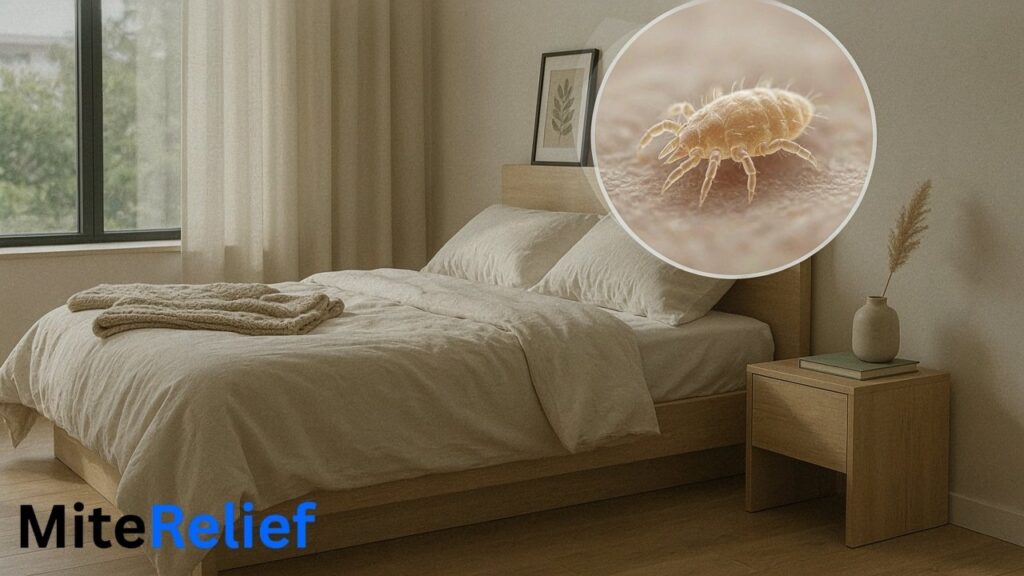
Itchy skin, red patches, and that weird crawling feeling right before bed. Sound familiar? Most people blame the detergent first. Or the weather. Or stress; honestly, stress gets blamed for everything these days. dust mite rash But if the same spots keep flaring up, night after night, dust mites are probably the actual culprit, not whatever you switched to last month.
This piece walks through dust mite treatment on skin, what the rash really looks like up close, and how to calm down dust mite itchy skin without waiting three weeks for it to sort itself out. We’ll get into the eyes too. Because it never really stays just on the skin, does it? Same allergen, breathed in and landed on, hitting you from two directions at once. No filler, just what tends to work and when it’s time to stop self-treating and call someone.
Why dust mites cause skin reactions
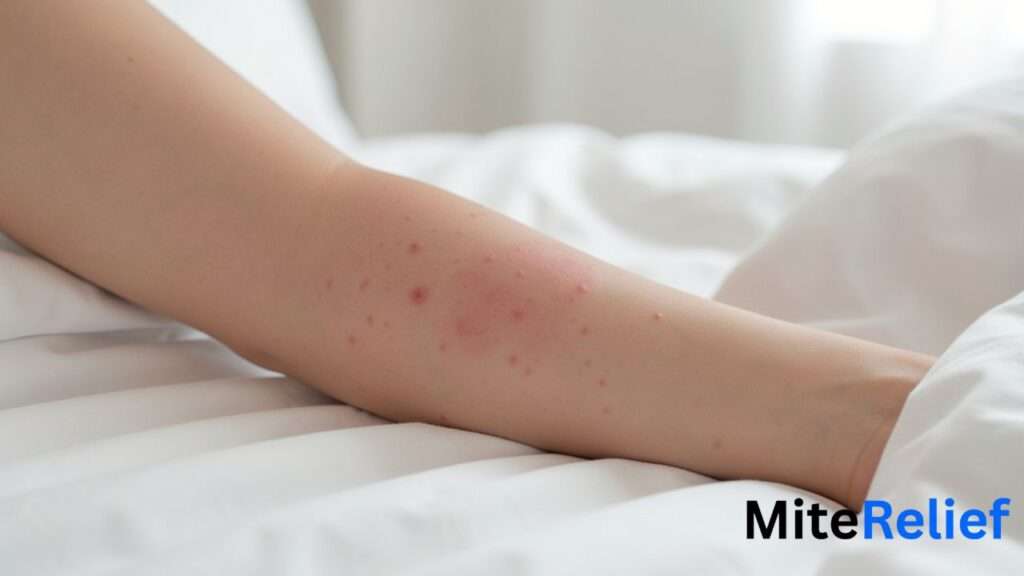
Quick myth buster: Dust mites don’t bite. Never have. It’s their waste, tiny fecal particles, that carry the allergen proteins, mostly Der p1 and Der f2. Those land on skin or get breathed straight in, and your immune system panics a little. Overreacts. Redness follows, swelling too, then the itch that just does not let up.
Some people react through inhalation mostly. That’s a systemic thing, so the skin reaction can show up somewhere far from where the allergen actually touched, weirdly enough. Others get it from direct contact; a night on old bedding does it. Different route, same end result, really: histamine floods in, inflammation kicks off, and you’re left scratching at three in the morning.
If asthma or hay fever is already part of your life, skin tends to be touchier around this stuff too. And no, it’s not a cleanliness issue. Spotless homes have dust mites, plenty of them actually. Warmth, a bit of humidity, and dead skin flakes floating around, That’s genuinely all they need.
Here’s a detail most articles skip. Symptoms creep in slowly, over months sometimes, so you never quite connect the dots. People blame sensitive skin, or a new soap, when it’s been the same mattress the entire time. Why does it always feel worse in winter, by the way? Windows shut, less airflow, heating running nonstop, mites love that warm, still air.
Age plays a part too, oddly enough. Older mattresses and pillows, the ones nobody’s replaced in five or six years, tend to carry far higher mite counts than newer ones. The same goes for carpets versus hard flooring; carpets tnonstop, and top time and do everything longer.
What does a dust mite rash actually look like?
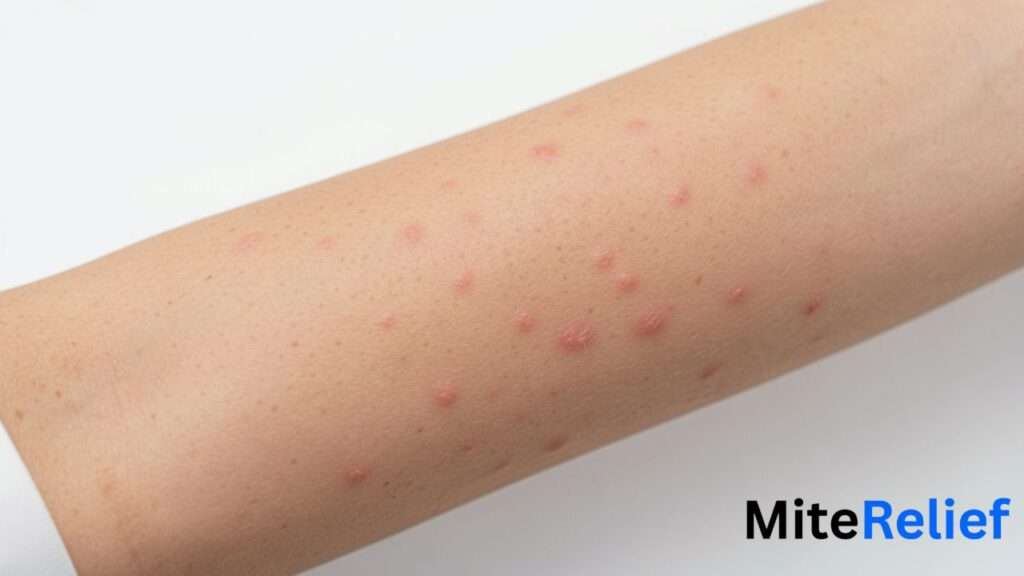
Red, itchy patches on the arms, neck, and sometimes the face. Worse, right after waking up, that timing matters more than people realize. Small raised bumps cluster in some cases. Other times it spreads wider, more like hives across a bigger patch of skin.
People mix this up with bed bug bites constantly, and fair enough, they can look close. But bedbugs leave a pattern, a line usually, or a small cluster, with an actual puncture mark dead center of each bump. Dust mites don’t do that. No bite mark at all, just plain diffuse redness from the allergen sitting on the skin, nothing more precise than that.
Comparing photos side by side genuinely helps here, as does checking for puncture marks, or rather the lack of them. Notice if it flares worse in the bedroom than anywhere else in the house too. That pattern alone usually points you toward recognizing signs of a dust mite allergy rather than chasing the wrong diagnosis for weeks.
Timing tells a story on its own. Right after waking, that’s overnight bedding exposure, almost always. A flare that builds later in the day, say after digging through an old attic or a dusty sofa, points more toward fresh direct contact instead.
Compare Common Skin Conditions
| Condition | Main Signs | Key Difference |
| Dust mite rash | Itchy red patches, hives | No bite marks, worse after sleeping |
| Bed bug bites | Small bites in lines | Visible bite puncture marks |
| Scabies | Burrow lines, intense itching | Highly contagious |
| Contact dermatitis | Rash where skin touched an irritant | Usually stays in one area |
Dust mite skin rash treatment: what actually works

So, what actually helps? Topical antihistamine creams first; they calm the itch fast enough that you stop scratching, and honestly that’s half the battle since scratching just feeds the inflammation.
For redness that won’t quit, a low-potency hydrocortisone cream works directly on the inflammation. Thin layer, don’t overdo it; twice daily is usually enough, unless a doctor says otherwise, obviously. Pair it with an emollient moisturizer too, since these reactions chip away at your skin barrier, and repairing that barrier means fewer repeat flares later.
Over-the-counter stuff doesn’t always cut it, though. Spreading redness and itching bad enough to wreck your sleep, That’s when a prescription topical corticosteroid, which is something stronger, is short-term only. As a dust mite rash remedy, stacking an antihistamine with moisturizer and actual allergen reduction beats any single product used alone, every time, really.
A quick note on fragrance: skip scented lotions while you’re mid-flare. Sounds minor, but added fragrance can irritate already inflamed skin further, slowing the whole recovery down when you least need that.
Cool compresses: Don’t sleep on these. Ten minutes with a damp, cool cloth over the itchy patch takes the edge off more than you’d expect. Small thing. It adds up, though, over a rough week especially.
Common Treatments for Dust Mite Skin Rash
| Treatment | Best For | OTC or Prescription |
| Hydrocortisone cream | Mild inflammation | OTC |
| Antihistamine cream | Itching | OTC |
| Calamine lotion | Soothing itchy skin | OTC |
| Moisturizer (Emollient) | Repairing the skin barrier | OTC |
| Prescription steroid cream | Severe flare-ups | Prescription |
Dust mites and eczema: Is there a link?
Yes. A strong one too. Dust mite allergens sit among the most common eczema triggers out there. Already dealing with atopic dermatitis? You’ve probably clocked the flares worsening at night, right in the bedroom, exactly where mite exposure peaks.
Makes sense once you think about it. Your face sits inches from the pillow for roughly eight hours straight, breathing allergens the whole time. Eczema shifts the treatment approach a bit; an emollient routine matters more here, applied consistently rather than only when things flare up.
During an actual flare, topical steroids calm things fairly fast. But allergen avoidance is where the real long-term shift happens; bedding, mattress covers, pillow choice, and even bedroom humidity levels all play a part. Picking the best bedding for dust mite allergies genuinely cuts down flare frequency, and for a lot of eczema sufferers that ends up being the missing piece nobody mentioned earlier.
Kids seem to feel this link hardest. Parents often notice flares easing within a couple of weeks after switching to allergen-proof covers. Not an overnight fix, no, but one of the few changes that keeps paying off months later.
And look, nobody wants to hear soft toys or curtains are part of the problem too, but sometimes they are. Fabric holds allergens the same way bedding does, just slower. Washing plush toys now and then, or swapping heavy curtains for washable ones, is a small step, but it adds up.
None of this needs to turn into a full renovation project either, to be clear. A few consistent habits, done weekly rather than obsessively, get you most of the benefit without the burnout.
Dust mite allergy eyes: symptoms and treatment
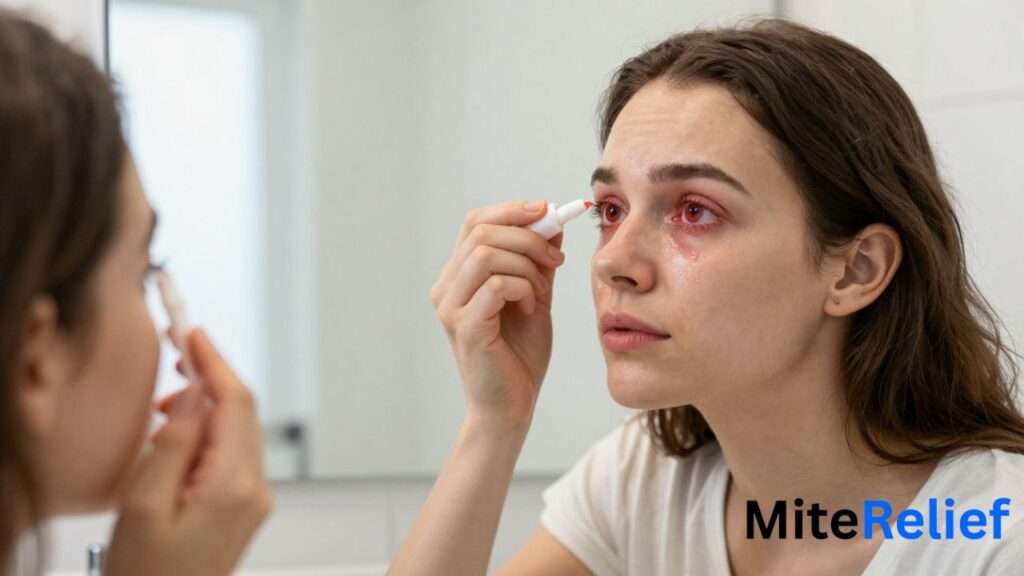
Eyes get hit too, and this bit surprises people every time. Allergic conjunctivitis from dust mite allergy eye reactions shows up as red, itchy, watery eyes, often dismissed as tiredness or too many hours staring at screens. Usually it isn’t that at all.
Antihistamine eye drops help a lot, whether it’s the over-the-counter kind or a stronger prescription if things keep coming back. Keep a cold compress handy too, pressed gently over closed eyes, for quick relief when the itching spikes.
One thing, though. Do not rub your eyes. Easier said than done when they’re itchy, I know, but rubbing makes it worse: more histamine is released, and the irritation lasts longer. If eye symptoms keep returning season after season alongside skin flares, mention it to an allergist, since that combo usually means broader allergen exposure worth tackling at the source.
Contact lens wearers, a small heads-up. Allergens cling to lenses and drag out the irritation through the day. Switching to glasses during a bad flare, even for a few days, speeds recovery up more than people expect.
Is it dust mites, scabies, or something else?
Misdiagnosis happens more than anyone admits. Scabies looks similar at first glance but comes with burrow tracks, tiny raised lines under the skin, and it spreads easily through close contact, unlike a dust mite reaction.
Bed bugs get confused with this too. Their bites follow a pattern, rows or small clusters usually, sometimes tiny blood spots left on the sheets. Dust mites simply don’t leave that kind of evidence behind.
Then there’s contact dermatitis, which stays localized right where something touched the skin, a new detergent maybe, rather than spreading the way an allergic reaction tends to.
If you genuinely can’t tell, that’s reason enough to see a dermatologist. Sorts it out properly instead of treating the wrong thing for weeks, which happens more than people like to admit.
Quick test, not foolproof but useful. If only one person in the house is affected, and everyone else is fine, that leans toward an individual allergy rather than something contagious like scabies.
Location on the body matters too. Scabies tends to favor the webbing between fingers, wrists, and the waistline, whereas dust mite reactions spread more broadly to arms, necks, faces, and wherever skin is exposed while sleeping.
Long-term skin management: treat AND reduce exposure

Topical treatments handle what’s in front of you right now. They won’t stop the next flare, though; that part comes down to exposure. Washing bedding weekly in hot water, using allergen-proof covers, running a dehumidifier if the bedroom runs humid,all of it matters.
It’s worth looking into proper dust mite allergy treatment options too, beyond just creams, like immunotherapy and, allopathy dealing with symptoms year-round. On the prevention side, learning how to prevent dust mites through small daily habits makes more of a difference than most people expect honestly. Treat what’s flaring, reduce what’s coming, and the whole cycle gets easier to manage over time.
Give it a full season before judging results, not a week. Skin and eye symptoms lag behind actual mite reduction by a few weeks usually, so don’t panic if things still feel itchy early on; the overall trend matters more than any single bad day.
Frequently asked questions
How do I know if my rash is from dust mites?
Redness and itching that are worse in the morning, with no visible bite marks anywhere. If it eases up noticeably away from your bedroom, say on a trip somewhere, that’s a fairly strong clue too.
Can dust mites cause hives?
Yes, and it’s fairly common, especially if you’re already sensitive to allergens generally. Raised itchy welts, coming and going over a few hours, sometimes shifting spots as they fade out.
How long does a dust mite rash last?
A few days with proper treatment. Without dealing with the actual exposure, though, it just keeps coming back, sometimes within the same week, which is honestly the biggest giveaway that it’s allergy-driven.
Can dust mites cause red eyes? , allergic conjunctivitis
Definitely can. Allergic conjunctivitis from dust mites is common and gets mistaken for tiredness or plain screen fatigue constantly.
Does showering help with dust mite skin reactions?
It rinses allergens off the skin, especially after time in a dusty room, but on its own, it won’t replace actual treatment or cutting down exposure at the source.
What to read next
- Best Allergy Medicine for Dust Mites: Treatment Guide (2026)
- Dust Mite Allergy Symptoms: How to Know If You’re Allergic
- Best Bedding for Dust Mite Allergies
Conclusion
Skin reactions from dust mites are manageable once you actually know what you’re looking at, instead of blaming soap or weather for weeks. Treat the flare in front of you first: antihistamine cream, hydrocortisone if it’s stubborn, or a cold compress for itchy eyes. Then focus on the part that actually matters long-term, exposure. Wash bedding weekly, get allergen-proof covers, and run a dehumidifier if things run humid Give it a few weeks; results lag behind actual changes, so don’t panic early on. Combine proper dust mite skin rash treatment with steady prevention, and flares get smaller and further apart. Not a permanent fix overnight, just fewer bad mornings.
Medical Disclaimer
This content is for informational purposes only and is not a substitute for professional medical advice, diagnosis, or treatment. Always consult a qualified healthcare provider regarding persistent allergy symptoms, skin reactions, asthma, or breathing difficulties. Never delay or disregard seeking professional medical advice because of information you have read on this website.

Umar Farooq is the founder of MiteRelief, a resource for dust mite control and allergy prevention. After battling allergen sensitivity, he started creating research-backed guides that turn complex indoor air quality science into practical, affordable solutions anyone can implement.