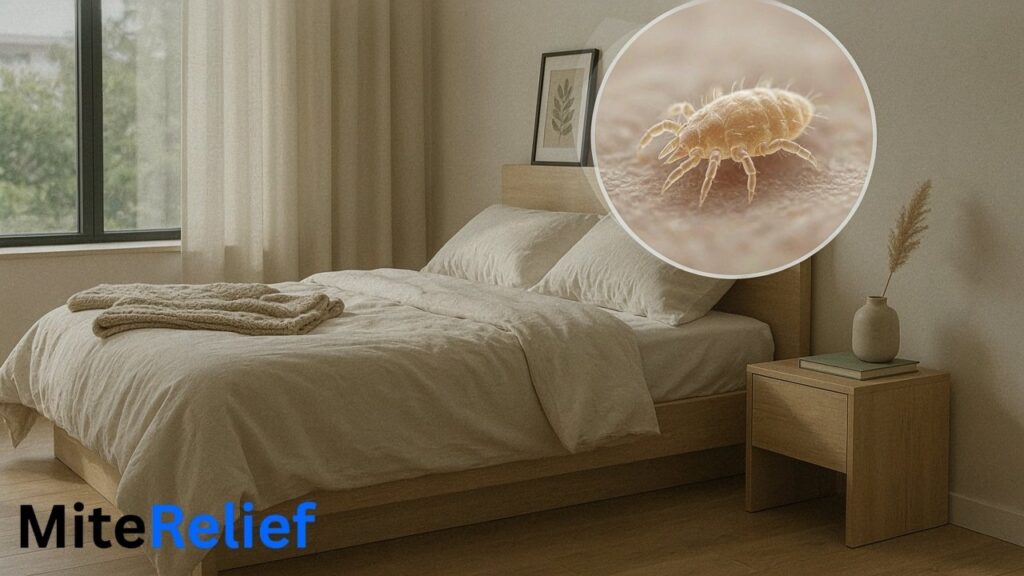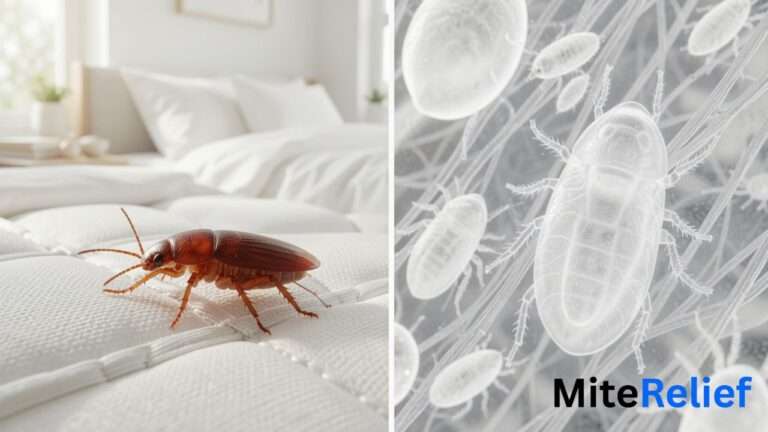
Both of them live in your bed. Both leave you itching at 2am, scratching before you’ve even opened your eyes properly. Dust Mites vs Bed Bugs But here’s the part that actually matters: these are not the same problem, not even close, and treating one like the other is exactly how people end up wasting weeks fighting the wrong pest entirely. When comparing a bed bug dust mite problem, many homeowners assume they are the same pest. In reality, dust mites and bed bugs are completely different, requiring different identification and treatment methods.
Dust mites and bedbugs get lumped together all the time, and it makes sense why: same bed, same itching, same panicked search at 3am with the phone brightness turned all the way down so you don’t wake anyone up. But a bed bug is a biting insect, one you can actually see if you look. A dust mite is different and microscopic, something you’re never going to spot without an actual lab microscope, and here’s the thing people miss: it doesn’t bite you at all. What triggers the reaction is its waste and the tiny fragments it leaves behind. Once that clicks, it significantly changes the approach about how you’d even go about treating each one.
Most people land on a page like this for one of two reasons, generally. Either they’ve seen something crawling and want to know exactly what it is, or they’re waking up itchy with nothing visible anywhere and starting to second-guess everything; maybe it’s the pillow, maybe it’s new detergent. Who knows? Both situations happen more than you’d expect, and both have a pretty clear answer once you know what to actually check for.
Dust Mite Bites vs. Bed Bug Bites: What’s the Difference?
- Dust mites do not bite humans, full stop, no exceptions.
- Bed bugs feed on blood, and yes, that includes yours while you sleep.
- Dust mite allergies show up as sneezing, coughing, itchy eyes, and general skin irritation.
- Bed bug bites appear as itchy red welts, usually clustered together or lined up in rows.
Quick gut check before you keep reading: if you’re waking up with new marks and nobody else in the house is affected, that’s more consistent with bed bugs, since they travel with a source rather than existing everywhere at once. If everyone in the home has some level of sneezing or coughing that never fully clears, that leans toward dust mites.
What Is the Difference Between Dust Mites and Bed Bugs?
Short answer? One is an allergen; the other is a biting insect. Longer answer? Well, that’s the whole point of this table below, so let’s just look at it side by side rather than me describing it in circles. While both may be found around bedding, one causes allergies and the other bites humans.
| Feature | Dust Mites | Bed Bugs |
| Visible to the eye | No | Yes |
| Bites humans | No | Yes |
| Feeds on | Dead skin cells | Blood |
| Size | 0.2–0.3 mm | 4–7 mm |
| Legs | 8 legs (Arachnid) | 6 legs (Insect) |
| Where they live | Mattresses, pillows, carpets, upholstered furniture, bedding | Mattress seams, bed frames, headboards, furniture cracks, luggage |
| Colour | Whitish or transparent | Reddish-brown |
| Main problem caused | Allergies | Itchy bites |
| Health effects | Sneezing, asthma flare-ups, eczema, itchy eyes | Itchy red welts, skin irritation, secondary infections from scratching |
Notice the size gap especially. A bed bug is roughly the size of an apple seed, visible on sheets if you know where to check. A dust mite needs a microscope. That’s basically why one problem is about what you see, and the other is about what you feel.
There’s also a similarity worth mentioning, since it’s part of why people confuse the two in the first place. Dust mites are arachnids with eight legs, while bed bugs are insects with six legs. Although both are commonly found around bedding and prefer warm indoor environments, they belong to entirely different groups of arthropods. Both prefer warm, humid conditions, and both are drawn to the same soft furniture and bedding in your home. That overlap in habitat is exactly why one house can end up with both problems at once; more on that a little further down.
How to Identify Dust Mites
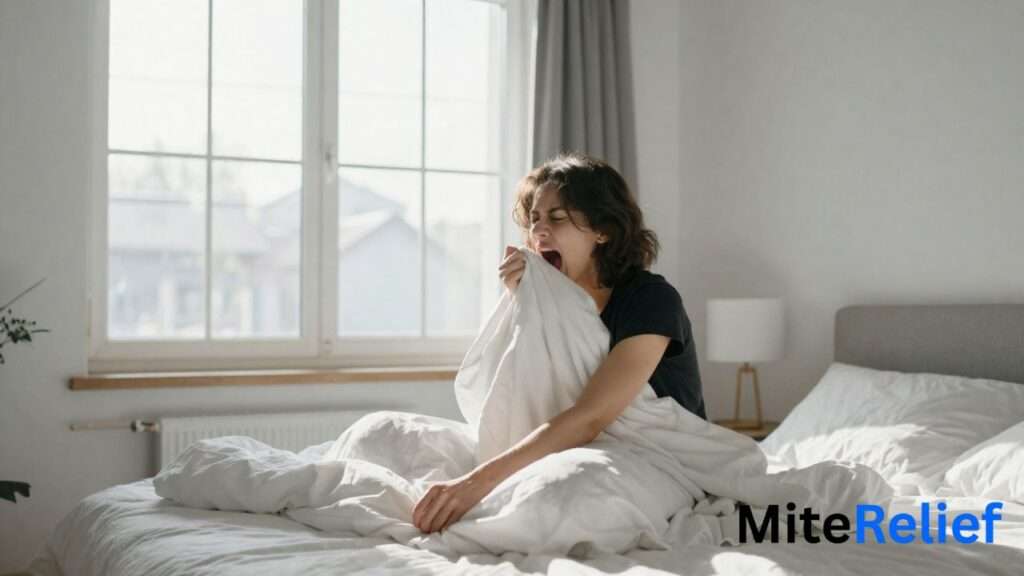
You will never actually see a dust mite, so forget squinting at your mattress hoping to spot one. Instead, watch for the pattern: allergy symptoms that show up year-round and get noticeably worse at night or right after you make the bed. Sneezing, a stuffy nose, itchy eyes, and sometimes a mild cough, That’s the mite talking, not a cold. Curious about what dust mites are in more depth? That’s covered separately, along with what dust mites look like under a microscope, if you’re the type who wants to actually see the thing that’s making you sneeze.
One more clue worth checking: if symptoms noticeably ease up while you’re away from home, staying at a hotel or a relative’s place, that eases toward dust mites rather than something else floating around in your air.
How to Identify Bed Bugs
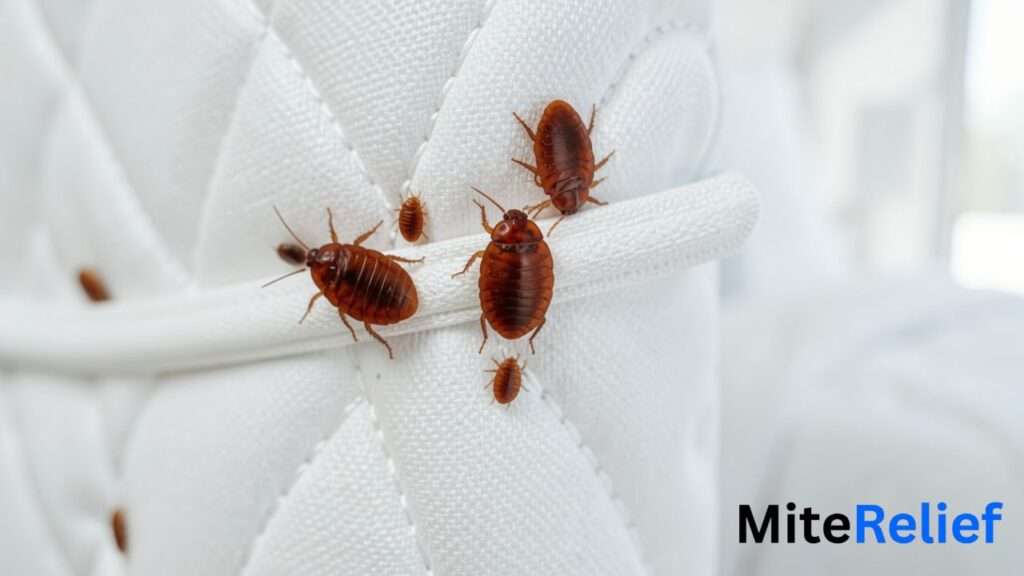
Bed bugs are the opposite story; you can see these. Reddish-brown and oval, flat when they haven’t fed, somewhere between 1 and 7 millimeters depending on age. Check your sheets in daylight, not with your phone flashlight at midnight In most cases, that approach is ineffective (as you think).
Look for a bite pattern of three in a row, sometimes called breakfast, lunch, and dinner. Then check the mattress seams for tiny dark spots; that’s dried blood or fecal matter, not dirt. In a heavy infestation, there’s often a musty, sweetish smell too. If you’re inspecting furniture or a headboard, a flashlight and a bit of patience genuinely help more than any spray at this stage.
It’s worth saying too, color and shape shift a bit depending on how recently the bug has fed. A hungry bed bug looks flatter and more reddish-brown, almost papery. Right after feeding it swells up, darkens, and looks more oval. If you catch one mid-crawl on a white sheet, that’s about as clear a confirmation as you’re going to get without calling in a professional inspector.
Health Effects: Dust Mites vs Bed Bugs
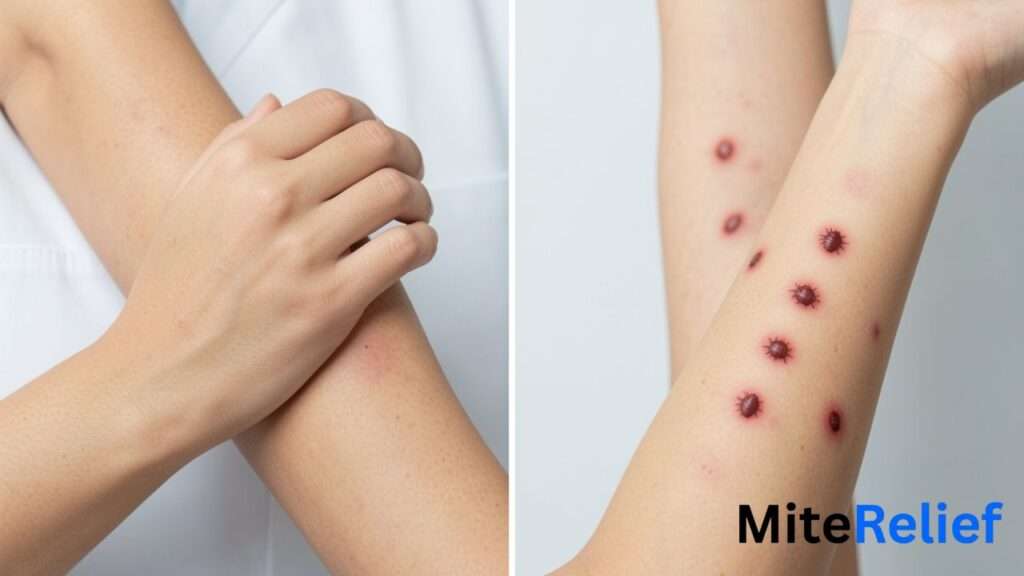
Dust mites don’t bite, so there’s no wound and no infection risk from them directly. What they cause instead is an allergic reaction, and for some people that means asthma flare-ups or eczema getting worse, not just sneezing. Want the fuller symptom breakdown? See dust mite allergy symptoms for the complete list.
Bed bugs are a different kind of stress entirely. Real bites, real welts, and occasional secondary infections if you scratch too much (and you will scratch; everyone does). There’s also the psychological weight of it; people lose sleep just knowing bugs are in the room, and that’s a real, documented part of dealing with an infestation, not an exaggeration.
Neither one spreads disease the way, say, a mosquito can; that’s worth knowing before becoming overly concerned into worst-case searching at midnight. But the day-to-day quality of life hit is very different for each. A dust mite allergy is manageable background noise once you get ahead of it. A bedbug problem tends to demand your attention immediately; there’s no comfortable way to ignore bites that keep multiplying.
How to Get Rid of Both, Completely Different Approaches
Here’s where the two problems really split apart. One you can handle yourself this weekend. The other, honestly, usually needs a professional. If you’re wondering how to get rid of bed bugs and dust mites, remember that they require completely different treatments. Dust mites are controlled through cleaning and humidity reduction, while bed bugs usually require professional extermination.
How to Remove Dust Mites
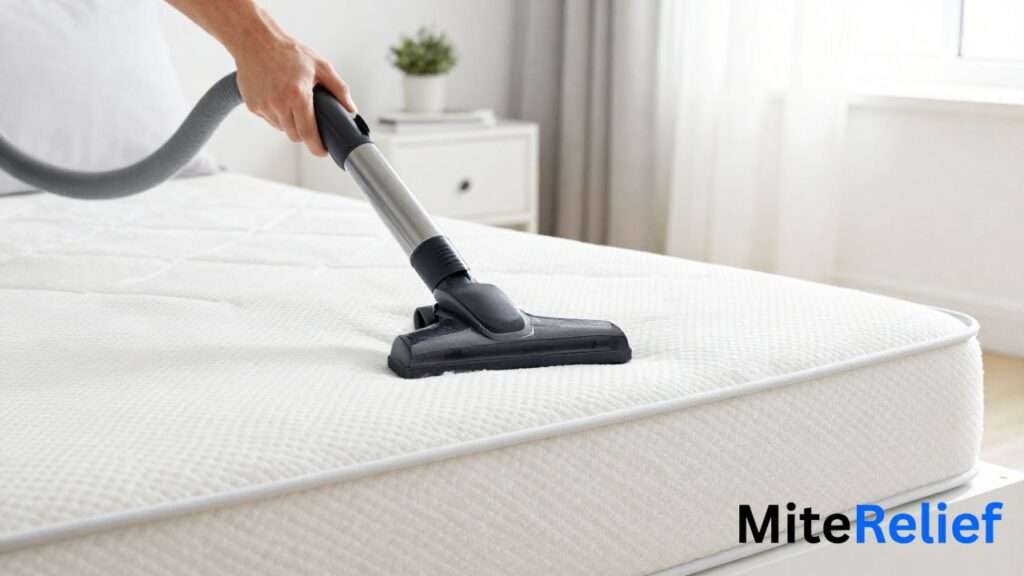
- HEPA vacuum, used regularly on mattresses, carpets, and upholstered furniture.
- Hot washing bedding weekly at 60 degrees Celsius or higher.
- Humidity control: Mites thrive above 50 percent humidity, so a dehumidifier genuinely helps.
- Mattress encasements designed specifically to block allergens.
How to Eliminate Bed Bugs
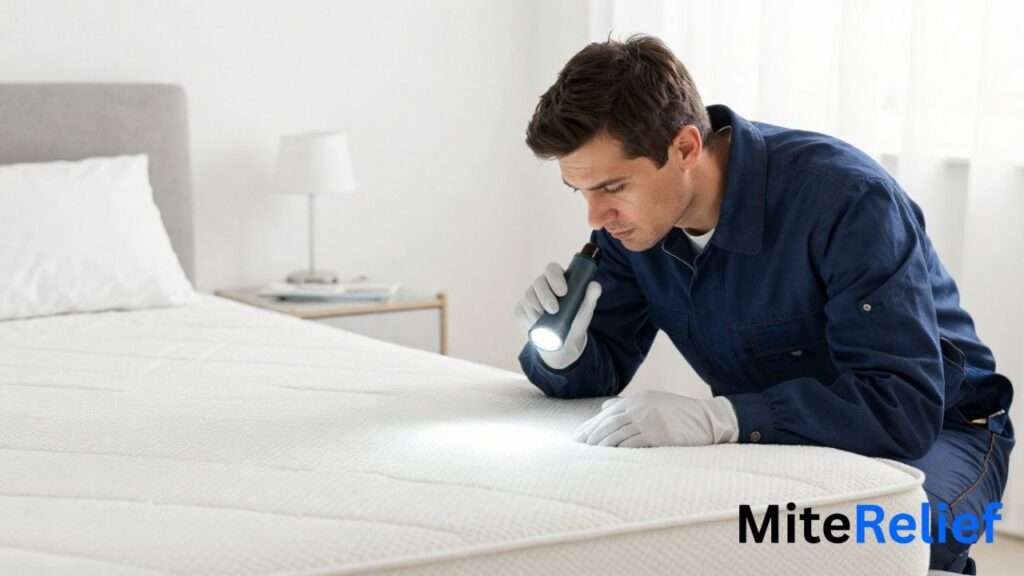
- Professional pest control: In most cases this isn’t optional; DIY sprays rarely finish the job.
- Heat treatment, since bed bugs die at sustained high temperatures.
- Thorough mattress inspection, seams and all.
- Furniture inspection, especially anything secondhand before it enters your home.
| Method | Dust Mites | Bed Bugs |
|---|---|---|
| HEPA vacuuming | Yes, effective | Limited effect |
| Hot washing (60C+) | Yes | Yes |
| Steam cleaning | Yes | Yes |
| Mattress encasement | Recommended | Helps, not a fix |
| Professional pest control | Rarely needed | Usually required |
Dust mites do not bite people. If you have visible bite marks, bed bugs or another insect are far more likely to be the cause, not a mite.
Side by side, the treatment gap looks like this: If prevention is more your goal than treatment, Preventing Dust Mites at Home walks through nine habits that actually make a difference long term, and if you want the deeper mechanics of removal, What Kills Dust Mites covers seven methods that hold up in practice, not just in theory.
Where Each One Lives in Your Home
Location alone can tell you a lot. Genuinely, sometimes it’s the fastest clue you have.
Where Dust Mites Hide
- Mattresses
- Pillows
- Carpets
- Upholstered furniture
- Bedding
Where Bed Bugs Hide

- Mattress seams
- Bed frame cracks
- Headboards
- Furniture joints
- Luggage, especially after travel
Dust mites are basically everywhere fabric exists, all year; no travel is required. Bed bugs, on the other hand, usually arrive from somewhere, like a hotel stay, a secondhand couch, or a friend’s guest room. That’s an important difference when you’re trying to work out how the problem even started.
If you’ve recently traveled and started noticing bites within a week or two of getting home, that timing alone is a strong clue. Dust mite symptoms don’t work that way; they build up gradually over weeks or months as levels in your carpet and bedding rise, not overnight after a single trip.
Do I Have Dust Mites or Bed Bugs?
Not sure which one you’re dealing with? Run through this quickly; it takes about two minutes.
5-Question Self-Assessment
- Do you see tiny insects on your mattress or sheets?
- Are the bites arranged in a line or cluster?
- Do symptoms happen mostly at night or year-round regardless of travel?
- Have you recently traveled or bought secondhand furniture?
- Are your symptoms respiratory (sneezing, coughing) or purely skin-based (bites, welts)?
Mostly visible bugs and line-pattern bites That’s leaning toward bedbugs. Mostly sneezing with nothing visible. That’s dust mites. Some overlap is normal; don’t panic if it’s not perfectly clean-cut.
Can You Have Both at the Same Time?
Yes, and it’s actually fairly common. Dust mites are essentially universal; nearly every home has them regardless of cleanliness. Bedbugs arrive separately, from an outside source. So if you’ve confirmed bedbugs, there’s a strong chance dust mites are already there too; they just never left. Many people ask whether they have a dust mite or bed bug problem. The answer depends on your symptoms; respiratory allergies usually point to dust mites, while visible insects and bite marks are much more consistent with bedbugs.
The two need entirely separate treatment plans, though. Fixing one does nothing for the other, so don’t assume a bed bug treatment will clear up your allergies as a side effect. It won’t.
A doctor can help sort out which symptoms belong to which pest if you’re genuinely unsure, especially if allergy symptoms are severe or a bite site looks infected. It’s not overkill to ask, and it can save you weeks of guessing which treatment to try next.
And if you’re mid-move or just bought a house, it’s worth doing a quick check for both before you settle in fully. A used mattress or an old sofa left behind by previous owners is exactly the kind of thing that carries bedbug risk, while carpets that haven’t been deep cleaned in years are prime territory for dust mite buildup regardless of who lived there before.
Frequently Asked Questions
Do dust mites leave bite marks like bed bugs?
No. Dust mites don’t bite at all; any bite marks you’re seeing point to bed bugs or another insect entirely.
Are dust mites harder to get rid of than bed bugs?
Not harder, just different. Dust mites respond well to regular cleaning and humidity control, while bed bugs usually need professional treatment to fully clear, since eggs survive most household products.
Can dust mites spread from house to house like bed bugs can?
Not really. Dust mites develop locally wherever there’s fabric and humidity; they don’t hitch rides in luggage the way bedbugs do.
Do the same sprays kill both dust mites and bed bugs?
Generally no. Products are formulated differently for each, and using a bed bug spray won’t meaningfully reduce dust mite allergens.
Which is more dangerous, dust mites or bed bugs?
Dust mites pose more of a respiratory risk through allergies and asthma, especially for people with existing conditions. Bed bugs cause more immediate physical discomfort through bites and, occasionally, skin infection, though rarely anything life-threatening.
What to Read Next
• What Are Dust Mites? (A Complete Beginner’s Guide)
• Dust Mite Allergy Symptoms: How to Know If You’re Allergic
• How to Prevent Dust Mites: 9 Habits That Actually Keep Them Away
Conclusion
Two pests, two totally different playbooks. Dust mites mean allergy management, washing, vacuuming, and humidity control. Nothing dramatic. Bed bugs mean visible bites, an actual infestation, and very likely a call to a pest control professional. Get the identification right first, because treating a bedbug problem like a dust mite problem, or the other way around, just wastes time while the real issue keeps going, and honestly, neither problem gets better on its own.
Medical Disclaimer
This content is for informational purposes only and is not a substitute for professional medical advice, diagnosis, or treatment. Always consult a qualified healthcare provider regarding persistent allergy symptoms, skin reactions, asthma, or breathing difficulties. Never delay or disregard seeking professional medical advice because of information you have read on this website.

Umar Farooq is the founder of MiteRelief, a resource for dust mite control and allergy prevention. After battling allergen sensitivity, he started creating research-backed guides that turn complex indoor air quality science into practical, affordable solutions anyone can implement.