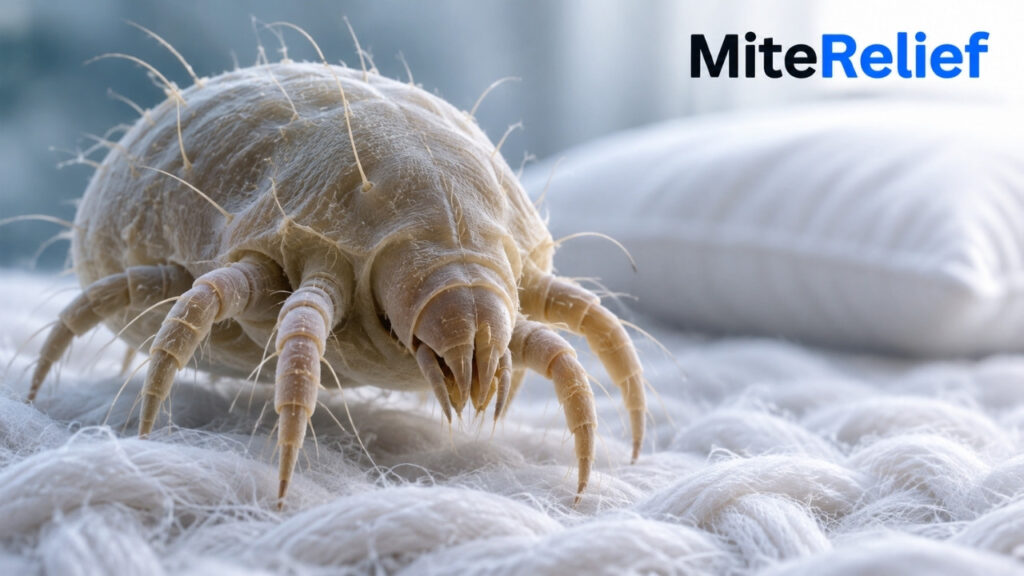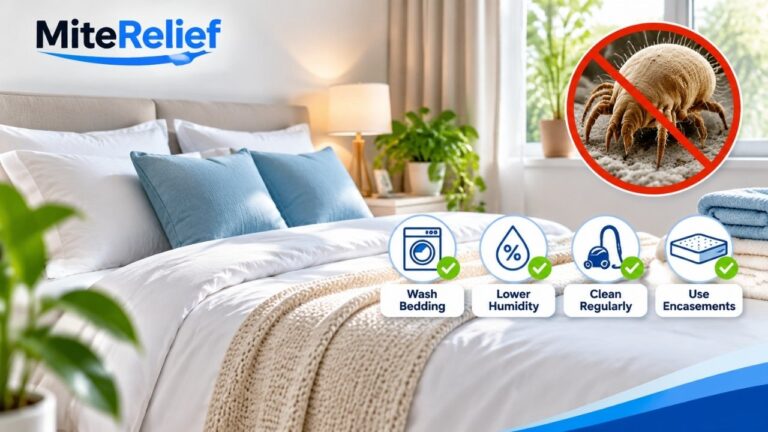
The best way to get rid of dust mites naturally is to combine a few habits: hot-washing bedding, keeping humidity low, covering mattresses and pillows, and cleaning properly. These natural dust mite remedies cut mite numbers and the allergens they leave behind. They can’t remove every mite, though. No home is completely mite-free.
It helps to separate three goals: killing mites, reducing their numbers, and removing allergens. Dead mites and their droppings can still trigger symptoms. A good routine tackles all three.
Do Natural Methods Really Work Against Dust Mites?
Dust mites feed on skin flakes that people shed. They don’t drink water. They absorb it from humid air. That’s why bedding, upholstered furniture, and carpet make ideal homes: food and moisture collect there.
Warmth and humidity help mites grow. Heat and dry air work against them. Natural methods work best when they hit those weak spots and reduce the dust mite allergens mites leave behind.
They do have limits. Cleaning won’t wipe out every mite or every allergen. Sunlight and fresh air may help dry out some items, but the evidence isn’t strong enough to rely on. No single step is a fix, so consistency matters more than any one trick.
Method 1: Wash Bedding Using Appropriate Heat
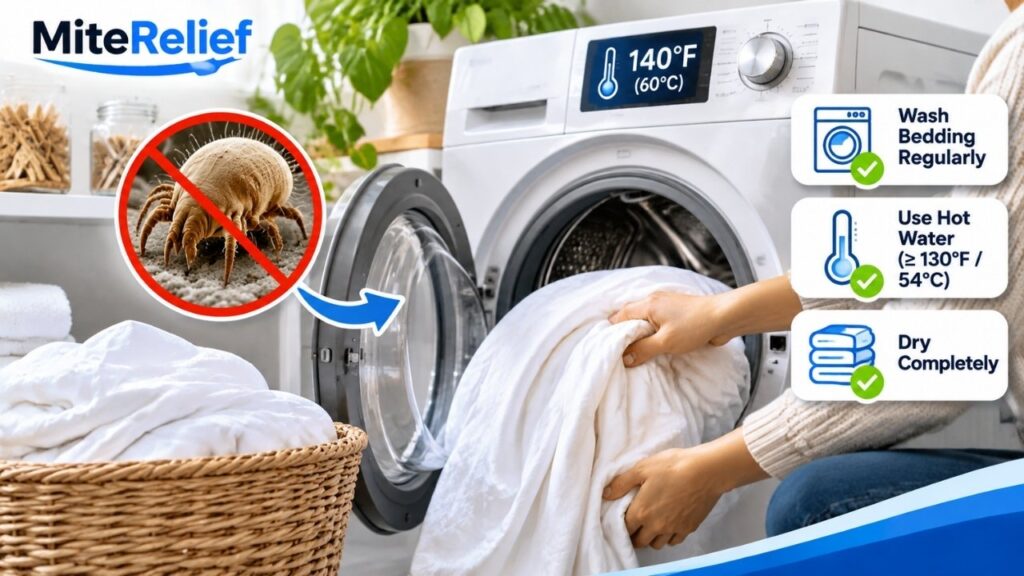
Laundry is the most useful step on this list. Mayo Clinic advises washing sheets, blankets, pillowcases, and bedcovers weekly in water at least 130°F (54°C), then drying them fully. Many people use 140°F (60°C) when the fabric allows. Check the care label first.
Heat kills mites in the fabric. The wash also rinses away dead mites and allergens, so hot washing does two jobs. For more on how heat works, see our guide on what kills dust mites.
If an item can’t handle hot water, Mayo suggests drying it for at least 15 minutes above 130°F, then washing and drying it. Don’t raise your home water heater to reach these temperatures, because hot water can scald. Use your washer’s hot or sanitize cycle instead.
Method 2: Reduce Indoor Humidity
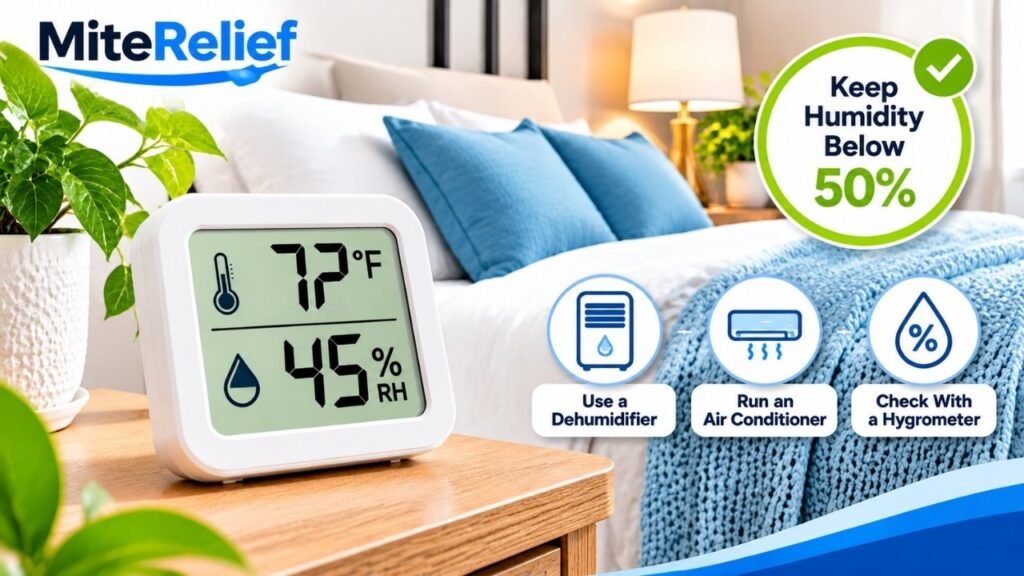
Because mites absorb water from the air, dry air makes life harder for them. Mayo Clinic recommends keeping indoor relative humidity below 50%. A dehumidifier or air conditioner can help, and an inexpensive hygrometer shows where you stand.
Start with the bedroom. Check the reading at different times of day, since humidity changes. Lower humidity works gradually, and results vary by home, so don’t expect overnight change.
Empty and clean dehumidifier tanks as the manufacturer directs. A dirty tank can create its own mold problems. The EPA also covers indoor air quality and household allergens if you want more on moisture control. To learn how humidity affects mite survival, read dust mites and humidity.
Method 3: Vacuum Carpets and Upholstery
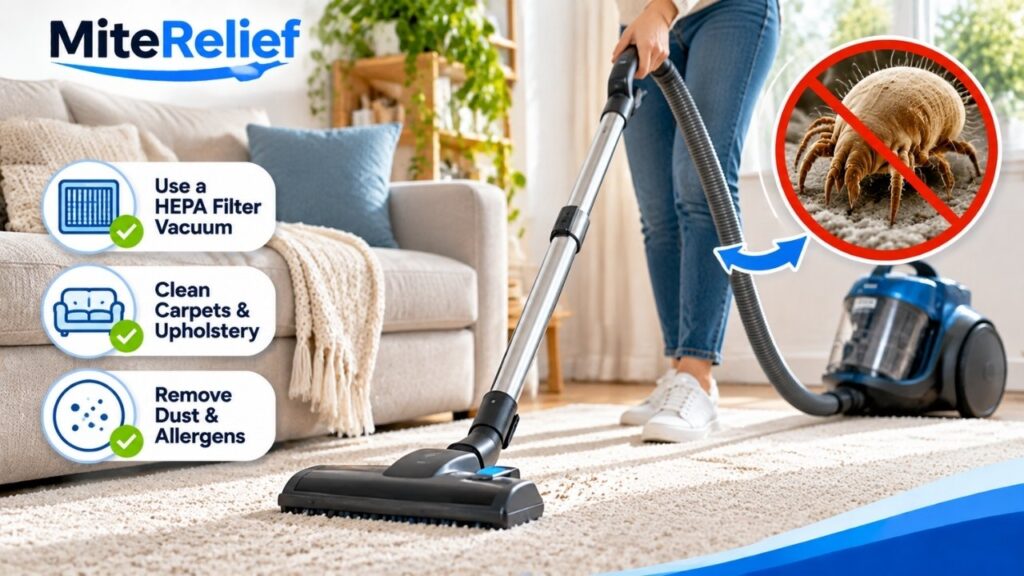
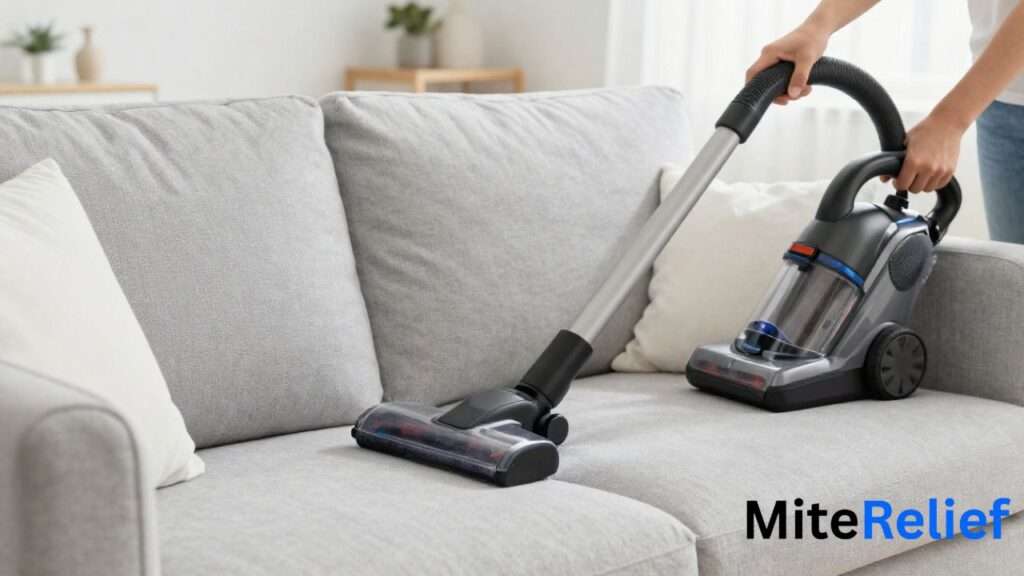
Vacuuming removes surface dust, which is part of what mites eat. It isn’t great at pulling mites out of deep fibers, so think of it as dust and allergen removal, not mite killing.
Use a vacuum with HEPA filtration, as the AAAAI and ACAAI dust mite control recommendations describe. A HEPA filter traps tiny particles instead of blowing them back into the room. Clean the mattress surface, carpets, rugs, and sofas.
Vacuuming stirs up allergens. If you’re allergic, ask someone else to do it. If you must, wear a mask and stay out of the room for about 20 minutes afterward, as NIEHS advises.
Method 4: Use Mattress and Pillow Encasements
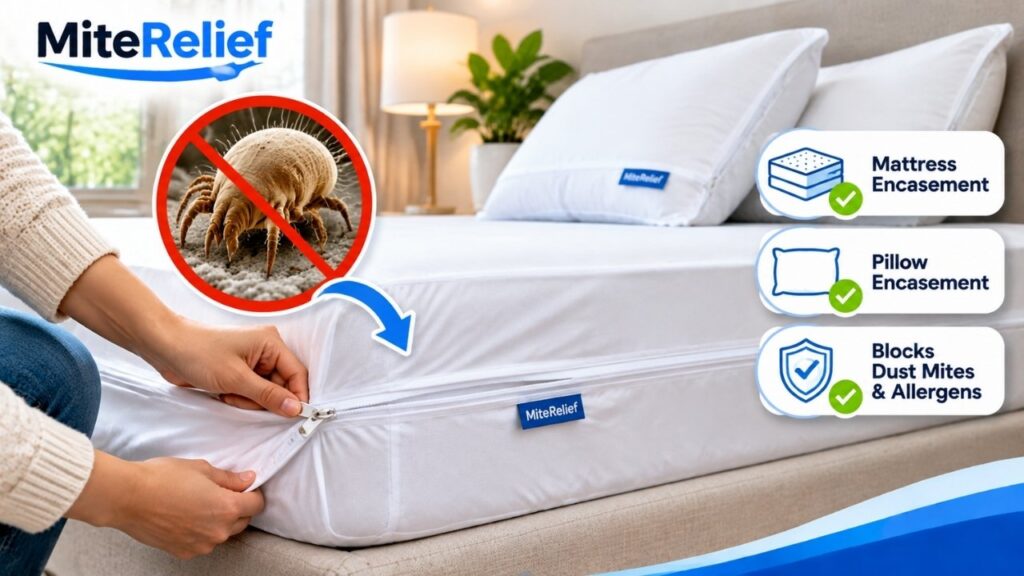
Allergen-proof covers are zippered and tightly woven. They wrap the mattress, box spring, and pillows. Mites and their droppings can’t pass through, so less allergen reaches your nose while you sleep.
Encasements don’t kill mites. They create a barrier. Allergy groups, including the AAAAI and ACAAI, list them among core exposure-reduction steps.
Check the label for cleaning directions. Mayo Clinic suggests wiping vinyl covers weekly with the hottest water possible. Keep washing your sheets on top of the cover. For details, see our page on dust mite mattress encasements.
Method 5: Clean Surfaces With Damp Cloths
Dry dusting often sends dust into the air, where it settles again. A slightly damp cloth traps dust instead of spreading it.
Wipe headboards, nightstands, shelves, window sills, and blinds. Work from high to low so falling dust lands on surfaces you haven’t cleaned yet. Rinse the cloth often, or use a fresh one.
If you’ve just vacuumed, give the dust about 15 minutes to settle before wiping. Wash curtains as their labels allow. Curtains and drapes collect dust like any other fabric.
Method 6: Wash Soft Toys and Removable Fabrics
Stuffed toys are a favorite mite hideout. Mayo Clinic recommends washable toys, washed often in hot water and dried completely. Keep toys off beds when you can.
Check the label first, since some toys can’t take heat; for suitable toys that can’t go in hot water, freezing in a sealed bag for 24 hours can kill mites. But Mayo notes freezing doesn’t remove allergens. Wash the toy afterward as its label allows.
Do the same for cushion covers, throw blankets, and other removable fabrics. Washing removes allergens, which is the goal.
Method 7: Reduce Dust Accumulation in Your Home
Less dust means less food for mites. Start in the bedroom. Cut back on fabric clutter such as extra throw pillows, piles of blankets, and heavy drapes.
Rugs and carpet hold dust; if you can, choose washable rugs or hard flooring in the bedroom, and clean carpets and upholstery regularly.
NIEHS notes that no home can be made completely free of dust mites, but you can reduce their numbers. A steady bedroom routine does more than an occasional deep clean.
Do Homemade Dust Mite Sprays and Essential Oils Work?
Many blogs promote sprays, oils, and powders. Here is what the evidence does and doesn’t show.
Homemade Dust Mite Spray: Does It Really Work?
A homemade dust mite spray usually mixes water with essential oils. I found no reliable household research showing these sprays kill mites in mattresses or carpets, or remove allergens.
A mist can’t reach mites deep in padding. It also can’t clear dead mites and droppings. Soaking fabric adds moisture, which can help mites and mold. A spray shouldn’t replace washing, encasements, or humidity control.
Essential Oils for Dust Mites: Evidence and Safety
Tea tree, eucalyptus, and clove oils have shown mite-killing or repelling effects in lab tests. One example is a 2025 study of a eucalyptus species. Lab results don’t prove an oil works in a real bed at a safe strength. Essential oils for dust mites remain unproven for home use.
Safety matters too. Oils can irritate skin, eyes, and airways. Tea tree oil can be toxic to cats and dogs. Keep oils away from pets and children, and use caution if anyone has asthma or allergies.
Diatomaceous Earth for Dust Mites: Is It Safe?
Diatomaceous earth is a fine powder made from fossilized algae. It can dry out some insects, but little reliable research shows that diatomaceous earth controls dust mites in mattresses or bedding.
The powder is also a dust. Breathing it in can irritate the nose, throat, and lungs, and that’s a bigger concern for people with asthma. I don’t recommend routine use on mattresses, bedding, or carpets.
Your Weekly Routine to Get Rid of Dust Mites Naturally
You don’t need to do everything every day. Use this routine as a baseline.
| Task | Frequency | Main Purpose |
| Wash bedding | Weekly | Reduce mites and allergens |
| Check bedroom humidity | Regularly | Maintain humidity below 50% |
| Vacuum carpets and upholstery | Weekly | Remove accumulated dust and allergens |
| Damp-dust surfaces | Weekly | Reduce settled dust |
| Use mattress and pillow encasements | Continuously | Reduce allergen exposure |
Add stuffed toys and removable fabrics to your laundry rotation as needed. For a full household plan, see our guide on how to prevent dust mites.
Frequently Asked Questions (FAQs)
Does baking soda get rid of dust mites?
There’s no solid evidence it does. It may freshen a mattress or carpet before vacuuming, but it isn’t a mite control method.
What is the fastest way to get rid of dust mites?
Hot-washing bedding works fastest for the items closest to you, because heat kills mites and washing removes allergens. Humidity and dust control take longer.
Can you get rid of dust mites permanently?
No. Allergy groups agree dust mites can’t be fully eliminated from a home. The goal is steady control.
How long does it take to reduce dust mites?
There’s no set timeline. Washing helps right away, while humidity control and dust reduction take weeks to build. Symptom relief varies from person to person.
What to Read Next
Final Thoughts on Getting Rid of Dust Mites Naturally
You can’t get rid of every dust mite, and you don’t need to. The goal is fewer mites and less allergen where you spend the most time, especially your bed.
Start with the steps that matter most: hot-wash bedding, keep humidity below 50%, and cover your mattress and pillows. Add damp dusting and careful vacuuming as you go. Treat sprays, essential oils, and diatomaceous earth as unproven extras, not substitutes.
If symptoms continue despite these steps, talk with a doctor or allergist about testing and treatment options.
Medical Disclaimer
This content is for general informational purposes only and is not a substitute for professional medical advice, diagnosis, or treatment. Individual health needs can vary, so speak with a qualified healthcare professional about allergies, asthma, skin reactions, medications, or other symptoms. Seek prompt medical care if symptoms are severe, persistent, or getting worse.

Umar Farooq is the founder of MiteRelief, creating research-backed guides about dust mites, indoor allergens, and practical allergy prevention for healthier homes.