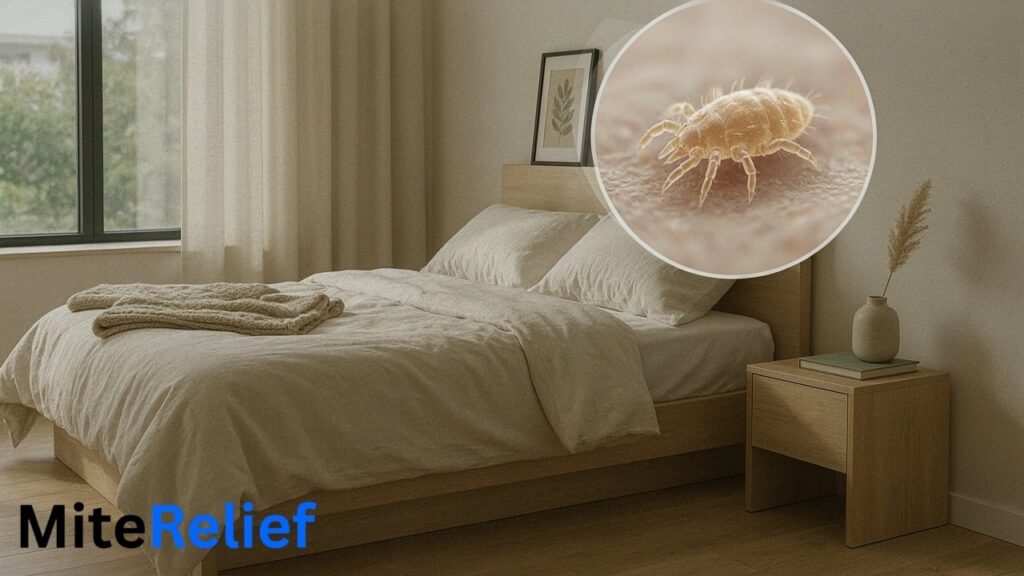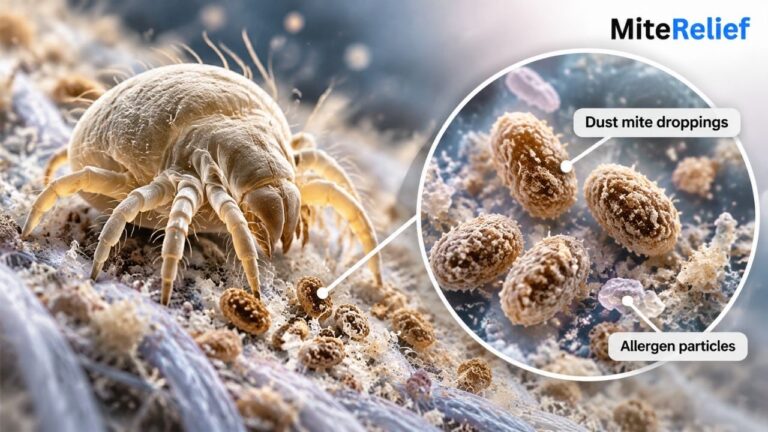
It is easy to assume you are allergic to the dust mite itself. But the bigger problem often comes from allergens in mite waste and tiny body parts. Dust mite droppings (also called dust mite poop) are far too small to see.
Still, they mix into household dust, settle on soft items, and can trigger allergic reactions. Understanding how they work makes it easier to reduce your exposure.
What Are Dust Mite Droppings?
Dust mite droppings are the waste house dust mites leave behind after they eat. You may also see them called dust mite feces, dust mite excrement, or dust mite feces (UK spelling). Scientists often call them dust mite fecal pellets.
Mites live mostly on the small skin cells that people and pets leave behind. They digest this food and pass waste, over and over, during their short lives. Over time, that waste builds up where mites live.
Here is the key point: a living mite and its allergens are not the same thing. Mite waste and dust mite debris, like bits of broken bodies and old shed skins, may carry proteins that cause allergy. Those proteins may linger in your home long after the mites are gone.
Not every particle contains the same allergens. Mite waste is a major source of allergens, though other body parts add to the mix. The American Academy of Allergy, Asthma & Immunology gives a helpful overview of how indoor allergens like these affect health.
What Are Der p1 and Der p2 Allergens?
Der p1 and Der p2 are two major allergens linked to the dust mite species Dermatophagoides pteronyssinus. They are proteins. Der p1 is an enzyme that helps mites digest food, so it shows up in dust mite fecal particles. Der p2 is another major dust mite allergen found in mite bodies and fecal material.
When a person breathes in or touches these proteins, the body may treat them as a threat. This is the first step toward an allergic reaction. People don’t all react the same way, and not everyone allergic to dust mites reacts to both proteins.
For a deeper scientific look, see this dust mite allergy research from the National Center for Biotechnology Information.
Why Do Dust Mite Droppings Cause Allergy?
It comes down to the immune system. In an allergic person, the immune system mistakes harmless proteins for something dangerous. It then makes IgE antibodies aimed at those proteins.
The next time the person is exposed, IgE antibodies trigger an allergic reaction. Dust mite droppings play a big part because they hold these proteins, and people can easily inhale them once they get stirred up.
The Asthma and Allergy Foundation of America names dust mite allergens as a leading cause of indoor allergy problems. To understand what a reaction can feel like, read about dust mite allergy symptoms.
Only a doctor can confirm a dust mite allergy. Use this article to learn, not to diagnose yourself.
What Do Dust Mite Droppings Look Like?
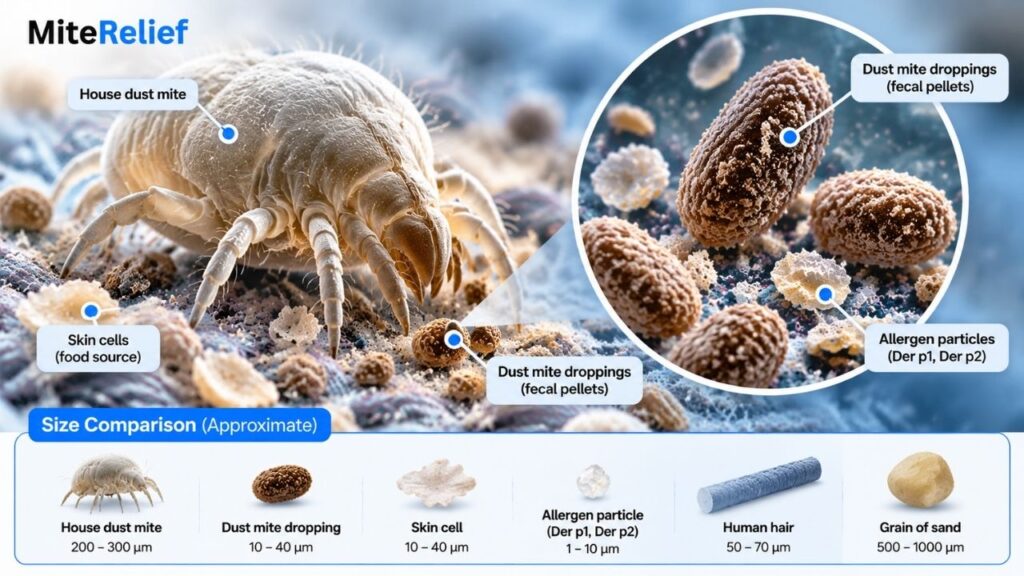
The human eye can’t see individual dust mite droppings. Each fecal pellet is microscopic, far smaller than a grain of sand. You need a microscope to see one.
Under a microscope, the pellets look like tiny round or oval specks, often wrapped in a thin coating. But you cannot spot them at home, and you cannot tell by looking whether a pile of dust holds them.
So where do they go? They mix with dust particles from many sources, such as skin flakes, fabric fibers, pet dander, and soil. That mixture is what we call household dust. Dust mite droppings are just one ingredient in that mix.
Here is the comparison formatted cleanly in a table:
| Feature | Dust Mite Droppings | Household Dust |
| Visibility | Microscopic | Usually visible |
| Contains | Allergen proteins | Mixed particles |
| Common locations | Mattresses, pillows, fabrics | Floors, shelves, surfaces |
| Removal method | Washing and HEPA cleaning | Regular cleaning |
Where Do Dust Mite Droppings Collect?
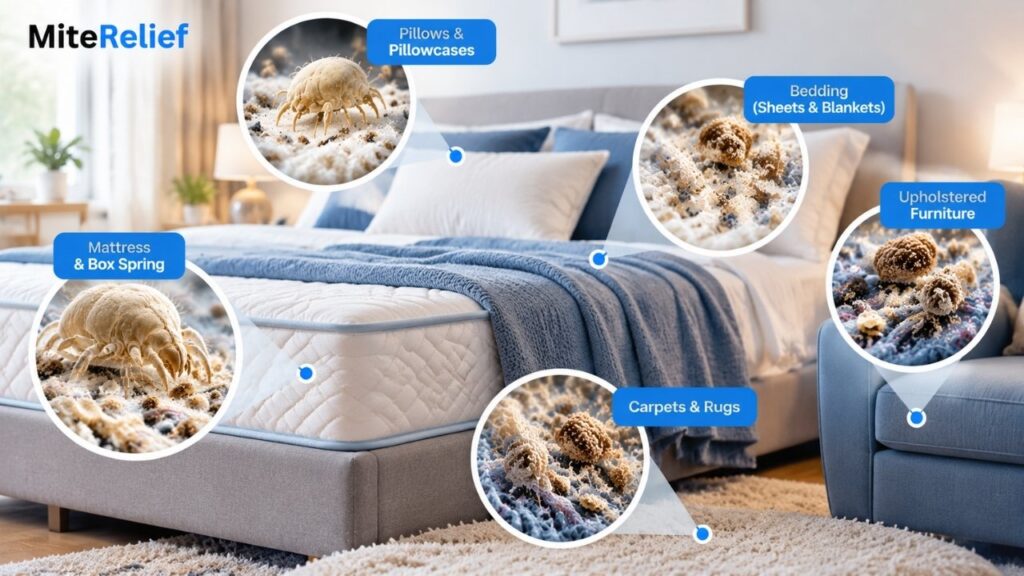
Dust mite droppings gather where mites live and where fine particles can settle. Soft, fabric-based items trap them best because particles sink deep into the fibers.
Common spots include:
- Mattress and box spring
- Bedding, such as sheets and blankets
- Pillows and pillowcases
- Upholstered furniture, like sofas and armchairs
- Carpets and rugs
Hard floors and smooth surfaces hold far less because particles have nothing to sink into. To learn more about dust mite debris inside mattresses, see our full guide.
Dust Mite Droppings in Mattresses
A mattress is a common place for dust mite droppings in the mattress to pile up, since most people lie on one for about eight hours a night. It traps warmth and skin flakes, and people rarely clean deep inside.
Because waste and debris collect slowly over the years, an older mattress can hold a lot of allergen material. A zippered mattress cover, called an encasement, can help block that material from reaching you. It does not remove what is already inside, so pair it with the cleaning steps below.
Dust Mite Droppings in Bedding and Furniture
Sheets, blankets, and pillowcases touch your skin every night. They catch skin flakes that feed mites and trap dust mite allergens in bedding. Pillows sit right next to your face, so they matter most.
Upholstered furniture works the same way. Sofa cushions and armchairs hold fine particles deep in the fabric, and so do carpets. Each time you sit down or walk across them, a little of that material can lift into the air.
Washing helps with bedding. Furniture and carpets need regular vacuuming, which we cover below.
How Do Dust Mite Droppings Become Airborne?
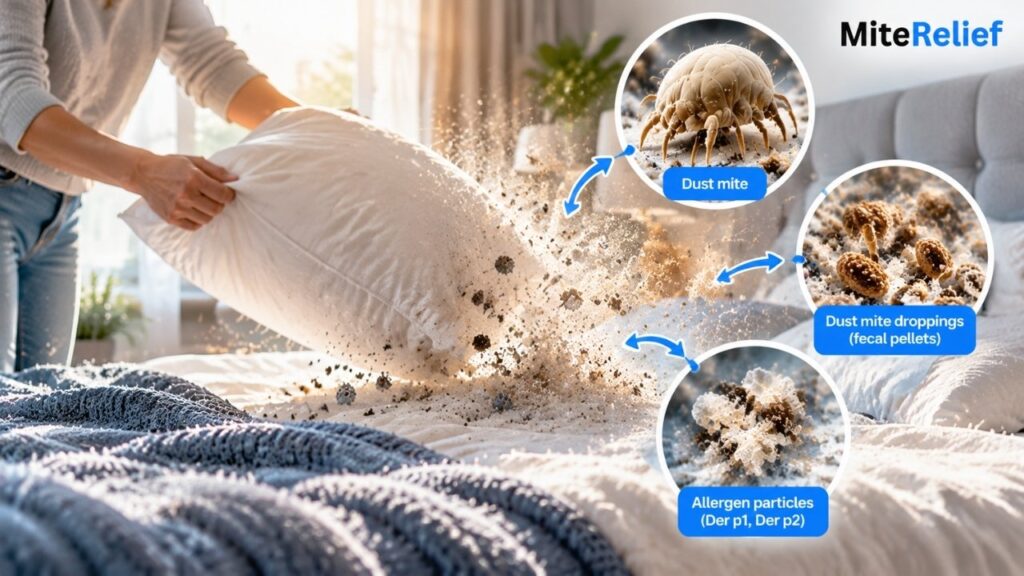
Settled droppings do not stay put. Fine allergen particles break loose when you move them around. These particles then float in the air for a while before settling again.
Common ways this happens:
- Rolling over or tossing in bed
- Shaking out or changing bedding
- Vacuuming with a poor filter
- Plopping onto a sofa or armchair
Many people take in allergens this way, simply by breathing the particles in. This is why bedrooms matter so much.
HEPA filters can help here. A true HEPA filter traps very small particles, so a good air-purifying setup can reduce the number floating in a room. Even so, it cannot catch every allergen, so pair it with regular cleaning.
How Long Do Dust Mite Droppings Stay Allergenic?
In many cases, a long time. Allergens in droppings and debris can stay in your home even after the mites that caused them die. That is why killing mites alone is not enough.
Think of it like crumbs after a party. Getting rid of the guests does not clean the floor. The same goes for mites and their waste. You have to remove the leftover material itself.
Humidity plays a role too. Mites thrive in high relative humidity because they take in water from the air. Lower humidity makes life harder for them so that fewer mites may produce new waste over time.
But humidity control will not destroy the allergens already sitting in your fabrics.
Read more about how humidity affects dust mite allergens in our humidity guide.
How to Remove Dust Mite Droppings From Your Home
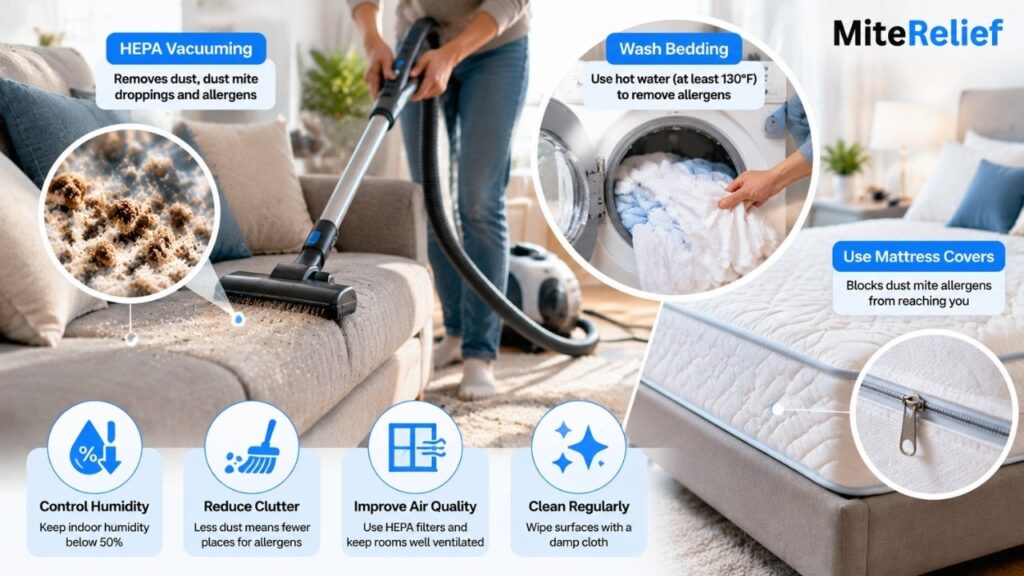
No method removes every particle. But steady cleaning can lower your exposure. These steps are realistic for most homes:
- Wash bedding every week or two. Wash sheets, pillowcases, and blankets in hot water if the care label allows it. Many allergy groups suggest at least 130°F (54°C). Hot water helps wash away allergen debris and kill live mites.
- Use covers. Zippered mattress and pillow covers can keep allergen material from escaping into the air.
- Vacuum soft surfaces. Go over carpets, rugs, and upholstered furniture often.
- Control humidity. Aim to keep indoor relative humidity below about 50 percent. A simple humidity meter can show you where you stand.
- Cut down on dust buildup. Clear clutter and wipe surfaces with a damp cloth. A damp cloth traps dust, while a dry one can push it back into the air.
These habits also improve overall indoor air quality. For more ideas, see our tips to reduce dust mite exposure.
Cleaning does not replace medical care. If your symptoms are hard to manage, talk to your doctor.
Does Vacuuming Remove Dust Mite Droppings?
It can help, but the type of vacuum cleaner matters. A vacuum with a HEPA filter and a sealed system can pull up settled dust mite debris and keep most of it inside the machine.
A basic vacuum may not trap the finest particles. Some can blow them back into the room through the exhaust. That can stir up more allergen dust than you started with.
Vacuuming also cannot reach every particle buried deep inside a mattress or sofa. Think of it as one helpful step, not a cure. Vacuum slowly and use the upholstery tool for best results.
Frequently Asked Questions (FAQs)
Can you see dust mite droppings?
No. Each pellet is microscopic, so you cannot see one without a microscope. Piles of visible dust may contain some, but you cannot tell by looking.
Are dust mite droppings the same as allergens?
Not exactly. Droppings are the physical waste. Allergens are the proteins inside that waste, such as Der p1. Allergens can also be found in body debris.
What causes dust mite allergy: mites or droppings?
Both play a part. Proteins in dust mite droppings and body debris trigger the allergic reaction, not a bite or sting. Mites do not bite people.
Can washing remove dust mite feces?
Washing can remove a lot of it. Hot washing can help reduce dust mite allergens and remove debris from bedding. It may not remove every particle, so regular washing works better than a single wash.
Do dust mite allergens disappear after mites die?
No. Allergens can stay in droppings and debris after the mites are gone. That is why removing the material matters as much as controlling the mites.
What to Read Next
Conclusion
Dust mite droppings are a major source of allergen exposure at home. You cannot see them, but they collect in mattresses, bedding, furniture, and other soft items. Cutting your exposure takes more than killing live mites. Regular washing, careful vacuuming, humidity control, and good air filtration can all help make your home a little easier to breathe in.
Medical Disclaimer
This content is for general informational purposes only and is not a substitute for professional medical advice, diagnosis, or treatment. Individual health needs can vary, so speak with a qualified healthcare professional about allergies, asthma, skin reactions, medications, or other symptoms. Seek prompt medical care if symptoms are severe, persistent, or getting worse.

Umar Farooq is the founder of MiteRelief, creating research-backed guides about dust mites, indoor allergens, and practical allergy prevention for healthier homes.