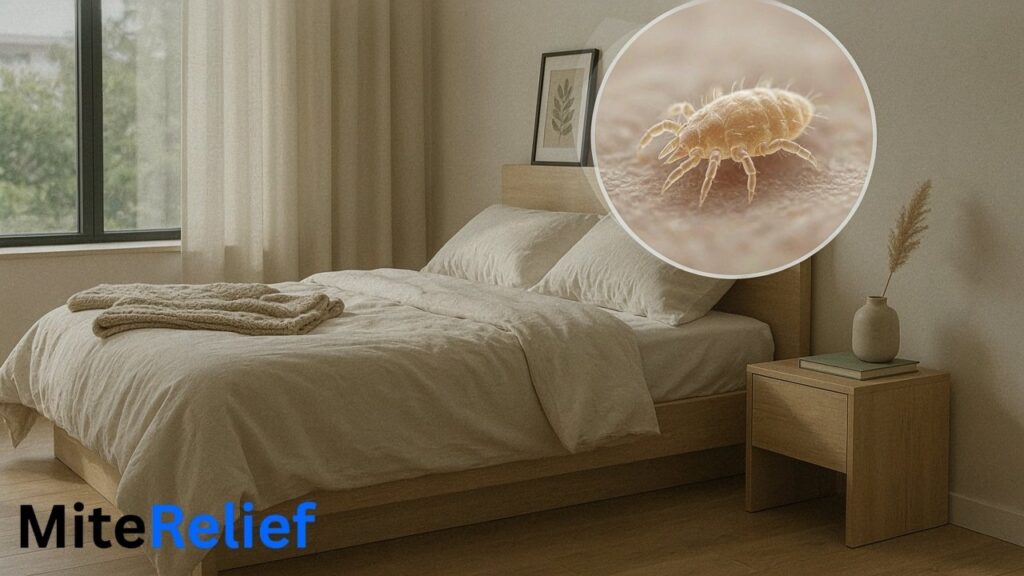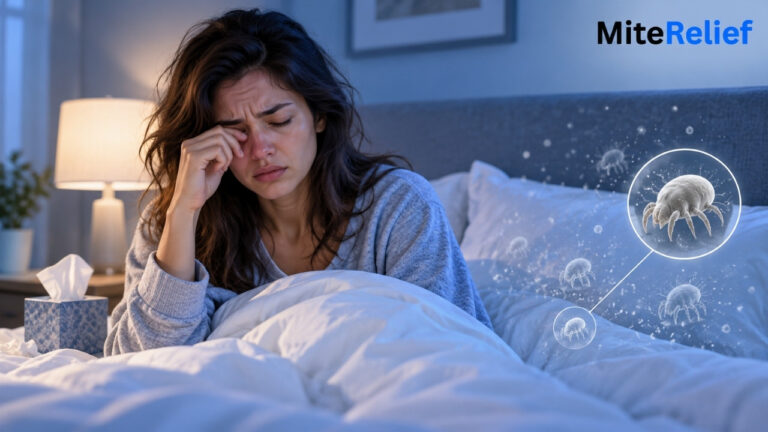
If you wake up sneezing, congested, coughing, or just plain tired, the problem might not be a cold. It could be tied to what’s happening while you sleep. Dust mites and sleep are closely linked.
Many people don’t notice this until they pay attention to when symptoms actually hit. For some, the worst hours are overnight or right after waking up, not during the day.
That pattern isn’t random. Your bedroom, your bedding, and the hours you spend lying still all play a role. Together, they shape how much you’re exposed to allergens while you sleep. This article looks at why that happens and what you can do about it.
Why Are Dust Mite Symptoms Worse at Night?

You spend more time in your bedroom than anywhere else in your home. Most people sleep seven to nine hours a night. During that time, they’re in close, steady contact with their mattress, pillows, and bedding. This is where house dust mite allergens tend to build up.
Unlike a quick walk through a dusty room, sleep means hours of close contact. Your face rests near the pillowcase. Your body presses into the mattress. Every movement can stir up tiny allergen particles. You breathe them in for hours without a break.
This steady overnight exposure can help explain dust mite symptoms at night. Symptoms may build slowly through the night. They often feel strongest by early morning, once exposure has had the most time to add up.
How Dust Mite Allergies Affect Sleep Quality
For people sensitive to dust mite allergens, nighttime exposure can turn into a cycle that’s hard to break. Nasal congestion can make it harder to breathe while lying down. Coughing or throat irritation may pull you out of a deep sleep. Over time, this pattern can wear on your sleep quality.
Sleeping difficulties tied to dust mites often show up as tossing, turning, or waking up several times a night. You might not remember each wake-up in the morning. But the lost sleep still adds up. It can leave you groggy, foggy, and reaching for coffee earlier than usual.
Why Nighttime Congestion Can Feel Worse
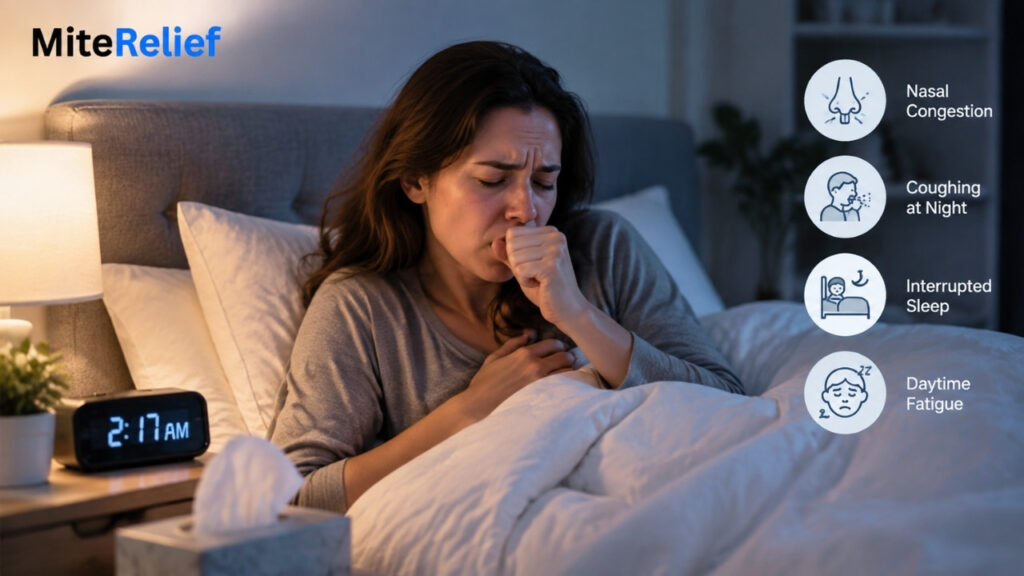
Lying flat can make stuffy nose symptoms feel more intense. When you’re upright, gravity helps drain your sinuses. When you lie down, that help goes away. Mucus can pool, and congestion can feel heavier.
This is one reason nighttime and early morning often feel like the hardest part of the day for people whose dust mite allergy symptoms flare up indoors.
Night Coughing and Breathing Problems
Dust mites coughing at night is a pattern some people notice without connecting it to their bedroom. A dry, tickly cough that shows up after you lie down may be linked to postnasal drip.
This happens when mucus drains down the back of your throat instead of out your nose.
For people with asthma, nighttime exposure can sometimes bring on wheezing or a tighter feeling in the chest.
Sensitive people may also experience mild dust mite-related shortness of breath at night. These breathing symptoms deserve attention. If coughing, wheezing, or breathlessness happens often, or seems to be getting worse, talk to a doctor or allergist rather than waiting it out.
A Simple Bedtime Routine for Lower Allergen Exposure
You don’t need a full room overhaul to start reducing overnight exposure. Small changes, done consistently, tend to matter more than one big cleanup. A few small habits before bed can help:

- Shower before bed if allergens tend to collect on your skin or hair during the day.
- Change into clean sleepwear instead of the clothes you wore all day.
- Keep your bedding reasonably clean and wash it on a regular schedule.
- Cut back on extra fabric near the bed, like stacks of throw pillows or heavy blankets you don’t need.
- Keep the area right around your bed tidy and low in dust.
None of these steps require special products. They’re just small changes that lower how much you’re exposed to right before the hours you spend in close contact with your bedding.
How to Create a Better Sleep Environment

Beyond your bedtime routine, your bedroom setup matters too. A cleaner, drier, better-ventilated space tends to hold fewer indoor allergens.
Clean bedding, washed regularly in hot water, is one of the simplest ways to reduce buildup. Protective covers on your mattress and pillows can add another layer between you and allergens.
That said, covers are just one part of the picture, not a fix on their own. Keeping bedroom humidity in check matters too, since dust mites tend to thrive in damp conditions: basic dust reduction and steady air quality round out a lower-exposure sleep space.
Fresh air helps when you can get it. For more on filtering the air itself, see air purifiers and dust mites.
Nighttime Factor Why It May Matter
Bedding Close, prolonged contact during sleep
Bedroom dust Can contain allergen particles
Humidity Can support dust mite survival
Air quality May affect airborne particles
Cleaning Helps reduce accumulated dust
Why You Wake Up With Allergy Symptoms
Morning sneezing, a runny nose, or puffy, itchy eyes right after you wake up can feel confusing if you don’t connect it to sleep. But these morning allergy symptoms often reflect hours of steady overnight exposure to dust mites in your bedroom.
Many people also notice their symptoms ease once they’ve been up and moving for a while, especially after leaving the bedroom. That shift can be a useful clue. It suggests your bedroom environment may be contributing. Still, this pattern doesn’t confirm the cause on its own.
Other allergens and irritants can cause similar symptoms. So this observation is a starting point, not a diagnosis.
What Can Help During the Night?
If nighttime symptoms are disrupting your sleep, it helps to focus on a few practical steps instead of trying to fix everything at once:
- Reduce obvious triggers in your bedroom, starting with bedding and nearby fabric.
- Keep your sleep area clean on a consistent schedule, not just occasionally.
- Follow whatever allergy management plan works for you, which may include over-the-counter or prescribed options. For an overview, see dust mite allergy medicine options.
- Talk to a doctor if breathing symptoms persist, worsen, or interfere with sleep night after night.
Frequently Asked Questions (FAQs)
Why do I wake up sneezing every morning?
Morning sneezing often reflects hours of overnight allergen exposure in your bedroom. By the time you wake up, your body may have been reacting for several hours already.
Can dust mites cause coughing at night?
Yes, nighttime coughing can be associated with dust mite allergens, often through postnasal drip or general airway irritation. It’s one of several possible causes, so persistent coughing is worth mentioning to a doctor.
Is dust mite allergy worse at night?
For many people, yes. Long, close contact with bedding during sleep can make nighttime and early morning hours feel worse than the rest of the day.
Can dust mite allergies disturb sleep?
Congestion, coughing, and itching can interrupt sleep, whether by waking you outright or making it harder to fall into deep, restful sleep.
Why do I feel better after getting out of bed?
Moving away from the bedroom can reduce your exposure to allergens that built up overnight, which may explain why symptoms often ease once you’re up.
What to Read Next
- Dust Mite Allergy Symptoms
- Dust Mites in Your Bedroom
- How to Prevent Dust Mites
- Do Air Purifiers Help With Dust Mites?
Conclusion
Hours of close, steady contact with your mattress and bedding can make dust mite exposure add up overnight. That helps explain why symptoms often feel worse at night or right after waking. Lost sleep can carry into the next day as fatigue or grogginess.
Morning symptoms can offer a useful clue about your bedroom environment. A few consistent nighttime habits, from clean bedding to a tidy sleep space, may help lower your exposure. If breathing symptoms keep showing up, or seem to be getting worse, it’s worth talking to a doctor.
Medical Disclaimer
This content is for general informational purposes only and is not a substitute for professional medical advice, diagnosis, or treatment. Individual health needs can vary, so speak with a qualified healthcare professional about allergies, asthma, skin reactions, medications, or other symptoms. Seek prompt medical care if symptoms are severe, persistent, or getting worse.

Umar Farooq is the founder of MiteRelief, a resource for dust mite control and allergy prevention. After battling allergen sensitivity, he started creating research-backed guides that turn complex indoor air quality science into practical, affordable solutions anyone can implement.