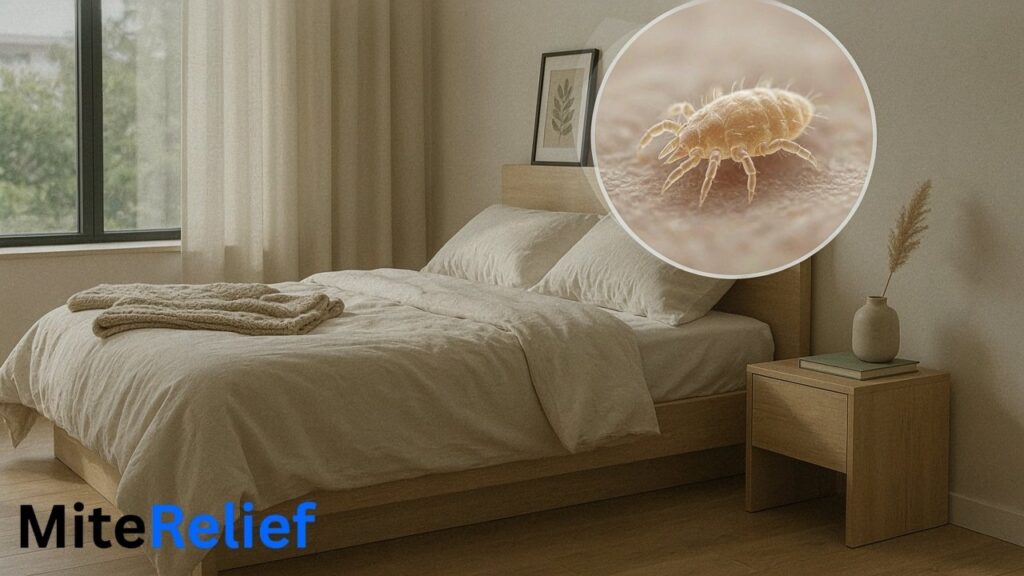
Suspecting a dust mite allergy is not the same as having a real diagnosis. A dust mite allergy test is the tool doctors use to check if your immune system reacts to dust mite allergens.
It usually starts with a review of your medical history. Next comes a skin prick test or a specific IgE blood test.
A trained healthcare professional then reads the results along with your symptoms and history.
The numbers alone don’t tell the whole story. This article walks through each step, from testing to what the results mean.
It gives general information about dust mite allergy testing. It is not a substitute for diagnosis or medical advice from a qualified healthcare professional.
Dust Mite Allergy Diagnosis
A dust mite allergy diagnosis starts with a talk, not a needle. Your doctor will ask about your symptoms.
They’ll want to know when they happen and what seems to trigger them. They’ll also ask about your medical history, including other conditions like asthma or eczema.
Next, your doctor thinks about your allergen exposure. Do you sneeze more at home? Does it get worse in one room?
They’ll also think about other triggers, since pollen, pet dander, and mold can cause similar symptoms.
After that talk, allergy testing comes into play. This means a skin prick test or a specific IgE blood test. These tests look for sensitization.
That means your immune system has made antibodies against dust mite allergens. This is not the same as proving dust mites cause your symptoms.
Your doctor puts the test result together with everything else they know about you. Only then do they reach a diagnosis.
A physical exam is often part of this process too. Your doctor may check your nose, throat, or skin for signs linked to allergies.
This step, sometimes called an allergy evaluation, helps build a fuller picture before any testing even starts.
It also helps rule out other health issues that can look like an allergy at first glance.
When Is Allergy Testing Recommended?
Not everyone with a few sniffles needs a dust mite allergy test. Doctors often suggest testing when symptoms stick around for weeks.
This is especially true if they feel worse indoors or right after cleaning.
Other reasons include ongoing nasal allergy flare-ups. Suspected allergy-related asthma is another reason.
So are symptoms that are hard to manage with normal care. If your triggers are unclear, testing can help sort things out.
For a full list of common symptoms of dust mite allergy, our symptoms guide covers the signs in more detail.
How a Dust Mite Skin Prick Test Works
Before the Skin Prick Test
Before your skin prick test, your doctor reviews your medical history. They’ll also ask about any medication you take.
This matters because antihistamines can change how your skin reacts during testing. This can make a real allergic reaction harder to spot.
Tell your doctor about any skin conditions you have, like eczema or dermatographism. These can affect test results too.
Always follow your clinic’s own instructions before the test. Never stop a prescribed medication on your own. Talk to your healthcare professional first.
During the Test
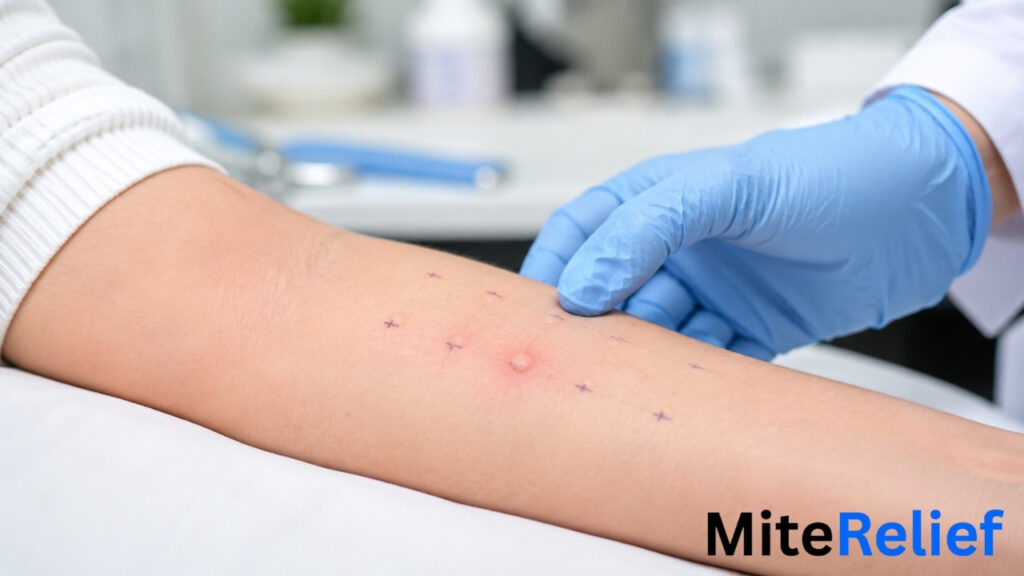
During the skin prick test, a small drop of allergen extract goes on your skin. The skin is then lightly pricked. This lets the extract enter the top layer of skin.
Doctors often use control spots along with the dust mite extract. This helps make sure the test is working properly.
Testing usually happens on the forearm or the back. Some itching or mild swelling is normal. It goes away on its own.
How the Result Is Read
Your doctor checks your skin again after about 15 to 20 minutes. A raised, itchy bump called a wheal means a possible reaction.
The doctor compares the size of this wheal with the control spots. A positive result points to sensitization.
But your doctor still weighs it against your symptoms and medical history. Most patients get their results during the same visit.
Dust Mite Allergy Blood Test (Specific IgE)

A dust mite IgE test measures allergen-specific IgE antibodies in a blood sample. It gets sent to a lab.
The lab measures allergen-specific IgE. IgE stands for Immunoglobulin E.
This is an antibody your immune system makes when it treats dust mite allergens like a threat.
A detectable amount of dust mite sIgE can point to sensitization. This is much like what a skin prick test shows.
Doctors may pick a blood test over a skin test for a few reasons. Some patients have skin conditions that make skin prick testing hard.
Others take medication, like certain antihistamines, that could change skin test results. Sometimes there’s another medical reason a blood test works better for that person.
Unlike a skin prick test, blood testing results aren’t instant. Your sample needs lab processing first. So you’ll wait a few days to get your numbers back.
A detectable level of IgE antibodies is not a scorecard. It does not tell you how bad an allergic reaction might be.
Some patients feel more at ease with a blood test since it only takes one needle stick.
Others simply prefer it because it avoids direct contact between the allergen and their skin.
Whatever the reason, the lab report becomes one more piece of evidence for your doctor to weigh, not a final answer on its own.
Skin Prick Test vs Blood Test
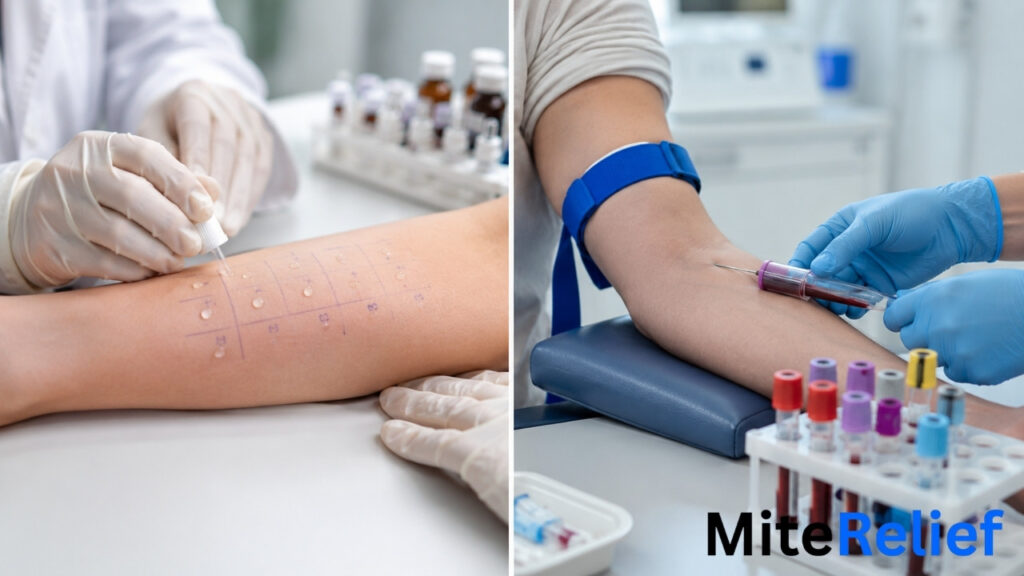
Neither test wins in every case. Each one has its own strengths.
| Factor | Skin Prick Test | Specific IgE Blood Test |
| What is tested | Skin response | Blood sample |
| Results | Usually available quickly | Requires lab processing |
| Antihistamines | Some may interfere | Usually do not affect the measurement in the same way |
| Skin conditions | May make testing difficult | Can be useful when skin testing is unsuitable |
| Interpretation | Combined with symptoms and history | Combined with symptoms and history |
Your allergist picks the right test for you. They weigh your medical history, your medication, your skin condition, and your clinical symptoms.
Sometimes the choice comes down to what’s easier for your schedule. Either way, the goal stays the same. It’s about getting a clear, useful clue for your diagnosis.
Dust Mite Allergy Test Results

What a Positive Result Means
A positive result means your body shows sensitization to dust mite allergens. In plain terms, your immune system has built antibodies against them.
But that alone doesn’t prove dust mites cause your symptoms. Your doctor checks the result against your clinical history. They want to see if it fits the pattern you describe.
What a Negative Result Means
A negative result usually makes IgE-linked sensitization less likely. It’s not a full all-clear, though.
Your doctor will still think about your symptoms and history. They won’t rule out dust mite allergy based on one number alone. Testing has limits, and some cases don’t show up clearly.
Sensitization vs Clinical Allergy
Sensitization and clinical allergy are not the same thing. Sensitization just means your immune system notices an allergen and reacts to it inside your body.
Clinical allergy means you actually get symptoms when you’re around that allergen in real life.
Some people show sensitization on a test but never feel symptoms day to day. That’s why context matters so much.
Preparing for a Dust Mite Allergy Test
Before your visit, write down every medication you take. Include over-the-counter ones too. Your doctor needs the full list, especially any antihistamines, since these can change skin prick test results.
Tell your doctor if you have asthma or any major skin conditions. Your clinic may give you steps to follow before testing. Stick to them closely.
Don’t stop taking a prescribed medication on your own. This is true even if you think it will help your results. Some medicines affect skin prick testing more than others.
Your healthcare professional is the right person to guide that choice.
It also helps to bring a short list of your symptoms and when they happen. Simple notes, like “worse in the bedroom” or “worse after vacuuming,” can save time during your visit.
Your doctor can use these small details alongside your test results to build a clearer picture.
Home Dust Mite Test vs Medical Allergy Test
A home dust mite test and a medical allergy test are not the same thing. One checks your house. The other checks your body.
| Home Dust Mite Test | Medical Allergy Test |
| Tests the environment | Tests the person’s immune system response |
| Looks for dust mite allergens in the home | Looks for sensitization to dust mite allergens |
| Does not diagnose a personal allergy | Helps with medical diagnosis |
If you want to learn about testing for dust mites at home, that guide walks through the steps.
What Happens After the Test Results?
Once results come back, your healthcare professional checks if they match your symptoms.
From there, they may confirm a diagnosis. Or they might suggest more checks if something doesn’t add up.
Your doctor might also talk about cutting your allergen exposure at home. They may bring up ways to manage day-to-day symptoms.
If treatment fits your case, they’ll walk you through dust mite allergy treatment options that suit you best.
Frequently Asked Questions
How accurate is a dust mite allergy test?
Both skin prick and specific IgE blood tests give useful clues about sensitization. Neither one is perfect on its own. Your doctor reads the results together with your symptoms and medical history.
Can antihistamines affect a dust mite skin test?
Yes. Some antihistamines can lower the skin‘s reaction during testing. This might hide a real allergic reaction. Always follow the steps your testing clinic gives you before your visit.
How long does a dust mite skin prick test take?
The skin reaction is usually checked around 15 to 20 minutes after testing. The full visit, with history review and test setup, often takes longer than that.
Can children have a dust mite allergy test?
Yes. Children can be tested for dust mite allergy when it fits their case. The exact testing method depends on their age, health, and situation.
Do I need both a skin prick test and a blood test?
Not always. Your allergist picks the test, or tests, that match your case. There’s no single rule that fits every person. Some patients only need one test to get a clear answer.
Can a dust mite allergy test show a false result?
Like most medical tests, a dust mite allergy test isn’t flawless. A few things, like medication use or a skin condition, can affect how the skin prick test responds. That’s one reason your healthcare professional always weighs test results alongside your symptoms and medical history, rather than reading them alone.
What to Read Next
- Best Allergy Medicine for Dust Mites
- Dust Mite Allergy Symptoms: How to Know If You’re Allergic
- How to Test for Dust Mites at Home
Conclusion
A dust mite allergy diagnosis relies on more than one test result. Your doctor looks at the full picture. That means your symptoms, your medical history, and either skin prick testing or specific IgE testing.
This combined approach helps confirm whether dust mite allergens are truly behind what you feel. That way, you get a real answer instead of a guess.
Medical Disclaimer
This content is for general informational purposes only and is not a substitute for professional medical advice, diagnosis, or treatment. Individual health needs can vary, so speak with a qualified healthcare professional about allergies, asthma, skin reactions, medications, or other symptoms. Seek prompt medical care if symptoms are severe, persistent, or getting worse.

Umar Farooq is the founder of MiteRelief, a resource for dust mite control and allergy prevention. After battling allergen sensitivity, he started creating research-backed guides that turn complex indoor air quality science into practical, affordable solutions anyone can implement.