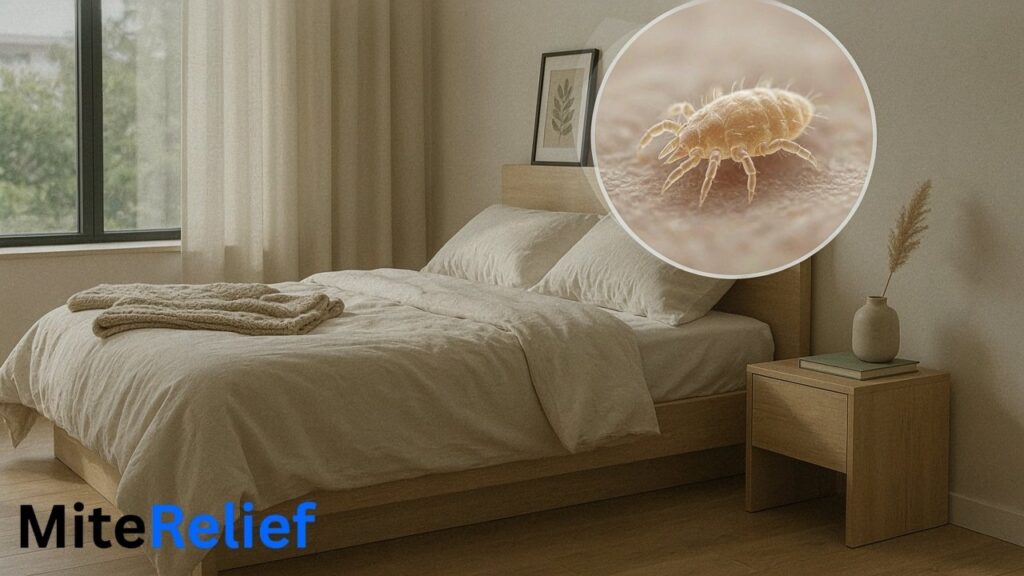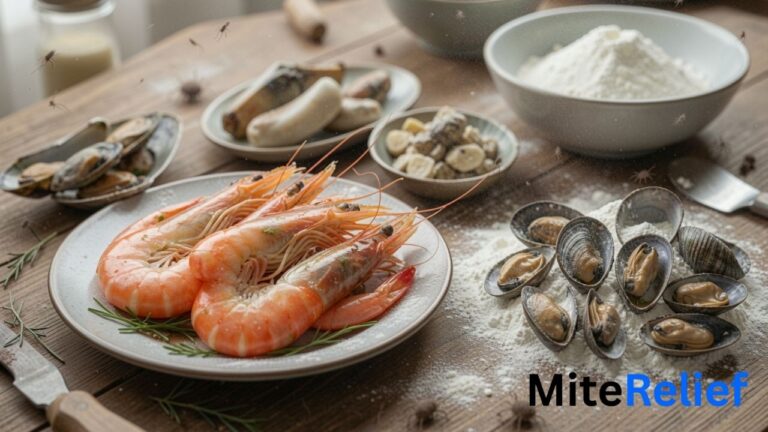
If you have a dust mite allergy, you’ve probably seen warnings about shrimp, shellfish, flour, or other foods. Maybe someone told you to cut out dairy or wheat just in case. But having a mite allergy does not mean you must remove these foods from your diet.
Most people with dust mite allergy do not need to avoid specific foods to avoid with dust mite allergy.
You only need to avoid a food if it has caused a reaction, or if a doctor has diagnosed a food allergy. This guide explains what the research really shows.
This article is for general information only. Do not cut out major food groups. Do not eat a food again that caused a bad reaction without asking a doctor first.
For more on how this allergy feels day to day, see our guide on dust mite allergy symptoms.
This article is for general information only and is not medical advice. Talk to a doctor about your own symptoms and diet.
Foods to Avoid with Dust Mite Allergy: Quick Answer
There is no single list of foods that everyone with a dust mite allergy must avoid. It depends on your own history and test results.
Shellfish is the main food linked to dust mite allergy, and shrimp comes up the most. If a food has already caused a reaction, stay away from it until an allergist checks you out.
A different problem called Oral Mite Anaphylaxis is tied to food that has mites in it, not to shellfish. And no, you do not need to cut out wheat or other major food groups just because you have a dust mite allergy.
| Situation | General Guidance |
| Shellfish you already eat with no problems | No need to stop |
| Food that caused an allergic reactions | Avoid until a doctor checks you |
| Wheat with no symptoms | No need to avoid |
| Flour that may have mites in it | Do not eat it |
| Whole food groups | Do not cut out without a medical reason |
Why Does a Dust Mite Allergy Affect What You Eat?
Here is the simple version. Cross-reactivity means your body’s defenses, built to fight one allergen, sometimes mix it up with a similar one. It is a case of mistaken identity, not a brand-new allergy.
Tropomyosin is a protein. It shows up in many small creatures, including house dust mites and shellfish like shrimp. The mite version of this protein, called Der p 10, looks a lot like the shrimp version.
Your immune system can sometimes react to the shrimp protein because it looks so much like the mite protein it already knows.
This does not mean every person with a dust mite allergy will react to shellfish. It just explains why the two allergies sometimes show up in the same person.
Learn more about how these allergens form in our guide to house dust mites and their allergens.
Dust Mite Cross Reactivity With Shellfish
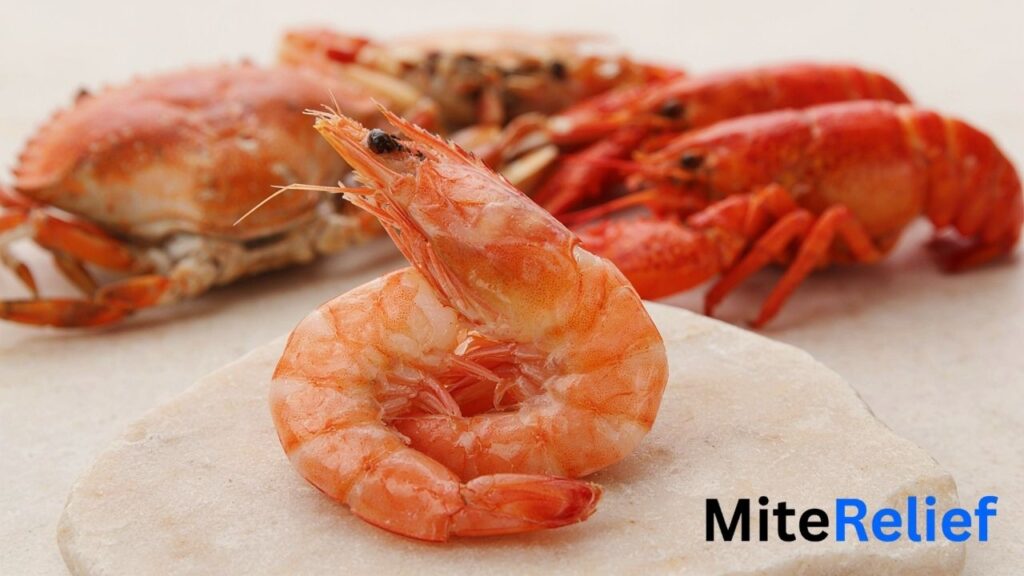
When people talk about dust mite cross reactivity, they usually mean crustaceans. This group has the strongest proof behind it.
Crustaceans
Shrimp and other crustacean shellfish all have tropomyosin that looks like the tropomyosin in house dust mites. This is the clearest dust mite cross-reactivity food link we have.
Mollusks
Mollusks are a separate shellfish group. Their cross-reactivity patterns are different from those of crustaceans.
Mollusks are a separate shellfish group, and their cross-reactivity patterns can differ from those of crustaceans. A review of shellfish and house dust mite allergy explains these differences in more depth.
Not everyone with a dust mite allergy will react to these foods. The link is about shared proteins. It is not a promise that you will have symptoms.
Dust Mites and Shrimp: Why Is There a Connection?
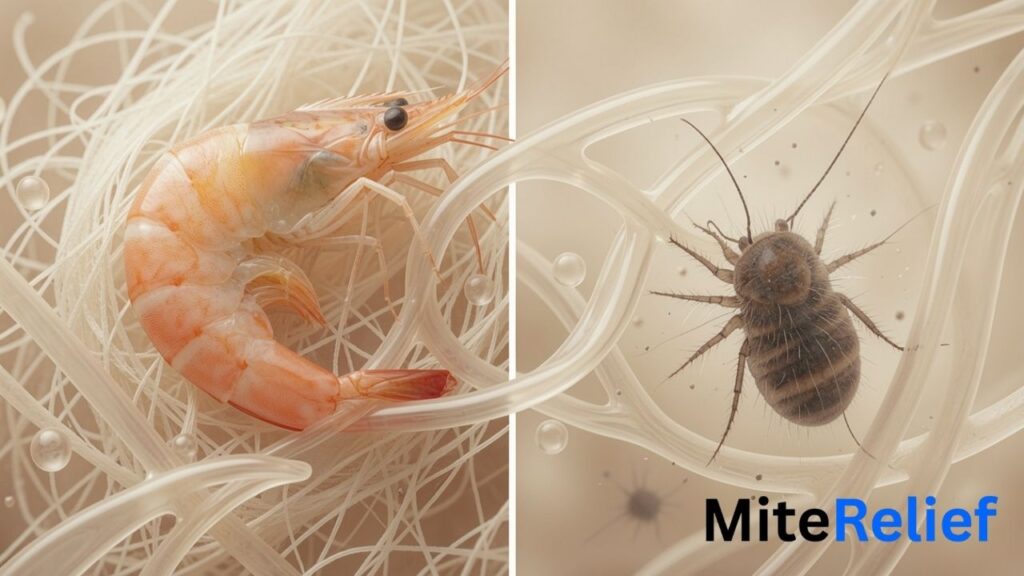
Shrimp tropomyosin and house dust mite tropomyosin look alike. That is why dust mites and shrimp keep coming up together. Der p 10 is the mite protein most often blamed for this overlap.
A person can become sensitized to both. But a positive test does not always mean you have a true shrimp allergy. This difference matters a lot.
If you eat shrimp and feel fine, a dust mite allergy alone does not mean you need to stop. Watch for real warning signs instead: hives, swelling, wheezing, throwing up, a tight throat, or trouble breathing.
If any of these happen after eating shrimp, see an allergist. Do not just guess based on shellfish allergy and dust mites articles online. Our guide on
Other Foods: What Is and Is Not Proven Cross-Reactivity?
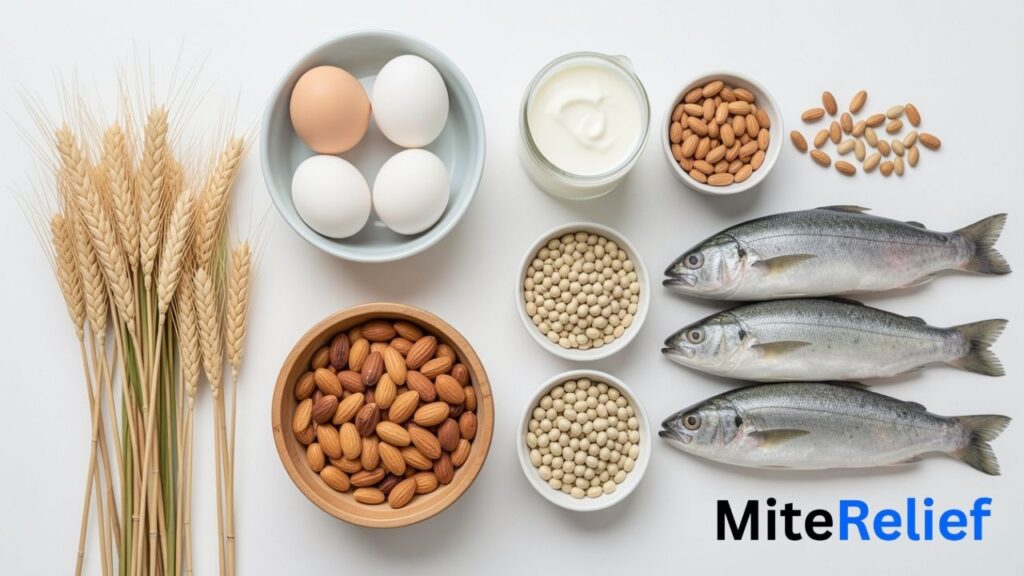
This is where a lot of bad advice shows up online. A dust mite allergy alone does not mean you must avoid wheat, other grains, soy, nuts, eggs, dairy, or fish.
These foods can cause their own allergies. But that is a different problem from proven dust mite cross-reactivity. Grouping them is not accurate.
An ingredient in packaged foods, processed foods, or protein bars might matter, but only if you already have a separate, confirmed allergy to that ingredient.
To be clear about what is not proven: preservatives do not cause dust mite cross-reactivity. Alcohol does not cause it either.
Dairy and wheat do not need to be cut out just because you have a dust mite allergy. Removing whole food groups without a real cause is not necessary and offers no benefit.
What Is Oral Mite Anaphylaxis or Pancake Syndrome?
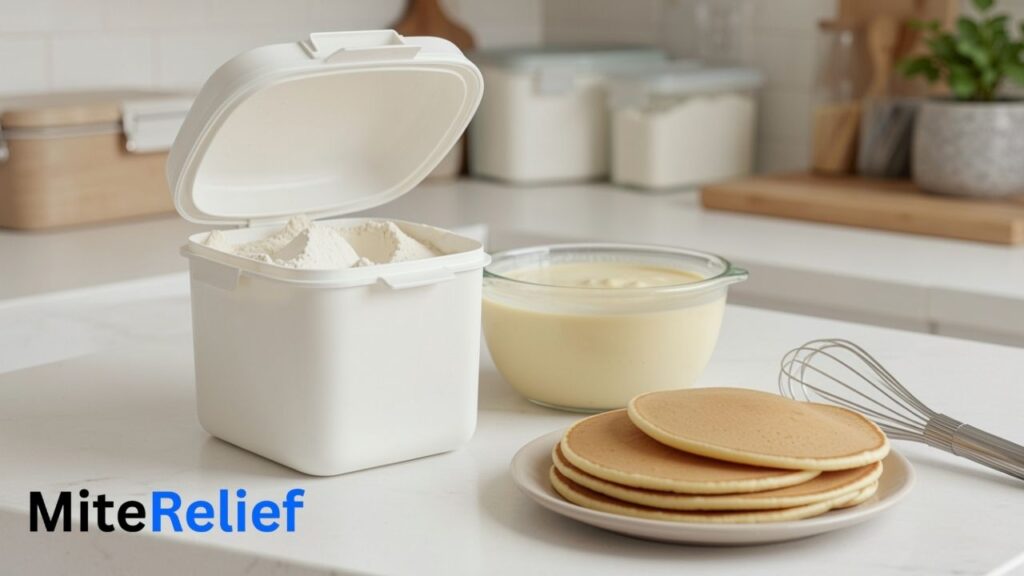
Oral Mite Anaphylaxis is different from shellfish cross-reactivity. It is a rare but serious reaction. It happens after eating food that has live mites or mite bits in it, not because of any shared protein.
It has been linked to wheat flour, pancake mix, and other flour-based mixes that were stored improperly. Some other stored grain products have caused it too.
Flour with mites in it can trigger a serious reaction in some people. Cooking the food does not always stop the allergic response once mites have gotten into it.
Signs can include hives, swelling, wheezing, trouble breathing, stomach problems, and in bad cases, a full allergic emergency. Some people call this Pancake Syndrome. Do not confuse it with a normal wheat allergy.
The trigger here is mites in the food, not the wheat itself. A review of oral mite anaphylaxis explains how this reaction happens and which foods are most linked to it.
Safe Food Storage to Reduce Oral Mite Anaphylaxis Risk

A few storage habits help a lot here. Keep opened flour and flour mixes in a tightly sealed container instead of the original packaging.
Try keeping opened flour in the fridge or freezer, especially if you live somewhere warm and humid, since mites do well in those conditions. Always follow the storage tips on the package.
Do not leave opened flour mixes sitting out at room temperature for a long time. If you think a product may have mites in it, throw it away.
Smell, taste, and texture cannot tell you if a product has mites in it. Do not trust your senses here.
This is a food storage issue. It is related to, but different from, cutting down on mites in your home, which our guide on reducing dust mite exposure at home covers in more detail.
Does Dust Mite Allergy Mean I Should Avoid All Shellfish?
No. Having a dust mite allergy alone does not mean you must avoid all shellfish.
Cross-reactivity is different for each person. Some people test positive but never get food symptoms. That is why your own history matters so much.
Skin-prick testing and specific IgE blood tests can help show if you are sensitized, but a positive result alone does not always prove a true food allergy.
An allergist looks at your symptoms, your history, and your test results together before making a call. If the diagnosis is not clear, a doctor-supervised food test may be used. Do not try to test a food at home.
Do not eat a food again that already caused a bad reaction, just to see what happens. Medicine can ease allergy symptoms, but it does not make an unsafe food safe to eat. Our guide to dust mite allergy treatment options explains what these medicines can and cannot do.
The AAAAI guidance on oral food challenges is a good resource if you want to learn how this testing works.
Can Diet Help With Dust Mite Allergy Symptoms?
There is no proven dust mite diet that cures or treats dust mite allergy. Anyone who says otherwise is overselling what the science shows.
That said, a balanced diet is good for your health overall, even if it will not replace real allergy treatment. Meals built around fish, plant-based foods, fruits, vegetables, nuts if you can eat them, and dairy if you can eat it are a solid base.
Diet plays a role in inflammation and general health, but that is not the same as saying one food fixes dust mite allergy.
Skip the bold claims you may see elsewhere. Vitamin C does not cure dust mite allergy. A vitamin D deficiency does not cause it.
Omega-3s do not treat it. Processed foods are not proven to cause dust mite allergy either. No proof cutting dairy or alcohol helps with mite cross-reactivity.
Frequently Asked Questions
Can Dust Mite Allergy Cause a Reaction to Shrimp?
It can, because of the link between Der p 10 and tropomyosin in house dust mites and shrimp. But not everyone with a dust mite allergy reacts to shrimp. If shrimp has caused symptoms for you, talk to an allergist instead of testing it on your own.
What Is Pancake Syndrome and How Do I Avoid It?
Pancake Syndrome, or Oral Mite Anaphylaxis, happens when someone eats food made with flour that has mites in it. Storing opened flour and mixes sealed and in the fridge lowers the chance of an allergic response a lot.
Does Having a Shellfish Allergy Mean I Have a Dust Mite Allergy Too?
No. Dust mite shrimp cross-reactivity means the two allergies can happen together, but one does not prove you have the other. Each one needs its own test.
What Deficiency Is Associated With Dust Mite Allergy?
No single nutrient deficiency is proven to cause dust mite allergy. Studies have looked at things like vitamin D and allergies in general, but that is not the same as saying low vitamin D causes house dust mite allergy.
Should I Avoid Wheat If I Have a Dust Mite Allergy?
Not unless there’s another medical cause for it. A dust mite diet does not usually mean cutting out wheat. The real concern is flour with mites in it causing Oral Mite Anaphylaxis, which is a different problem from a normal wheat allergy.
What to Read Next
- Best Allergy Medicine for Dust Mites (2026)
- Dust Mite Rash: Pictures, Symptoms & Treatment
- Dust Mite Allergy Symptoms: Signs You Shouldn’t Ignore
Conclusion
There is no single list of foods to avoid with dust mite allergy. The strongest known link is with shellfish, especially shrimp, but not everyone with a mite allergy will react to it. Oral Mite Anaphylaxis is a separate problem tied to food that has mites in it, not to shellfish cross-reactivity.
Skip food restrictions you do not need, and talk to an allergist if a food has caused you symptoms.If you think you are having anaphylaxis or a severe food reaction, get emergency medical care right away.
Medical Disclaimer
This content is for general informational purposes only and is not a substitute for professional medical advice, diagnosis, or treatment. Individual health needs can vary, so speak with a qualified healthcare professional about allergies, asthma, skin reactions, medications, or other symptoms. Seek prompt medical care if symptoms are severe, persistent, or getting worse.

Umar Farooq is the founder of MiteRelief, a resource for dust mite control and allergy prevention. After battling allergen sensitivity, he started creating research-backed guides that turn complex indoor air quality science into practical, affordable solutions anyone can implement.