Many people don’t realize that dust mites in curtains can add to indoor allergen exposure. This is most likely in bedrooms, where fabric hangs near the bed for hours every night. Curtains collect dust over time, and that dust can carry dust mite allergens.
The type of fabric matters. So does how often you clean it. This guide explains which window coverings collect more allergens, when to clean or replace them, and which options are easier to keep clean.
This article is for education only. It is not medical advice. If you have ongoing symptoms, talk with a doctor or allergist.
Can Dust Mites Live in Curtains and Drapes?
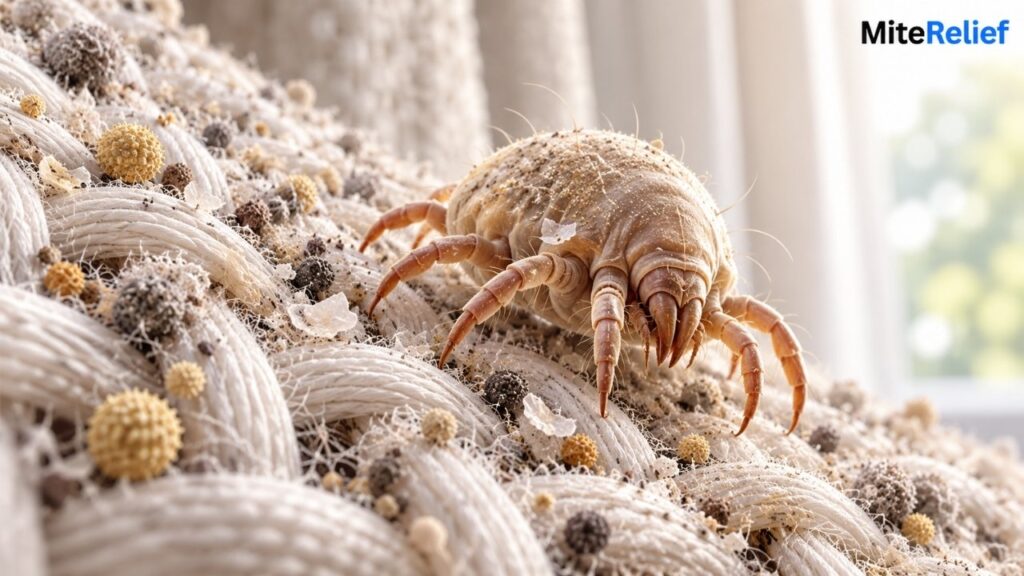
Yes, they can. Dust mites are tiny living things you can’t see. The most common type in US homes is the house dust mite. It feeds on shed skin flakes and other small bits of organic matter.
Curtains and dust mites often go together because fabric holds dust. Thick drapes have deep folds and soft surfaces. Dust settles there and stays put. When humidity is high, conditions can be better for dust mites to survive.
Here is an important point. Dust mites themselves don’t make you sick. Your body reacts to the allergens in their droppings and body parts. This is an allergy.
Dust mites in drapes may matter most in the bedroom. Curtains hang close to bedding, and you breathe near them while you sleep.
Opening and closing them can also stir up settled dust.
Common signs of a reaction include sneezing, a runny nose, and a stuffy nose. Together, these are often called allergic rhinitis. Learn more about the signs of dust mite allergy.
Symptoms depend on how sensitive you are and how much exposure you have. Curtains are only one possible source.
Which Curtains Attract More Dust Mites?
Heavy, layered, and textured fabrics usually hold more dust. Flat, hard surfaces hold less. No window covering can guarantee relief from allergy symptoms. But some are much easier to clean.
Materials matter too. Natural fibers like cotton and linen are often easy to wash. Synthetic fabrics like polyester can also be washable. What counts most is whether you can wash the curtain and how often you do it.
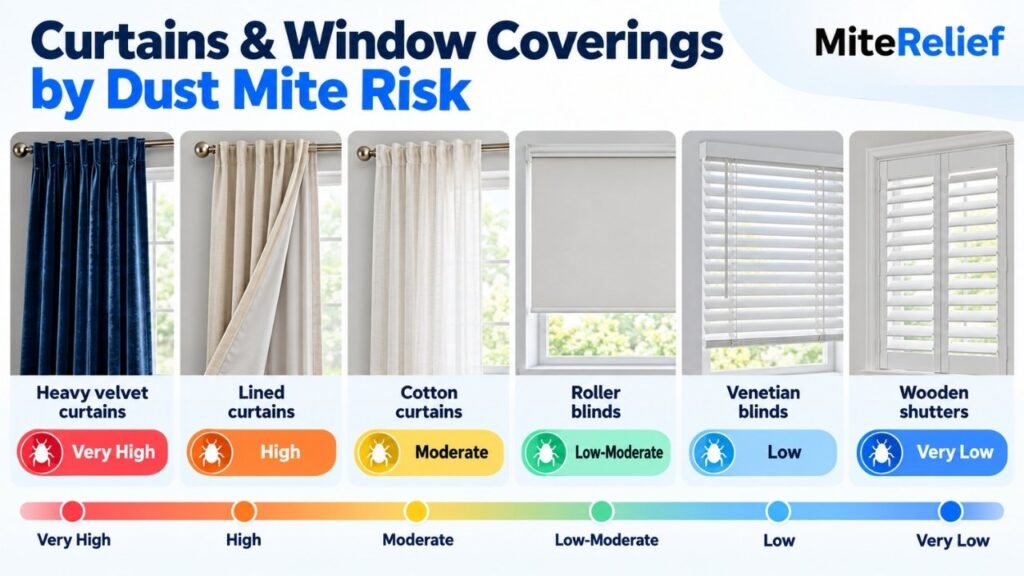
Use this table as a general guide. It is not a strict ranking.
| Window Covering Type | Dust Mite Risk | Why It Matters | Allergy-Friendly Choice |
| Heavy velvet or brocade drapes | Very High | Thick fabric and deep texture can trap dust and allergens | Avoid in bedrooms if possible |
| Lined fabric curtains | High | Many layers collect dust and are harder to clean | Wash often or consider other options |
| Unlined cotton or linen curtains | Moderate | Easier to wash than heavy fabrics | Better choice with regular cleaning |
| Fabric roller blinds | Low to Moderate | Flat surfaces collect less dust but still need care | Wipe or dust regularly |
| Vertical fabric blinds | Moderate | Fabric slats collect dust and are harder to clean | Clean on a regular schedule |
| Aluminum or PVC Venetian blinds | Low | Hard surfaces are easy to wipe | Good low-allergen option |
| Wooden shutters | Very Low | Smooth surfaces mean less fabric to hold dust | Strong allergy-friendly option |
| Blackout roller blinds with no fabric covering | Lowest | Little fabric surface to collect allergens | Useful for severe allergies |
Replace or Clean Curtains for Dust Mite Allergy?
It depends on how bad your symptoms are and the condition of your curtains. Not everyone needs to replace their curtains.
If your curtains are light and washable, regular cleaning may be enough. If they are heavy, lined, or can’t be washed, replacing them may be worth thinking about. Lightweight, washable curtains are a practical swap.
Start with the bedroom. You spend the most time there, so exposure is longer. Living room curtains can usually wait.
Keep in mind that new curtains won’t cure a dust mite allergy. Dust mites also live in other places, like bedding. Changing your window coverings is one step that may help lower exposure.
For a bigger picture, read about reducing dust mite exposure in the bedroom.
If you have strong or lasting symptoms, ask an allergist what steps fit your needs.
How to Clean Curtains for Dust Mite Allergy
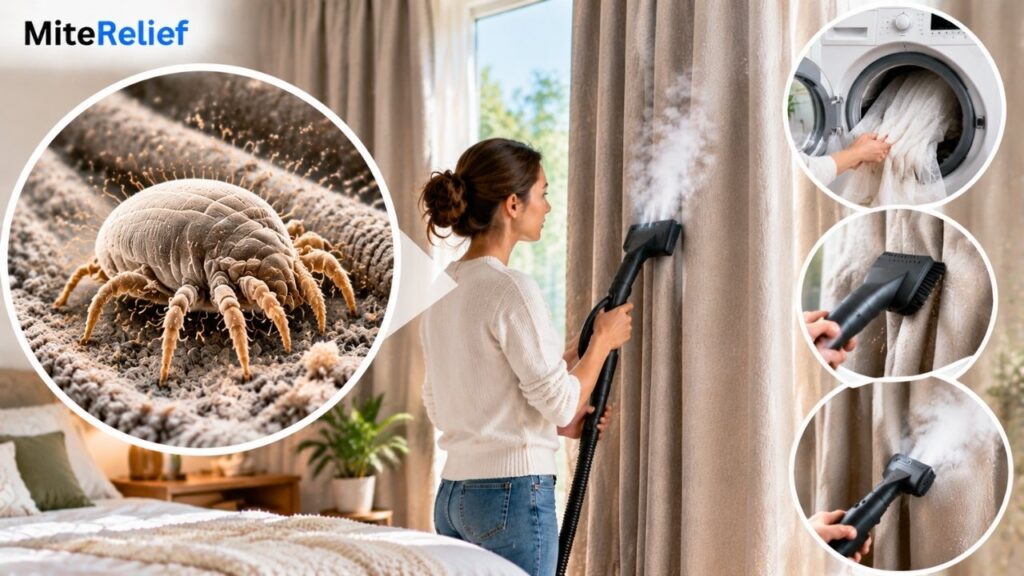
How you clean depends on the fabric. Always check the care label first.
Machine-washable curtains
- Follow the care label for water temperature and cycle.
- Wash them on a regular schedule. This helps remove dust and allergens.
- Dry them fully before you hang them back up.
- Learn about laundry solutions for dust mite allergens.
Curtains that can’t be washed
- Use a vacuum cleaner that has a soft brush. A HEPA filter helps keep fine dust from blowing back into the room.
- Vacuum slowly from top to bottom, including the folds.
- Consider professional cleaning for heavy drapes.
- Check the label before trying steam. Some fabrics can be damaged. Read about steam cleaning methods for dust mite control.
For how to clean curtains for dust mites, regular care works better than one big clean now and then.
Cleaning Roller and Venetian Blinds
Blinds have fewer soft surfaces than curtains, so they are often easier to keep clean. They still collect dust and need regular care.
Cleaning Fabric Roller Blinds
- Pull the roller blind down all the way.
- Wipe it with a dry or slightly damp microfiber cloth.
- Don’t soak the fabric. Too much water can leave stains or damage it.
Cleaning Aluminum and PVC Venetian Blinds
- Close the slats and wipe one side with a damp microfiber cloth.
- Flip the slats and wipe the other side.
- Repeat often, so dust never builds up.
Best Window Coverings for Dust Mite Allergy

No single choice is best for everyone. Still, some options are easier to keep clean. That can help lower allergen buildup.
For the best window coverings for dust mite allergy, think about how easy the surface is to wipe or wash:
- Wooden shutters have smooth surfaces and no fabric to hold dust.
- Aluminum or PVC Venetian blinds wipe clean in minutes.
- Washable cotton or linen curtains can go in the washing machine.
- Lightweight materials wash and dry more easily than heavy ones.
If you want allergen-free curtains, remember that no curtain is truly free of allergens. The goal is to choose fabrics that are easy to wash and maintain. Dust mite resistant curtains may also help, but they still need regular cleaning.
Reducing Dust Mite Allergens Around Windows
A few simple habits can limit dust near your windows:
- Wash or vacuum curtains regularly.
- Wipe window sills and blinds so dust doesn’t pile up.
- Keep indoor humidity low. Many experts suggest staying below about 50 percent.
- Start with bedroom windows, since that’s where you spend the most time.
These steps can support better indoor air quality. You can also read about dust mites in upholstered furniture, another soft surface where dust collects.
Frequently Asked Questions (FAQs)
Do curtains have dust mites?
They can. Fabric curtains collect dust, and that dust may contain dust mite allergens. Regular cleaning helps keep it under control.
How often should curtains be washed for dust mite allergy?
It depends on the material and the care label. Many people wash washable curtains every few weeks to every few months. If you’re unsure what works for you, ask your allergist.
Are blackout curtains bad for dust mites?
Thick fabric blackout curtains can hold more dust than lighter ones. Easy-to-clean options, like blackout roller blinds, may be simpler to maintain.
What are the best window coverings for dust mite allergy?
Hard, easy-to-clean surfaces are often the simplest to maintain. Examples include wooden shutters and aluminum or PVC Venetian blinds.
Can washing curtains remove dust mite allergens?
Washing helps lower allergens in fabric. But dust builds up again, so cleaning needs to be a regular habit.
What to Read Next
Conclusion
Curtains can collect dust, and that dust may hold dust mite allergens. Both the fabric you choose and how often you clean it matter. Washable curtains or easy-to-clean window coverings may help lower your exposure.
Pay the most attention to bedroom windows, since you spend so many hours there. Cleaning curtains helps, but it won’t solve a dust mite allergy on its own.
Medical Disclaimer
This content is for general informational purposes only and is not a substitute for professional medical advice, diagnosis, or treatment. Individual health needs can vary, so speak with a qualified healthcare professional about allergies, asthma, skin reactions, medications, or other symptoms. Seek prompt medical care if symptoms are severe, persistent, or getting worse.

Umar Farooq is the founder of MiteRelief, creating research-backed guides about dust mites, indoor allergens, and practical allergy prevention for healthier homes.