Does your nose stay blocked for weeks? Does facial pressure return just when you thought it was gone? If you are looking into dust mites sinusitis, you’re not alone. Dust mite allergy can keep the nose inflamed day after day.
That swelling can slow sinus drainage and prolong symptoms. Still, many things can cause sinus trouble, and dust mites are just one possible piece of the puzzle.
This article is for education only. It is not a substitute for advice from a healthcare provider.
Sinus Pressure vs Sinusitis: What’s the Difference?
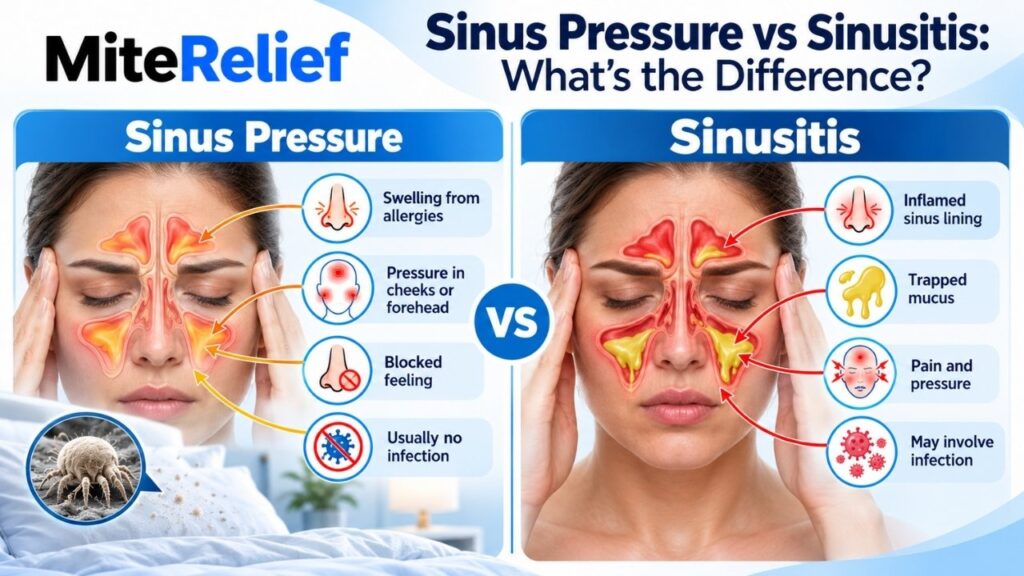
Sinus pressure and sinusitis may feel the same, yet they are not the same thing. What sits behind them is often different.
Allergy-related sinus pressure starts with inflammation. Your immune system overreacts to an allergen, and the lining of your nasal passages puffs up. In most cases, no germ is involved.
Acute sinusitis does not last long. A virus, such as the common cold, most often causes it. Occasionally, a bacterial infection joins in. Chronic sinusitis lasts 12 weeks or more and involves ongoing sinus inflammation.
A sinus infection is just one kind of sinusitis. Sinusitis means the sinuses are swollen and irritated, regardless of the trigger.
| Condition | Main Cause | Typical Pattern | Infection Present? |
| Allergy-related sinus pressure | Allergic inflammation | Congestion, pressure, sneezing | Usually no |
| Acute sinusitis | Often viral, sometimes bacterial | Short-term sinus symptoms | Sometimes |
| Chronic sinusitis | Ongoing sinus inflammation | Symptoms lasting 12 weeks or longer | Not always |
How Can Dust Mite Allergy Affect Your Sinuses?
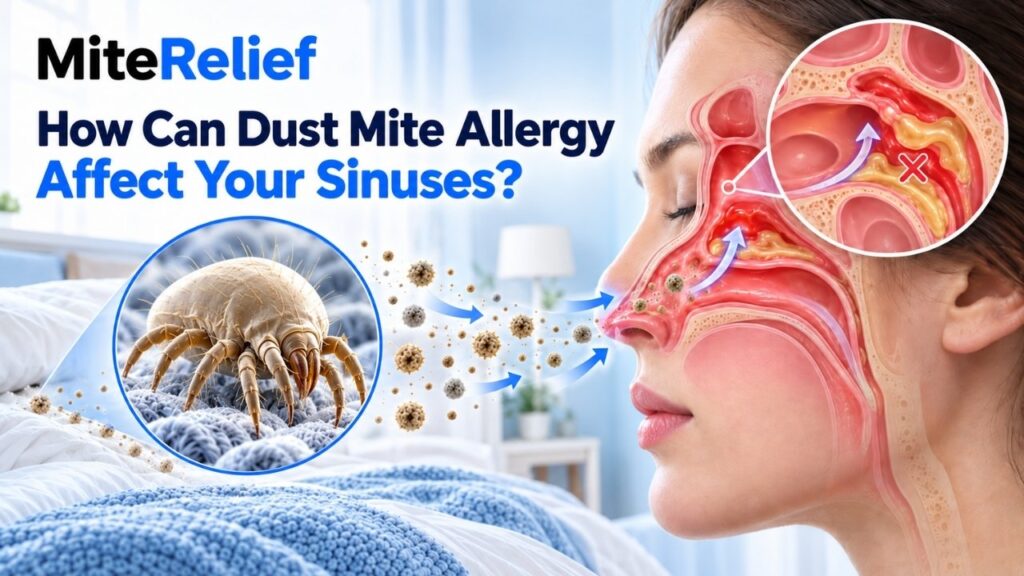
A house dust mite is a very small creature found in many homes. The mite is not what bothers you. The real culprit is dust mite allergens: proteins in the mite’s waste and body parts.
When dust gets disturbed, these proteins become airborne allergens, and you pull them into your nasal cavity with each breath.
With allergic rhinitis, your immune system treats these proteins like a danger. It produces IgE antibodies and triggers an allergic reaction. Here is the path that may lead to sinus trouble:
Dust mite allergens → allergic inflammation → swollen nasal mucosa → tighter sinus drainage openings → mucus buildup → lingering sinus symptoms
Dust mites do not infect the sinuses. They act as an allergy trigger. Even so, the swelling they cause can make other problems more likely. To learn more, read about the signs of dust mite allergy in our symptoms guide.
How Blocked Sinus Drainage Can Lead to Ongoing Problems
Your sinuses produce mucus every day. In a healthy nose, it flows out through tiny openings. When the lining swells, those openings can narrow, and mucus can get stuck.
Stuck mucus can keep the area irritated. For some people, it may also make a later infection more likely. This is not true for everyone.
Can Dust Mites Cause Recurrent Sinus Infections?

Dust mites don’t directly cause every sinus infection. Still, dust mite allergy may be one reason your sinus trouble keeps coming back. Allergy-related swelling can block the sinuses from draining properly, so problems may return more often.
Certain patterns can hint at an allergic trigger. Ask yourself whether your symptoms:
- Show up all year long
- Keep returning
- Seem worse inside your home
- Cause congestion when you wake up
- Bring sneezing along with sinus pressure
- Return after a brief improvement
If several of these fit, allergy may be part of the story. Some people describe this as recurrent sinus infections caused by dust mites. Only a medical exam, though, can show what is truly going on.
Signs Your Sinus Problems May Have an Allergy Trigger
Watch for patterns rather than looking for proof. Allergy symptoms often include sneezing, itchy eyes, or a runny nose. They may feel stronger after time in the bedroom or while resting on your bedding.
Postnasal drip is common too. A real infection is more likely to bring thick, colored mucus, a fever, or pain that grows worse over several days.
Acute vs Chronic Sinusitis: What Changes?
Acute sinusitis usually follows a cold. Facial pain, nasal congestion, and thick mucus tend to appear quickly. Most people feel better within a few weeks. Some wonder whether a sinus infection is related to a dust mite allergy.
Allergies don’t cause the infection, but swelling can make it harder for the sinuses to clear out.
Chronic sinusitis works differently. Symptoms stay for 12 weeks or longer.
They may ease and flare, but they do not fully go away. That often means something more than a simple cold is at work.
Lasting symptoms may point to an allergic, inflammatory, or structural cause. Structural means a problem with the shape of the nose or sinuses, such as a crooked wall or a growth.
Since the causes differ, long-lasting symptoms call for a medical evaluation. Guessing can slow down the right care.
When Nasal Polyps May Be Part of the Problem
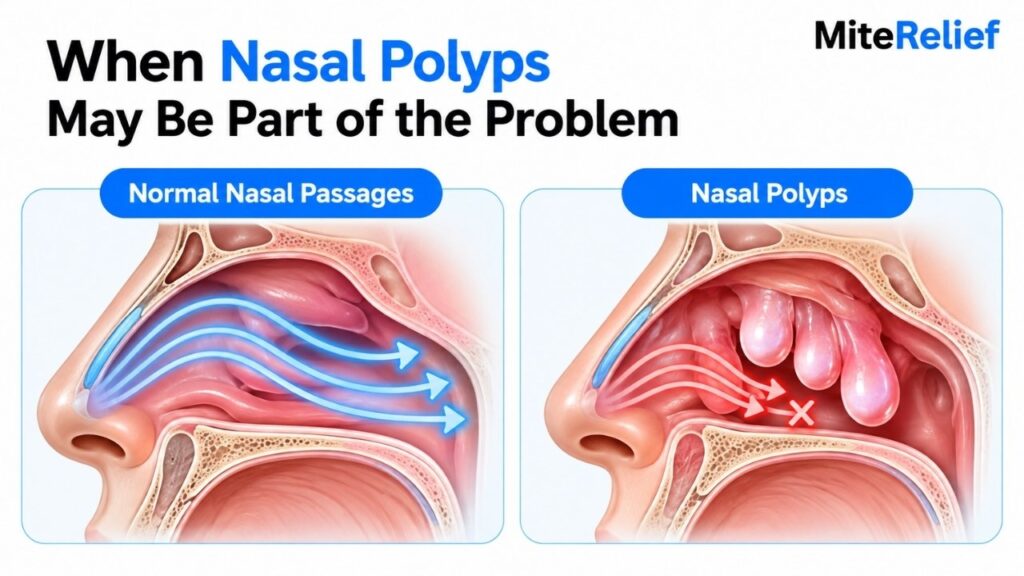
Nasal polyps are soft, painless lumps that grow in the lining of the nose or sinuses. They are not cancer. They often develop after long periods of inflammation, and ongoing allergies may contribute.
Small polyps may cause nothing at all. Bigger ones can lead to:
- A nose that stays blocked
- A weaker sense of smell
- Steady sinus pressure
- Hard time breathing through the nose
If you suspect polyps, talk to an ENT specialist. This doctor can look inside your nose and check your sinuses. Only an exam can confirm polyps, so please do not try to figure it out alone.
How Is Dust Mite-Related Sinusitis Managed?
Care often follows a clear, step-by-step path. Your provider can help you choose what works best for you.
- Confirm the allergy. Find out how dust mite allergy is tested. A skin prick test or blood test, along with your medical history, can show whether dust mites trigger your symptoms.
- Calm allergic inflammation. Choices may include nasal corticosteroids and antihistamines. Learn more about these nasal treatment options for dust mite allergy.
- Rinse if advised. Nasal irrigation using a saline rinse may help wash out mucus. Ask your provider how to do it safely.
- Check for infection. If signs point to a bacterial infection, your provider can decide on next steps.
- Visit an allergist. An allergist can look into symptoms that keep returning.
- Visit an ENT specialist. This can help with long-term blockage or possible polyps.
When an allergy is confirmed, some people explore a longer-term route called allergy immunotherapy. You can read about immunotherapy for dust mite allergy here.
Lowering dust mite exposure at home may help, too. Examples include a HEPA filter or protective covers on your mattress and bedding. Results vary from person to person.
When Should You See a Doctor or ENT?
Do not put it off if your symptoms keep coming back. Reach out to a healthcare provider if you notice:
- Sinus symptoms that return again and again
- Strong facial pain
- Fever
- Puffiness around the eyes or face
- Loss of smell
- A blocked nose that does not clear
- Recurrent sinus infections
- Trouble breathing
- No improvement over time
Seek urgent care for sudden vision changes, a stiff neck, confusion, or serious swelling around the eyes. Your provider may refer you to an allergist or an ENT specialist.
Frequently Asked Questions (FAQs)
Can dust mite allergy cause chronic sinusitis?
It can play a part. Allergic inflammation may leave the sinuses swollen and slow to drain. Chronic sinusitis has many possible causes, though, so a doctor should take a look.
What is the connection between dust mite allergy and sinusitis?
Dust mite allergy can cause nasal inflammation that blocks sinus drainage. Trapped mucus may keep symptoms going or raise infection risk in some people, though dust mites do not directly cause sinusitis.
How do I know if my sinus problems are allergy-related?
Sneezing, itchy eyes, symptoms all year, and congestion in the morning are clues. Allergy testing is the most reliable way to find out.
Can dust mite allergy lead to a sinus infection?
Not on its own. Dust mites set off allergic swelling. That swelling can block drainage, which may raise the chance of infection in some people.
Will antibiotics fix recurring sinus problems caused by allergies?
Usually not. Antibiotics work only on bacterial infections. They don’t calm allergic inflammation so that symptoms may return.
Can dust mite allergy contribute to nasal polyps?
Long-lasting allergic inflammation may be one factor. Polyps can also come from other causes. An ENT specialist can explain more.
Does treating dust mite allergy help sinus symptoms?
It may, if dust mites really are a trigger for you. Managing the allergy can lower swelling and ease symptoms. It is not a sure cure.
What to Read Next
- Dust Mite Allergy Test
- Nasal Spray for Dust Mite Allergy
- House Dust Mite Immunotherapy
- Dust Mite Allergy vs Seasonal Allergy
Conclusion
Dust mite allergy may add to long-running swelling in the nose and sinuses. That swelling can block drainage and keep symptoms returning. Even so, dust mites are only one possible cause.
If you have recurring sinus infections or symptoms that will not go away, see a healthcare provider. Finding the real cause is the best first step toward relief.
Medical Disclaimer
This content is for general informational purposes only and is not a substitute for professional medical advice, diagnosis, or treatment. Individual health needs can vary, so speak with a qualified healthcare professional about allergies, asthma, skin reactions, medications, or other symptoms. Seek prompt medical care if symptoms are severe, persistent, or getting worse.

Umar Farooq is the founder of MiteRelief, creating research-backed guides about dust mites, indoor allergens, and practical allergy prevention for healthier homes.