Young kids can’t always tell you what’s wrong. Dust mite allergy in kids can appear differently depending on their age and sensitivity. It’s rarely a clear complaint.
Dust mites are tiny bugs. They live in bedding, carpets, and soft furniture. They’re one of the most common indoor allergens in American homes.
For a child with sensitive airways, breathing in mite waste can trigger sneezing. It can also cause congestion or itchy eyes. Some kids deal with allergy symptoms that flare up mostly at night. Others notice it first thing in the morning.
This guide walks parents through the signs, the causes, and simple ways to ease exposure. It covers both home and school. It’s meant for general education, not a diagnosis. A pediatrician or allergist can confirm what’s really going on.
Common Dust Mite Allergy Symptoms in Children
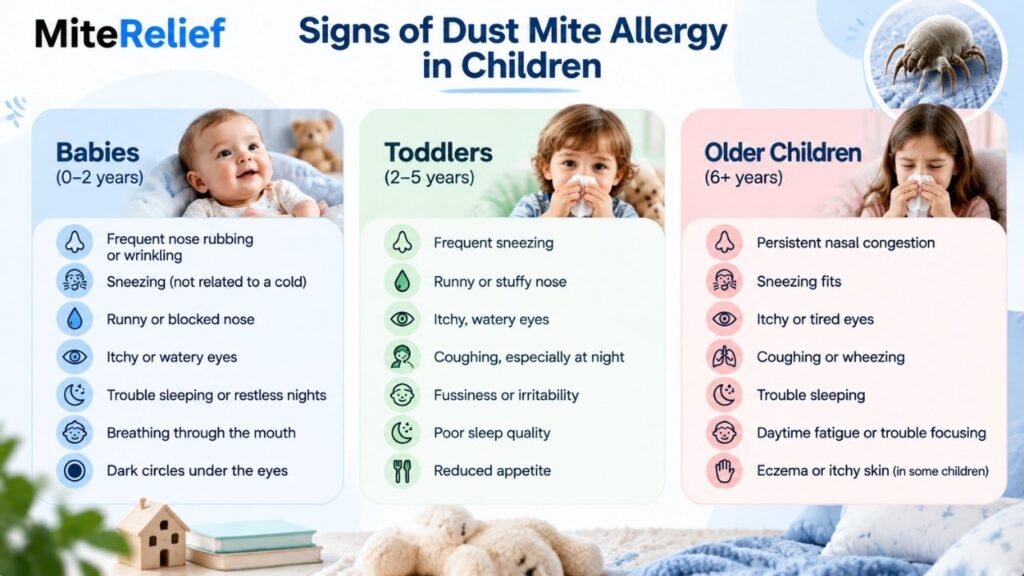
| Age Group | Common Signs |
| Babies | Nose rubbing, congestion, coughing, restless sleep |
| Toddlers | Sneezing, itchy eyes, runny nose, mouth breathing |
| Older Children | Nasal congestion, fatigue, poor sleep, allergy flare-ups |
Why Children Are More Vulnerable to Dust Mite Allergy
Kids’ immune systems are still learning. They’re still figuring out what’s harmless and what’s not. That’s part of why this early childhood onset of dust mite allergy happens as the immune system becomes exposed to common indoor allergens.
Children also spend more hours asleep than adults do. That means more time face-down in bedding that can collect mite waste. Toddlers crawl on carpets. They hug stuffed animals and touch soft furniture all day. All that close contact adds up. It means more exposure in the rooms where kids spend the most time.
Genetics play a role too. A child with a parent who has allergies, asthma, or eczema is more likely to develop a dust mite allergy themselves. This doesn’t mean every child with an allergic parent will react the same way. It just slightly raises the odds.
Symptoms of Dust Mite Allergy in Babies, Toddlers, and Children
Symptoms can look different depending on a child’s age, since younger kids can’t describe what they’re feeling. A toddler might seem fussier than usual, while a school-age child might complain of an itchy nose or tired eyes. Knowing what’s typical for each age group makes it easier to spot when something’s off.
Signs Parents May Notice in Babies and Toddlers
A baby with a dust mite allergy might rub their Nose often, almost like a little salute. Watch for:
- Frequent Nose rubbing or wrinkling
- Sneezing that isn’t tied to a cold
- A runny or blocked nose
- Itchy or watery eyes
- Dark circles under the eyes
- Breathing through the mouth instead of the Nose
None of these signs alone confirm an allergy. Colds cause similar symptoms. But if they stick around for weeks, or keep coming back, a dust mite allergy in infant children is worth asking a doctor about.
How Dust Mite Allergy Symptoms Affect Sleep and Daily Life
Older kids often show child dust mite allergy symptoms through changes in sleep and energy. Nighttime coughing is common. That’s because lying down brings a child’s face closer to mite-heavy bedding.
Poor sleep quality can follow. Daytime tiredness and trouble focusing at school often come with it. Parents sometimes notice symptoms get worse at home and ease up elsewhere. That’s a helpful clue to watch for.
Some kids also become cranky or restless without an obvious reason. Once you connect it to a stuffy nose or itchy eyes, the pattern usually clicks into place. You can read more about these patterns in our guide to common signs of dust mite allergy.
How Dust Mite Allergy Is Diagnosed in Children
When Parents Should Consider Allergy Testing
Occasional sniffles usually aren’t a reason to worry. But persistent congestion, repeated nighttime coughing, or sleep that never seems to improve are good reasons to talk with a doctor.
A pediatrician can rule out other causes first. Colds and sinus infections can look a lot like allergies. If symptoms fit a pattern, the pediatrician may refer your child to an allergist for allergy testing.
Two common methods are used:
- A skin prick test. A small amount of allergen is applied to the skin to check for a reaction.
- An IgE blood test. This measures allergy-related antibodies in the blood.
Testing gives a clearer answer than guessing based on symptoms alone. It also helps rule out other allergens that might be causing the same symptoms, like pet dander or pollen. Most allergy visits are quick, and neither test causes much discomfort for kids. Our page on how dust mite allergy is diagnosed breaks down what each test involves.
How Parents Can Reduce Dust Mite Exposure at Home
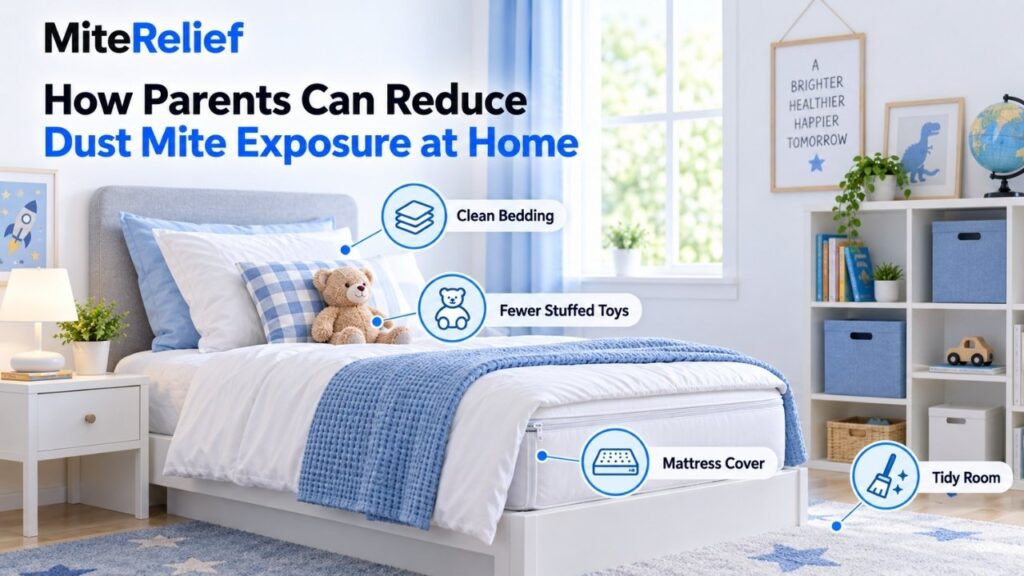
Creating a Lower-Allergen Bedroom for Children
A child’s bedroom is usually where mite exposure is highest. That makes it the best place to start.
Wash bedding in hot water every week. Cover the mattress and pillows with allergen-proof covers. Keeping humidity low (under 50%) can also help, since mites thrive in damp air. A dehumidifier may help in rooms that stay humid year-round.
Carpets hold onto dust more than hard floors do. Vacuuming often with a good filter matters here. Stuffed animals are another common hiding spot. Washing favorite toys regularly, or freezing them overnight, can reduce mites. Our guide to dust mites hiding in stuffed toys has more detail.
A HEPA filter in an air purifier can also help trap allergens that float through the air. It won’t remove mites from bedding or carpet, but it can improve overall room air quality. For broader tips beyond the bedroom, see ways to reduce dust mite exposure, including advice on choosing the best bedding for dust mite allergy.
Daily Habits That May Help Children With Dust Mite Allergy
Small routines can add up over time. A few habits worth building into your week:
- Keep sleeping areas tidy and free of extra dust-collecting clutter.
- Dust surfaces with a damp cloth instead of a dry one, so dust doesn’t scatter back into the air.
- Air out bedrooms when weather allows, to keep humidity from building up.
- Stick to a consistent cleaning schedule, since gaps let dust build back up fast.
- Swap out throw pillows and soft blankets for wash-friendly ones when you can.
None of these habits alone will eliminate a dust mite allergy. But together, they can lower how much a child breathes in day to day. Consistency matters more than any single fix.
Treatment and Medical Support for Children With Dust Mite Allergy
Treatment depends on a child’s age. It also depends on how severe symptoms are, and whether other conditions like asthma or eczema are involved. No single fix works for every child.
An allergist or pediatrician may suggest antihistamines for mild symptoms. For kids with persistent allergies, they may discuss immunotherapy as a longer-term option. This treatment slowly builds up a child’s tolerance over time, though it isn’t right for every situation. Some children also need an asthma action plan if their allergy triggers breathing trouble. You can learn more about the options in our overview of treatment options for dust mite allergy.
Because every child is different, a professional evaluation is the safest way to build a plan that actually fits. What works well for one child may not work for another.
Managing Dust Mite Allergy at School

Home isn’t the only place kids run into dust mites. Classrooms have carpets, soft toys, and fabric-covered furniture too. Reading corners with cushions and rugs can be a hidden hot spot.
Letting teachers know about your child’s allergy helps them watch for flare-ups. It also helps them respond appropriately if symptoms show up during the day. If your child carries an inhaler or antihistamine, make sure the school nurse has clear instructions on when to use it.
Keeping backpacks, jackets, and other soft personal items clean can also reduce exposure away from home. Washing a favorite stuffed animal or blanket that travels to and from school helps too.
For kids with asthma, sharing an asthma action plan with school staff adds an extra layer of safety. It gives staff a clear, simple plan to follow if a flare-up happens.
Frequently Asked Questions (FAQs)
Can babies have dust mite allergies?
Yes. Even infants can react to dust mites. Symptoms like nose rubbing and congestion can be easy to mistake for a cold, which is why babies are often diagnosed later than older kids.
What are the first signs of dust mite allergy in children?
Sneezing, a runny nose, and itchy eyes are usually the earliest signs parents notice. These often come with disrupted sleep or nighttime coughing.
How can I tell if my child has dust mite allergy or a cold?
Colds usually clear up within one to two weeks. Allergy symptoms tend to stick around longer, or return again and again, especially indoors. A cold also often comes with a fever, which allergies don’t cause.
Can children outgrow dust mite allergies?
Some kids see symptoms ease with age, but many carry sensitivity into adulthood. An allergist can track changes over time and adjust a treatment plan as needed.
When should a child see an allergist?
If symptoms are frequent, disrupt sleep, or don’t improve with basic home changes, it’s a good time to schedule a visit. A referral from your pediatrician is often the first step.
What to Read Next
- Dust Mite Allergy Symptoms
- How to Test for Dust Mite Allergy
- How to Prevent Dust Mites
- Dust Mites in Stuffed Animals
- Eczema and Dust Mite Allergy
Conclusion
A dust mite allergy in children can affect sleep, comfort, and everyday energy, but it’s manageable once you know what to look for. Watching for early signs, cutting down on exposure at home, and involving an allergist or pediatrician when needed can make a real difference for your child. Most kids do well once a plan is in place, even if it takes a little trial and error to find what works.
Skin problems tied to allergies, like flare-ups linked to eczema, are covered in our guide to skin problems linked to dust mite allergy.
Medical Disclaimer
This content is for general informational purposes only and is not a substitute for professional medical advice, diagnosis, or treatment. Individual health needs can vary, so speak with a qualified healthcare professional about allergies, asthma, skin reactions, medications, or other symptoms. Seek prompt medical care if symptoms are severe, persistent, or getting worse.

Umar Farooq is the founder of MiteRelief, a resource for dust mite control and allergy prevention. After battling allergen sensitivity, he started creating research-backed guides that turn complex indoor air quality science into practical, affordable solutions anyone can implement.