If you deal with a dust mite allergy, you already know medicine only goes so far. Antihistamines and nasal sprays can calm your symptoms.
But they don’t change how your body reacts to dust mite allergens in the first place. That’s where house dust mite immunotherapy comes in.
Immunotherapy works differently. It slowly trains your immune system to tolerate dust mites instead of overreacting.
Two main options exist: allergy shots and sublingual tablets like ODACTRA. This guide covers how both work, how long treatment takes, and what to expect before you talk with an allergist.
A quick note: this article is for general information only. Talk with an allergist before starting any treatment. Results and suitability vary from person to person.
What Is House Dust Mite Immunotherapy?
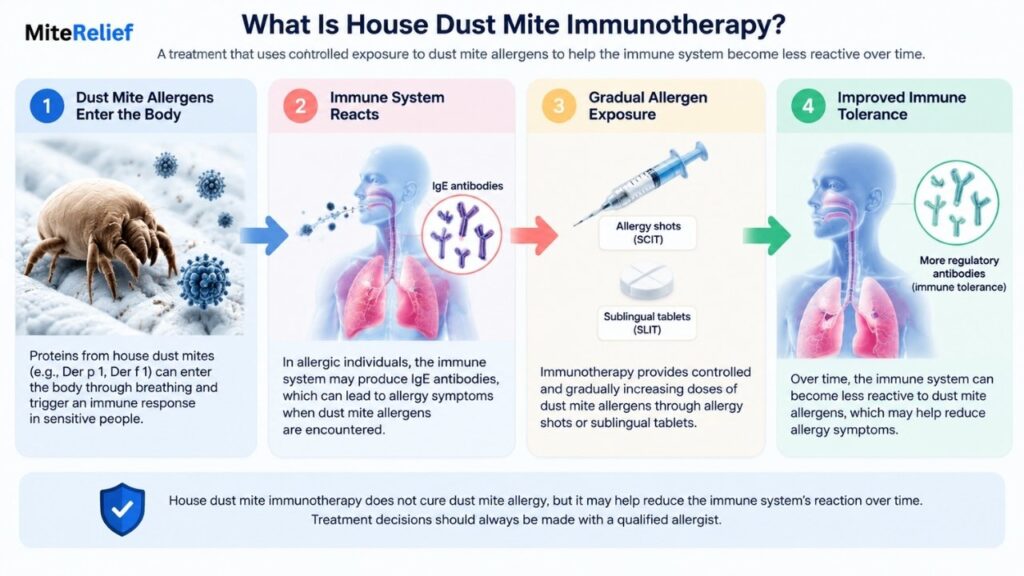
House dust mite immunotherapy is a type of allergen immunotherapy. It doesn’t just block symptoms as a pill does. Instead, it exposes your body to small, controlled amounts of dust mite allergen over time.
The goal is simple: help your immune system build tolerance instead of treating every exposure like a threat.
Two mite species cause most of the trouble. They’re called Dermatophagoides pteronyssinus and Dermatophagoides farinae. Their waste particles trigger an allergic reaction when you breathe them in. That’s why these two mites show up so often in allergy tests.
Immunotherapy for house dust mite allergy works differently than a pill you take when symptoms flare up. Medicine treats what’s happening right now.
Immunotherapy changes how your immune system responds over time. That’s why it takes months, not minutes, to show results.
Think of it like slow, steady practice. Your immune system needs repeated, small exposures to learn a new response.
It won’t happen after one dose. It happens gradually, over many doses spread across months and years.
How Do Dust Mite Allergy Shots Work?
Allergy shots are also called subcutaneous immunotherapy, or SCIT. This treatment uses injections given in your upper arm. Your allergist gives them under medical supervision at their office, not at home.
A dust mite allergy shot contains a small, measured amount of allergen extract. Your body reacts to each dose. Over time, that reaction gets smaller as your immune system adjusts.
Build-Up Phase
During the build-up phase, your allergist slowly raises the dose with each visit. You’ll usually go in once or twice a week during this stage.
This phase can last a few months. Your allergist watches closely for reactions and adjusts the pace as needed.
Maintenance Phase
Once you reach an effective dose, you move into the maintenance phase. Shots become less frequent. Most people get one every two to four weeks.

This phase can continue for several years. Your allergist keeps monitoring you and decides when it’s reasonable to stop.
Some people stay on maintenance shots for three to five years total. A few stick with them even longer, depending on how well symptoms respond and what their allergist recommends.
How Does Sublingual Immunotherapy Work?
Sublingual immunotherapy, or SLIT, skips the needle entirely. Instead, you place a tablet or drops under your tongue. The allergen is absorbed there, right into your body.
You usually take sublingual dust mite tablets once a day. Treatment often starts under medical guidance, then continues at home. That makes SLIT a convenient choice for people who don’t want frequent office visits.
Sublingual Tablets
House dust mite sublingual immunotherapy tablets are prescription-only. Your allergist chooses the right dose and monitors your reaction to the first dose. Your allergist usually gives the first dose in the office.
After that, most people continue treatment at home. You’ll still have regular check-ins with your allergist.
Sublingual Drops
Sublingual drops work on a similar idea, but they’re less common in the United States. Other countries use them more often, and they don’t carry the same approval status here.

Drops aren’t the main focus of most dust mite immunotherapy plans in the US. Tablets are the more established option right now.
What Is ODACTRA for Dust Mite Allergy?

ODACTRA is an FDA-approved odactra dust mite tablet used for sublingual immunotherapy. It treats allergic reactions caused specifically by house dust mites.
Like other SLIT tablets, ODACTRA dissolves under the tongue. You take it every day. Treatment usually continues for around three years to get lasting benefit.
Your allergist decides if ODACTRA fits your situation. That decision depends on your allergy history and overall health. This isn’t something you pick up over the counter. It requires a prescription and a medical evaluation first.
Dust Mite Allergy Shots vs Tablets: Main Differences
Both allergy shots and sublingual tablets are forms of immunotherapy. But they differ in how they’re given and how often you need to think about them.
| Feature | Allergy Shots | Sublingual Tablets |
| Method | Injection | Tablet under tongue |
| Location | Clinic | Home after guidance |
| Frequency | Changes during phases | Usually daily |
| Monitoring | Regular visits | Medical follow-up |
| Treatment length | Long term | Long term |
Neither option is automatically the right pick for everyone. Which one makes sense depends on your schedule, your comfort with injections, and your allergist’s recommendation.

When Do Doctors Consider Immunotherapy?

Allergists usually consider house dust mite immunotherapy once you already have a confirmed dust mite allergy.
That confirmation typically comes from earlier testing, and immunotherapy builds on it rather than replacing it. For more on how that process works, see our dust mite allergy test guide.
Beyond a confirmed allergy, doctors also look at how much your symptoms affect daily life. If allergic rhinitis or conjunctivitis keeps disrupting your sleep or work, even with medicine, immunotherapy may come up as an option.
Commitment matters too. Since treatment runs for years, your allergist wants to know you’re ready for the long haul before you start.
Your overall health also plays a role. Conditions like uncontrolled asthma can affect whether shots or tablets are a safe fit right now, so your allergist will review your full health picture first.
How Long Does Dust Mite Immunotherapy Take?
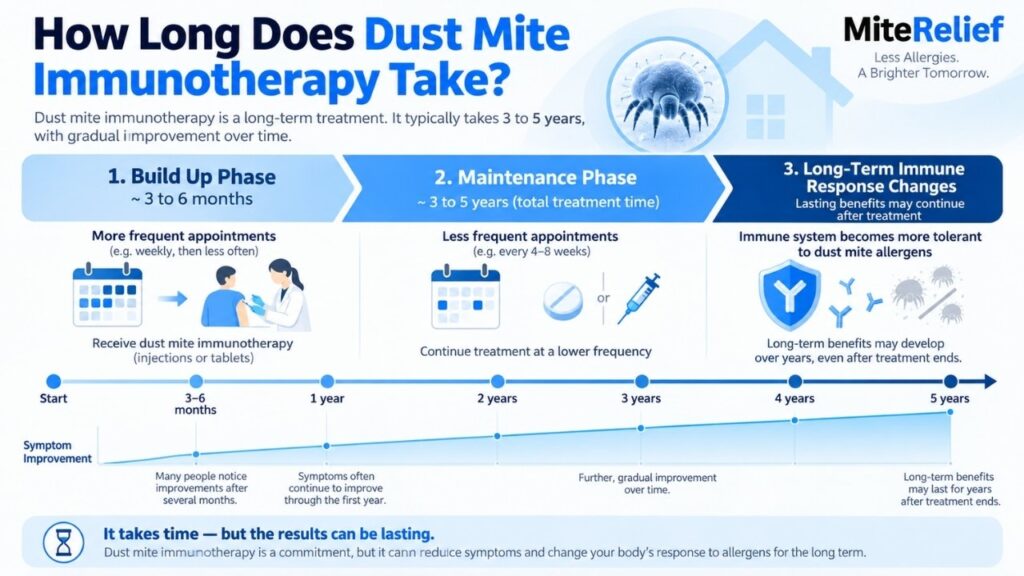
Immunotherapy dust mite allergy treatment isn’t fast. Most people don’t notice real improvement for several months after starting.
Full treatment courses often run three to five years. That’s true whether you choose shots or tablets. The long timeline gives your immune system time to build lasting tolerance, instead of just a short-term dip in symptoms.
Results vary from person to person. Some people notice meaningful relief earlier. Others take longer to see a real difference.
Possible Side Effects and Safety Considerations
Immunotherapy is generally safe when a trained allergist manages it. But side effects can still happen, so it helps to know what to expect.
Allergy Shot Side Effects
Injection site reactions are the most common issue with allergy shots. You might notice redness, swelling, or itching where you received the shot.
Rare but more serious reactions can happen too. That’s why shots are given in a clinical setting, with monitoring after each dose.
Sublingual Tablet Side Effects
Mouth irritation and throat discomfort are the most common complaints with SLIT tablets, especially early on. These usually fade as your body adjusts.
Allergic reactions are possible with tablets too, though they’re less common than with injections. Your allergist will explain the warning signs to watch for and what to do if they show up.
What Results Can You Expect From Immunotherapy?
Many people see real symptom reduction after finishing a full course of immunotherapy. Some find they need fewer symptom-control medicines as treatment moves along.
If you’re still relying on daily medicine in the meantime, our guide to allergy medicine for dust mites covers common options.
That said, results aren’t the same for everyone. Some people see dramatic improvement. Others notice a more modest drop in symptoms.
Long-term benefit also varies widely. Some people keep their improvement for years after stopping treatment. Others may need a booster or some ongoing management down the road.
Sleep quality is one area people often mention. Fewer nighttime symptoms can mean better rest, which can make a real difference in day-to-day energy and mood. It’s a smaller detail, but it’s often one of the first changes people notice.
Frequently Asked Questions (FAQs)
Does house dust mite immunotherapy work?
Evidence shows it can meaningfully improve symptoms for many people who are good candidates. Results still vary from person to person.
How long does dust mite immunotherapy take?
Most people wait several months before they notice changes. Full treatment usually takes years to complete.
Are dust mite allergy shots safe?
Yes, when a trained allergist gives and monitors them. They watch reactions closely, especially right after each dose.
Is ODACTRA a type of immunotherapy?
Yes. ODACTRA is a sublingual immunotherapy tablet made specifically for house dust mite allergy.
Can children receive dust mite immunotherapy?
It depends on age, the type of treatment, and a specialist’s evaluation. Not every option is approved for younger kids.
What to Read Next
- Dust Mite Allergy Test
- Dust Mite Allergy Symptoms
- Best Allergy Medicine for Dust Mites
- What Are Dust Mites?
Conclusion
House dust mite immunotherapy takes a different path than daily medicine. It aims to change how your immune system responds to dust mites over time, not just mask the symptoms for a few hours.
Allergy shots and sublingual tablets like ODACTRA are the two main routes. Each has its own routine, timeline, and commitment level.
Neither option gives you overnight results. And neither works the same way for everyone. If your dust mite allergy symptoms keep getting in the way of daily life, even with medicine, it’s worth bringing up immunotherapy at your next visit with an allergist.
Medical Disclaimer
This content is for general informational purposes only and is not a substitute for professional medical advice, diagnosis, or treatment. Individual health needs can vary, so speak with a qualified healthcare professional about allergies, asthma, skin reactions, medications, or other symptoms. Seek prompt medical care if symptoms are severe, persistent, or getting worse.

Umar Farooq is the founder of MiteRelief, a resource for dust mite control and allergy prevention. After battling allergen sensitivity, he started creating research-backed guides that turn complex indoor air quality science into practical, affordable solutions anyone can implement.