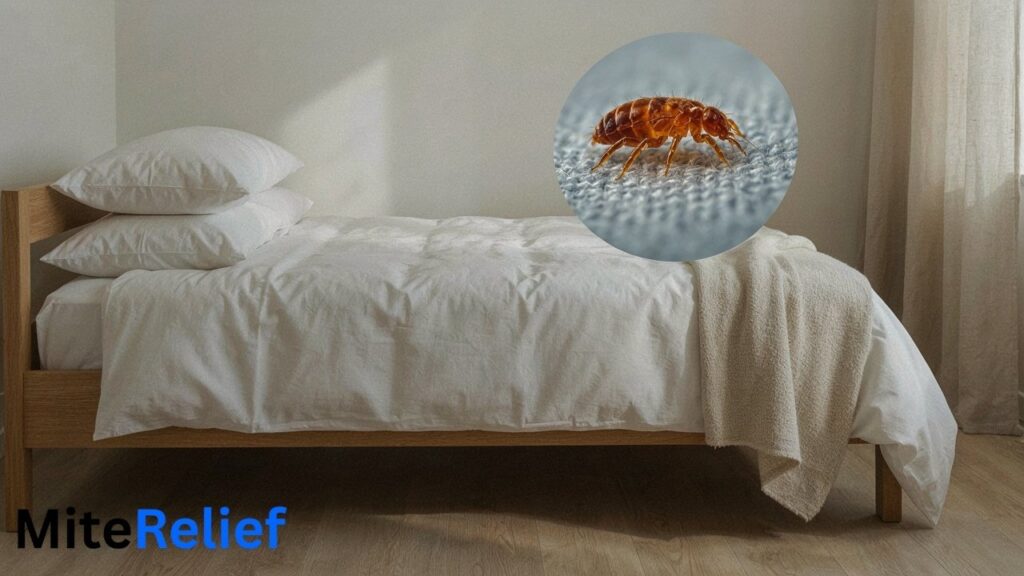
You change the bedsheets and vacuum the carpet properly. Maybe even spray the mattress because, honestly, the room already looks clean. But then morning comes around again, and there it is sneezing before your feet even touch the floor.
For some people, it starts with watery eyes. Others wake up with a blocked nose that somehow disappears later in the day. And sometimes the irritation feels random enough that you blame the weather, stress, or maybe even the fan. Most people do, at first.
Then eventually the question shows up:
What Are Dust Mites, and Why Are They Still Inside the House When Everything Seems Clean?
The answer surprises people because dust mites are not connected to “dirty homes” the way most assume. They are tiny microscopic creatures that quietly live inside soft fabrics around the house: mattresses, pillows, rugs, couches, blankets, even stuffed toys sitting untouched in the corner for months.
You cannot see them. Not even close.
But they are there because homes naturally give them what they need: warmth, moisture, darkness, and skin flakes humans shed every single day without noticing.
And yes, even very clean people deal with them.
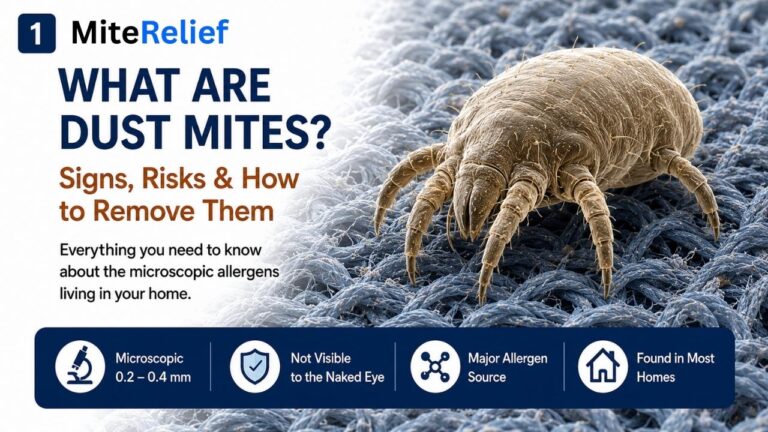
What Are Dust Mites?
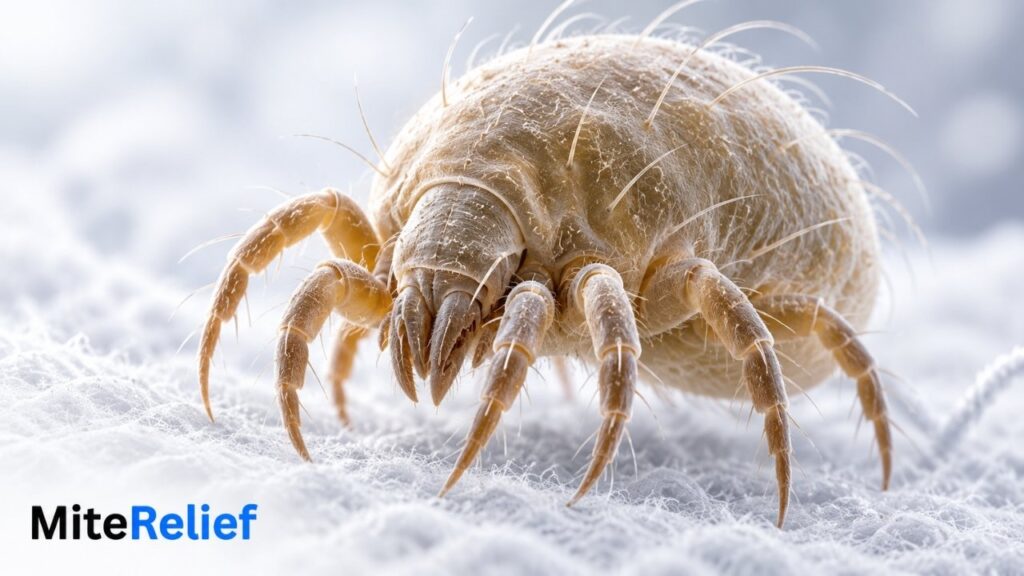
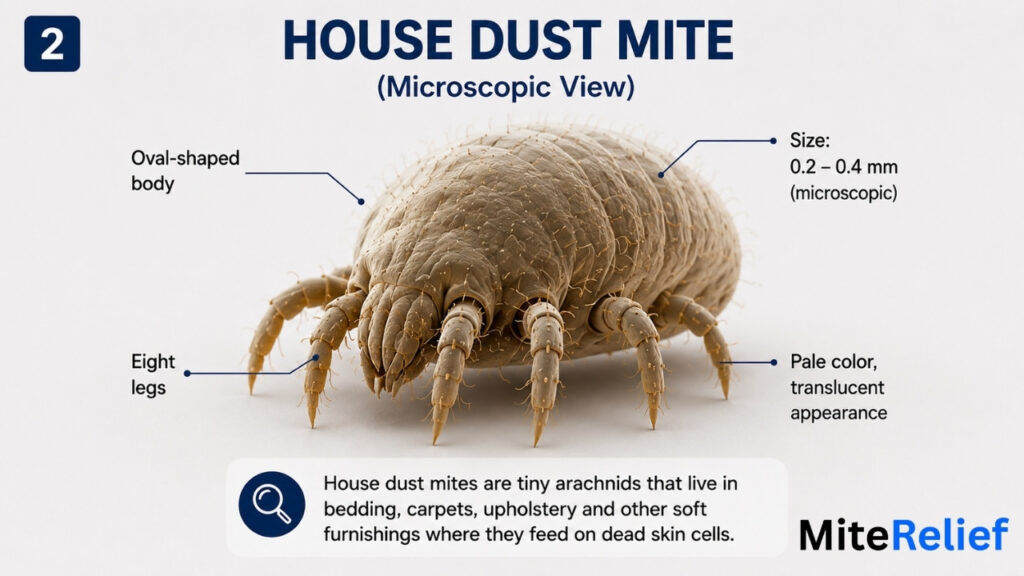
So let’s simplify it. Dust mites are microscopic arachnids. Basically, distant relatives of spiders and ticks, except much smaller. Extremely small, actually. Around 0.2 to 0.3 millimeters.
You could stare directly at a mattress filled with thousands of dust mites and still never see what dust mites look like under a microscope, which surprises most people.
They usually have:
- Eight tiny legs
- Soft oval-shaped bodies
- Pale white or cream coloring
- No wings
- No antennae
The important thing? Dust mites do not bite people.
A lot of people think they’re getting bitten at night. Usually, that is something else entirely. Dust mites survive by feeding on dead skin cells, not blood.
The real issue is what they leave behind.
Their waste particles and broken body fragments mix into household dust. Then those particles float into the air, settle into bedding, carpets, couches, all the places your face and lungs stay close to every day, without you thinking about it.
These allergens can trigger dust mite allergy symptoms such as sneezing, congestion, and itchy eyes.
That is where symptoms usually begin.
What Do Dust Mites Eat?
Honestly, this is the part that makes dust mites almost impossible to avoid completely.
Humans naturally shed skin throughout the day. Tiny invisible flakes. It happens while sleeping, walking around, sitting on the couch, folding laundry… constantly.
And for dust mites, that is food.
Mainly, they feed on:
- Dead skin cells
- Pet dander
- Organic fabric debris
- Tiny fungal particles in humid spaces
Which explains why they gather in places like:
- Mattresses
- Pillows
- Blankets
- Upholstered furniture
- Thick rugs
- Carpeted bedrooms
- Stuffed toys
Notice something?
Learn more about how dust mites in your bedroom can affect your sleep and allergies.
Almost every location involves fabric.
Dust mites are not interested in leftover pizza crusts or visible dirt the way people imagine. Even a spotless home still produces enough skin flakes daily to support them.
That is why someone can deep clean an entire room and still wake up congested the next morning. Frustrating, honestly.
Are Dust Mites Harmful?
Technically? Not directly.
Dust mites do not sting. They do not spread around biting people if you’ve ever wondered whether dust mites bite, the answer is clear. They are not chewing holes into your skin while you sleep, despite what some internet posts claim.
The real problem comes from allergies.
Proteins found in dust mite waste and decomposed particles can trigger immune reactions in sensitive people. Repeated exposure to dust mite allergens may cause sneezing, congestion, coughing, watery eyes, and worsening asthma symptoms.
Where Do Dust Mites Live?
If you want the shortest answer?
Anywhere soft, warm, and slightly humid.
That is basically paradise for dust mites.
The most common places include:
- Beds
- Pillows
- Mattresses
- Blankets
- Sofas
- Carpets
- Curtains
- Fabric chairs
- Stuffed animals
And yes, dust mites in bed are probably the biggest issue for most households. Using a dust mite mattress encasement can help reduce direct exposure during sleep.
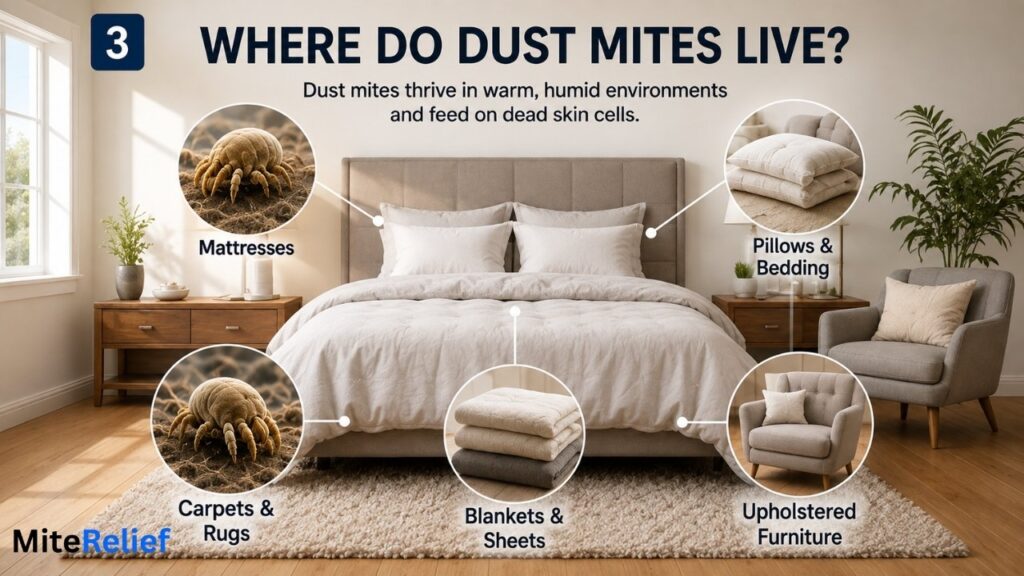
Think about it for a second. A mattress holds warmth from your body for hours. Sweat creates moisture. Skin flakes collect slowly over time. Airflow stays limited deep inside the fabric layers.
For dust mites, it is the perfect setup.
Carpets work similarly. Especially thicker ones.
You vacuum the top surface, and it looks cleaner immediately, sure, but deeper inside the fibers? Dust, allergens, moisture, and dead skin all of it gets trapped underneath, where regular cleaning barely reaches.
Hard flooring usually causes fewer problems because moisture cannot stay trapped as easily. That is one reason many allergy-sensitive homes slowly move away from wall-to-wall carpeting over time.
The Dust Mite Lifecycle
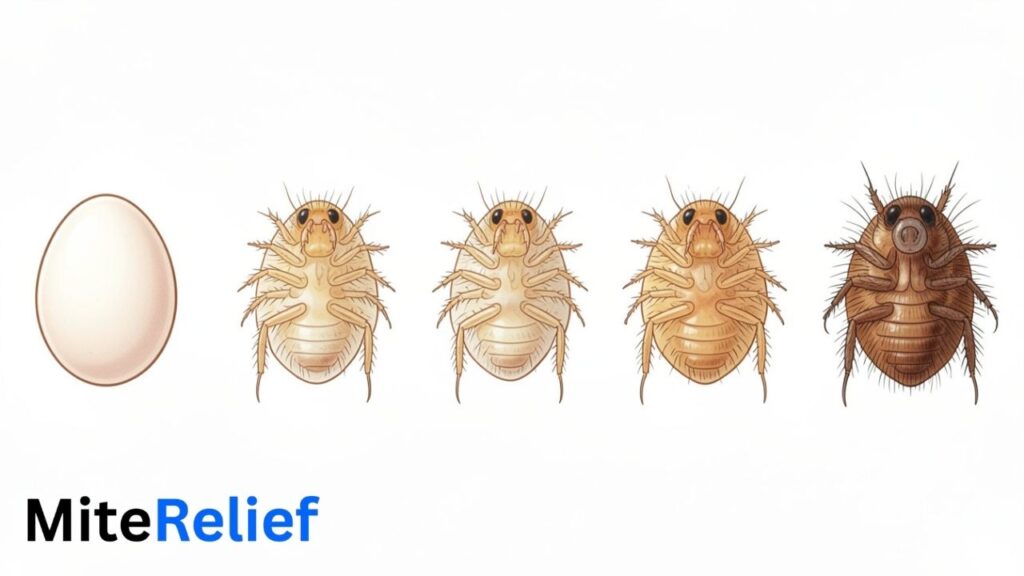
This part surprises people, too.
Dust mites reproduce quietly and continuously. You never notice the buildup happening because it happens slowly.
Their lifecycle usually goes:
- Egg
- Larva
- Protonymph
- Tritonymph
- Adult
A female dust mite can lay somewhere around 60 to 80 eggs during her lifespan.
Which sounds manageable until you remember how many mites may already exist inside a mattress. Under warm indoor conditions, the full lifecycle can finish in roughly two to three months. Sometimes faster if the humidity stays high.
So while you are sleeping normally every night, populations continue growing in the background without any visible sign. That is why symptoms tend to build gradually instead of all at once.
- Runny nose
- Nasal blockage
- Eye irritation
- Dry coughing
- Itchy throat
- Mild skin irritation
- Breathing discomfort
A lot of people notice symptoms becoming worse early in the morning.
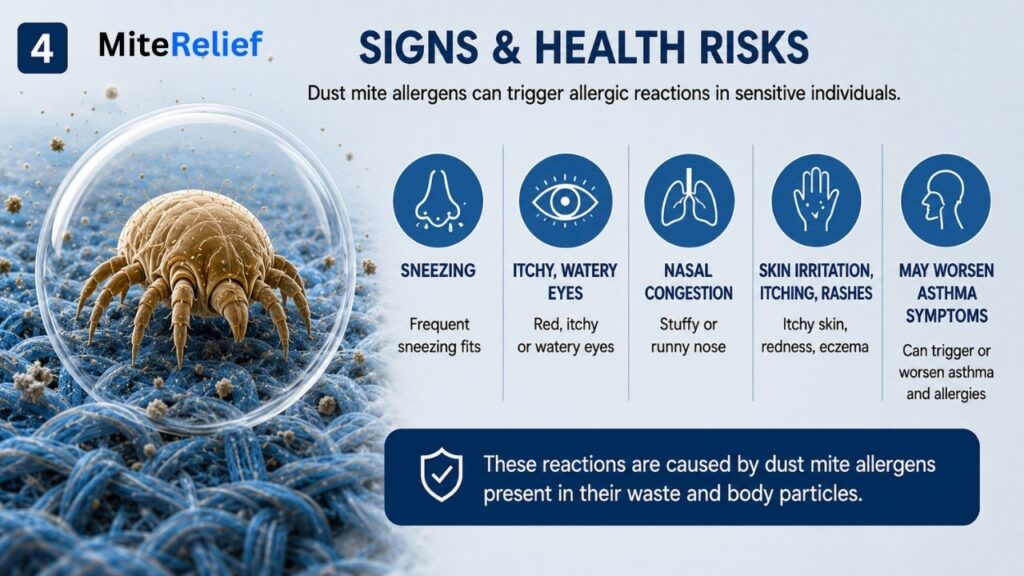
Makes sense, honestly. Your face spends hours pressed close to bedding, where allergen exposure is highest.
Sometimes people think they “keep catching colds,” especially during season changes, but ongoing indoor allergies can feel very similar to mild cold and flu symptoms.
What conditions do dust mites prefer?
Dust mites are picky in a strange way.
They need moisture more than dirt.
Warm indoor temperatures around 20°C to 25°C usually help them thrive. But humidity is the bigger factor. Once indoor humidity climbs above 70%, dust mites multiply much faster.
That is why certain rooms feel heavier somehow. Bedrooms with closed windows. Thick bedding. Heavy curtains. Poor airflow.
You walk inside, and the air almost feels still.
Even everyday habits can increase indoor moisture:
- Drying clothes indoors
- Keeping windows shut all day
- Poor bathroom ventilation
- Thick-layered carpets
- Dense fabric furniture
And people usually do not notice the humidity building slowly because the room itself still looks clean.
But trapped moisture changes everything.
When humidity drops below 50%, dust mites struggle badly. Their reproduction slows down. Survival rates fall. Over time, populations naturally decrease without harsh chemicals or complicated treatments. That is why airflow matters more than many people realize.
How To Get Rid of Dust Mites: What Actually Works
Here is the truth most quick fix ads never mention:
For more detailed methods, check our guide on how to get rid of dust mites naturally.
You probably will not remove every dust mite completely.
The goal is to reduce their environment enough that allergens stop building up heavily.
That part matters more.
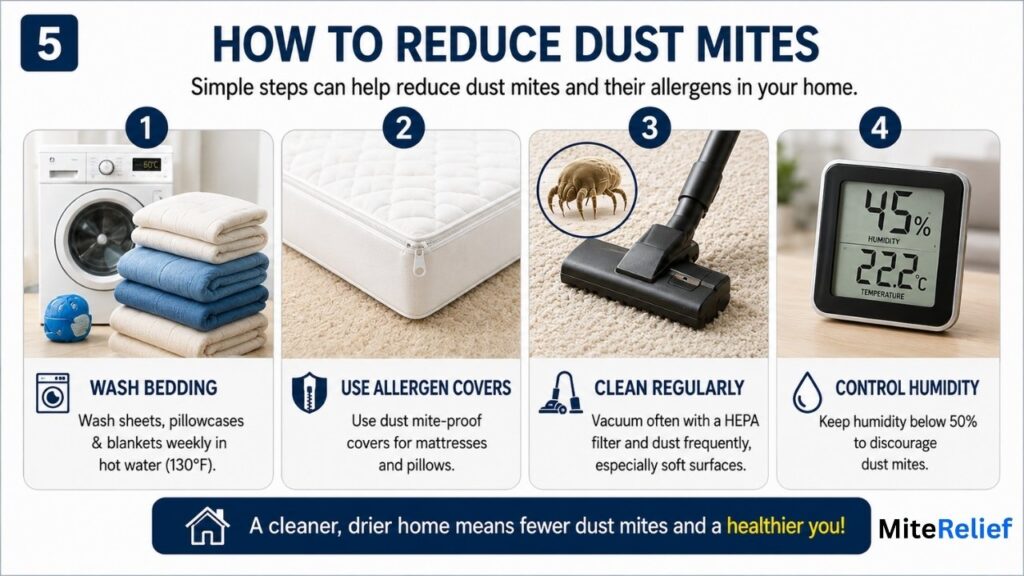
Wash Bedding in Hot Water
Heat works surprisingly well.
Wash:
- Bedsheets
- Pillowcases
- Blankets
- Mattress covers
using hot water around 60°C or higher.
Cold water helps with visible dirt, sure, but it often does not reduce dust mites effectively deep inside fabrics. High heat drying afterward helps too.
A lot of allergy-sensitive households notice improvements just from washing bedding more consistently. Nothing fancy. Just regular habits.
Lower Indoor Humidity
Honestly, this is one of the biggest changes you can make.
Dust mites depend heavily on moisture.
Lower humidity by:
- Using dehumidifiers
- Opening windows regularly
- Running ceiling fans
- Improving bedroom airflow
- Avoiding indoor clothes drying
Even small airflow changes can slowly reduce allergen buildup over time.
Using the best dehumidifiers for dust mite allergy can help maintain humidity levels that are less favorable for dust mites.
Rooms start feeling fresher, too. Less heavy.
Use a HEPA Vacuum Cleaner
Not every vacuum traps allergens properly.
Some actually push fine particles back into the air while cleaning, which is… not helpful at all.
A best vacuum cleaners for dust mites can help capture allergens from carpets, mattresses, and furniture.
Focus on:
- Carpets
- Rugs
- Mattresses
- Upholstered furniture
- Bed frames
- Corners near the flooring
And vacuum slowly. Seriously.
Fast cleaning usually skips the deeper layers where allergens settle.
Steam Cleaning Helps Too
Steam reaches deep into thick fabric surfaces where normal cleaning struggles.
It works well for:
- Sofas
- Rugs
- Mattresses
- Upholstered chairs
The heat helps reduce allergen buildup hidden inside the material.
But surfaces need to dry completely afterward. Otherwise, trapped dampness can bring the problem right back again. Which sounds unfair, honestly, but that is how humidity works.
Freeze Stuffed Toys
This one always sounds strange the first time people hear it.
But yes, freezing stuffed toys overnight inside sealed plastic bags can help reduce dust mites.
After freezing:
- Wash the toys
- Remove leftover allergen particles
- Dry them properly
Simple. Practical. Especially useful in homes where children have allergies or constant morning congestion.
Let sunlight inside
Older habits worked for a reason.
Opening curtains, airing blankets outside, letting sunlight hit bedding all of that naturally reduces moisture buildup inside fabric. Dry warm air makes survival harder for dust mites.
It also helps rooms feel cleaner in a way that is hard to explain unless you notice it yourself.
Replace Older Fabric Items
Sometimes the issue is not surface cleanliness anymore.
Older mattresses, rugs, heavy cushions, and worn blankets can trap years of allergen buildup deep inside their fibers. Even after cleaning, some materials simply hold too much accumulated dust.
Replacing heavily used fabric items occasionally can reduce long-term exposure significantly.
Use mattress and pillow covers
Protective covers are a simple but very effective solution. Special covers for mattresses and pillows create a barrier between you and trapped allergens inside bedding. They do not remove dust mites completely, but they reduce direct exposure during sleep.
You can also explore best bedding for dust mites to reduce allergen exposure during sleep
Many people notice fewer morning symptoms, like sneezing, congestion, and irritation, after using them consistently.
How To Prevent Dust Mites From Coming Back
Long-term control is really about consistency, not obsession.
Follow our complete guide on how to prevent dust mites for long-term control.
Small regular habits matter more than extreme deep-cleaning sessions once every few months.
The Most Effective Dust Mite Prevention Steps Include:
- Washing bedding weekly in hot water
- Keeping humidity below 50%
- Vacuuming regularly with HEPA filters
- Improving room airflow
- Reducing unnecessary fabric clutter
- Cleaning stuffed toys often
- Letting sunlight enter bedrooms daily
- Replacing old bedding when necessary
Most of it comes down to reducing moisture and limiting fabric buildup where allergens collect quietly over time. That is really the core issue.
Your Weekly And Monthly Cleaning Routine
| Weekly Tasks | Monthly Tasks |
| Wash bedding in hot water | Steam clean carpets |
| Vacuum mattresses and floors | Deep clean upholstered furniture |
| Dust hard surfaces | Wash curtains and fabric decor |
| Air out bedrooms | Rotate and sun-dry pillows |
| Wipe moisture-prone areas | Check humidity levels throughout the home |
| Clean pet sleeping spaces | Declutter unused fabric item storage |
This routine keeps allergen buildup manageable without becoming overwhelming. Save it somewhere visible. Most people forget the monthly tasks first.
Frequently Asked Questions
How do I know if I have Dust Mites?
Dust mites can’t be seen with the naked eye, but their symptoms are easy to identify. Common symptoms are sneezing, itchy eyes, coughing, stuffy nose, and allergy at night. Symptoms tend to be worse in bedrooms or dusty places.
What attracts Dust Mites to humans?
Dust mites are drawn to dead skin cells, warmth, humidity, and soft fabrics. They get the ideal environment to live and grow in beds, pillows, carpets, and furniture.
Can Dust Mites Be Completely Eliminated?
You cannot get rid of dust mites in your home completely. But regular cleaning, hot water washing of bedding, and reduction of humidity can dramatically cut down their numbers and allergy levels. But their growth is slowed in cooler and drier conditions.
What Temperatures Do Dust Mites Prefer?
They thrive between 68–77°F or 20–25°C. High humidity helps them survive longer, too. Cooler, drier indoor environments slow their growth significantly.
What To Read Next
- Do Dust Mites Bite?
- Dust Mite Allergy Symptoms
- How to Get Rid of Dust Mites Naturally
- What Do Dust Mites Look Like?
Conclusion
Living with dust mites does not mean your house is dirty. These microscopic pests exist in almost every indoor environment.
The real difference comes from controlling moisture, reducing allergen buildup, and creating less comfortable spaces for them to survive.
Small changes matter more than extreme cleaning routines lower humidity. Wash bedding hotter. Use a HEPA vacuum cleaner. Keep fabric clutter manageable. Over time, those habits reduce symptoms, improve sleep, and make your home feel healthier again.
Medical Disclaimer
This content is for general informational purposes only and is not a substitute for professional medical advice, diagnosis, or treatment. Individual health needs can vary, so speak with a qualified healthcare professional about allergies, asthma, skin reactions, medications, or other symptoms. Seek prompt medical care if symptoms are severe, persistent, or getting worse.

Umar Farooq is the founder of MiteRelief, a resource for dust mite control and allergy prevention. After battling allergen sensitivity, he started creating research-backed guides that turn complex indoor air quality science into practical, affordable solutions anyone can implement.