Most people imagine bugs crawling across the bed when they hear about dust mites. That image feels believable. Tiny creatures living inside your mattress? Sounds creepy enough already.
But here’s the strange part. You physically cannot see them.
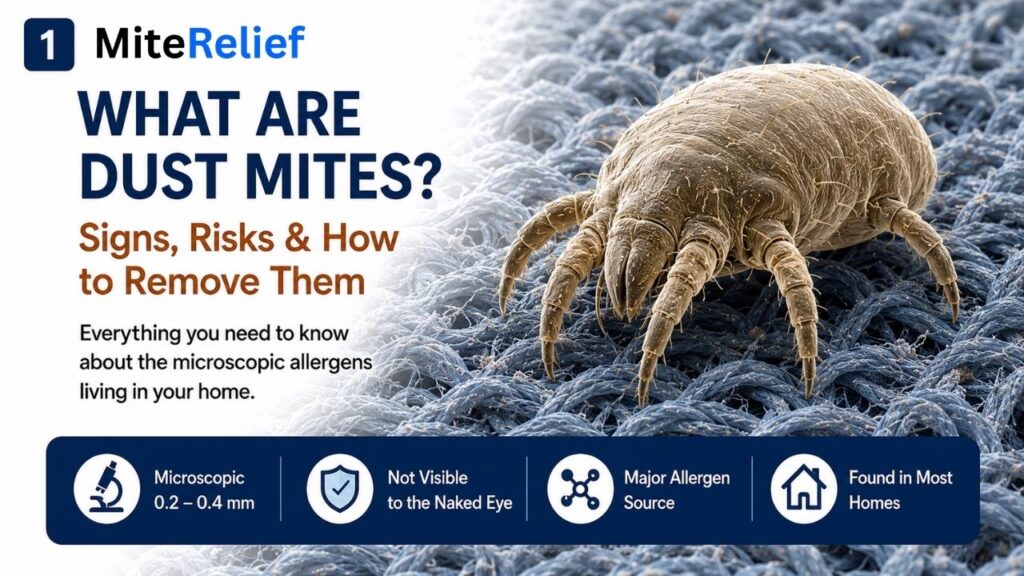
So, what do dust mites look like in real life? Tiny. Almost impossibly small. Many readers expect them to resemble insects crawling across the bed, but that never happens. Without a microscope, they stay invisible to the human eye.
Still, once magnified, their appearance becomes surprisingly detailed. Their body shape, mouthparts, legs, and pale color suddenly become visible in ways most people never expect.
Can You See Dust Mites With the Naked Eye?
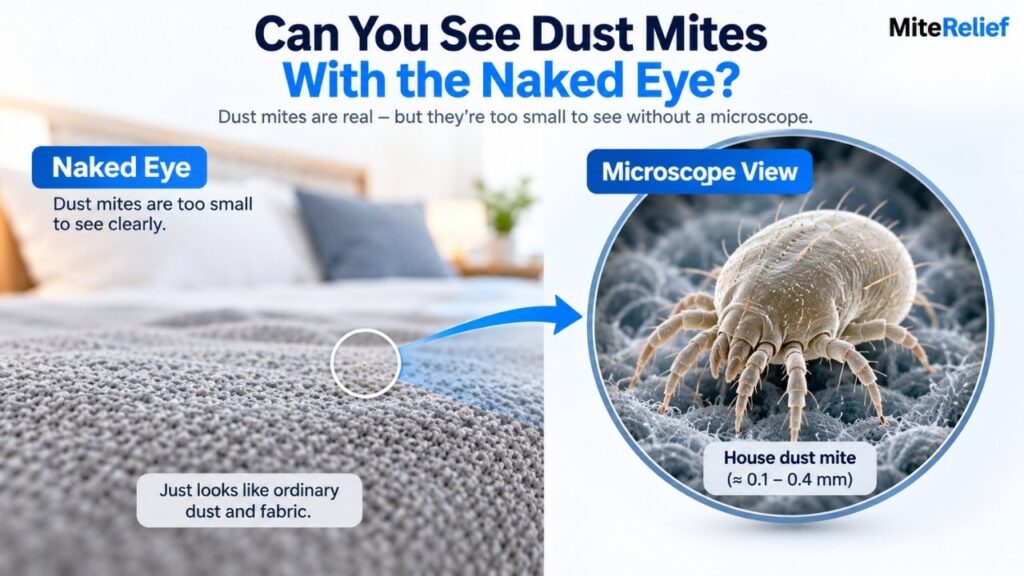
Short answer? No. When readers ask whether you can see dust mites, they usually expect something visible moving across a pillow or mattress. That never really happens because dust mites stay incredibly small.
Most mites measure only 0.2–0.3 millimeters in size. That is smaller than the thickness of many sewing threads. Human eyes simply cannot detect that naturally. Even on dark fabric, they disappear completely between soft household fibers. You need at least 10x magnification before their body shape becomes visible.
That explains why online dust mite images and dust mite pictures almost always come from laboratory microscopes rather than phone cameras. Oddly enough, many homes contain thousands of mites without anyone ever seeing a single one.
What Do Dust Mites Look Like Under a Microscope?
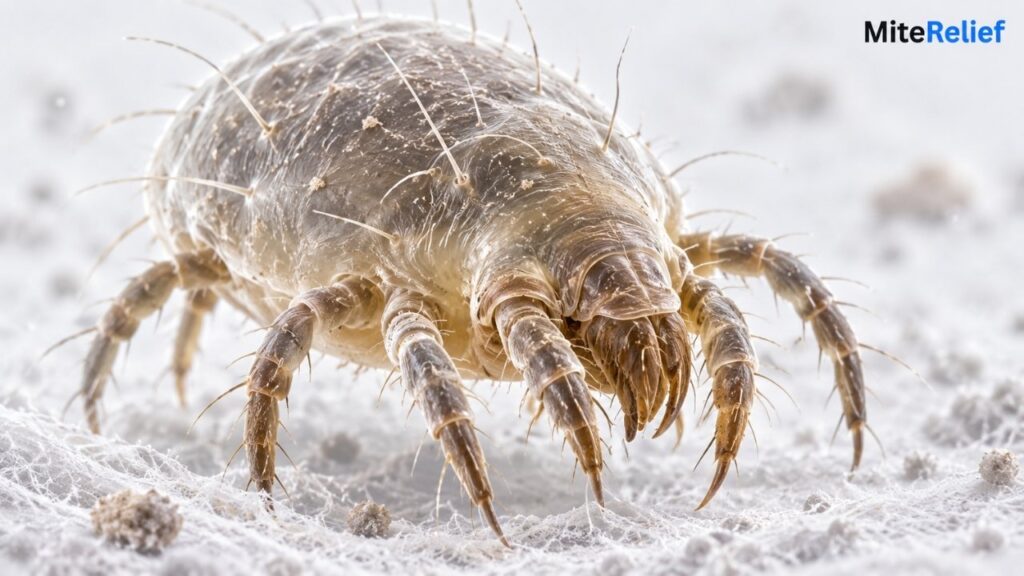
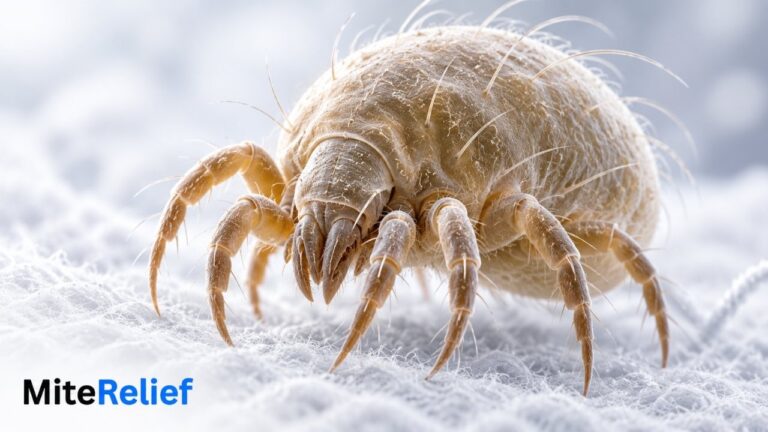
This is where things become interesting. Under a microscope, dust mites look pale and soft-bodied. Their color usually ranges from off-white to light tan, depending on lighting and species.
Their shape resembles a tiny bean or broad oval. Not insect-shaped exactly. More rounded. Slightly wrinkled, too. Adult mites develop eight legs because they belong to the arachnid family. Dust mites share the same class as spiders and ticks, which explains their eight legs and oval body shape. So technically, they relate more closely to spiders than insects. Strange comparison, honestly, but true.
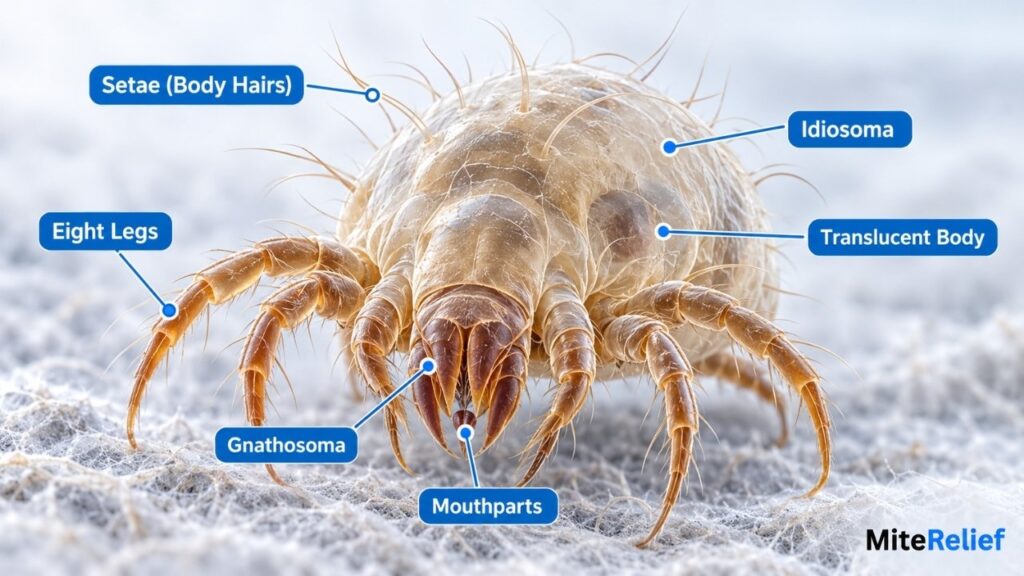
Unlike insects, they do not have wings. No antennae either. Instead, their bodies show faint stripes and textured folds under magnification. Their tiny mouthparts appear near the front of the body. Some microscope photos even reveal tiny claw-like structures attached to their legs. Those help them grip soft surfaces like blankets, mattresses, and upholstery.
When readers search for what mites look like, these microscope photos usually answer the question best because normal photography cannot capture enough detail.
Some online images of dust mites make them appear frightening. Realistically, though, they look more weird than dangerous.
How Big Are Dust Mites Exactly?
Numbers alone do not really explain their tiny scale properly. Still, here’s the actual measurement. Adult dust mites usually grow between 0.2 and 0.3 millimeters long. That equals around 0.004–0.012 inches.
Tiny. Ridiculously tiny. For comparison, a human hair measures roughly 70 micrometres wide. Most mites only measure around 200–300 microns. You could place several beside a strand of hair and still struggle to notice them.
That tiny size explains why people never see mites crawling across furniture or skin. Even large infestations remain hidden inside soft household materials. Mattresses and pillow surfaces especially collect them because dead skin particles build up there naturally over time.
What Do the Different Lifecycle Stages Look Like?
Like many microscopic species, dust mites pass through several growth stages before reaching adulthood. The process starts with eggs. These appear as tiny white oval shapes hidden deep inside dusty fabrics and soft bedding.
Next comes the larva stage. Larvae only have six legs at first, which makes them slightly different from adults. Their bodies also appear lighter and smaller. After that, they move into protonymph and tritonymph stages. Sounds technical, honestly, but the visual differences stay fairly simple. Their body gradually grows broader and more developed during each phase.
Finally, adult mites appear with eight legs and a fuller oval shape. Their body texture and mouthparts become easier to identify under magnification. Warm indoor conditions help these stages continue faster. Moisture trapped inside mattresses and fabric fibers creates the perfect environment for growth.
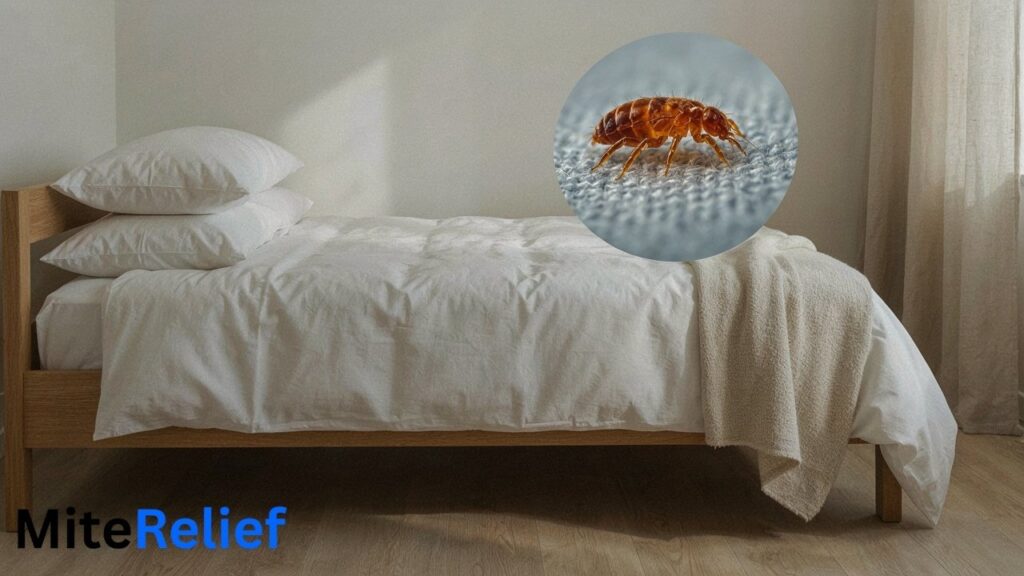
Dust Mites vs Bed Bugs: Visual Comparison
This confusion happens constantly online.Many people confuse dust mite allergy reactions with bed bug bites. However, dust mites and bed bugs are very different, and understanding the differences can help identify the cause. Learn more in our guide on Dust Mites vs Bed Bugs
| Feature | Dust mites | Bed Bugs |
| Size | 0.2–0.3mm | 1-7 mm |
| Visibility | Invisible to the naked eye | Clearly visible |
| Color | Off-white to tan | Reddish-brown |
| Shape | Broad oval | Flat oval |
| Legs | 8 | 6 |
| Feeding Source | Dead skin | Blood |
| Habitat | Bedding and fibers | Bed frames and furniture |
Bed bugs feed on blood from humans. dust mites do not bite and do not drink blood at all.
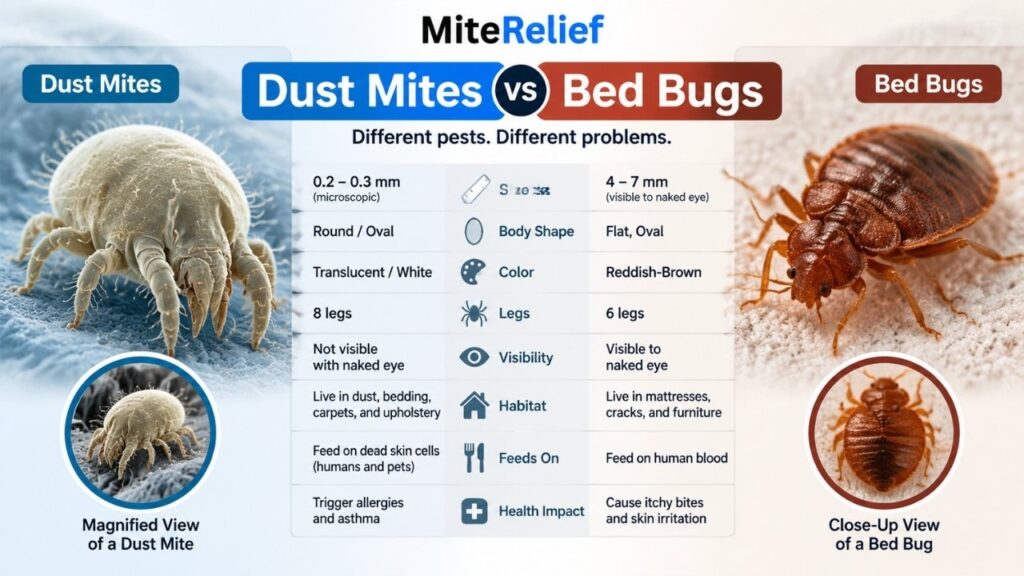
Instead, mites survive mostly by feeding on dead skin particles found inside mattresses, blankets, carpets, and upholstery. That difference matters because many allergy symptoms feel physical enough to seem like bites. Usually, airborne allergens trigger the real reaction instead. especially with dust mite allergy symptoms.
If you want a full explanation, read our related guide: Do Dust Mites Bite?
What Do Dust Mite Droppings Look Like?
Here’s something many readers do not realize. The biggest allergy trigger usually does not come from the mites themselves. It comes from their waste particles.
Dust mite droppings appear as microscopic pellet-shaped particles measuring around 10–40 microns. Humans cannot naturally see them floating through the air.
Once blankets or mattresses move, these particles become airborne. Then, sensitive people inhale them through the nose and lungs.
These tiny allergen particles are one reason some people experience ongoing reactions. Learn more about common dust mite allergies and symptoms.
That is why allergies often feel worse during sleep or early mornings. Pillows, carpets, and fabric surfaces release trapped allergens easily after movement.
Even though most online dust mite pictures focus on the mites themselves, the invisible waste particles usually create a stronger allergic reaction.
How Can You Tell if You Have Dust Mites Without Seeing Them?
Most people never physically see dust mites. Instead, they notice symptoms around them. Frequent sneezing after waking up? Itchy eye irritation at night? Blocked nose symptoms around your pillow? Those signs matter more than visual proof.
Understanding where these tiny creatures originate can also help explain why they appear in bedrooms, bedding, and other soft materials. Learn more about where dust mites come from and how they spread indoors.
Unlike seasonal pollen allergies, dust mite reactions often continue year-round. Bedrooms usually trigger the strongest reactions because soft bedding traps moisture, heat, and dead skin flakes. Some individuals also develop coughing, watery eyes, or throat irritation while sleeping. Vacuuming dusty rooms may temporarily worsen symptoms because allergens become airborne during cleaning. For a deeper explanation, read our guide What Are Dust Mites?
Frequently Asked Questions
Are dust mites visible to the naked eye?
No, not at all. You won’t see dust mites just by looking around. They’re way too small. Most people don’t even realize they’re there because they hide inside mattresses, pillows, carpets, and soft fabrics.
What symptoms do dust mites cause?
Honestly, it usually just feels like random allergies. Sneezing, a blocked nose, itchy or watery eyes, and sometimes even a bit of coughing. And what’s confusing is that it often shows up in the morning or after sleeping, so people don’t always connect it to dust mites right away.
Do dust mites live on human skin?
No, they don’t live on your skin, even though a lot of people think that. They actually stay in bedding and fabrics. They just feed on dead skin flakes that naturally fall off the body. So they’re around you, not on you.
Why are dust mites worse at night?
It feels worse at night because that’s when you’re literally lying in their main area of your bed. Warmth from your body, a bit of sweat, and long hours of contact with pillows and mattress, all of that makes reactions more noticeable.
Can cleaning remove dust mites completely?
Not really, and that’s the honest answer. You can reduce them a lot, but you can’t completely get rid of them forever. Still, regular washing of bedding, vacuuming, and keeping things clean make a huge difference. It’s more about control than elimination of dust mites.
What to Read Next
- What Are Dust Mites? Everything You Need to Know
- Do Dust Mites Bite? 7 Facts You Need to Know
- Dust Mite Allergy Symptoms: How to Know If You’re Allergic
- Where Do Dust Mites Come From?
Conclusion
Dust mites are one of those things you never see, but you definitely feel their effect. Sneezing, a blocked nose, and irritated eyes can all feel random at first. But once you understand what’s happening, it actually starts to make sense.
Once you understand what dust mites look like and where they live, the next step is learning practical ways to reduce exposure. Read our guide on how to prevent dust mites.
They’re not on your skin, but they’re always close to pillows, mattresses, and bedding. And that’s why symptoms keep coming back. The good part? You can manage it. Simple cleaning habits and a bit of consistency can really reduce dust mite discomfort over time.
Medical Disclaimer
This content is for general informational purposes only and is not a substitute for professional medical advice, diagnosis, or treatment. Individual health needs can vary, so speak with a qualified healthcare professional about allergies, asthma, skin reactions, medications, or other symptoms. Seek prompt medical care if symptoms are severe, persistent, or getting worse.

Umar Farooq is the founder of MiteRelief, a resource for dust mite control and allergy prevention. After battling allergen sensitivity, he started creating research-backed guides that turn complex indoor air quality science into practical, affordable solutions anyone can implement.