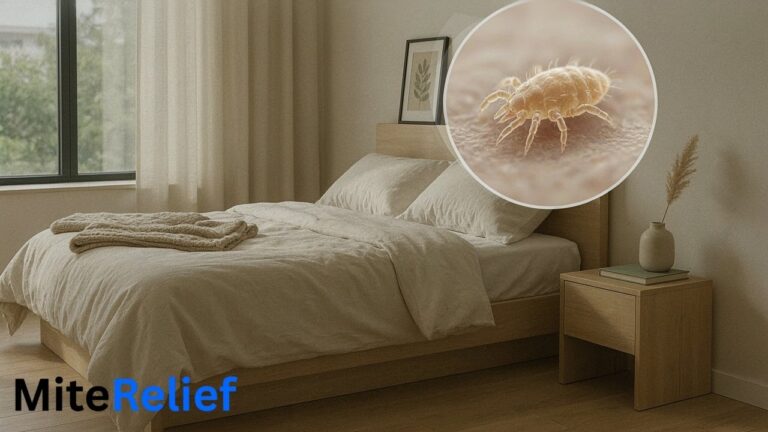
The short answer is no, dust mites do not bite. But here’s the thing, most people who wake up itchy or see red spots on their skin immediately think something bit them during the night. And honestly, it makes sense at the moment. You go to bed fine, wake up uncomfortable, and your brain tries to explain it quickly. So dust mites usually get the blame.
But the reality is simpler and a bit surprising. Dust mites can’t bite you at all.
They’re nothing like mosquitoes or bed bugs. They don’t have biting mouthparts, they don’t feed on blood, and they’re not living on your skin either. Still, they can make life uncomfortable in a very indirect way.
Do dust mites bite humans?
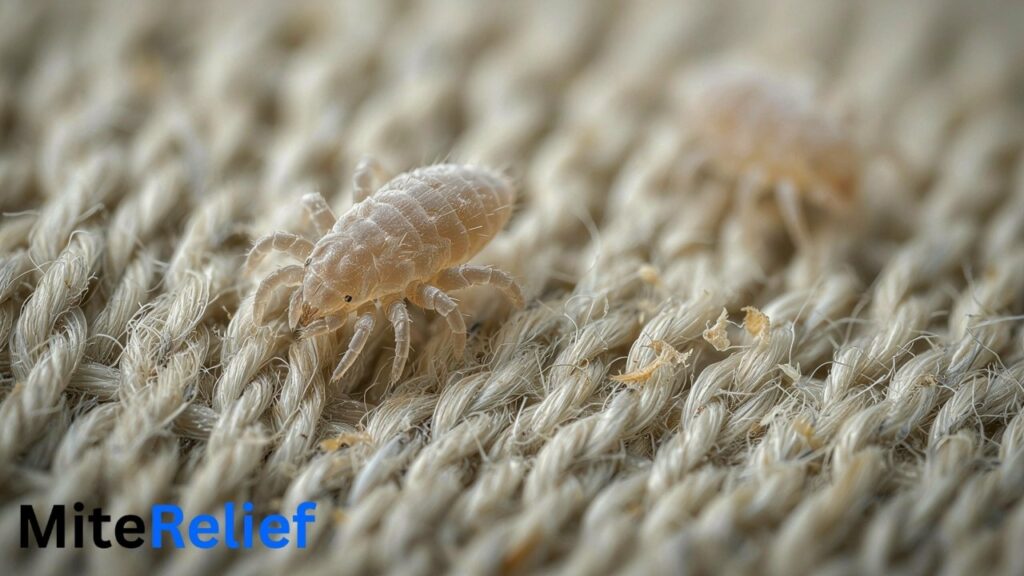
No, dust mites do not bite humans, not even a little. They physically can’t. Their mouthparts are not designed for piercing skin, so the idea of dust mite bites is actually a myth.
These tiny creatures live in places like bedding, mattresses, carpets, and furniture. Anywhere soft, warm, and slightly dusty is perfect for them. They mostly feed on dead skin flakes that naturally fall off our bodies every day. That’s it. They stay in the environment, not on people.
So if your skin feels irritated, it’s not because something bit you. It’s usually something else going on.
So what actually causes itching and skin rashes?
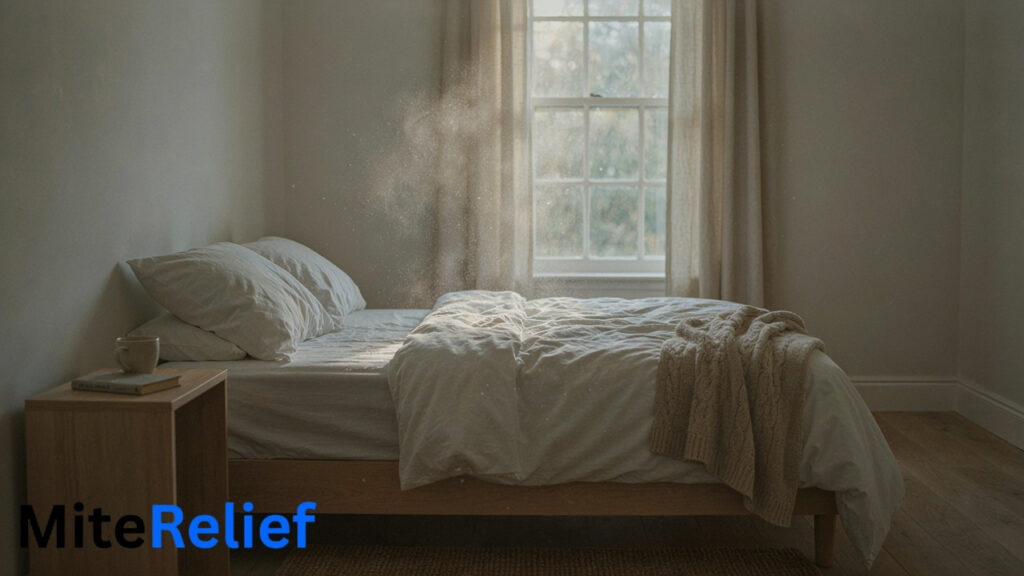
This is the part where most people get confused. When people say dust mite bites, what they’re actually reacting to are allergens not bites.A dust mite rash can be one way this sensitivity shows up.
Dust mites leave behind tiny waste particles and fragments of their bodies. These are microscopic, so you never see them. But they mix into household dust and can easily float around in the air. When your body comes into contact with these particles, it can react in different ways. Some people don’t feel anything at all. Others react quite strongly.
You might notice things like:
- itching
- red or irritated skin
- small bumps
- dry or patchy areas
But again, this is not a bite. It’s more like your immune system reacting a bit too strongly to something harmless.
And this is where things get interesting. Everyone reacts differently. One person can sleep in the same bed and feel completely fine, while someone else wakes up scratching and uncomfortable. That difference usually comes down to sensitivity.
The confusing part is how normal it feels at first. You wake up, feel itchy, maybe notice a few red marks, and your first thought is almost always the same: something bit me.
That reaction is natural. We’re wired to look for a clear cause. But dust mites don’t actually behave like that at all. They’re not attacking skin or biting anyone. They’re just living quietly in the background of everyday environments.
The real issue is what they leave behind.
Over time, dust mites build up in bedding, mattresses, sofas, and other soft furniture. And while they live there, they produce waste particles and shed tiny fragments of their bodies. These mix into dust and become part of the air around us without being noticed.
Now here’s where the body response starts.
Some people’s immune systems treat these particles as if they are harmful. Not because they are dangerous, but because the body misreads them. That’s when the reaction begins. A chemical called histamine gets released, and that’s usually when symptoms like itching, redness, or irritation start showing up. In some people, it’s mild and barely noticeable. In others, it can feel quite strong and uncomfortable.
And it doesn’t always stop at the skin.
Some people also wake up sneezing, with watery eyes, nasal pressure, or even a bit of coughing that comes and goes. At first, it feels random, like different problems happening at once, but they often trace back to the same source: dust mites in the environment.
Bedding plays a big role here because you spend hours in direct contact with it every night. You’re breathing near it, your skin is touching it, and everything builds up slowly over time. So if dust mite levels are high, symptoms usually show up more in the morning.
That’s exactly why so many people think something happened overnight when in reality, it’s just a reaction that built up while they were sleeping.
What do dust mite bite marks look like?
They don’t actually exist, but people still try to describe them.
Usually, what happens is this: someone sees small red bumps and assumes they were bitten. But dust mite reactions don’t have a clear bite pattern like bed bugs or mosquitoes.
If you’re curious, what dust mites look like under a microscope makes it much clearer why their reactions feel so different from a real bite.
Instead, it looks more like:
- scattered red patches
- tiny bumps on arms or neck
- dry, irritated skin
- sometimes eczema flare-ups
And this is where people get confused. Because visually, it feels like bites, but biologically, it isn’t.
There actually aren’t any real dust mite bite marks. That’s the first thing to clear up. They don’t bite, so there’s no pattern or puncture or anything like that.
But the skin reaction they trigger can still look confusing.
You might see small red patches. Sometimes tiny bumps. Sometimes, it’s just areas that feel rough or irritated without a clear shape. And it doesn’t always look the same from person to person, which makes it harder to identify.
With actual insect bites, there’s usually some kind of structure, like lines from bed bugs or a clear center from mosquito bites. Dust mite reactions don’t follow that pattern. They’re kind of scattered and random.
And here’s the tricky part: people often check their skin first thing in the morning, half asleep, and try to make sense of what they’re seeing. That’s usually when the assumption happens.
Also, symptoms don’t always stay in one spot. One day it might be arms, another day neck or back. It depends on where the skin had more contact with bedding or fabric.
If other things are happening at the same time, sneezing, watery eyes, or that slightly blocked feeling in the nose, then it starts pointing more toward an allergy rather than anything biting.
Dust mites vs bed bugs: How to tell the difference
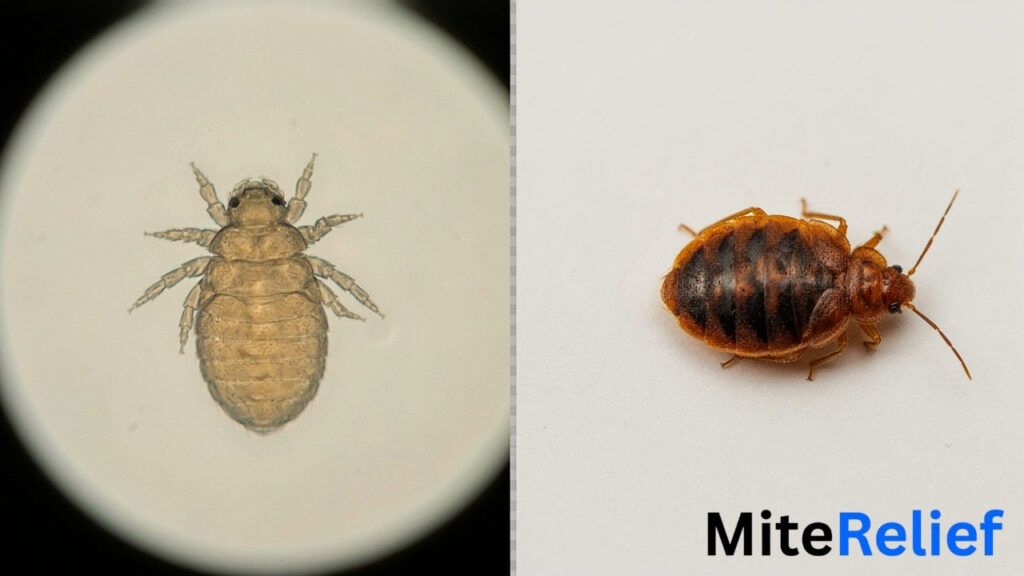
People constantly confuse dust mites and bed bugs because both problems happen around beds. But they behave very differently.
Here is the easiest way to separate them.
| Dust Mites | Bed Bugs |
| Microscopic and invisible | Visible to the eye |
| Do not bite | Bite humans for blood |
| Cause allergic rashes | Leave real bite marks |
| Live inside fabrics | Hide in cracks and seams |
| Trigger sneezing and allergies | Cause itchy bite lines |
| Feed on dead skin | Feed on blood |
Simple comparison:
- Bed bugs → visible + real bites
- Dust mites → invisible + allergic reaction
So if there are no insects but symptoms persist, dust mites are more likely involved.
Can dust mites live on your skin?
No, dust mites do not live on human skin. This is another common myth that causes unnecessary worry.
They survive in soft areas like bedding, pillows, carpets, and furniture, where dead skin cells accumulate. Your body is not their habitat. So the dust mites on skin are actually misleading; they may affect your skin indirectly, but they don’t live on it. They stay in the environment, not on people.
How to relieve itching and rashes caused by dust mites
If your skin is reacting, the first instinct is usually to think, “I need to get rid of whatever is on me.” But with dust mites, it doesn’t work like that. The issue is in your surroundings, especially bedding. A simple starting point is antihistamines.
dust mite allergy symptoms, like itching and irritation, usually respond well to them, especially when reactions keep coming back at night.
After that, it’s mostly about reducing exposure. Washing bedding at 60°C or higher actually makes a difference because it kills dust mites and clears out allergens stuck in fabric. A lot of people skip this step, but it’s honestly one of the most effective ones.
This is the part people usually want a quick fix for, but it doesn’t really work that way. You can treat the skin, sure, but if the environment stays the same, it just keeps coming back. That’s the frustrating cycle.
So most of the focus is actually on reducing exposure.

Washing bedding regularly helps more than people expect. Not just once in a while, consistently. Pillow covers, sheets, anything that stays in contact with skin for long hours. Vacuuming soft furniture also matters, even if it feels like nothing changes immediately. Dust mites don’t stay on the surface, but their allergens do.
Some people notice improvement when the room isn’t too humid. Dust mites like warm, slightly damp conditions, so controlling that environment can slowly reduce their presence over time. And if symptoms keep showing up no matter what, allergy testing becomes useful. Not because it’s something alarming, but just to stop guessing. Knowing the actual trigger makes everything easier to manage, honestly.
Another thing that helps is anti-allergy covers for pillows and mattresses. It sounds small, but it blocks dust mites from building up right where you sleep every night. And if you want the bigger picture, like long-term control and a full cleaning routine, it’s better to follow a proper how to get rid of dust mites approach instead of just treating symptoms again and again.
Frequently Asked Questions
Do dust mites bite at night?
No, they don’t bite at any time. Night symptoms come from allergen exposure in bedding.
Can you feel dust mites crawling on you?
No. They are microscopic. Any crawling feeling is not real mite movement.
How do you know if it’s a dust mite bite?
If you have sneezing, itchy skin, watery eyes, or symptoms worse in dusty environments or beds, it could be an allergy
What do dust mite bumps look like?
They usually look like small red patches or irritation, not proper bite marks with a center point
What to read next
If this topic confuses you, you’re not alone. The next step is understanding what dust mites actually are and where they come from. Start with:
- What are dust mites?
- Dust Mite Allergy Symptoms: How to Know If You’re Allergic
- What do dust mites look like?
Conclusion
So, do dust mites bite? No, and that’s the key takeaway. The real issue is allergic sensitivity, not physical bites.
When symptoms appear on the skin, it’s usually your immune system reacting to something invisible in your environment, especially in bedding or soft
furniture. Once you understand this difference, everything becomes clearer and easier to manage.
Medical Disclaimer
This content is for general informational purposes only and is not a substitute for professional medical advice, diagnosis, or treatment. Individual health needs can vary, so speak with a qualified healthcare professional about allergies, asthma, skin reactions, medications, or other symptoms. Seek prompt medical care if symptoms are severe, persistent, or getting worse.

Umar Farooq is the founder of MiteRelief, a resource for dust mite control and allergy prevention. After battling allergen sensitivity, he started creating research-backed guides that turn complex indoor air quality science into practical, affordable solutions anyone can implement.